Paris Masters Winners and Records: From Djokovic’s Seven Titles to Alcaraz’s 2026 Win
All 41 Paris Masters singles champions and finalists by year, with Djokovic’s seven titles, the move from Bercy, and how Alcaraz beat Shelton in 2026.
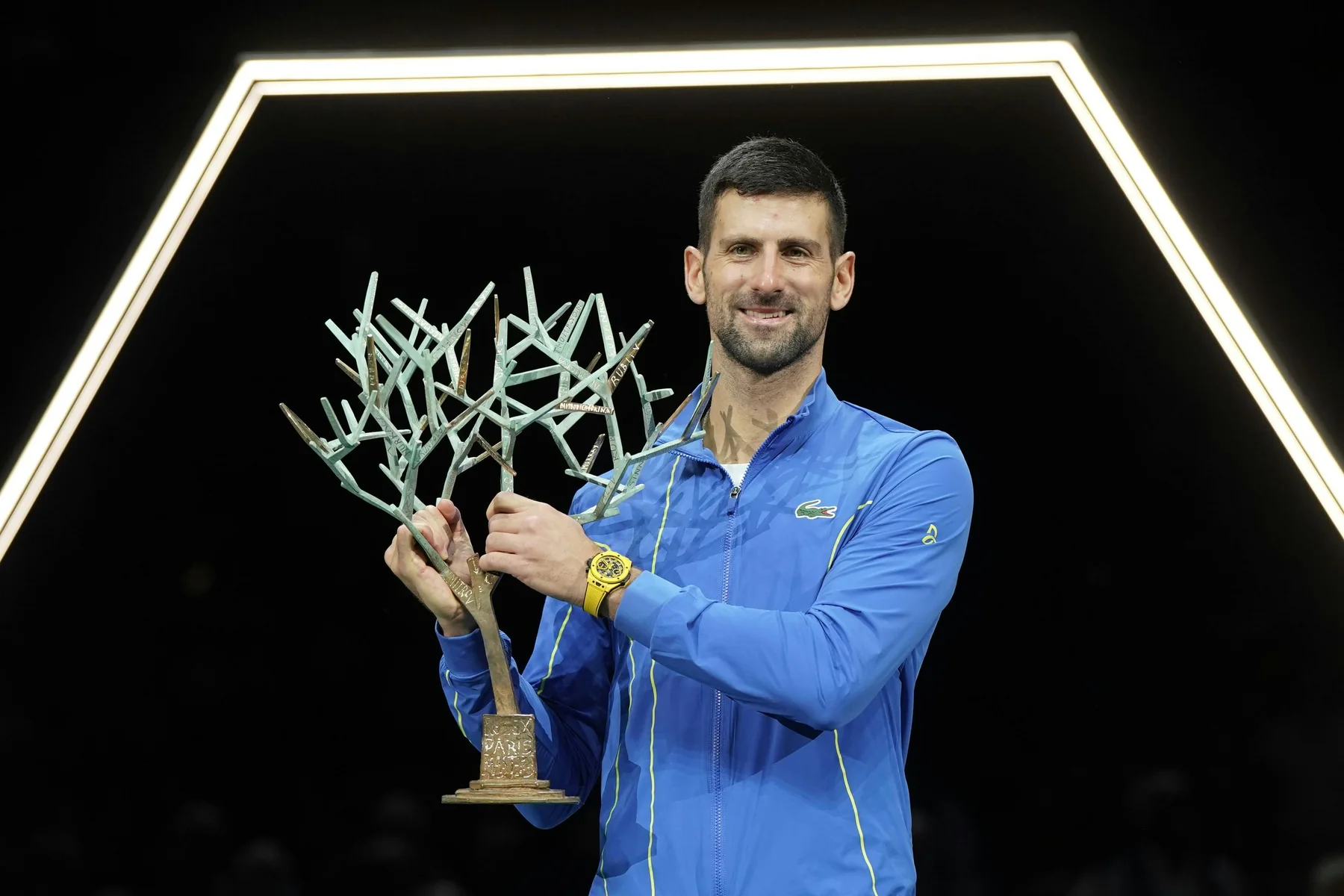
Who has won the most Paris Masters titles?
Novak Djokovic holds the men's singles record with seven Paris Masters titles. He won in 2009, 2013, 2014, 2015, 2019, 2021 and 2023. Boris Becker and Marat Safin are next in the modern tournament's singles history with three apiece. Carlos Alcaraz is the latest champion. He beat Ben Shelton on November 8, 2026 to win the event for the first time. The two achievements capture different parts of the draw's history: the first player to win it under the new roof was Jannik Sinner in 2025, while all seven of Djokovic's titles came at Bercy.
The record here starts with the tournament's first modern edition in 1986, when Becker won at Bercy. The ATP's Masters 1000 series began in 1990. Those dates answer different questions. Title counts for the Paris event include its first four Bercy editions, and ATP series totals start in 1990. That matters especially when comparing Becker's Paris trophies with his all-tour Masters 1000 record. The ATP Masters 1000 champions guide follows the series-wide scope.
Paris also hosts Roland Garros, and a player can have titles at both. Alcaraz won Roland Garros in 2024 and 2025 before his 2026 Paris Masters victory. That made three singles trophies from the two events in the Paris area, and one Paris Masters title. Follow the event name and the venue as well as the city when you read a player's record. For the Paris Masters, Bercy covers the editions through 2024, and La Défense covers the 2025 and 2026 editions.
Use the chronology below to identify the winner and opponent in each final. A return to the championship match tells one part of a player's history. The title column tells another. Djokovic lost two finals at Bercy while setting the title record, and both of those opponents are part of the same roll of honor.
Paris Masters singles winners by year from 1986 to 2026
These are all 41 men's singles finals from the first modern Bercy edition through the second edition at La Défense. The year tells you which tournament edition to look up, and the runner-up makes repeat appearances easy to find. For example, Becker and Edberg traded consecutive finals at the end of the 1980s and the beginning of the Masters series. The same two names mean different winners in different years. The organizer's historical gallery provides the earlier results and photographs. Its November final report covers the new row for 2026.
1986–1999 at Bercy
Becker won three times in the first seven editions. Brad Gilbert and Pete Sampras each made repeated finals during that first decade, and Sampras won in 1995 and 1997. The names in the runner-up column often trace champions across several seasons. Agassi beat Safin for his second title in 1999. Safin returned to a final the next year and started his own run of titles.
| Year | Champion | Runner-up |
|---|---|---|
| 1986 | Boris Becker | Sergio Casal |
| 1987 | Tim Mayotte | Brad Gilbert |
| 1988 | Amos Mansdorf | Brad Gilbert |
| 1989 | Boris Becker | Stefan Edberg |
| 1990 | Stefan Edberg | Boris Becker |
| 1991 | Guy Forget | Pete Sampras |
| 1992 | Boris Becker | Guy Forget |
| 1993 | Goran Ivanišević | Andrei Medvedev |
| 1994 | Andre Agassi | Marc Rosset |
| 1995 | Pete Sampras | Boris Becker |
| 1996 | Thomas Enqvist | Yevgeny Kafelnikov |
| 1997 | Pete Sampras | Jonas Björkman |
| 1998 | Greg Rusedski | Pete Sampras |
| 1999 | Andre Agassi | Marat Safin |
2000–2012 at Bercy
Safin's three titles in five years are the obvious pattern at the top of this table. The middle years brought a series of first-time Paris champions, including Berdych, Davydenko, Nalbandian and Tsonga. Monfils was the runner-up in consecutive years in 2009 and 2010. Reading both finalists makes it possible to see how a player could be a regular threat here even with no title beside his name.
| Year | Champion | Runner-up |
|---|---|---|
| 2000 | Marat Safin | Mark Philippoussis |
| 2001 | Sébastien Grosjean | Yevgeny Kafelnikov |
| 2002 | Marat Safin | Lleyton Hewitt |
| 2003 | Tim Henman | Andrei Pavel |
| 2004 | Marat Safin | Radek Štěpánek |
| 2005 | Tomáš Berdych | Ivan Ljubičić |
| 2006 | Nikolay Davydenko | Dominik Hrbatý |
| 2007 | David Nalbandian | Rafael Nadal |
| 2008 | Jo-Wilfried Tsonga | David Nalbandian |
| 2009 | Novak Djokovic | Gaël Monfils |
| 2010 | Robin Söderling | Gaël Monfils |
| 2011 | Roger Federer | Jo-Wilfried Tsonga |
| 2012 | David Ferrer | Jerzy Janowicz |
2013–2026 across two venues
The 2020 date stays in the record. Daniil Medvedev beat Alexander Zverev in that year's championship match, and Zverev later won the last championship at Bercy. In the final two rows, the title belongs to the same tournament at a new home. Sinner and Alcaraz were first-time Paris Masters winners in their respective years. Across the full table, Djokovic is the only man with seven wins in the final. Through 2025 there had been 28 different singles champions, and Alcaraz made it 29. That is a count of different players, with 41 editions represented.
| Year | Champion | Runner-up |
|---|---|---|
| 2013 | Novak Djokovic | David Ferrer |
| 2014 | Novak Djokovic | Milos Raonic |
| 2015 | Novak Djokovic | Andy Murray |
| 2016 | Andy Murray | John Isner |
| 2017 | Jack Sock | Filip Krajinović |
| 2018 | Karen Khachanov | Novak Djokovic |
| 2019 | Novak Djokovic | Denis Shapovalov |
| 2020 | Daniil Medvedev | Alexander Zverev |
| 2021 | Novak Djokovic | Daniil Medvedev |
| 2022 | Holger Rune | Novak Djokovic |
| 2023 | Novak Djokovic | Grigor Dimitrov |
| 2024 | Alexander Zverev | Ugo Humbert |
| 2025 | Jannik Sinner | Félix Auger-Aliassime |
| 2026 | Carlos Alcaraz | Ben Shelton |
How Djokovic built his seven-title record
Djokovic's Bercy run started with a deciding-set tiebreak against Gaël Monfils in 2009. His most concentrated spell came four years later. He defeated David Ferrer, Milos Raonic and Andy Murray in successive finals from 2013 to 2015. The ATP's account of his rivalry with Murray identifies their 2015 final as the third leg of the streak and his fourth trophy at the tournament. By that point he had already moved clear of both Becker and Safin.
The later results came at intervals. Djokovic lost to Karen Khachanov in the 2018 final, then won against Denis Shapovalov a year later. He beat Daniil Medvedev in the 2021 final, lost the 2022 championship to Holger Rune and took the trophy back in 2023. Seven titles from nine finals capture both sides of his record. His loss to Rune is part of the reason their next Bercy meeting mattered. The 2023 quarterfinal gave Djokovic a chance to change the outcome before he even reached that year's title match.
The 2023 final against Grigor Dimitrov
On November 5, Djokovic beat Dimitrov 6–4, 6–3 in 98 minutes. He had gone to a third set against Tallon Griekspoor, Rune and Andrey Rublev in the preceding three rounds. ATP's match report makes clear where the final turned. Djokovic won 15 of 17 first-serve points in the opening set and broke once in each set. Dimitrov took him to deuce while he served for the first set. Djokovic came through that game and faced zero break points across the match.
The ATP's tactical analysis emphasized Djokovic's backhand from the baseline. The service numbers explain how little pressure he faced during much of the opener. That gave him time to work on Dimitrov's service games and take the openings that came. With the final complete, the result counted three ways: his seventh Paris Masters title, his 40th Masters 1000 trophy, and his 50th career win at Bercy as recorded that day. The Djokovic ranking history follows a separate record that spans the rest of the season.
The champions who shaped the Bercy years
Becker, Safin and Djokovic produced the biggest repeat title runs at Bercy. The finalists around them tell a wider story. A week late in the calendar could reward a player's serve and first strike or a returner who could win the short pressure points. The earliest editions used indoor carpet, which helps explain the tournament's affinity for leading attacking players. Later generations won under different playing conditions inside the same arena.
Becker and Safin each won three
Becker was 18 when he beat the Spanish qualifier Sergio Casal in the inaugural modern final. He won again in 1989 against Stefan Edberg and in 1992 against Guy Forget. His five finals in the opening decade included a 1990 retirement against Edberg and a 1995 loss to Sampras. The repetition along one row of the record is striking. Even in the main years of Becker's dominance, the same rivals could turn a return to the final into a different outcome.
Safin first reached the final against Andre Agassi in 1999. A year later he beat Mark Philippoussis in a five-set final decided 10–8 in the last tiebreak. He added straight-sets wins over Lleyton Hewitt in 2002 and Radek Štěpánek in 2004. Matching Becker's three titles meant navigating very different kinds of championship matches. Only one of Safin's three wins came in a fifth set and he needed that narrow tiebreak before the later two trophies were possible.
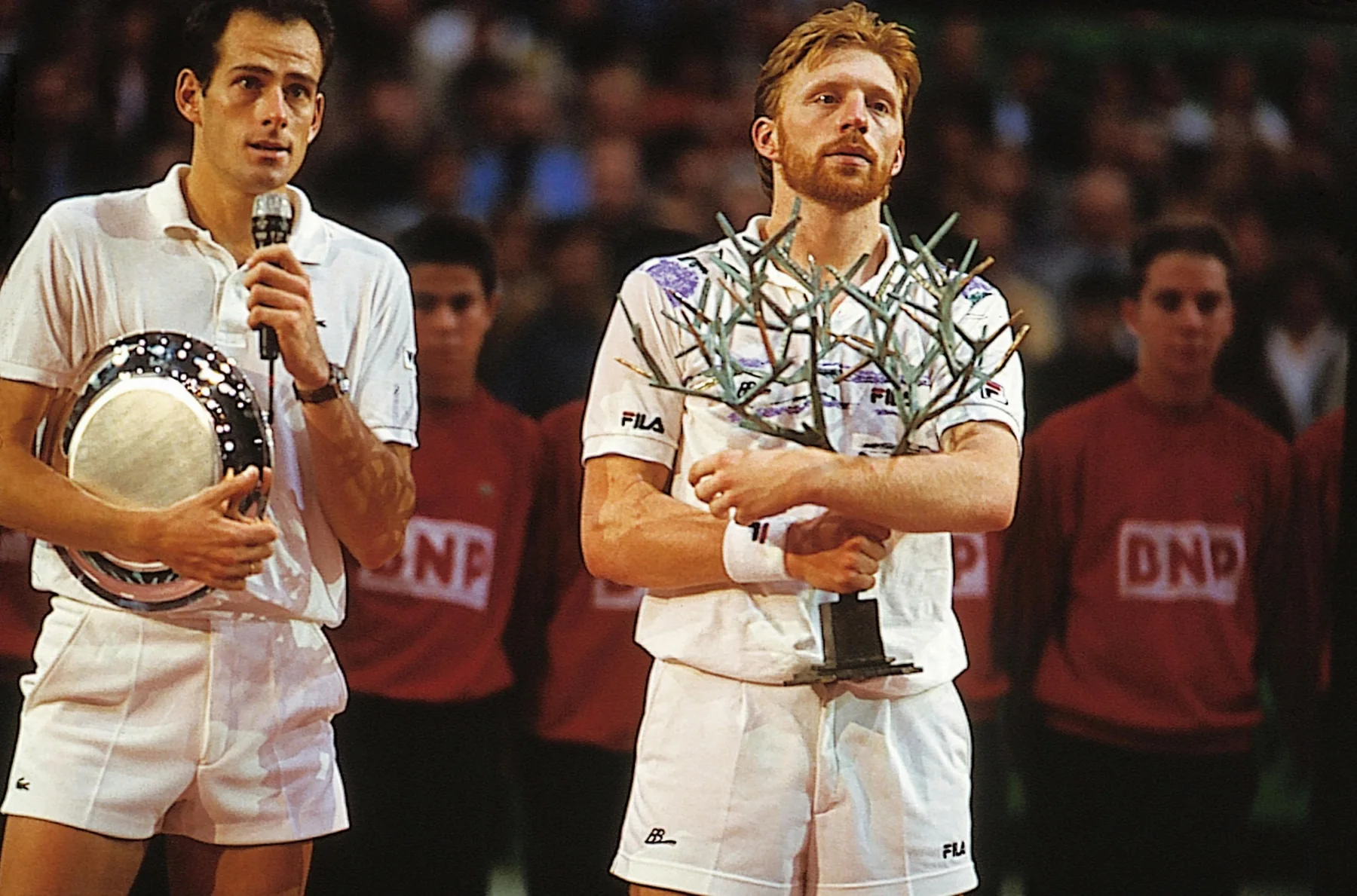
Breakthroughs from Forget to Rune
Forget's five-set win over Sampras in 1991 gave France its first modern singles champion here. Sébastien Grosjean followed in 2001, and Jo-Wilfried Tsonga beat the reigning champion David Nalbandian in 2008. Tsonga remains the most recent French men's singles champion through 2026. That gave Humbert's later run to the last Bercy final an extra resonance for local fans.
The draw could still change a career in the closing years at Bercy. At 19, Holger Rune beat five top-ten opponents in succession in 2022. His 3–6, 6–3, 7–5 comeback against Djokovic made him a Masters 1000 champion for the first time. Looking up just his final score misses the difficulty of getting there: he also had to get past Hurkacz, Rublev, Alcaraz and Auger-Aliassime that week.
What changed when the tournament left Bercy?
The move happened between the 2024 and 2025 editions. The former host was Accor Arena in the Bercy neighborhood of Paris, where the tournament had opened in 1986. The new host was Paris La Défense Arena in Nanterre. It became Plenitude Arena on July 1, 2026. That accounts for the two venue names in recent score pages. Sinner's 2025 final and Alcaraz's 2026 final took place in the same building, while Djokovic's titles belong to the earlier venue.
The last final at Accor Arena was brief. On November 3, 2024, Zverev beat Ugo Humbert 6–2, 6–2. According to the ATP match report, he dropped five points on his own serve for the entire match. Humbert had beaten Alcaraz on his way to the final, one reason his run mattered even though it ended with a clear result. Zverev took the last singles trophy in the arena and became the second German champion in the event's history after Becker.
The organizer's move announcement described a larger operation, with four competition courts and a separate practice court. It gave 16,500 as the planned capacity for the center court in the tennis configuration. That is the useful figure when comparing the new tournament setup with concert or rugby capacities for the same arena. The floor plan changed what a spectator could see across a day's play. The familiar fall slot and championship remained part of the same competition, which is why the list continues after 2024.
Sinner won the first La Défense edition by beating Félix Auger-Aliassime 6–4, 7–6(4). He took the trophy without dropping a set and returned to No. 1 in the following ATP rankings. That first result at the new venue gives the record a clear transition point. The second set was still tight enough to require a tiebreak even in a title run in which Sinner won every set.
When comparing the two eras, check the year along with the arena name. The final-round scores reveal how the match played out, while the venue identifies where the match belongs in the history. A guide to the 2026 venue and draw provides more detail for following the current format.
How Alcaraz won his first Paris Masters title in 2026
Carlos Alcaraz defeated Ben Shelton 7–6(5), 7–5 in the November 8, 2026 final at Plenitude Arena. It was his first Paris Masters championship and the ninth Masters 1000 title of his career. The win changed his own record here. Before that week, his deepest run in the event had been the 2022 quarterfinals. He had lost his opening match to Cameron Norrie in the first La Défense edition in 2025.
The official 2026 draw shows why reaching this final was an achievement on its own. Alcaraz lost a 12–10 first-set tiebreak to Taylor Fritz in their quarterfinal, then won the next two sets. He beat Casper Ruud 6–4, 6–4 in the semifinal. Shelton came through a three-set semifinal against Luca Van Assche. A title comparison based only on the two-set final would leave those differences out. The complete Paris Masters results are useful for tracing the draw before the final.
The organizer’s quarterfinal report shows how close the first title came to ending on Friday. Alcaraz had played just one hour and 41 minutes across the previous rounds after a bye, a win over Alex Michelsen and Matteo Berrettini’s withdrawal. Fritz held a match point on Alcaraz’s serve and another when serving at 5–4 in the second. Alcaraz saved both, broke back and won 6–7(10), 7–5, 6–3. He had also saved match points against Jannik Sinner in the 2025 Roland Garros final. The two scorelines belong to separate tournaments, but they show how near defeat Alcaraz came on his way to each Paris-area title.
What decided the two close sets
In the first set, Shelton put pressure on Alcaraz's serve before either player pulled ahead. The tournament's match account records four break chances for Shelton at 2–1 and two more at 4–3. Alcaraz held both games. With neither man able to separate before the tiebreak, Alcaraz won it 7–5 at the end of a 65-minute set. The five in parentheses in the scoreboard is Shelton's tiebreak total. The 7–6 score shows the games in the opening set. That detail helps when reading a final table without seeing the match.
Shelton broke for a lead in the second set, and Alcaraz trailed 2–4. He won 12 of the next 15 points on the way to 5–4. When Shelton later served to force another tiebreak, Alcaraz created two match points and finished the match with a winner. The match ended after an hour and 57 minutes. Seen together, those two sets show different routes through the same problem. In the first, Alcaraz kept his service games alive through pressure. In the second, he had to recover the break and find the decisive return game before another tiebreak.
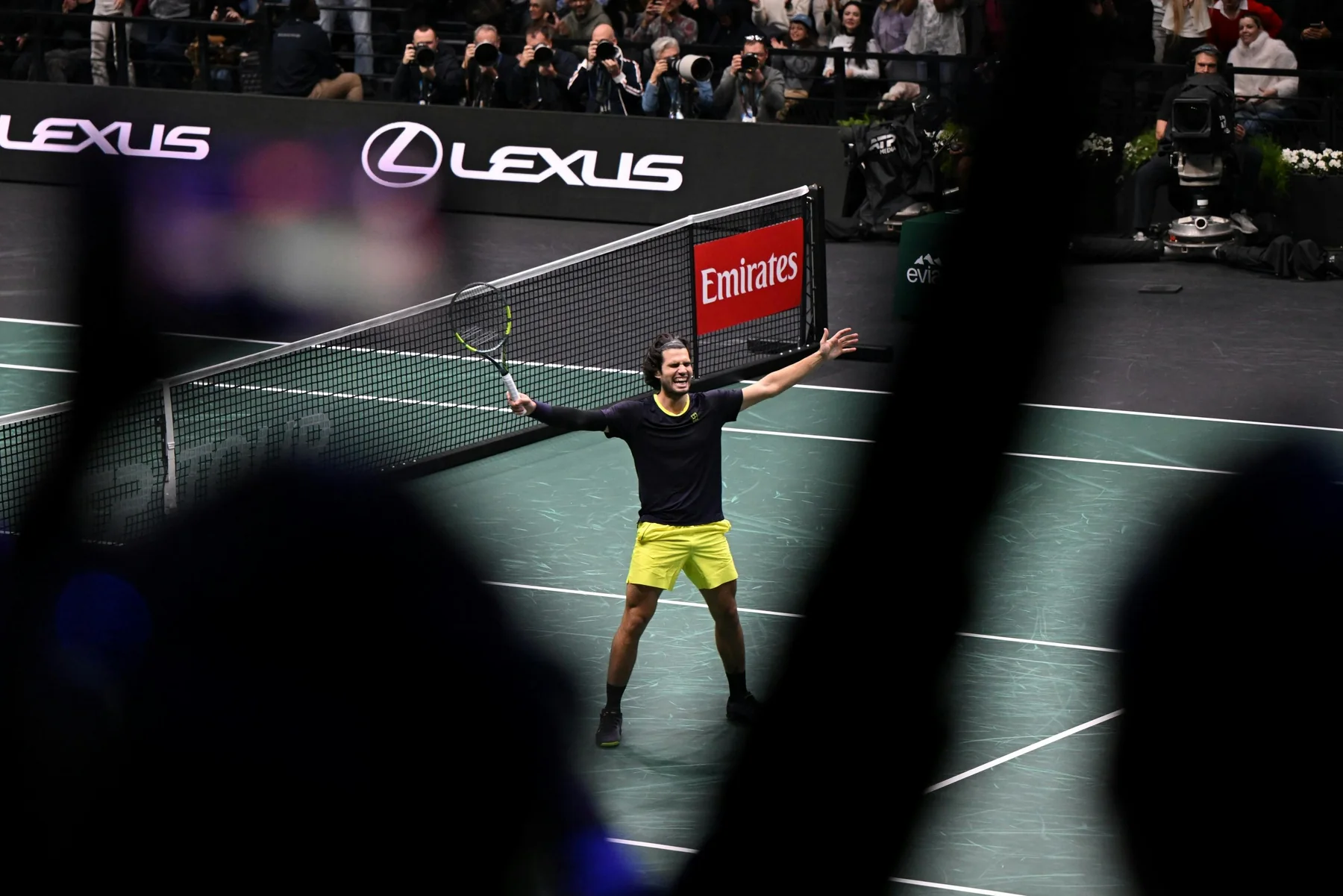
The organizer of Roland Garros counts the 2024 and 2025 clay titles in its own champions list. The November 2026 win belongs to the indoor Paris Masters list. It puts Alcaraz alongside Sinner as the two champions at the new arena through that edition. Djokovic's seven titles still stand at the top of the record across both venues.
About the author
ATP Schedule Editorial Team
The ATP Schedule editorial team turns match times, scores, tournament information and verified tennis news into clear answers fans can use quickly.
View all articles by this author →Fan discussion
Comments
Sign in with Google to comment. Keep the discussion helpful and tennis-focused. New comments are reviewed before they appear.
Loading comments…