ATPATP Schedule

Court and conditions

ATP tennis court surfaces explained: hard, clay, grass and indoor

Compare how the ball and match tend to behave on each court, then open a surface to browse this season’s tournaments by date, city, level and status.

Compare conditions

ATP court surfaces at a glance

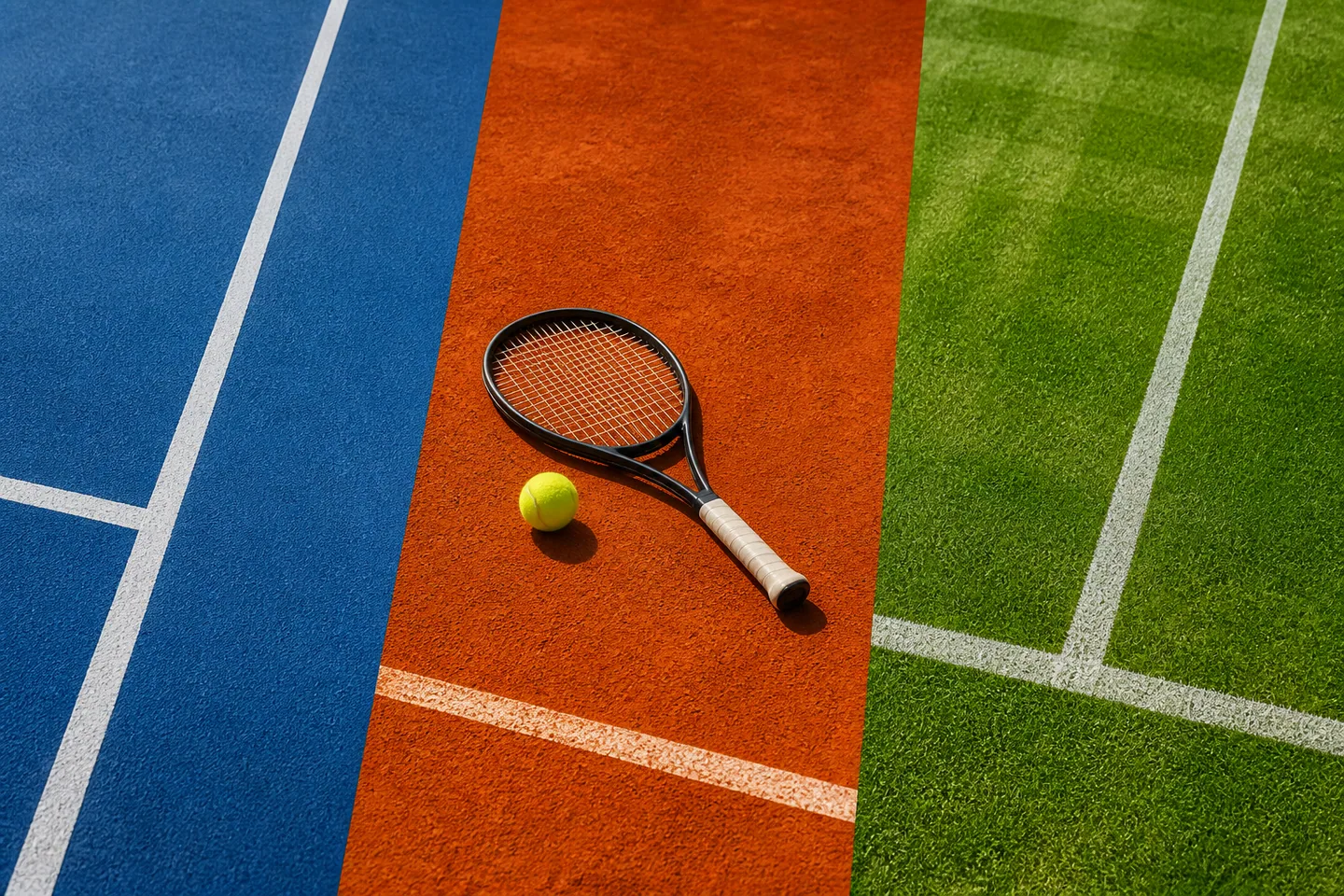
Hard, clay and grass tennis court surfaces shown side by side

Viewing cues

How ATP playing conditions usually compare

CategoryTypical bounceCommon rally patternWhat it identifies
Hard courtGenerally evenBalanced attack and defenceSurface material family
Clay courtSlower and higherLonger baseline exchangesSurface material family
Grass courtLower and fasterQuicker points and reactionsSurface material family
IndoorDepends on installed courtNo wind or rain during playCovered playing environment

These are broad fan cues, not fixed speed rankings. The ITF measures individual court products from slow to fast, so two hard courts can still play differently.

How to use this tool

Choose an ATP court or playing condition

  1. 1

    Compare the typical bounce and rally pattern for hard, clay and grass; treat Indoor as an environment filter.

  2. 2

    Open a category to see every matching 2026 tournament in calendar order.

  3. 3

    Open a tournament for daily schedules, completed scores, players, venue and viewing information.

Fan tip: Surface is useful match context, but it is not a prediction: court preparation, weather, altitude, balls and the player match-up still matter.

Fan guide

Understand ATP court surfaces and indoor conditions

Ball and rally

How hard, clay and grass change a tennis match

ATP describes hard courts as generally more neutral, clay as slower with a higher bounce and longer baseline rallies, and grass as lower-bouncing and faster with quicker points. These are useful viewing cues, not guarantees about an individual match.

Official details ↗

Important context

Surface name alone does not fix court speed

Courts made from the same broad material can play differently. The ITF measures Court Pace Rating in five bands from slow to fast, while weather, altitude, balls and event preparation can also affect what fans see. Indoor is an environment label and is usually paired with a material such as hard court.

Official details ↗

Quick answers

ATP court surface questions answered

What are the main ATP tennis court surfaces?

ATP Tour events are played on hard, clay and grass courts. Events are also identified as indoor or outdoor, which describes the setting rather than a separate playing material.

Which tennis surface is slowest?

Clay is generally the slowest of the three broad ATP surface families and produces a higher bounce, but measured pace still varies by individual court.

Does every court of the same surface play at the same speed?

No. The ITF uses five Court Pace Rating categories, and courts within the same broad material family can have different measured speeds.

Official ATP information ↗