ATP Masters 1000 Winners: Champions and All-Time Records
Review the 2026 ATP Masters 1000 champions and remaining events alongside the all-time title leaders, Golden Masters and major record comparisons.
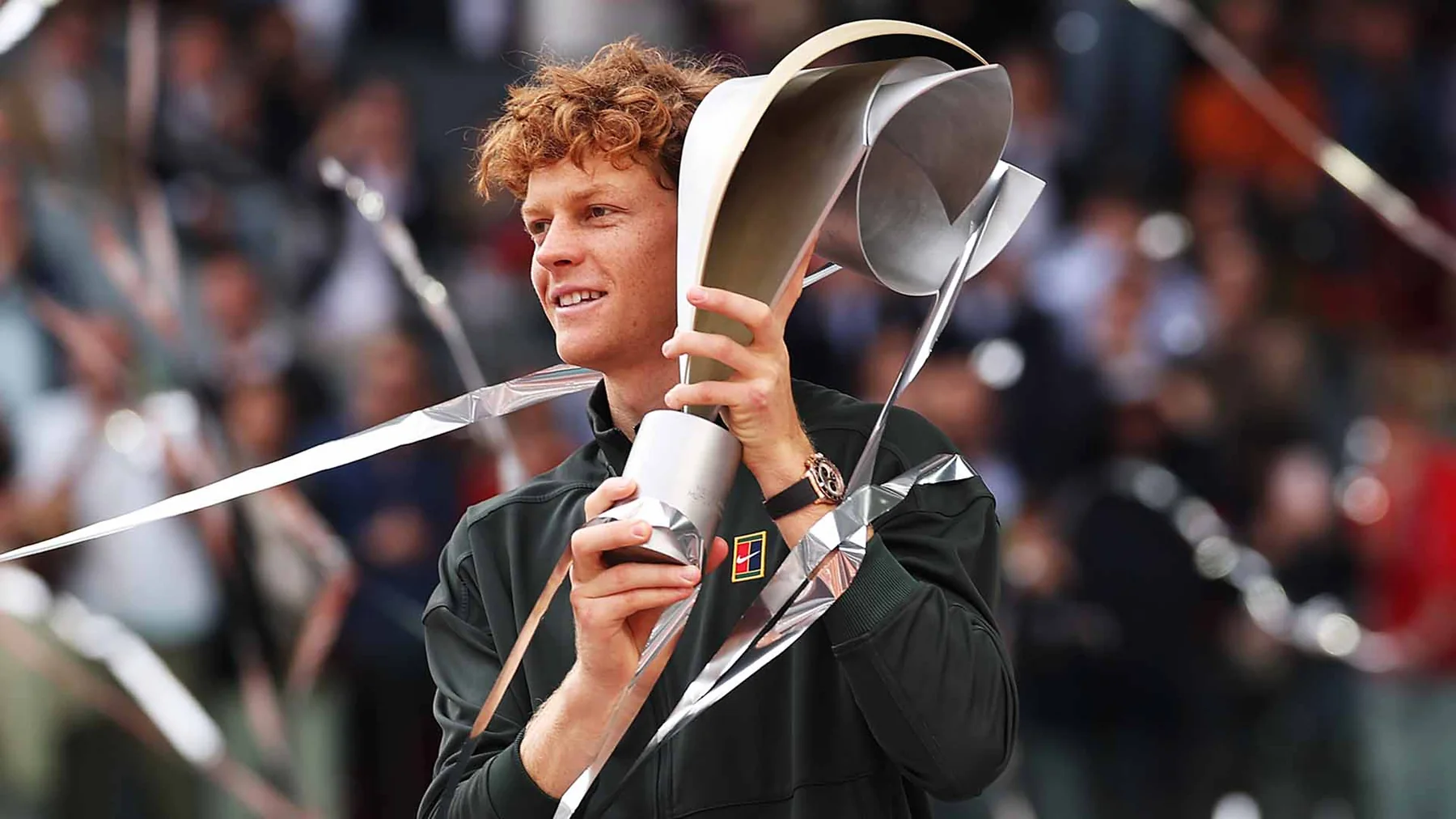
Seven ATP Masters 1000 champions had been decided in 2026 by September 9, with Jannik Sinner winning the first five events before Ben Shelton and Arthur Fils took the summer titles. This verified guide records every completed final, marks the two remaining tournaments, and separates career title totals from breadth and streak records.
2026 ATP Masters 1000 Winners and Remaining Events
If you want the direct answer, seven of the nine ATP Masters 1000 tournaments had produced a champion by September 9, 2026. Jannik Sinner won the opening five events, Ben Shelton defended the Canadian title in Montreal, and Arthur Fils claimed the Cincinnati trophy. Shanghai and Paris remained ahead on the calendar, so any page already naming their 2026 winners is premature.
| Event | Surface | 2026 champion | Final result |
|---|---|---|---|
| Indian Wells | Outdoor hard | Jannik Sinner | def. Daniil Medvedev 7-6(6), 7-6(4) |
| Miami | Outdoor hard | Jannik Sinner | def. Jiri Lehecka 6-4, 6-4 |
| Monte-Carlo | Outdoor clay | Jannik Sinner | def. Carlos Alcaraz 7-6(5), 6-3 |
| Madrid | Outdoor clay | Jannik Sinner | def. Alexander Zverev 6-1, 6-2 |
| Rome | Outdoor clay | Jannik Sinner | def. Casper Ruud 6-4, 6-4 |
| Montreal | Outdoor hard | Ben Shelton | def. Brandon Nakashima 6-3, 7-6(4) |
| Cincinnati | Outdoor hard | Arthur Fils | def. Frances Tiafoe 6-3, 1-6, 6-0 |
| Shanghai | Outdoor hard | Upcoming | Not played at cutoff |
| Paris | Indoor hard | Upcoming | Not played at cutoff |
The table separates an event result from the broader season story. Sinner's run crossed hard court and clay, while Shelton and Fils won the two North American summer events in very different circumstances. The final score also prevents a common archive problem: a champion name alone cannot show whether a match was a pair of tie-breaks, a one-sided final or a three-set momentum swing.
Masters 1000 is a tournament category rather than a single championship. Each stop has its own draw, conditions and trophy, and a player can accumulate several in one season. The “1000” identifies the maximum ranking points available to the singles champion. For the latest day-by-day scores, use the site's ATP results page; for venue and draw information, open the relevant entry in the tournament directory.
This tracker uses official ATP final reports and is current through Cincinnati on August 23. It does not convert scheduled events into completed results. That distinction matters late in a season, when search snippets and automated summaries can place a defending champion beside a future date and make the old winner look like the new one.
Sinner’s Historic Five-Title Start to 2026
Sinner did more than win the first five Masters tournaments of 2026. He linked several records that measure different kinds of dominance: clean runs through two hard-court draws, six consecutive trophies across two seasons, the longest Masters match-winning streak, and a title at every active stop. Keeping those records separate makes the achievement clearer.
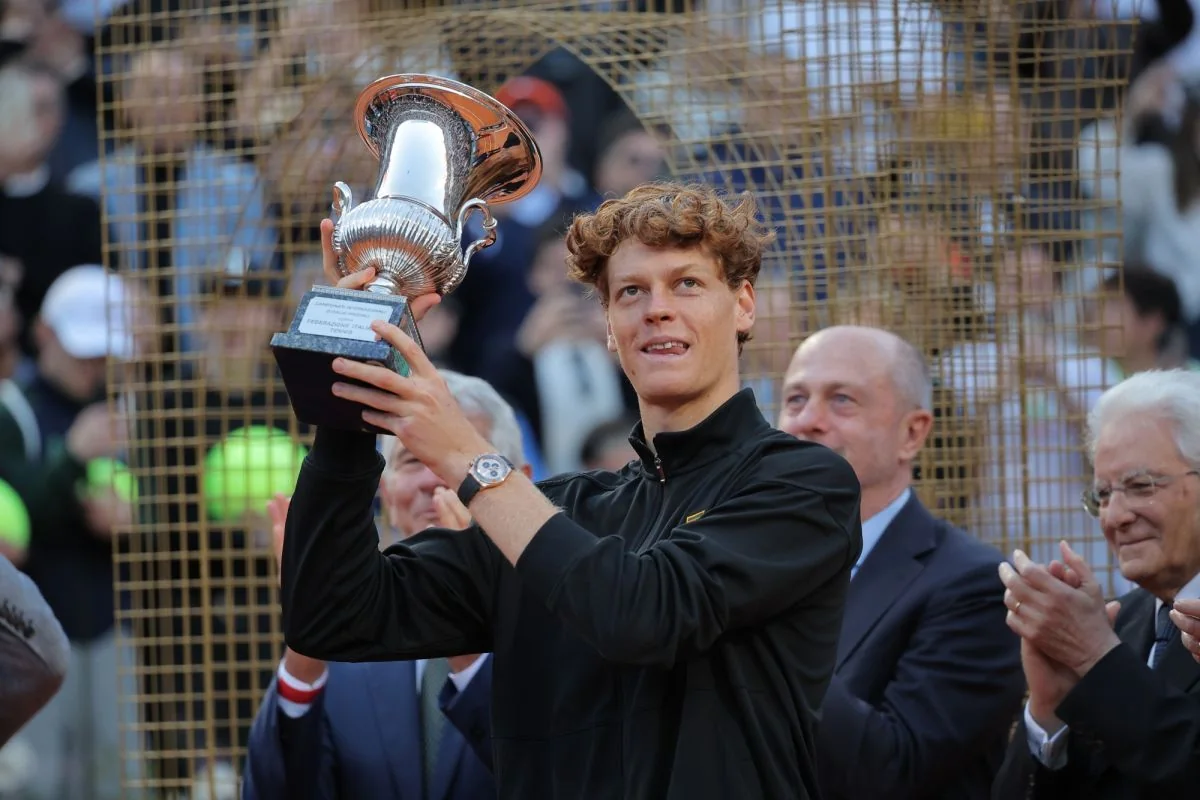
The Sunshine Double Without Dropping a Set
Indian Wells supplied the missing piece in Sinner's hard-court collection. He beat Daniil Medvedev in two tie-breaks and became the third man, after Novak Djokovic and Roger Federer, to win all six Masters 1000 events played on hard courts. He had also gone through the California draw without conceding a set. That followed a similarly flawless title at Paris in late 2025.
Miami turned an impressive fortnight into a rare two-tournament sweep. Sinner defeated Jiri Lehecka 6-4, 6-4 and became the eighth man to win Indian Wells and Miami in the same season. ATP's record note made the extra distinction: he was the first man to complete the Sunshine Double without dropping a set at either tournament. At that point his run covered two venues and similar outdoor hard-court demands, but it still needed a surface change to become a broader statement.
Monte-Carlo and Madrid Broke New Ground
Monte-Carlo provided that change. Sinner beat Carlos Alcaraz 7-6(5), 6-3 for his first Masters 1000 trophy on clay. The final mattered beyond a third title in three events because clay had been the obvious empty column in his Masters record. Wind, slower conditions and longer exchanges asked for different point construction than Indian Wells or Miami. Winning against the defending champion made the answer especially persuasive.
In Madrid, Sinner overwhelmed Alexander Zverev 6-1, 6-2 without facing a break point. That trophy was his fourth Masters title of 2026 but his fifth in consecutive Masters appearances, beginning with Paris in November 2025. ATP identified him as the first man to win five consecutive tournaments at this level. The Madrid altitude and quicker clay also showed that the Monte-Carlo win was not a one-week adaptation.
Rome Completed the Career Golden Masters
Rome completed three records at once. Sinner beat Casper Ruud 6-4, 6-4 to become the first Italian men's champion at the event since Adriano Panatta in 1976. It was his fifth Masters title of the 2026 season, his sixth consecutive Masters trophy counting Paris, and his 34th consecutive match win at the level. ATP reported that he had already passed Djokovic's previous Masters winning-streak mark of 31 during the Rome run.
Most significantly, Rome was the only active Masters tournament Sinner had not previously won. The victory made him the second man after Djokovic to complete the Career Golden Masters: at least one title at Indian Wells, Miami, Monte-Carlo, Madrid, Rome, Canada, Cincinnati, Shanghai and Paris. It was his 10th Masters title overall. That total is far below the all-time lead, yet its distribution across all nine events gives it a special kind of completeness.
Fans should therefore phrase the record precisely. Sinner won the first five Masters events played in 2026. He won six consecutive Masters trophies beginning at Paris in 2025. He also won 34 consecutive matches at the level through the Rome final. Those are related accomplishments, but each uses a different unit and cutoff.
Montreal and Cincinnati Changed the Winner List
The North American summer finally broke the Sinner pattern. He did not add either August Masters trophy, and the two winners arrived with contrasting résumés. Ben Shelton repeated at the Canadian event, proving he could carry the pressure of a title defence. Arthur Fils then won his first Masters 1000 trophy in Cincinnati, turning the second half of the season into a much broader champion race.
Shelton Defended Canada
Shelton defeated fellow American Brandon Nakashima 6-3, 7-6(4) in the Montreal final. The first set was controlled; the second demanded a tie-break against an opponent trying to force a decider. Shelton's ability to close in two sets mattered because defending a major title often brings a different burden from chasing it. Every round comes with the memory of last year's points and a draw full of players who know the defending champion is the benchmark.
ATP's final report described the result as a successful title defence in Montreal. Canada rotates its men's event between Montreal and Toronto, so records can be listed under the National Bank Open or the Canada Masters rather than one city. For a winner archive, “Canada” preserves the event lineage while “Montreal” tells readers where the 2026 draw was staged.
The final also carried an unmistakable generational signal. Both finalists were American players born in the 2000s, and Shelton left with a repeat Masters trophy rather than a one-off breakthrough. That distinction does not move him near the all-time title leaders, but it makes his event-specific record more meaningful.
Fils Earned His First Masters 1000 Crown
Nine days later, Fils defeated Frances Tiafoe 6-3, 1-6, 6-0 in Cincinnati. The score tells the story better than a simple straight-line recap. Fils started faster, Tiafoe seized the second set, and the Frenchman responded with a six-game deciding set instead of carrying the setback forward. ATP reported that Fils converted four of eight break points and won 13 of 15 first-serve points in the opening set.
The trophy was the biggest of Fils's career and his first at Masters 1000 level. It also made him the first French Masters champion in 12 years. That historical marker is narrower than an all-time record, yet it shows why a season list should retain nationality and breakthrough context: a single winner can end a long national gap even while the career leaders remain unchanged.
Montreal and Cincinnati therefore add two different forms of credibility. Shelton showed repeatability at one of the tour's deepest events. Fils showed recovery within a volatile final and crossed a new ranking-category threshold. Together they stopped the 2026 Masters list from being only a chronicle of Sinner's spring.
ATP Masters 1000 All-Time Title Leaders
The all-time leaderboard begins with Novak Djokovic on 40 Masters 1000 singles titles. Rafael Nadal has 36 and Roger Federer 28. Those totals refer to the series era that started in 1990, and the official ATP table was current through the 2026 Cincinnati Open. They do not include Grand Slam trophies, ATP Finals titles, Olympic medals or lower tournament categories.
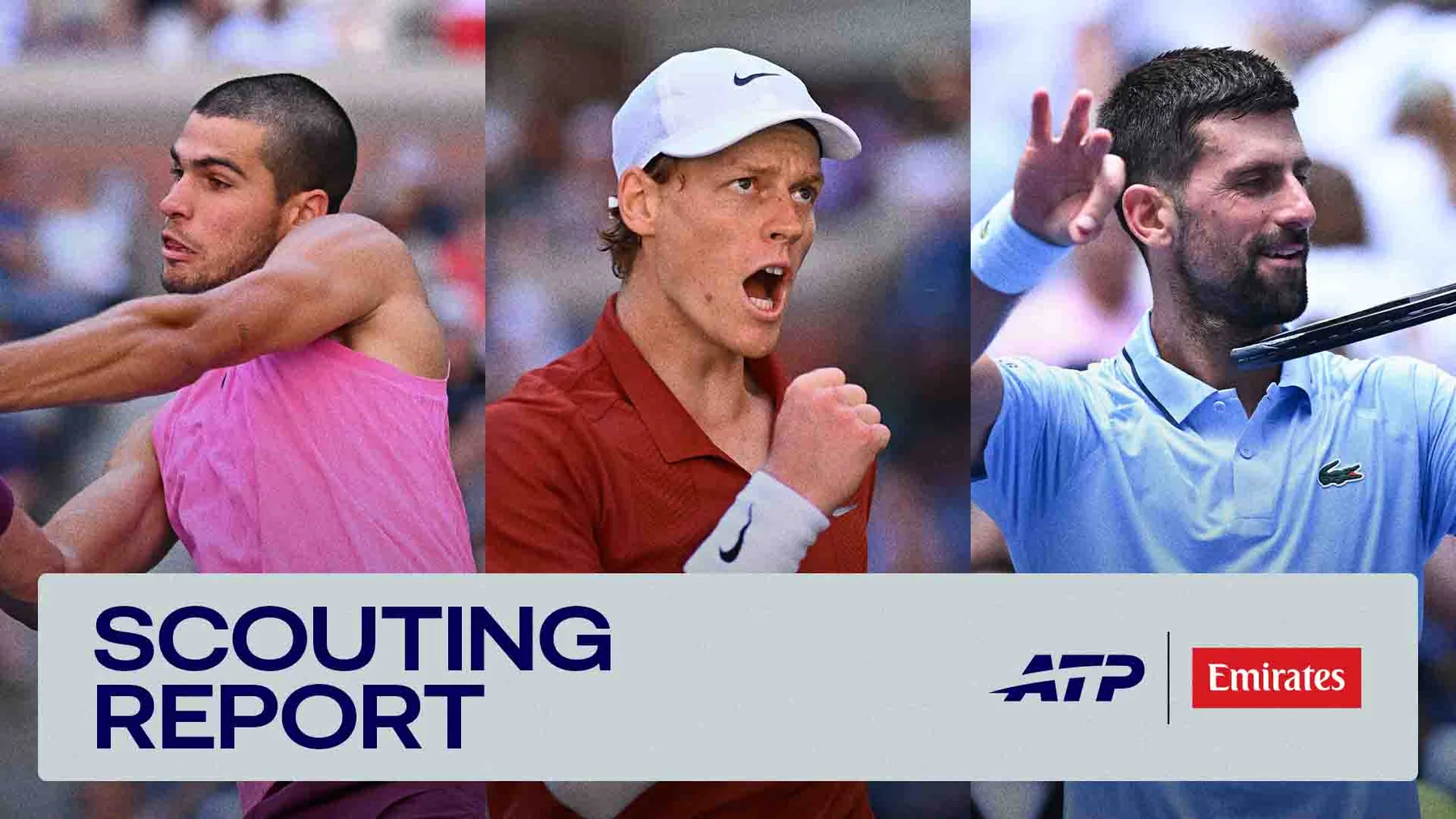
The 40, 36 and 28 Benchmark
| Rank | Player | Masters 1000 titles |
|---|---|---|
| 1 | Novak Djokovic | 40 |
| 2 | Rafael Nadal | 36 |
| 3 | Roger Federer | 28 |
| 4 | Andre Agassi | 17 |
| 5 | Andy Murray | 14 |
| 6 | Pete Sampras | 11 |
| 7 | Jannik Sinner | 10 |
The top three are separated from the rest by more than a decade's worth of elite results. Federer's 28 stands 11 above Andre Agassi in fourth, while Djokovic's 40 remains four ahead of Nadal. Sinner entered the top seven after Rome with 10, but he would need sustained future seasons to approach the total-title lead. His Career Golden Masters record measures variety across events, not volume.
Match wins form a second useful leaderboard. ATP listed Djokovic at 420-97 through Cincinnati, Nadal at 410-90 and Federer at 381-108. Andy Murray followed at 230 wins. Andre Agassi and Tomas Berdych were both listed with 209 wins, even though Agassi won 17 Masters titles and Berdych one. That contrast is a good warning against treating deep-run consistency and championship conversion as the same statistic.
Totals also need a date stamp. A live player can add a title at Shanghai or Paris after this article's September 9 cutoff. The stable historical point is the ordering and scale recorded after Cincinnati; the current-season tracker above is the place to check whether the later 2026 events changed an active player's number.
Career Golden Masters and Other Defining Records
A title total rewards repeated success, but it cannot describe every form of Masters excellence. Three other records answer different questions. The Career Golden Masters asks whether a player has conquered every current venue. A consecutive-title streak measures uninterrupted tournament wins. Reaching every final measures adaptability even when the last match was lost.
Winning All Nine Active Masters Events
The Career Golden Masters means winning each of the nine active Masters 1000 tournaments at least once: Indian Wells, Miami, Monte-Carlo, Madrid, Rome, Canada, Cincinnati, Shanghai and Paris. Djokovic became the first man to complete the set when he won Cincinnati in 2018. He was 31 and had already accumulated 30 Masters titles before the completion trophy.
Sinner became the second member in Rome in 2026. He was 24 and the Rome victory was his 10th Masters title. The difference is revealing. Djokovic reached completeness after amassing a much larger total; Sinner reached it unusually quickly and with fewer repeat titles. Neither path changes the definition, but it shows why the Golden Masters should be discussed independently from the career title table.
The label uses the active nine-event lineup. Earlier top-level series configurations and discontinued events create historical complications, so this is not a universal test for every player whose career began before the current calendar took shape. It is most useful as an achievement within the modern Masters structure.
Consecutive Titles and Match-Win Streaks
Sinner's run joined two related records. He won six consecutive Masters tournaments: Paris in 2025, then Indian Wells, Miami, Monte-Carlo, Madrid and Rome in 2026. A title streak counts tournaments won, so it stays intact between events even when weeks or other tournament categories intervene.
The match-winning streak counts individual Masters matches. It reached 34 with the Rome final, passing Djokovic's previous benchmark of 31. The two numbers describe the same dominant period from different angles. Six tells you that no one else lifted a Masters trophy during that sequence of Sinner appearances; 34 tells you how many draw opponents he beat to sustain it.
Both streaks ended as live claims once the summer produced other champions. Their completed values remain records in the archive. A responsible update should never quietly extend a streak based on calendar gaps or by counting wins at Grand Slams and ATP 500 events, because those matches belong to other competitive levels.
Finals at Every Stop
Madrid delivered another breadth milestone before Sinner won the trophy. By reaching the 2026 final, he became the fourth man to appear in the championship match at all nine active Masters events. ATP listed Federer, Djokovic and Nadal as the other three. Sinner was the youngest to complete that finals set at 24; Djokovic had done it at 25, Nadal at 27 and Federer at 30.
This record includes runner-up finishes, so it is less restrictive than winning all nine. It still demonstrates that a player can negotiate every combination of altitude, speed, weather, draw size and surface well enough to reach the last match. Andy Murray, for example, reached finals at eight of the nine but not Monte-Carlo according to ATP's comparison.
Read together, the records form a fuller portrait. Djokovic owns the career title and match-win leads. Djokovic and Sinner own the complete winner set. Federer, Djokovic, Nadal and Sinner own the complete finals set. Sinner's 2025-26 sequence owns the consecutive-title and match-win streak marks cited by ATP. One player can lead one dimension without leading them all.
How to Read Masters 1000 Winner Records Fairly
Masters statistics look simple until two lists use different eras or cutoffs. Before comparing players, check the series definition, the events included, whether the number counts titles or match wins, and the date of the update. Those four checks prevent most misleading conclusions.
Series History, Event Changes and Surfaces
The ATP's official overview dates the Masters series to 1990. The current structure contains nine events, but names, sponsors, host cities and calendar positions have evolved. Canada's event is a useful example: its lineage is one tournament even though the men's competition rotates between Montreal and Toronto. A city-only search can therefore split what the ATP treats as one record.
Surface distribution also matters. Indian Wells, Miami, Canada and Cincinnati are outdoor hard-court events. Shanghai is also outdoors on hard court, while Paris is indoors. Monte-Carlo, Madrid and Rome are played on clay. Winning across all nine tests much more than repeating on a preferred surface, yet repeated titles at one event can reveal a different kind of mastery.
Older players also faced calendar configurations that do not perfectly mirror today's set. For that reason, this article uses the ATP's series-era leaderboard and describes the Career Golden Masters against the active nine. It does not retrofit the phrase onto every elite tournament that existed before 1990.
Ranking Points and the 2026 Cutoff
A Masters 1000 singles champion receives 1,000 PIF ATP Rankings points, which explains the category name and the substantial movement one title can produce. In the expanded-draw distribution in the 2026 rulebook, a runner-up receives 650, a semifinalist 400 and a quarterfinalist 200. A player can therefore strengthen a ranking through repeated deep runs without winning as many trophies as a rival.
Points do not remain forever. They operate within the ranking system's rolling framework, and entries, byes and mandatory-event rules add more detail than a winner table can show. Readers who need those mechanics can use the site's ATP player and ranking directory and its explanation of tournament levels.
Finally, keep defending champion and current champion separate. A tournament page published before play may feature last year's winner, but that name is not a 2026 result. Here, Shanghai and Paris remain marked upcoming because this page was checked on September 9. Once each final is complete, the correct update is to add the official winner, opponent and score, then refresh any active career totals affected by that result.
That method makes the archive durable. It preserves completed history, shows exactly where current-season knowledge ends, and lets records grow from verified finals instead of anticipation.
Record check: Djokovic remains the all-time title leader with 40, while Sinner became the second Career Golden Masters member in Rome. Return after Shanghai and Paris for the final two 2026 winner rows.
About the author
ATP Schedule Editorial Team
The ATP Schedule editorial team turns match times, scores, tournament information and verified tennis news into clear answers fans can use quickly.
View all articles by this author →Fan discussion
Comments
Sign in with Google to comment. Keep the discussion helpful and tennis-focused. New comments are reviewed before they appear.
Loading comments…