Cincinnati Open 2026 Review: Draw, Results and Key Matches
Arthur Fils won his first Masters 1000 title after a campaign that included wins over higher seeds and a changing final against Frances Tiafoe. Review the draw, deciding matches and doubles champions.
Cincinnati Open 2026 results at a glance
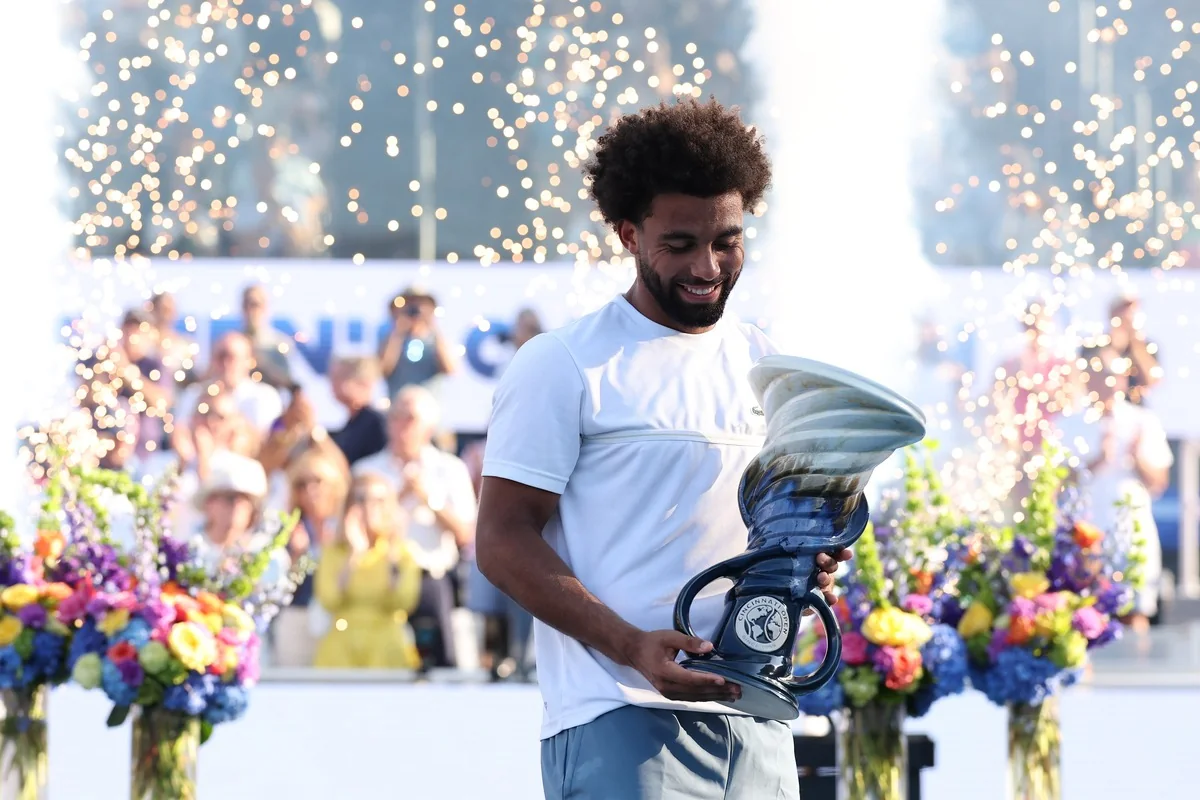
Arthur Fils won the 2026 Cincinnati Open men's singles title, defeating Frances Tiafoe 6-3, 1-6, 6-0 on Sunday, 23 August. Orlando Luz and Rafael Matos won the men's doubles. This is a review of the completed ATP tournament, with the draw and key matches placed in context.
| Competition | Champions | Runners-up | Final score |
|---|---|---|---|
| Men's singles | Arthur Fils [21] | Frances Tiafoe [17] | 6-3, 1-6, 6-0 |
| Men's doubles | Orlando Luz / Rafael Matos | Constantin Frantzen / Robin Haase | 6-4, 3-6, [10-7] |
The ATP main draw ran from 13 to 23 August on outdoor hard courts at the Lindner Family Tennis Center in Mason, Ohio. Fils finished the singles final in 88 minutes. The three-set score contains an unusually sharp reversal: he lost the middle set heavily, then did not concede a game in the decider.
For individual matches, the Cincinnati 2026 results archive is the quickest reference. The completed official ATP singles draw preserves the entire bracket. This review adds the connections that a bracket alone cannot supply: why the late field changed, how the finalists reached Sunday and what the final's serving figures reveal.
Fils and Tiafoe were both trying to win a first Masters 1000 title. Their positions within that shared ambition differed. Fils was playing his first final at the level; Tiafoe had reached this same title match in 2024. The result therefore created a breakthrough for one player and a second missed Cincinnati final opportunity for the other.
Cincinnati also staged a women's tournament, so broad searches for the event can mix ATP and WTA results. The scores here concern men's singles and doubles. That separation is especially useful when revisiting final day: a singles third set and a doubles deciding match tie-break are different formats, even when both appear as a third column in a scoreboard.
The doubles final's bracketed 10-7 records that match tie-break. It should not be read as a long conventional third set. Keeping the format visible helps preserve how the title was actually decided.
How the draw opened up
The 96-player singles field gave all 32 seeds a first-round bye. Fils was seeded 21st and Tiafoe 17th, so both still had to win six played matches to take the title. Seed numbers describe their positions in this particular draw; they should not be substituted for world rankings from another week.
Early exits changed the top half
The top half began with Alexander Zverev as the first seed and Novak Djokovic as the third. Neither reached the quarter-finals. Zverev lost to Tommy Paul in the fourth round, while Thiago Agustin Tirante defeated Djokovic 2-6, 6-4, 6-4 in the second round.
Tirante's win is an especially important bracket marker. It removed a three-time Cincinnati champion from a section that eventually fed into Fils's quarter-final. Yet the opportunity did not belong to Fils simply because Djokovic was out. Tirante continued winning, and Fils still had to defeat him. Above them, Cobolli advanced through Paul to secure the other semi-final place.
That is why a retrospective should distinguish an opening from a completed path. A leading seed's departure changes the names that might appear later; it does not cancel the matches in between. The actual quarter-final results show which players converted those openings.
| Quarter-final winner | Opponent | Score |
|---|---|---|
| Flavio Cobolli | Tommy Paul | 2-6, 6-3, 6-4 |
| Arthur Fils | Thiago Agustin Tirante | 6-3, 6-2 |
| Brandon Nakashima | Taylor Fritz | 7-6(9), 4-6, 6-3 |
| Frances Tiafoe | Lorenzo Musetti | 7-6(2), 7-5 |
The bottom half produced an American semi-final
The bottom half contained second seed Felix Auger-Aliassime, fourth seed Daniil Medvedev, sixth seed Fritz and eighth seed Ben Shelton. Tiafoe eliminated Auger-Aliassime in the fourth round. Nakashima removed Medvedev in the third round and later beat Fritz in a three-set quarter-final. Shelton had already lost his opener to qualifier Jaime Faria.
Nakashima and Tiafoe then met for a final place, guaranteeing an American singles finalist. Tiafoe won 7-5, 6-3. His route and Nakashima's route had crossed different obstacles, which makes the semi-final more informative than a general statement about home advantage. Both had earned their positions through specific wins.
The Cincinnati 2026 player archive provides field context. Use the completed draw for finishing rounds: an entry list, a pre-tournament seed table and the final bracket answer different questions.
Arthur Fils's route to a first Masters title
Fils won six matches after his first-round bye. The route included three opponents seeded above him before the final: Jiri Lehecka, Alex de Minaur and Flavio Cobolli. Calling the title simply an unexpected draw opening would overlook the opposition he actually defeated.
| Round | Opponent | Fils's winning score |
|---|---|---|
| Second round | Yannick Hanfmann | 7-6(5), 6-1 |
| Third round | Jiri Lehecka [9] | 6-1, 6-7(7), 6-3 |
| Fourth round | Alex de Minaur [5] | 6-3, 6-4 |
| Quarter-final | Thiago Agustin Tirante | 6-3, 6-2 |
| Semi-final | Flavio Cobolli [7] | 6-3, 6-4 |
| Final | Frances Tiafoe [17] | 6-3, 1-6, 6-0 |
The Lehecka match supplied the early test
Lehecka was the only player to take a set from Fils before the final. After winning the opener 6-1, Fils lost a long second-set tie-break and had to regain control in a decider. That makes the third round a useful companion to the championship match: twice during the campaign he lost a set after an apparently strong start, and twice he recovered.
The following three matches were won in straight sets. Against De Minaur, Tirante and Cobolli, Fils conceded no more than four games in a set. That does not prove every passage was easy, but it establishes an efficient stretch through the rounds in which an opening campaign becomes a genuine title bid.
Cobolli offered an instructive contrast. The tournament's semi-final preview recorded that all four of the Italian's previous matches had required three sets. Fils then beat him 6-3, 6-4. Their different workloads are relevant background, although the score alone cannot establish how much fatigue affected Cobolli.
The quality of Fils's week lies in the combination: he recovered from resistance, beat higher seeds and closed several late rounds without another deciding set. A draw can become more inviting while still requiring a player to do difficult work. Those ideas are compatible here.
For replay purposes, Lehecka supplies the early pressure test, De Minaur the win over a leading seed and Cobolli the moment Fils secured his first Masters final. The Cincinnati event archive connects that sequence to the rest of the tournament.
Why Tiafoe's return to the final mattered
Tiafoe reached a second Cincinnati final in three years, having lost to Sinner in the 2024 title match. His 2026 campaign deserves to be read through the five wins that brought him back, as well as the deciding-set defeat that ended it.
After beating Lorenzo Sonego 6-3, 6-4, he needed three sets against Learner Tien, winning 6-4, 4-6, 6-4. He then defeated Auger-Aliassime 6-3, 6-4, Musetti 7-6(2), 7-5 and Nakashima 7-5, 6-3. Those were different assignments: an early domestic contest that went the distance, a win over the second seed, a tight first set against Musetti and an all-American semi-final.
The tournament's feature on Tiafoe's return to form linked his improved consistency to the stricter routine he described. That is useful player testimony, rather than a claim that a particular training change can explain every result. The draw supplies the external evidence: he kept putting victories together against opponents with different strengths.
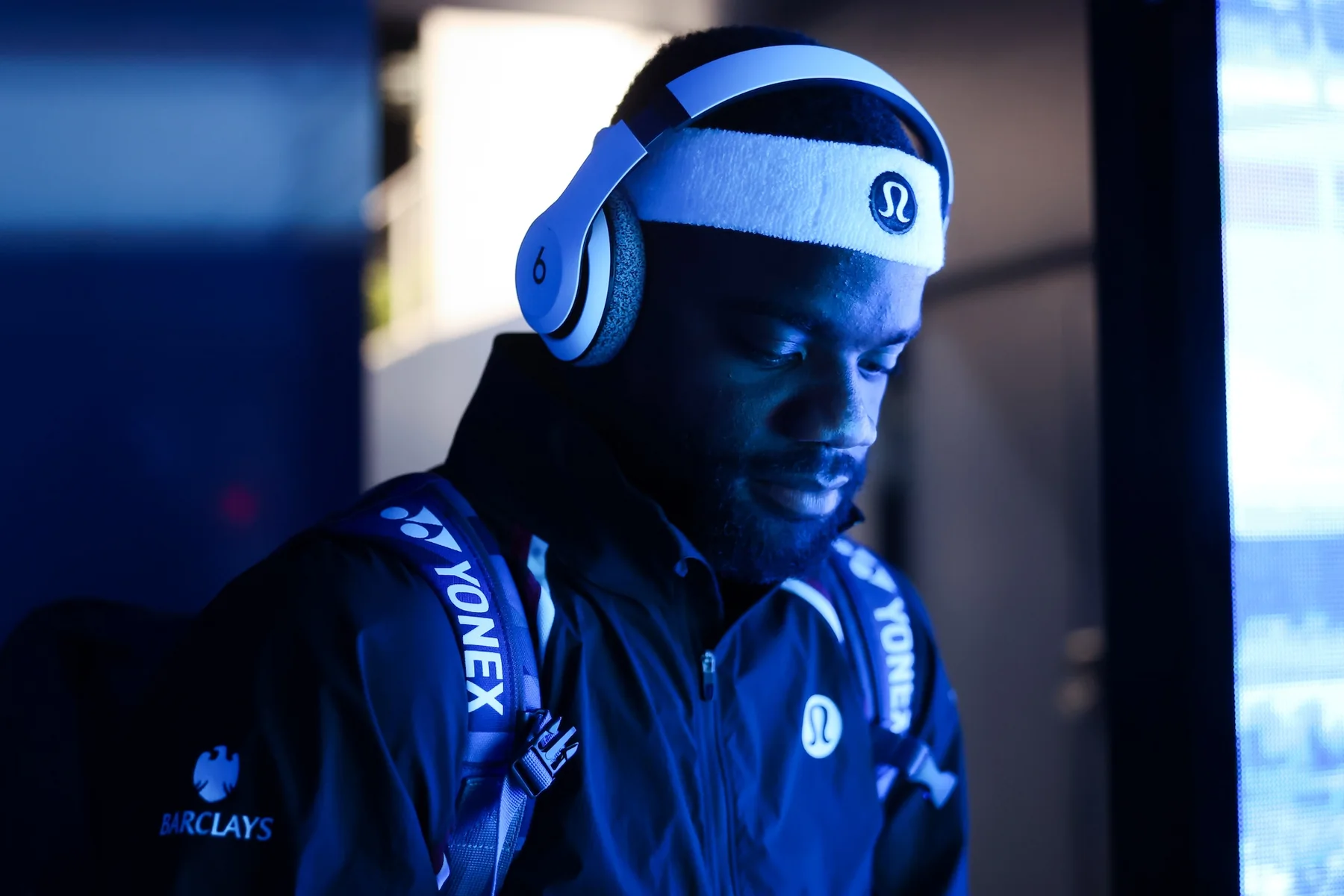
Home support was plainly part of the atmosphere, but it should not replace match analysis. Against Tien, Tiafoe had to recover after losing the middle set. Against Musetti, he had to win a tie-break before closing in two. Those passages show the work within the campaign, rather than treating the crowd as a mechanism that produces wins.
The final also carried a broader milestone: the tournament identified it as the first ATP Masters 1000 singles final between two Black players. Tiafoe spoke beforehand about representation and younger fans seeing themselves in that setting. That significance remains part of the event regardless of the score.
The sporting conclusion stays specific. Tiafoe again demonstrated that he could build a title-contending week in Cincinnati. Fils stopped him on Sunday. Acknowledging both points gives a more accurate account than allowing the final 6-0 set to erase the preceding campaign.
The final turned twice before Fils took control
Fils established the first advantage, Tiafoe transformed the match in the second set, and Fils then won the decider without losing a game. The final's 6-3, 1-6, 6-0 sequence is a reminder that momentum in tennis can change sharply without obliging the next set to follow the previous one.
What the serving numbers reveal
Across the match, Fils made a much greater proportion of first serves than Tiafoe. The distinction matters because a first-serve percentage measures how often the first ball lands in; it is different from the percentage of points won behind that serve. Fils had an advantage in both measures, as well as on second-serve points.
| Whole-match statistic | Fils | Tiafoe |
|---|---|---|
| First serves in | 59.3% | 39.1% |
| First-serve points won | 71.4% | 66.7% |
| Second-serve points won | 66.7% | 54.8% |
| Break points converted | 4 of 8 | 2 of 6 |
The match statistics support a clear interpretation: Tiafoe exposed his second serve more frequently, while Fils protected his own second delivery more effectively. That gave the Frenchman more favourable starting positions over the match as a whole. It does not mean he controlled every service game, as the second set plainly demonstrates.
Fils also finished with 11 aces and one double fault, according to the tournament report. Those direct serve outcomes help explain his capacity to regain control, but return pressure mattered too: converting four break chances supplied the separation needed to win the first and third sets.
The deciding set and the medical timeout
Tiafoe took a medical timeout before the third set. The official final report recorded his reluctance to explain the problem or attribute the defeat to it. The public evidence therefore supports acknowledging the interruption, while leaving a diagnosis open.
Tiafoe also said he had chances early in the decider that he did not take. That detail prevents the final set from becoming a story in which nothing competitive happened before the score reached 6-0. Fils escaped the early pressure and then extended his lead; the set's eventual margin does not erase the importance of those initial opportunities.
Our interpretation is that the final rewarded Fils's ability to reset, with his serving providing a firmer foundation once the match turned again. The evidence supports that explanation more strongly than an unverified account of Tiafoe's physical condition. Keep the whole-match totals, the changing set scores and the medical uncertainty separate when judging the performance.
Luz and Matos complete the doubles summer sweep
Orlando Luz and Rafael Matos defeated Constantin Frantzen and Robin Haase 6-4, 3-6, [10-7] in the men's doubles final. The Brazilian pair thereby added Cincinnati to their title in Montreal, becoming the fifth team in the Open Era to win the Canadian and Cincinnati events in the same season.
The official doubles recap identified them as the first team to complete that sequence since Pierre-Hugues Herbert and Nicolas Mahut in 2017. It is a different type of achievement from Fils's first singles Masters title: a partnership sustained its level across two consecutive major stops.
The completed doubles draw shows the variety in their route. Luz and Matos beat Christian Harrison and Neal Skupski, Marcelo Melo and Alexander Zverev, Simone Bolelli and Andrea Vavassori, and Hugo Nys and Edouard Roger-Vasselin before the final. The semi-final ended 6-4, 2-6, [10-2], another match in which they had to respond after losing a set.
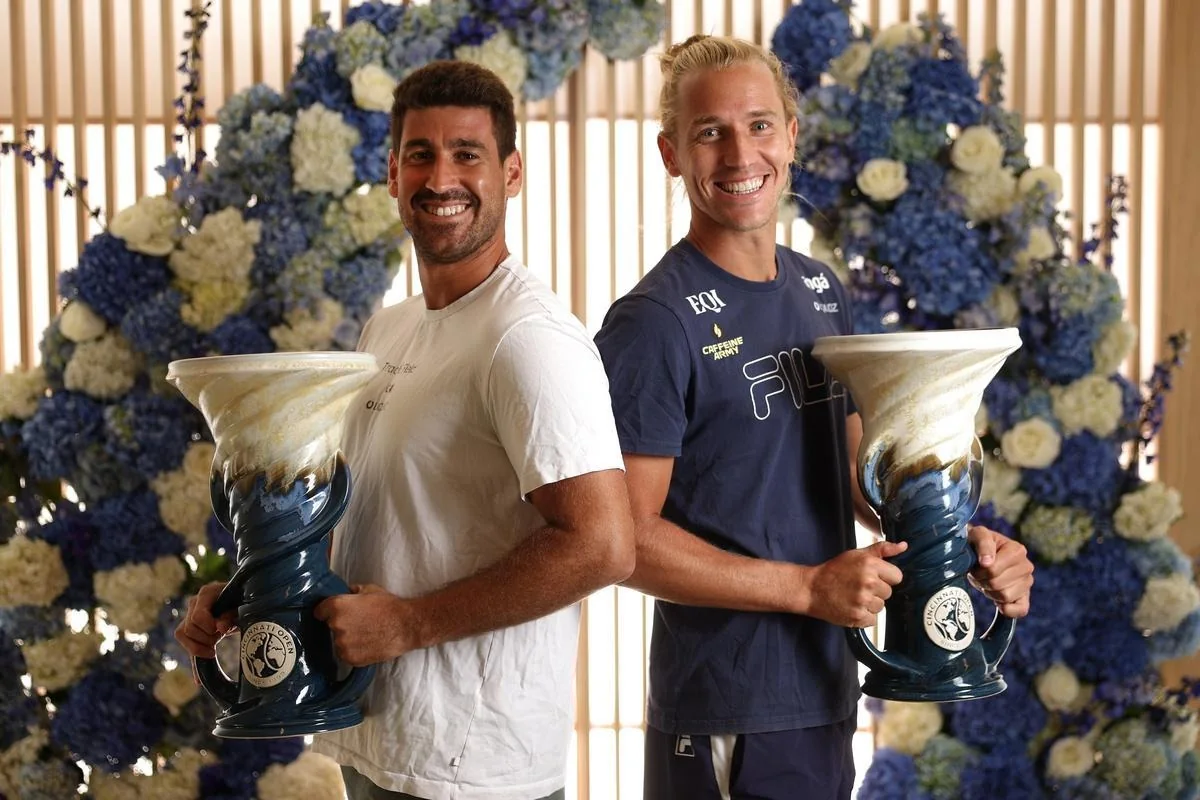
Three of the champions' five Cincinnati matches required a deciding match tie-break. That is the strongest reason to resist calling the sweep effortless. Partnership confidence and shared routines may help a team navigate the pressure, but the scores preserve how often this run remained undecided late.
Frantzen and Haase deserve their place in the account too. They entered as alternates and defeated second seeds Marcel Granollers and Horacio Zeballos in a deciding match tie-break in the semi-final. Reaching Sunday from that starting position made their campaign substantial even though the final went the other way.
For spectators, doubles offers a separate viewing focus: the returner's starting position, the partner's movement near the net and the ability to finish the first useful chance. The published results do not quantify those patterns here, so the firm conclusion rests on the score sequences. Luz and Matos repeatedly survived the deciding format and finished the North American double with a trophy.
What Cincinnati established before the US Open
Cincinnati established that Fils could turn a Masters 1000 final opportunity into a title. Earlier progress at the level had brought him close; this week supplied the final step. His recovery from the Lehecka match and from the lost second set on Sunday gave that breakthrough substance beyond the trophy photograph.
It also gave the event its first French men's singles champion since Guy Forget in 1991. That historical link places the victory within Cincinnati's own story, rather than simply treating it as another result in the summer sequence. For Tiafoe, a second final confirmed the venue's continuing importance to his best tennis, even though the title remained out of reach.
A breakthrough with a dated ranking milestone
The tournament's final report stated that Fils would rise to a career-high No. 11 on the Monday after the final, 24 August 2026. That is the immediate post-Cincinnati milestone. It is not a statement of his position at the time a reader opens this article later in the season.
The singles event awarded 1,000 ranking points to the champion and 650 to the runner-up. Those awards describe the value of the rounds reached, not an automatic calculation of each player's net change in the rolling rankings. Earlier results can be leaving the total at the same time. The ATP rankings explainer covers that distinction.
As evidence before the next major, the campaign was encouraging without settling everything. Fils beat several higher seeds, handled two deciding sets and served effectively in the final. A longer tournament would still ask different questions about recovery and repeated pressure. One excellent week cannot answer those questions in advance.
The fairest assessment of Cincinnati is therefore grounded in what happened there. Fils completed the breakthrough; Tiafoe assembled another strong home campaign; Cobolli and Nakashima reached the semi-finals through contrasting paths; Luz and Matos carried a winning partnership across two Masters events. The 2026 Masters 1000 calendar helps locate the week in the season, while the completed results preserve why this particular edition mattered.
About the author
ATP Schedule Editorial Team
The ATP Schedule editorial team turns match times, scores, tournament information and verified tennis news into clear answers fans can use quickly.
View all articles by this author →Fan discussion
Comments
Sign in with Google to comment. Keep the discussion helpful and tennis-focused. New comments are reviewed before they appear.
Loading comments…