How Davidovich Fokina Won Shanghai 2026: Comeback, Key Matches and Ranking Impact
Davidovich Fokina's first Masters 1000 title came through a comeback against Jodar, repeated escapes and a remarkable return from injury. Here is how the final and his week unfolded.
What was the Shanghai 2026 final result?
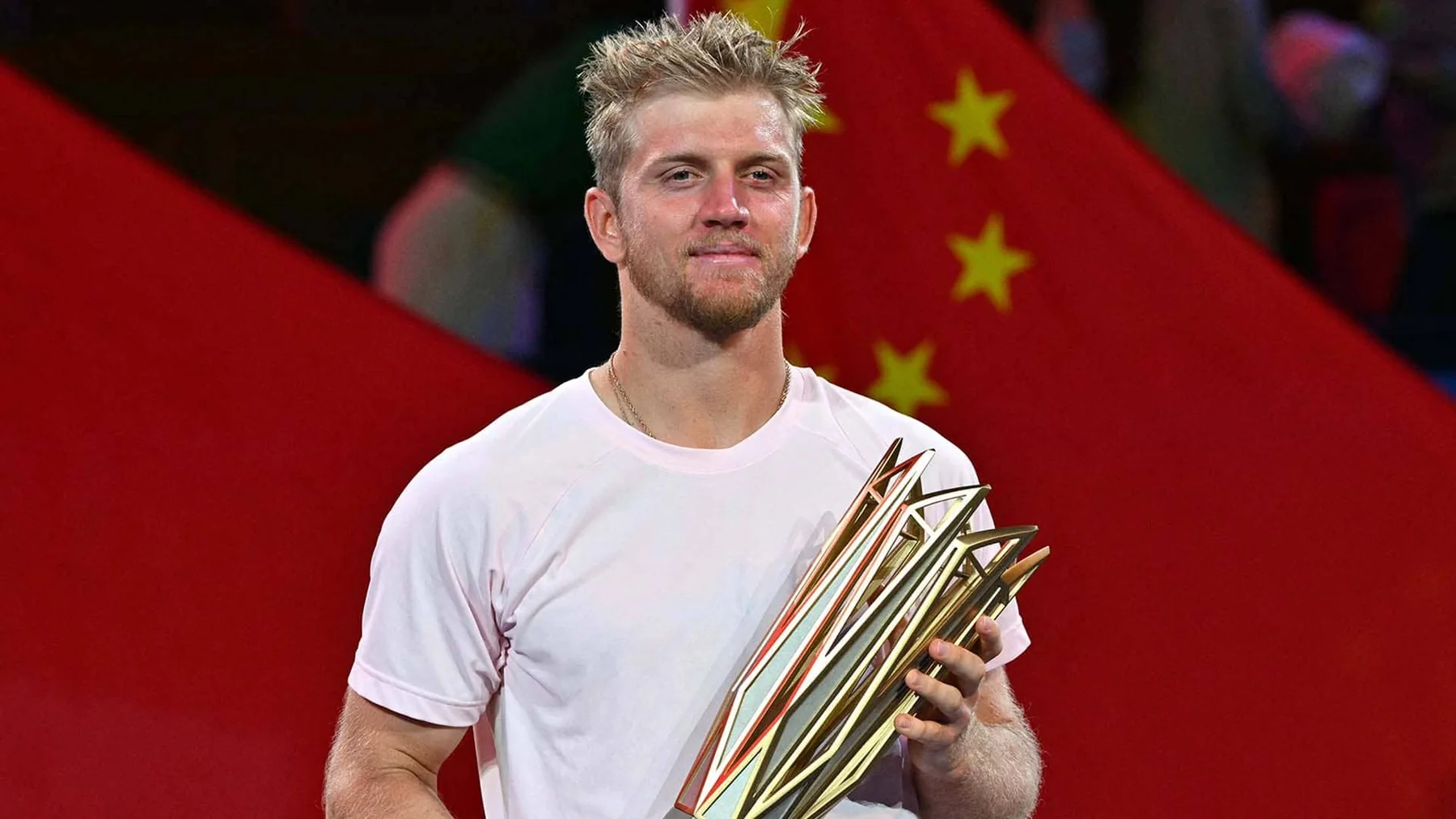
Alejandro Davidovich Fokina defeated Rafael Jodar 1-6, 7-6(5), 6-4 on October 18 to win the 2026 Rolex Shanghai Masters. The final lasted two hours and 28 minutes at Qizhong Forest Sports City Arena. It delivered his first Masters 1000 trophy and his third ATP Tour title overall.
The score captures two different matches inside the same final. Jodar controlled the opening set and then led by a set and a break at 1-6, 2-3 from Davidovich Fokina's perspective. The eventual champion had to recover immediately, survive repeated pressure on serve and take the second-set tie-break before the contest could become a third-set test.
| Final detail | Confirmed outcome |
|---|---|
| Champion | Alejandro Davidovich Fokina |
| Runner-up | Rafael Jodar |
| Score | 1-6, 7-6(5), 6-4 |
| Match duration | 2 hours, 28 minutes |
| Career milestone | First Masters 1000; third Tour title |
The official ATP final report places the victory in a week of narrow escapes. This was a title earned by keeping difficult matches alive, rather than by moving through a string of comfortable straight-set wins.
For fans checking the ATP results, there is an important terminology point. Shanghai was his maiden title at the Masters 1000 level. Calling it his first professional Tour title would erase the Mallorca and Chengdu victories that came earlier in 2026. The larger achievement here was taking that winning habit into a higher category against a young opponent who initially looked in command.
Why did Jodar control the opening set?
Jodar was winning the physical exchanges as well as taking his chances to break. He broke Davidovich Fokina in the second game, broke again for 5-1 and completed the set without facing a break point himself. AFP's match account records a 27-minute opening set finished with an ace.
That combination made the start particularly uncomfortable for Davidovich Fokina. He was not simply losing a few close return games while serving securely. He was already chasing the score, and Jodar had shown no obvious weakness in holding the advantage.
Winning the long exchanges as well as the quick points
The clearest measure of the early dominance is a narrowly defined one: Jodar won all seven first-set rallies that lasted longer than nine shots, according to ATP's report. It does not mean he won every long rally in the match. It does show that extending the opening-set points was not enough to disrupt him.
Our interpretation is that this made the recovery more demanding than a routine response to a fast start. Davidovich Fokina could not assume that simply keeping the next ball in court would make the opponent's advantage disappear. He needed to stay competitive long enough for the balance of the contest to change, without giving away the second set in the meantime.
There is a useful distinction between that observation and an invented tactical adjustment. The available reporting does not justify assigning an exact change in backhand height, return position or serve speed to the turnaround. What it does establish is an opponent who initially held up across extended rallies and on serve.
Jodar deserves credit for that level rather than being described only through the loss that followed. Davidovich Fokina's achievement is clearer when the starting problem is stated properly: a 6-1 set against a player who was winning both the scoreboard and the longer points. The comeback required an immediate competitive response before any later physical edge could become relevant.
How did Davidovich Fokina turn the final around?
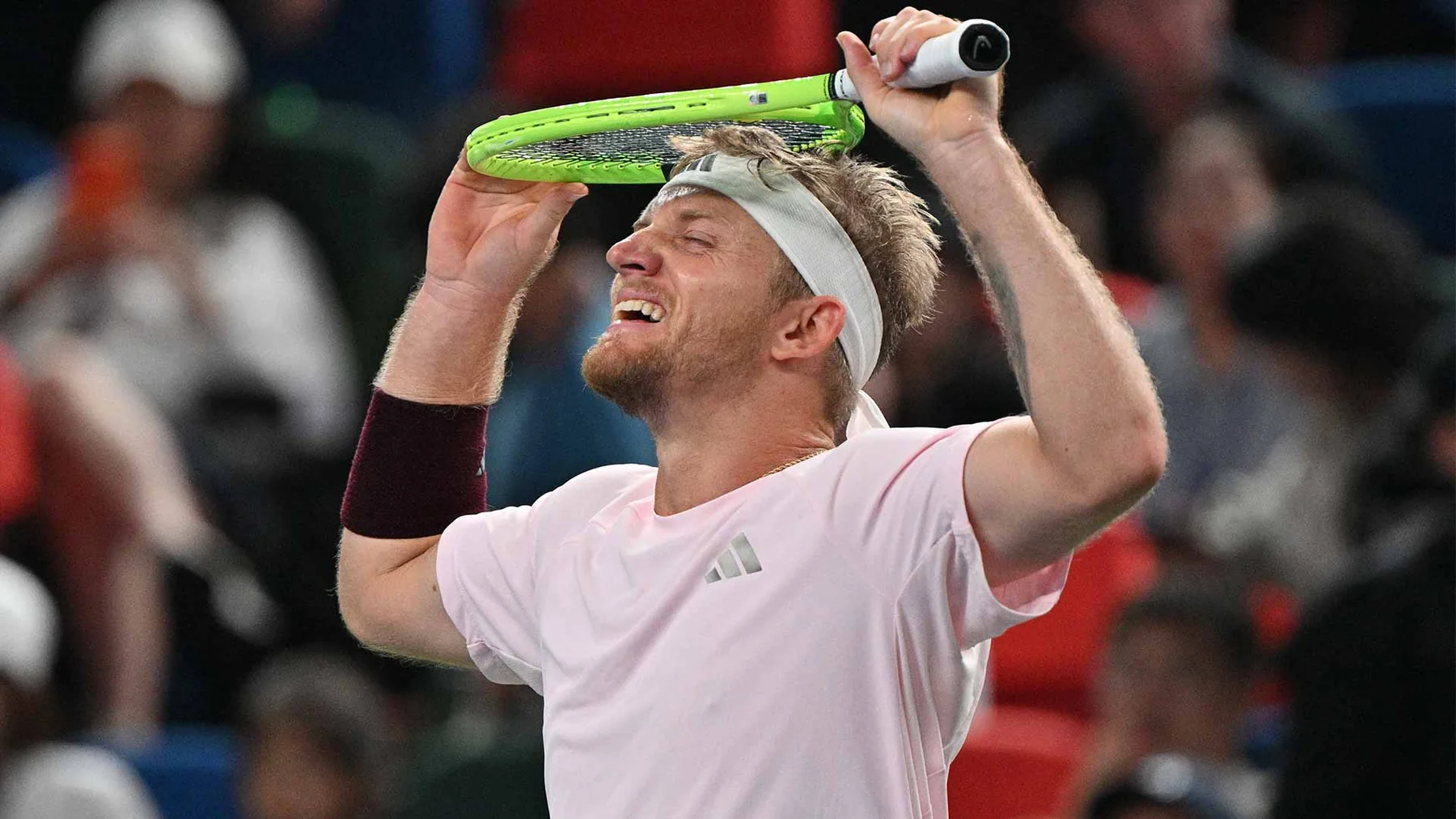
The comeback depended on an immediate break back, five break points saved across three later service games and a second-set tie-break won 7-5. The spectacular moments matter, but the repeated holds are the part of the recovery that best explains how he reached a deciding set.
Breaking back immediately kept the contest alive
At 1-6, 2-3, Davidovich Fokina was a set and a break behind. He recovered the break in the next game, finishing a scrambling point after moving forward to the net. That restored 3-3 rather than allowing Jodar to consolidate the lead and move within sight of the title.
Our reading is that the immediate response prevented the match from becoming entirely about Jodar protecting an established advantage. It did not guarantee a comeback. Davidovich Fokina still had to survive his own service games, and Jodar continued creating opportunities to take control again.
Five break points saved changed the second-set equation
Davidovich Fokina saved one break point while holding for 4-3, two while holding for 5-4 and two more while holding for 6-5. The sequence, detailed in the ATP report and corroborated in Tennis Majors' account, shows how little margin he had.
| Moment | Davidovich Fokina's response | Why it mattered |
|---|---|---|
| Second set, 2-3 | Immediate break back | Removed Jodar's service advantage |
| Holds for 4-3, 5-4 and 6-5 | Five break points saved in total | Kept the set on serve |
| Second-set tie-break | Won 7-5 | Forced a third set |
| Third set, fifth game | Broke for 3-2 | Established the decisive advantage |
Surviving those games meant Jodar had to keep serving to stay level instead of serving with a fresh break in hand. It also required the challenger to sustain his level after missed chances. That pressure is a concrete part of the contest; there is no need to attribute the entire result to a mysterious shift in momentum.
The deciding set began with a break each. Davidovich Fokina then broke again in the fifth game and protected that lead. A later physical advantage may have helped him finish, but the second-set escapes were what made that later phase possible.
For a rewatch, start with the 3-3 game sequence rather than only the championship point. Our ATP viewing guide helps locate legal coverage options; replay access depends on the broadcaster and territory. Those pressure holds reveal more about the title than a short celebration clip.
Which matches made his Shanghai title run so demanding?
The first escape came against Frances Tiafoe in the third round, when Davidovich Fokina saved a match point. He then had to recover from a set down against Hubert Hurkacz, Alexander Zverev and Jodar. The final comeback repeated a problem he had already solved against several different opponents.
| Round | Opponent | Result for Davidovich Fokina |
|---|---|---|
| Second round | Jenson Brooksby | 6-1, 6-3 |
| Third round | Frances Tiafoe | 7-6(4), 4-6, 7-6(6) |
| Fourth round | Hubert Hurkacz | 1-6, 6-3, 7-6(6) |
| Quarter-final | Arthur Gea | 4-1, retired |
| Semi-final | Alexander Zverev | 5-7, 6-4, 6-3 |
| Final | Rafael Jodar | 1-6, 7-6(5), 6-4 |
The table also prevents a misleading version of the week. Not every match was a marathon: the opening win was in straight sets, and Gea's retirement ended the quarter-final early. Those facts can coexist with the considerable pressure of the narrow wins around them.
Against top seed Zverev, there was a more specific technical foundation. ATP's semi-final report records that Davidovich Fokina made 82 percent of his first serves and found success serving wide to Zverev's forehand. That figure describes first serves landing in during the semi-final; it is not a final-match statistic or a percentage of service points won.
He still had to finish under pressure. Two match points passed on Zverev's serve at 5-2 in the third set before Davidovich Fokina served out. Our assessment is that this gives the week a stronger explanation than simply labeling him fearless: he experienced missed opportunities and setbacks, yet continued to execute the next service game.
The Tiafoe and Hurkacz matches required deciding tie-breaks. The Zverev match required overturning a tight first set against the tournament's leading seed. Jodar presented a different early problem in the final. Our Shanghai event and draw guide supplies the wider tournament context, while this route shows why the champion's repeated problem-solving mattered.
Was Shanghai his first title or his first Masters 1000?
Shanghai was his first Masters 1000 title and his third ATP Tour title. All three arrived in 2026: Mallorca on grass in June, Chengdu in September and Shanghai in October. Mallorca and Chengdu were ATP 250 events; Shanghai was a breakthrough at a higher tournament level.
The distinction also changes the story of his finals record. Davidovich Fokina lost the first five Tour finals of his career, including Monte-Carlo in 2022. He has now won his past three. That is a substantial change in outcomes, although it should not be reduced to a claim that every earlier defeat had the same cause or that every future final will follow the new pattern.
The injury comeback makes the China double more striking
The official Shanghai reaction records that he returned in Chengdu after two months away with a back injury. Winning Chengdu and Shanghai meant two titles in three tournaments following that absence. By the end of Shanghai, he had won 10 consecutive matches on Chinese soil.
That last description needs its geographical limit. It is not the same as claiming an uninterrupted 10-match winning streak across every tournament he entered. The achievement is strong enough when stated accurately.
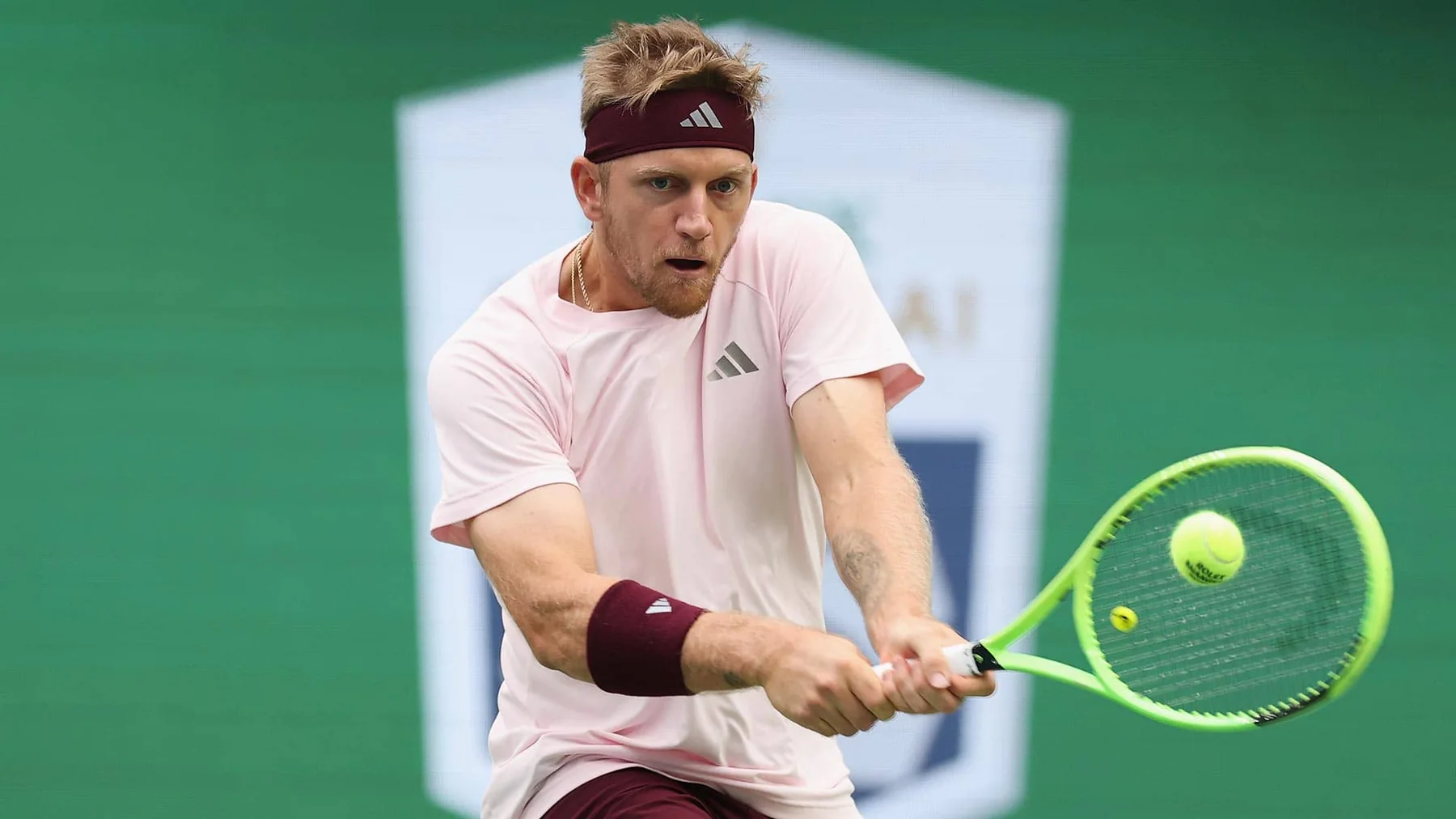
Our assessment is that this context makes his persistence in the final especially meaningful. A player returning from an extended absence still had to withstand a difficult start and a long championship match. His gratitude to his team and family explains what the period felt like to him; it does not establish a medical formula for other players to follow.
The Masters 1000 winners and records guide places this title within the category's history. For Davidovich Fokina, the immediate importance was more personal and specific: the trophy that had escaped him in a previous Masters final was finally his, after he had already learned how winning Tour finals felt earlier in the season.
What changed in the rankings after Shanghai?
Davidovich Fokina rose 13 places to a career-high world No. 13 in the October 19 ATP rankings. Jodar rose two places to No. 11, matching his previous best. The dated official list confirms the movement that Sunday's reports had projected.
| Player | World ranking, Oct. 19 | Weekly ranking points | Movement |
|---|---|---|---|
| Alejandro Davidovich Fokina | 13 | 2,880 | Up 13 |
| Rafael Jodar | 11 | 3,234 | Up 2 |
The runner-up remaining higher than the champion is not a contradiction. A weekly ranking reflects a much larger set of results than the final just played. Shanghai changed their totals and positions; it did not erase the rest of either player's record.
World ranking and the Race to Turin answer different questions
The Race to Turin was a different list when checked on October 19: Davidovich Fokina stood 16th with 2,450 points, while Jodar was ninth with 3,159. Those figures should not be swapped into the world-ranking table or presented as the same measure.
For fans, the distinction changes the meaning of the breakthrough. Davidovich Fokina's career-high ranking demonstrates the wider value of his title run. His position in the season's Race shows that winning Shanghai did not automatically put him into a straightforward year-end qualification place. Remaining results and the applicable qualification conditions still matter.
Our ATP rankings guide explains the rolling ranking and the season's Race in more detail. Read any later Turin update against its own date, because live standings can move as the next events begin. The stable outcome of this week is the Shanghai title; a live qualification picture is something to keep checking.
What should fans look for after this breakthrough?
The next test is whether Davidovich Fokina can carry the reliable parts of this run into fresh matches while recovering from a demanding spell. A Masters title changes what he has achieved. It does not mean that every future match will begin cleanly or end with another comeback.
His immediate priority was simpler than a ranking projection. In the post-final reaction, he spoke about returning home, seeing his family and enjoying the victory with his team. Wanting a few days to celebrate is not the same as announcing a withdrawal from a specific event.
On court, there are concrete things to watch. Against Zverev, first-serve consistency and the wide serve to the forehand supplied a useful attacking platform. Against Jodar, the decisive work included surviving return pressure and protecting service games when another break could have changed the set. Those are repeatable parts of tennis to assess, even when the next opponent demands a different pattern.
There is also value in watching how he responds after a missed opportunity. The semi-final contained unconverted match points; the final contained a heavy opening-set defeat and another break conceded. In both cases he continued to play the next important game effectively. That is a more concrete measure of resilience than assuming that a new trophy has removed all nerves.
Check today's ATP schedule and the relevant event's official draw for his next confirmed appearance. Match assignments and entries should be verified as they are announced, rather than inferred from a celebratory interview.
Shanghai's lasting result is already secure: a first Masters 1000 title, a third Tour trophy and a career-high ranking. The match itself offers an equally useful lesson for anyone rewatching it. The final was won through a chain of narrow escapes and service holds before the deciding break, rather than through one isolated spectacular shot.
About the author
ATP Schedule Editorial Team
The ATP Schedule editorial team turns match times, scores, tournament information and verified tennis news into clear answers fans can use quickly.
View all articles by this author →Fan discussion
Comments
Sign in with Google to comment. Keep the discussion helpful and tennis-focused. New comments are reviewed before they appear.
Loading comments…