Laver Cup 2026 Results: How Team Europe Won 13–5
Team Europe defeated Team World 13–5 in London. Follow the ten played matches, Saturday's turning point and the three-point Sunday finish.
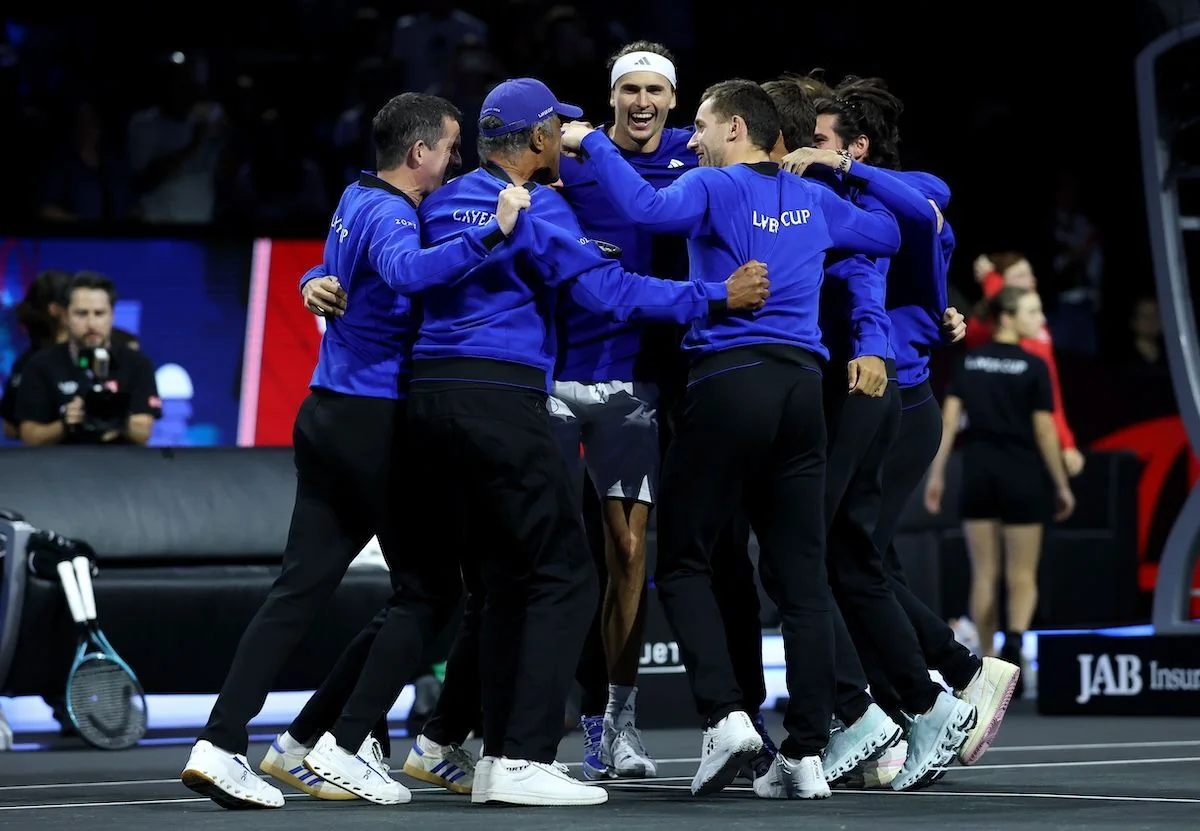
Team Europe reclaimed the Laver Cup in London with a 13–5 victory over Team World on September 27, 2026. The headline margin tells you who won; the path to it explains the tension. Europe led just 7–5 after Saturday, then took the only two Sunday rubbers that were played. Here are the verified match results, the two turning points that mattered most and the scoring rule that made each Sunday win worth three points.
What was the final Laver Cup 2026 result?
Team Europe beat Team World 13–5 at London's O2 Arena on Sunday, September 27, 2026. Alexander Zverev secured the Cup by beating Learner Tien 7–6(3), 6–3. Earlier that day, Flavio Cobolli and Jakub Mensik had defeated Alex de Minaur and Taylor Fritz 7–5, 6–3 in doubles. Each Sunday victory added three points to Europe's tally, taking it from an overnight 7–5 lead to 10–5 and then the winning 13–5. Those match scores and point awards appear on the official 2026 results sheet.
| Checkpoint | Europe | World | What changed |
|---|---|---|---|
| End of Friday | 3 | 1 | Three European match wins at one point each |
| End of Saturday | 7 | 5 | Both sides won two two-point matches |
| After Sunday doubles | 10 | 5 | Cobolli and Mensik earned three points |
| Final | 13 | 5 | Zverev earned the last three points |
The team score is a tally of weighted match wins, not a count of tennis games or sets. Europe won seven of the ten matches actually played; World won three. A fan glancing only at 13–5 might imagine a wire-to-wire rout, but The Guardian's report from the arena noted that the teams were separated by only two points entering Sunday. That distinction is central to understanding this edition: the last day's weighting can make a tight weekend finish look lopsided.
The competition stopped as soon as Europe reached the required 13 points. The official sheet marks the later Sunday singles involving Carlos Alcaraz, Alex de Minaur, Rafael Jodar and Fritz as not played. They were scheduled possibilities, not additional European wins. For the rest of the men's tour, the site's current results page is the practical place to check subsequent matches; the Laver Cup score here is a completed team-event record.
How did Friday and Saturday leave Europe only two points ahead?
Europe's 7–5 advantage at the end of Saturday was the product of two very different days. Its Friday 3–1 lead came from three individual wins worth one point apiece. On Saturday, Team World took the first two matches, each worth two, and briefly led 5–3. Europe then needed Carlos Alcaraz's escape against Taylor Fritz and a night-session doubles win to restore its advantage.
Friday: Europe took a 3–1 lead
Casper Ruud opened by recovering from a set down to beat Francisco Cerundolo 6–7(4), 6–4, [10–8]. Brandon Nakashima answered for Team World against Jakub Mensik, 6–1, 3–6, [10–7], tying the contest at 1–1. Europe's Rafael Jodar then beat Alexander Bublik 6–2, 6–3. In the night doubles, Alcaraz and Mensik defeated Bublik and Fritz 6–4, 6–4. The official score sheet lists all four results and their one-point awards.
That 3–1 advantage mattered, but its size was modest in a format that increases the value of later matches. The event's Friday report noted a useful precedent: Europe had also led 3–1 after the first day in 2025, yet World ultimately won that Cup. For fans reading a team scoreboard, Friday offered a head start, not control of the event.
Saturday: World surged before Europe recovered to 7–5
Learner Tien first beat Cobolli 6–3, 2–6, [10–7], making it 3–3. De Minaur then rallied past Zverev 2–6, 7–6(5), [11–9] to put World ahead 5–3. The official match report says Zverev held a match point at 9–8 in the deciding breaker. At that moment, World had won three of its four Saturday points despite starting the session two points behind.
Alcaraz's response against Fritz was the weekend's hinge. He won 6–3, 4–6, [13–11], saving two match points in the decider. Europe was level at 5–5 instead of facing a possible 7–3 deficit had Fritz converted; that latter score is a counterfactual, not a result. Alcaraz's drop shot helped him through the closing points, as the event's account explains. Finally, Ruud and Zverev beat Bublik and Nakashima 6–4, 7–6(7) in doubles, giving Europe the 7–5 overnight lead. Those two late wins did more than rescue Saturday: they ensured World had to chase from behind on the day when each match would be worth three.
Which Sunday matches delivered the 13–5 victory?
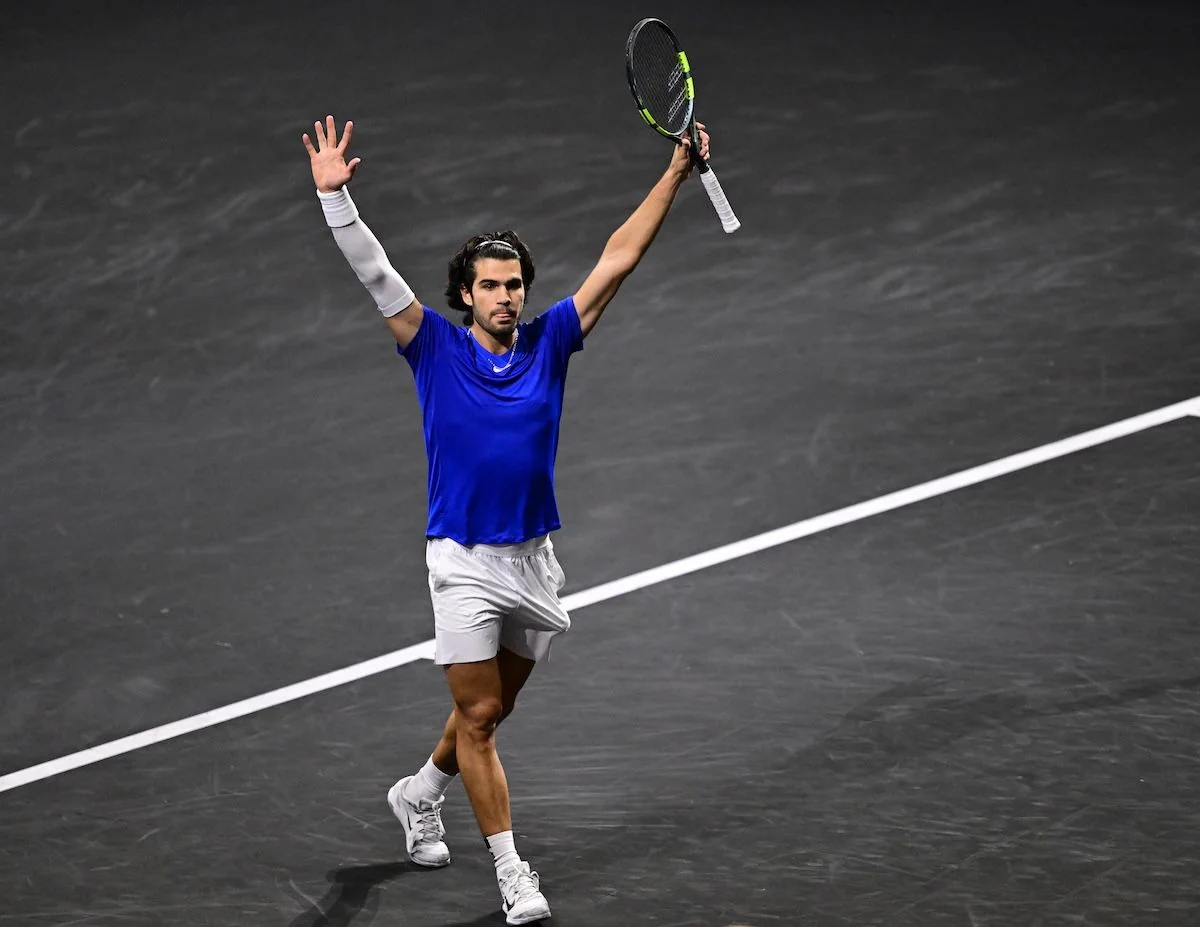
Only two Sunday matches were needed: Cobolli and Mensik won the opening doubles, then Zverev beat Tien in singles. The order mattered. Europe began at 7–5, but a Sunday loss in the doubles would have put World ahead 8–7. Instead, the doubles win made it 10–5 and gave Zverev the chance to finish the contest immediately.
Cobolli and Mensik put Europe within one win
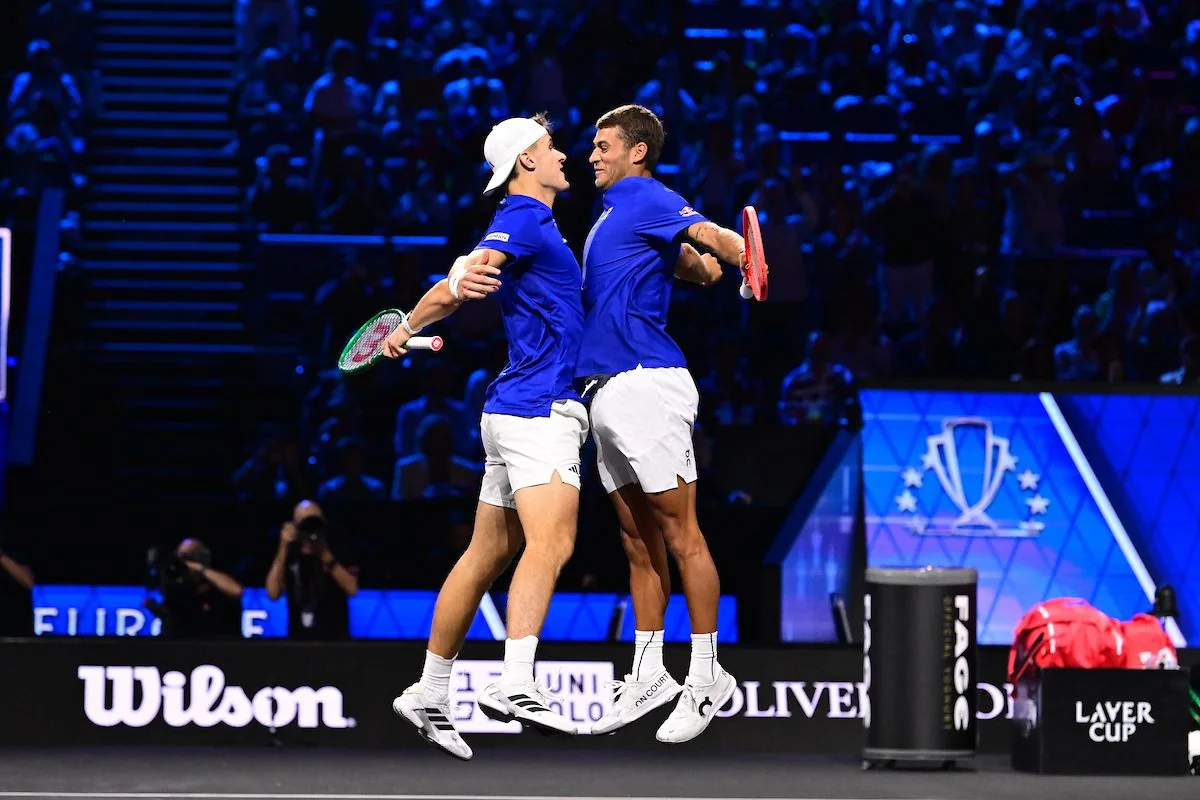
Cobolli and Mensik beat de Minaur and Fritz 7–5, 6–3. The pairing was not a routine specialist doubles team: Cobolli had lost a singles rubber to Tien the previous day, while Mensik had already won Friday doubles alongside Alcaraz. Sunday's partnership gave each a fresh role in the team campaign. Their official match report describes a slow start on Mensik's serve before they found a rhythm; it also confirms the move to 10–5.
At 7–5 overnight, Europe still needed six points. A single Sunday win could supply only three. The doubles therefore did not itself clinch anything, yet it changed the pressure on the next player. World now needed to win the remaining scheduled singles in a row to stay alive, whereas Europe could close on its next court appearance. The match gave Cobolli a direct answer to Saturday's loss and offered Mensik a second doubles contribution after Friday. It is easy to overlook that contribution when the last singles winner receives the trophy-clinching headline.
Zverev beat Tien to clinch the Cup
Zverev's 7–6(3), 6–3 win was decisive but not effortless. According to the tournament's match account, Tien saved three break points while serving at 5–5 in the first set, forcing a tiebreak. Zverev won that breaker, then converted his sixth break opportunity when Tien served at 2–3 in the second set. Tien produced three chances to break back at 4–2, but Zverev held and later served out. These are the pressure points behind an apparently straightforward straight-sets score.
The three team points for Zverev's win brought Europe to exactly 13. The official results page accordingly records the later Alcaraz–de Minaur and Jodar–Fritz singles as not played. Alcaraz was in the announced lineup, but the rules made his appearance conditional on the contest remaining alive. That matters when reading a pre-match order of play after the fact: it is a sequence of potential rubbers, not a promise that every scheduled pairing will be contested.
Why did a Sunday match count for three team points?
The Laver Cup deliberately makes each day's wins more valuable: one team point on Friday, two on Saturday and three on Sunday. The first team to 13 wins. Those numbers are laid out in the tournament's official rules, and they explain why a 7–5 Saturday lead still left Europe needing two more match victories in London.
The point ladder and 13-point finish line
| Day | Scheduled matches | Team points per win | Possible points that day |
|---|---|---|---|
| Friday | Four | One | Four |
| Saturday | Four | Two | Eight |
| Sunday | Four, if needed | Three | Twelve |
The scheduled matches carry 24 points in total if every one is played, so 13 is an outright majority. In the 2026 event, Europe's seven points after Saturday were six short of that threshold. Its first Sunday win made 10, still three short; Zverev supplied the next three. By then World could no longer catch up, and the remaining scheduled singles did not occur. The official order of play explicitly marks later Sunday contests as conditional. That is a useful reminder for fans looking at a lineup: a named match can disappear when the team title is settled earlier.
The rising weight also gives the trailing team a genuine path back into the tie. World was two points behind entering Sunday, but had it won the opening doubles, it would have moved ahead 8–7. That alternate score illustrates the rule's effect, not a result that occurred. It is why captains' Sunday pairing choices matter so much: the doubles leads the session and carries the same three points as each singles rubber, even though the broader tennis audience may focus on the singles stars.
A match tiebreak is not three team points
Another potential confusion is the number in brackets at the end of a match score. When players split the first two sets, Laver Cup singles and doubles replace a full third set with a 10-point match tiebreak. Thus Alcaraz's Saturday 6–3, 4–6, [13–11] win over Fritz describes his deciding on-court tiebreak. It awarded Europe two team points because it occurred on Saturday. Zverev's Sunday 7–6(3), 6–3 win ended in straight sets, yet awarded three team points because of the day. Neither the 13 in Alcaraz's tiebreak nor the 13 in the final team score is an ATP ranking tally; readers tracking the separate tour system can use our ranking guide.
The rules have one further safeguard: if the scheduled 12 matches leave the teams tied 12–12, an extra one-set doubles decider determines the winner. No such decider was necessary in 2026. Europe's score reached 13 after match ten, so the event ended before that edge case could arise.
What does the 13–5 score say about the weekend?
The final margin describes the points Europe earned under the rules, but it does not mean every match was one-sided. Europe won seven of the ten contested rubbers, including both played on Sunday. World won three. That is a clear team victory. Yet the score was 7–5 after eight matches, and five of the ten contested matches went to a deciding 10-point match tiebreak. Both observations can be checked against the official match sheet.
Those five breakers are a useful measure of how often the outcome remained open deep into a match. Ruud edged Cerundolo and Nakashima beat Mensik in Friday's breakers. Saturday's Tien–Cobolli, de Minaur–Zverev and Alcaraz–Fritz contests also needed one. They do not show that every point was equally balanced or that World was certain to win an alternate scenario. They do show why a fan who watched the long, tense middle of the weekend could reasonably remember something closer than the 13–5 headline suggests.
World's best stretch came after Tien and de Minaur won the first two Saturday rubbers, taking the team from 1–3 to 5–3. Alcaraz then saved match points against Fritz. Had World converted one of those chances, its lead would have widened at exactly the moment the high-value Sunday lineups were approaching. That is the decisive hinge in our reading of the event: it is grounded in the actual 5–3 and 5–5 checkpoints, while the alternative remains hypothetical. In the event's World reaction, de Minaur likewise reflected that a few points might have changed the tie. His view conveys the players' sense of proximity, not a mathematical claim that another result was inevitable.
Europe's Sunday performance resolved the suspense emphatically. Cobolli and Mensik took the doubles in straight sets; Zverev did the same against Tien. Because each win was worth three, those two matches added six team points without World having a chance to play its later scheduled singles. This is the built-in drama, and sometimes frustration, of a first-to-13 contest: a strong finish can simultaneously decide the Cup and remove a star matchup from the card. The alternative would be to play dead rubbers after the trophy has already been earned, which is not how the official result sheet treats this edition.
For historical context, the victory gave Team Europe its sixth Laver Cup title after Team World had won in 2025. The official format page already names Los Angeles, September 24–26, 2027 as the next host. The sensible lesson for the next event is to follow both the match score and the changing team-point total, especially after Saturday night. Do not assume an announced late Sunday singles will take place: its appearance depends on the earlier results. For the regular men's tour in the meantime, use our this-week schedule and tournament list to follow what comes next.
Europe's title was settled by seven match wins across three days, capped by Zverev against Tien. For the clearest reading of 2026, keep the match scores beside the running team score: Friday built the lead, Saturday nearly overturned it, and Sunday's three-point wins ended the contest before the rest of the card was required.
About the author
ATP Schedule Editorial Team
The ATP Schedule editorial team turns match times, scores, tournament information and verified tennis news into clear answers fans can use quickly.
View all articles by this author →Fan discussion
Comments
Sign in with Google to comment. Keep the discussion helpful and tennis-focused. New comments are reviewed before they appear.
Loading comments…