ATP Masters 1000 Schedule 2026: Dates, Events & Results
Follow every 2026 ATP Masters 1000 event in calendar order, with official dates, surfaces, completed champions and practical links for daily schedules and results.
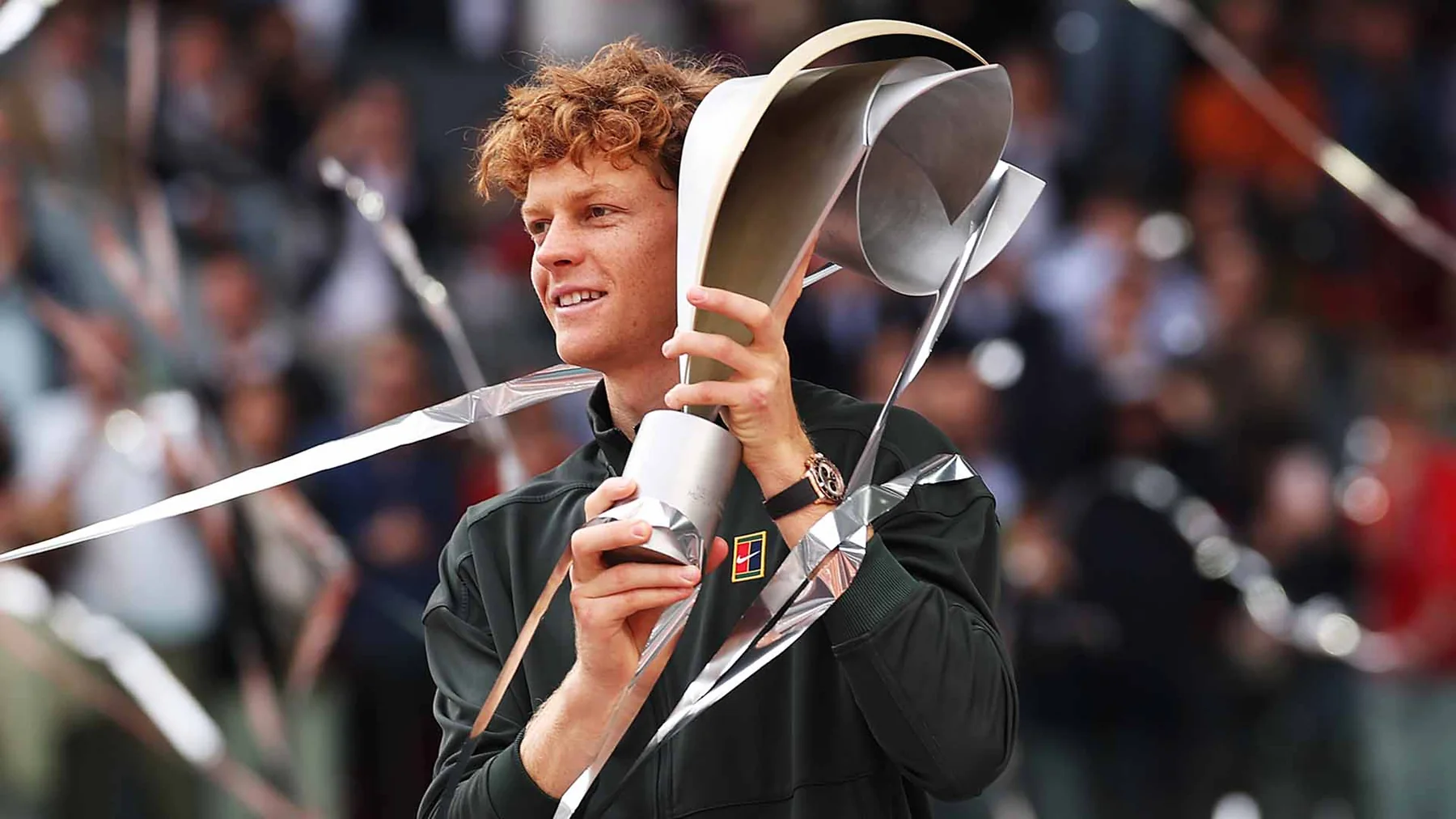
The 2026 ATP Masters 1000 season runs through nine of the men's tour's most valuable stops, from Indian Wells in March to Paris in November. This guide combines the official dates, surfaces and completed champions, then explains the category and the safest way to follow daily play. Results and event status were checked on August 30, 2026; Shanghai and Paris remain upcoming and are labeled accordingly.
Quick answer: Seven Masters tournaments have been completed. Jannik Sinner won the first five singles titles, Ben Shelton won Montreal and Arthur Fils won Cincinnati. Shanghai is scheduled for October 7-18, followed by Paris on November 2-8.
The Complete 2026 ATP Masters 1000 Schedule at a Glance
The 2026 ATP Masters 1000 schedule contains nine tournaments across three main outdoor seasons and the indoor finish in Paris. Seven are expanded 12-day events; Monte-Carlo and Paris keep the more compact one-week format. The table below combines the ATP's official date windows with the official results archive, checked on August 30, 2026. A named champion means the event is complete. “Pending” means the tournament has not yet been played, not that its result is missing.
| Dates | Tournament | City | Surface | 2026 singles champion | 2026 doubles champions |
|---|---|---|---|---|---|
| Mar. 4-15 | BNP Paribas Open | Indian Wells, USA | Outdoor hard | Jannik Sinner | Guido Andreozzi / Manuel Guinard |
| Mar. 18-29 | Miami Open | Miami, USA | Outdoor hard | Jannik Sinner | Simone Bolelli / Andrea Vavassori |
| Apr. 5-12 | Rolex Monte-Carlo Masters | Monte-Carlo, Monaco | Outdoor clay | Jannik Sinner | Kevin Krawietz / Tim Puetz |
| Apr. 22-May 3 | Mutua Madrid Open | Madrid, Spain | Outdoor clay | Jannik Sinner | Harri Heliovaara / Henry Patten |
| May 6-17 | Internazionali BNL d'Italia | Rome, Italy | Outdoor clay | Jannik Sinner | Simone Bolelli / Andrea Vavassori |
| Aug. 2-13 | National Bank Open | Montreal, Canada | Outdoor hard | Ben Shelton | Orlando Luz / Rafael Matos |
| Aug. 13-23 | Cincinnati Open | Cincinnati, USA | Outdoor hard | Arthur Fils | Orlando Luz / Rafael Matos |
| Oct. 7-18 | Rolex Shanghai Masters | Shanghai, China | Outdoor hard | Pending | Pending |
| Nov. 2-8 | Rolex Paris Masters | Paris, France | Indoor hard | Pending | Pending |
The sequence is as important as the list. Indian Wells and Miami form the March hard-court pair commonly called the Sunshine Double. Monte-Carlo, Madrid and Rome then lead the Masters calendar through the European clay swing. Montreal and Cincinnati are the summer hard-court bridge to the US Open; in 2026, Montreal's final date is also Cincinnati's opening date. Shanghai begins the autumn Masters run, and Paris supplies the category's final title before the Nitto ATP Finals.
Results through Cincinnati show an extraordinary concentration in singles: Sinner won the first five Masters events, before Shelton prevailed in Montreal and Fils beat Frances Tiafoe 6-3, 1-6, 6-0 in Cincinnati. Doubles was more distributed, although Luz and Matos completed the Canada-Cincinnati double. Those results are historical facts; Shanghai and Paris remain schedule entries whose fields, draws and champions should be checked closer to play. For event-level dates and current filters, use the site's ATP tournament directory.
What Makes a Masters 1000 Different From Other ATP Events?
The “1000” in ATP Masters 1000 tells you the singles champion's ranking reward: 1,000 PIF ATP Rankings points. It does not describe the draw size or a fixed prize-money figure. The series began in 1990 and now comprises nine elite tournaments. In the men's tour hierarchy, a Masters title is worth half a Grand Slam champion's 2,000 points, but twice an ATP 500 title and four times an ATP 250 title.
Ranking points and draw sizes
| 2026 category | Winner | Finalist | Semifinalist | Quarterfinalist |
|---|---|---|---|---|
| Grand Slam | 2,000 | 1,300 | 800 | 400 |
| ATP Masters 1000 | 1,000 | 650 | 400 | 200 |
| ATP 500 | 500 | 330 | 200 | 100 |
| ATP 250 | 250 | 165 | 100 | 50 |
That points gap raises the ranking stakes in every round. In a Masters 1000, a semifinal alone is worth 400 points, and a runner-up receives 650. The 2026 rulebook permits three main singles configurations: 96 players, 56 at an outdoor event, and 48 at an indoor event. Its associated doubles table lists 32, 28 and 24-team configurations, with optional alternatives for some smaller singles draws. So “Masters 1000” is a points category, not one identical tournament template. See the site's ATP tournament-level comparison for the broader hierarchy.
Why seven events now last 12 days
ATP's 2026 calendar identifies seven of the nine Masters tournaments as enhanced 12-day events. Bigger 96-player draws need additional early rounds, while the longer window creates more sessions and can give players recovery time between matches. For a fan, the practical consequence is that the tournament date range is not an order of play: a ticket or broadcast plan still needs the schedule for the specific day, court and session. Monte-Carlo and Paris retain compact calendar windows, so their rounds arrive more quickly.
Participation is also more nuanced than “every star must play all nine.” The 2026 rulebook defines a commitment player as someone who was in the Top 30 of the November 10, 2025 singles rankings. That player's commitment includes Masters 1000 singles events for which he is accepted. The rankings formula, however, labels eight Masters tournaments as automatic-entry events, while Monte-Carlo is treated with the ATP 500 minimum for commitment and ranking purposes. Injuries, acceptance status and rulebook exceptions still matter. The accurate takeaway is that Masters events carry unusually strong participation and ranking consequences—not that every listed player is guaranteed to appear.
The Sunshine Double: Indian Wells and Miami Results
Jannik Sinner owned the 2026 Sunshine Double, winning Indian Wells and Miami without dropping a set. He beat Daniil Medvedev 7-6(6), 7-6(4) in the California desert, then defeated Jiri Lehecka 6-4, 6-4 in South Florida. ATP's official results make the achievement especially clear: Sinner became the first man since Roger Federer in 2017 to win both tournaments in one season and the first man to complete the pair without conceding a set.
Why the back-to-back test is difficult
The two events are linked by timing and surface category, but they do not present identical tennis. Indian Wells is an outdoor hard-court event in dry desert conditions; Miami follows immediately in warmer, more humid conditions at Hard Rock Stadium. A player must carry form across travel, a new venue and another large draw. Sinner's two Indian Wells tiebreak wins show his control of the highest-pressure points against Medvedev. In Miami, two cleaner 6-4 sets suggest he created separation earlier against Lehecka. That is editorial interpretation of the scorelines, not a claim that the conditions alone decided either final.
2026 champions
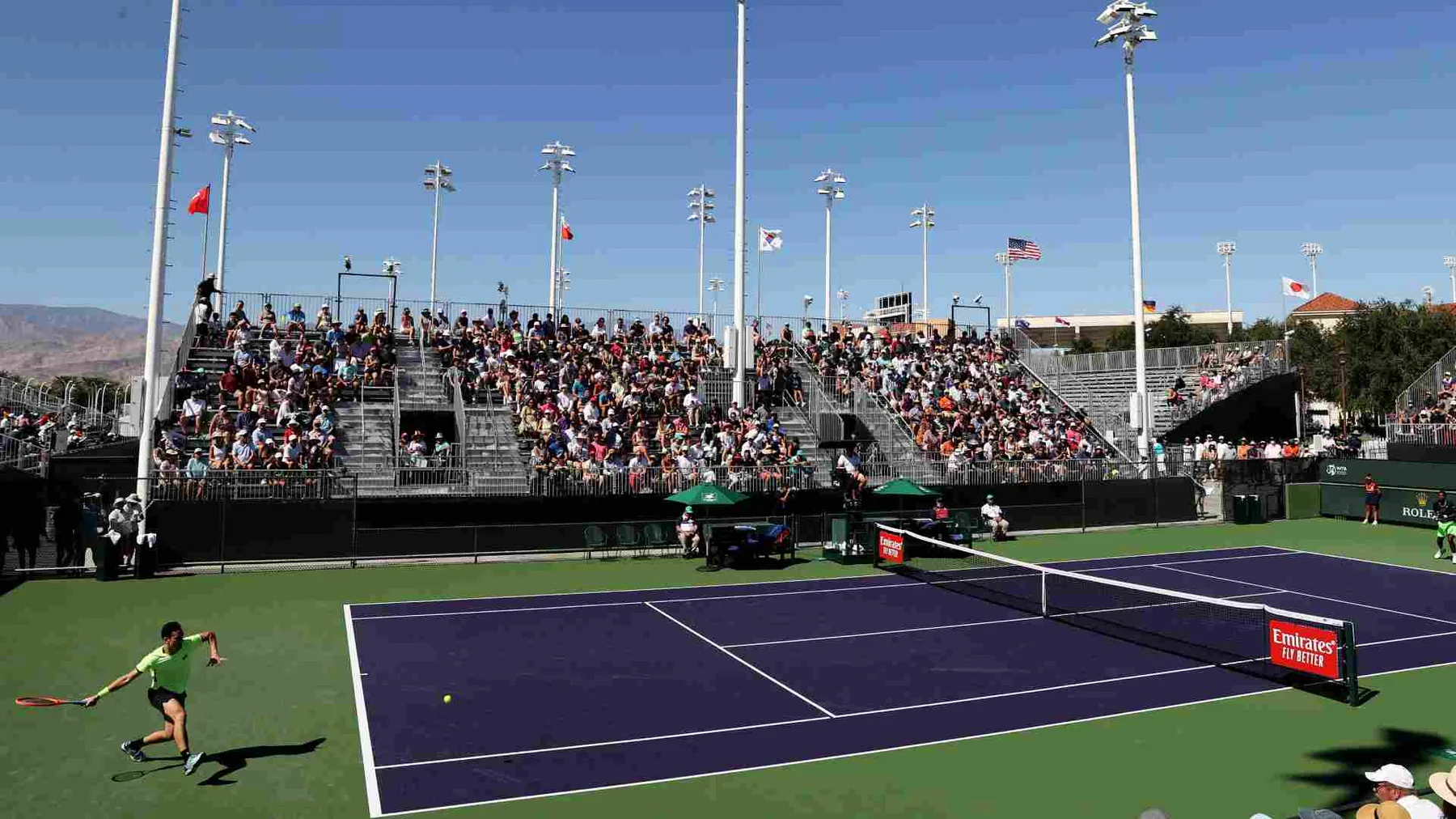
Indian Wells: Sinner defeated Medvedev in singles. Unseeded Guido Andreozzi and Manuel Guinard beat Arthur Rinderknech and Valentin Vacherot 7-6(3), 6-3 for their first title as a team. The champions saved four of the five break points they faced, a decisive response after losing serve while trying to close the first set at 5-4.
Miami: Sinner defeated Lehecka in singles. Simone Bolelli and Andrea Vavassori beat Harri Heliovaara and Henry Patten 6-4, 6-2 for their first Masters 1000 trophy together. They saved all three break points faced and converted three of nine, including breaks in the opening game of both sets.
The doubles results also reward different kinds of resilience: Andreozzi and Guinard recovered after a late first-set setback, while Bolelli and Vavassori established front-running positions immediately. For the stable record of finished matches beyond these finals, use the site's ATP results index.
The Clay Masters: Monte-Carlo, Madrid and Rome Results
Jannik Sinner swept all three 2026 clay-court Masters singles titles. He defeated Carlos Alcaraz in Monte-Carlo, Alexander Zverev in Madrid and Casper Ruud in Rome. The common surface should not hide the range of tests: Monte-Carlo was the compact first Masters checkpoint of the European clay swing, Madrid's high altitude contributed to quicker red-clay conditions, and Rome delivered the last Masters 1000 test before Roland-Garros.
Three clay tests, not one
The final scorelines show three different paths. Sinner needed a first-set tiebreak before beating Alcaraz 7-6(5), 6-3 in Monte-Carlo. He then produced the most one-sided final score of the trio, 6-1, 6-2 against Zverev in Madrid. In Rome, he beat Ruud 6-4, 6-4. ATP's Madrid coverage describes the Spanish capital's relatively high altitude as a source of faster-paced clay tennis. That helps explain why fans should not transfer expectations mechanically from one clay event to the next, although it would be too strong to say altitude caused Sinner's result.
| Event | Singles final | Doubles final |
|---|---|---|
| Monte-Carlo | Sinner d. Alcaraz 7-6(5), 6-3 | Krawietz/Puetz d. Arevalo/Pavic 4-6, 6-2, [10-8] |
| Madrid | Sinner d. Zverev 6-1, 6-2 | Heliovaara/Patten d. Andreozzi/Guinard 6-3, 3-6, [10-7] |
| Rome | Sinner d. Ruud 6-4, 6-4 | Bolelli/Vavassori d. Granollers/Zeballos 7-6(8), 6-7(3), [10-3] |
2026 singles and doubles champions
Sinner's sweep was more than three additions to a title count. The Rome win made him the first Italian men's singles champion there since Adriano Panatta in 1976 and completed his Career Golden Masters. In doubles, no team swept the clay trio. Kevin Krawietz and Tim Puetz recovered from a set down in Monte-Carlo; Harri Heliovaara and Henry Patten also required a Match Tie-break in Madrid; Simone Bolelli and Andrea Vavassori survived two tiebreak sets before dominating the deciding Match Tie-break in Rome.
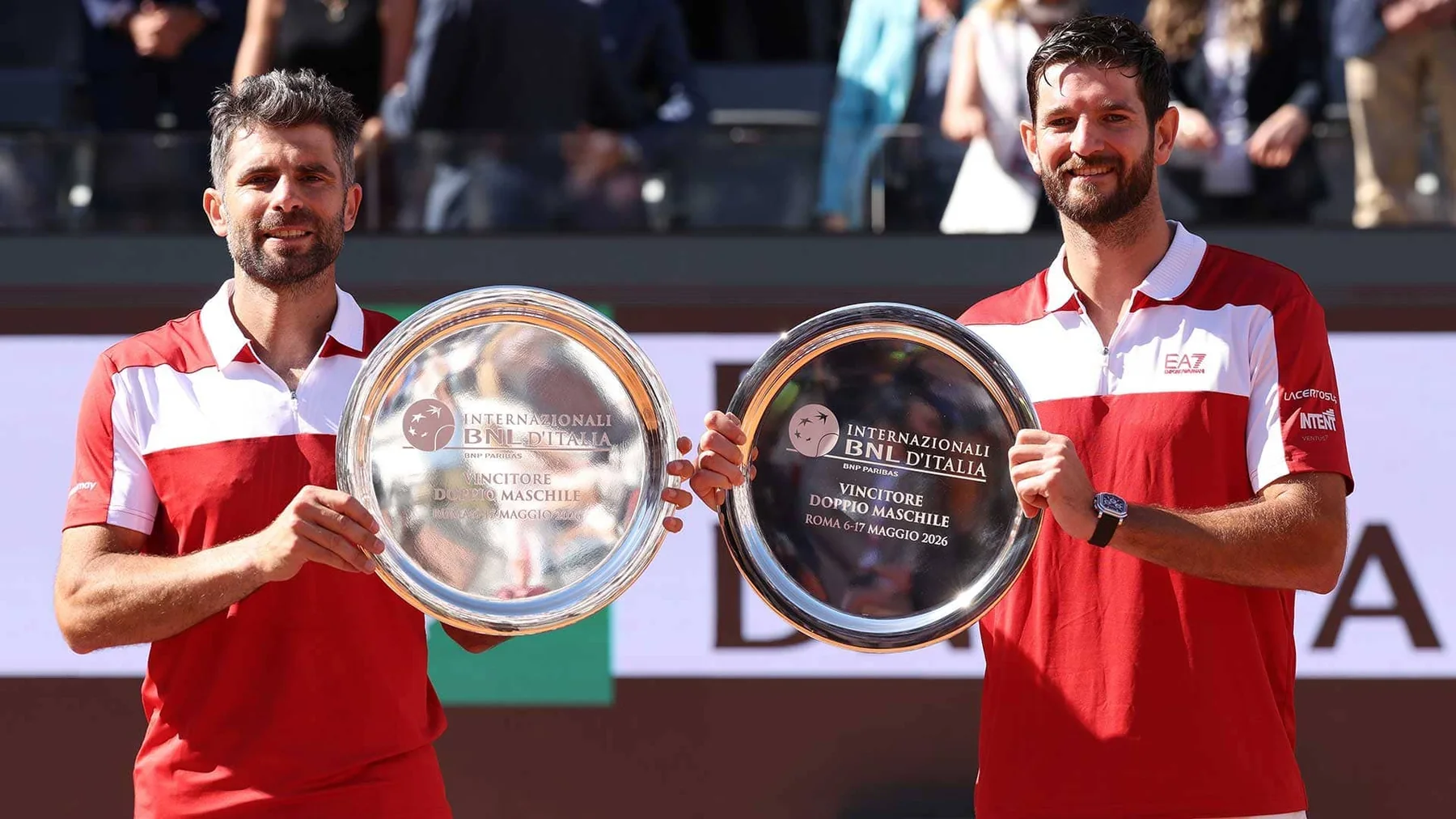
The home champions saved four set points in the first set and completed a two-hour, 19-minute final against Granollers and Zeballos. That is the clearest doubles lesson from the swing: on clay, patient construction still has to be paired with decisive returning and net play in the compressed Match Tie-break. Compare playing characteristics in the site's ATP surface guide, or use the results index for completed scores.
Canada and Cincinnati: The 2026 Summer Hard-Court Results
Ben Shelton won the 2026 National Bank Open in Montreal, Arthur Fils won Cincinnati, and Orlando Luz with Rafael Matos captured both doubles titles. The official dates make this more than a simple two-week sequence: Montreal ran August 2-13, while Cincinnati opened August 13 and continued through August 23. That shared date makes daily orders of play essential, even though it does not mean every player was required to compete in both cities on the same day.
A demanding calendar handoff
Shelton closed Montreal by beating Brandon Nakashima 6-3, 7-6(4). He went through six matches without losing a set and successfully defended the Canadian title he had won in Toronto in 2025. His final was controlled rather than merely serve-dependent: ATP recorded that he faced no break point and converted two of four. Because the Canadian event alternates host city, “defending the Canada title” is the accurate description; his 2025 win came in Toronto and the 2026 win came in Montreal.
Calendar note: Montreal's finals were played Thursday, August 13, which was also Cincinnati's first listed tournament date. Treat those date windows as event boundaries, not proof of any individual player's travel or match assignment.
What the completed results tell us
Singles: Fils defeated Frances Tiafoe 6-3, 1-6, 6-0 in Cincinnati for his first Masters 1000 crown. The final swung sharply: Fils established the first-set lead, lost the second decisively, then reset to take every game in the third. That response is the useful competitive takeaway; the score does not support guessing how he will perform at the US Open.
Doubles: Luz and Matos rallied past Marcelo Arevalo and Mate Pavic 5-7, 6-4, [10-6] in Montreal, then beat Constantin Frantzen and Robin Haase 6-4, 3-6, [10-7] in Cincinnati. They became the fifth Open Era team to complete the Canada-Cincinnati double and the first since Pierre-Hugues Herbert and Nicolas Mahut in 2017.
Both doubles finals required a deciding Match Tie-break, so the sweep combined recovery across cities with execution in a short, high-variance finish. Fans reviewing the week should separate that doubles format from Fils's full third set in singles. Use the ATP results index for finished scores and the tournament directory for event date windows.
Shanghai and Paris: The Masters 1000 Events Still to Come
Two 2026 Masters 1000 tournaments remained unplayed when this guide was checked on August 30: Shanghai on October 7-18 and Paris on November 2-8. No 2026 champion, completed draw or result should be attached to either event yet. Valentin Vacherot in Shanghai and Jannik Sinner in Paris are the 2025 champions, included only as defending-champion context.
Shanghai begins the closing sprint
Confirmed: Rolex Shanghai Masters, October 7-18, Shanghai, outdoor hard court.
Not yet confirmed in this guide: the final 2026 field, draw, daily order of play and champion.
Shanghai is the eighth Masters tournament of 2026 and uses the expanded date window. It follows the ATP 500 stops in Beijing and Tokyo, so it begins the period when strong autumn results can materially reshape the Race to Turin. That does not make every projected entrant certain to play: withdrawals, acceptance changes and the final draw still need event-week checks. The useful planning action is to save the date window now and wait for the official daily schedule before assigning a player to a court or session.
Paris is the final Masters checkpoint
Confirmed: Rolex Paris Masters, November 2-8, Paris, indoor hard court.
Status: ninth and final Masters 1000 of the season; 2026 draw and champions pending as of August 30.
Paris follows the ATP 500 events in Basel and Vienna and ends one week before the November 15-22 Nitto ATP Finals window. ATP's current rankings FAQ says the top seven singles players in the Race after Paris qualify for Turin. The eighth place is governed by the stated current-year Grand Slam champion provision, so it is misleading to reduce qualification to “the top eight after Paris” without that condition. The FAQ applies a related rule to the top seven doubles teams and a possible qualifying Grand Slam champion team.
The contrast is part of the challenge: Shanghai is an expanded outdoor-hard event in Asia, while Paris is a compact indoor-hard finish in Europe. A player pursuing both must handle a long calendar gap, travel and a change of playing environment. That is why the 2026 fall sweep is a possibility, not a forecast. Near each event, check the site's ATP schedule this week; for the season-level view, use the tournament directory.
How to Follow Daily Schedules, Draws and Results
The reliable workflow is simple: use the current event page for who is playing, the daily order of play for court and start information, and the results page after the match finishes. A tournament's full date window cannot tell you which player appears on a given day—especially at a 12-day Masters event with multiple sessions and courts.
Use the event page first
-
1. Confirm the event and day. Start with the ATP tournament directory, then select the event and exact calendar date. A draw shows a player's path through the bracket; it is not the daily schedule.
-
2. Read the order of play. Look for court, session, “start” and “not before” labels. ATP's rulebook defines this order as the published summary of matches for one day and says it should be released by 10 p.m. tournament-local time once determined.
-
3. Refresh close to play. Weather and earlier matches can alter timing. Miami's 2026 final schedule changed after rain, including a new not-before time and a court move. Use today's ATP schedule rather than relying on an old screenshot.
Read dates in the venue time zone
A displayed event time should be read in its stated time zone unless the page explicitly converts it. “Not before 4:30 p.m.” means the match cannot start earlier; it may begin later if the preceding match runs long. Cincinnati's final-day order, for example, put doubles at 2 p.m. and singles not before 4:30 p.m. Confirm the date as well as the clock when following an event across Asia, Europe or North America, because the venue day may differ from yours.
Singles and doubles need separate checks
Do not assume doubles follows the singles timetable or scoring format. ATP Tour doubles uses two tie-break sets, No-Ad scoring and a deciding 10-point Match Tie-break at one set all. A score displayed as 6-4, 3-6, [10-7] therefore records two conventional sets and a match-deciding tiebreak—not a third set that ended 10 games to seven. Check the doubles order independently because it may open the main court, as it did on Cincinnati finals day.
After play, switch from the schedule to the ATP results index; that is the stable record for winners and scores. For viewing, consult the site's legal TV and streaming guide, then verify the exact match with the provider. Schedule status, result status and broadcast availability are separate checks, and treating them separately prevents most fan-planning errors.
About the author
ATP Schedule Editorial Team
The ATP Schedule editorial team turns match times, scores, tournament information and verified tennis news into clear answers fans can use quickly.
View all articles by this author →Fan discussion
Comments
Sign in with Google to comment. Keep the discussion helpful and tennis-focused. New comments are reviewed before they appear.
Loading comments…