Davis Cup 2026 Final 8: Schedule, Teams, Format and How to Watch
Eight countries head to Bologna for the 2026 Davis Cup finale. Plan the seven ties, understand captain selections and deciding doubles, and find the right viewing and ticket information.
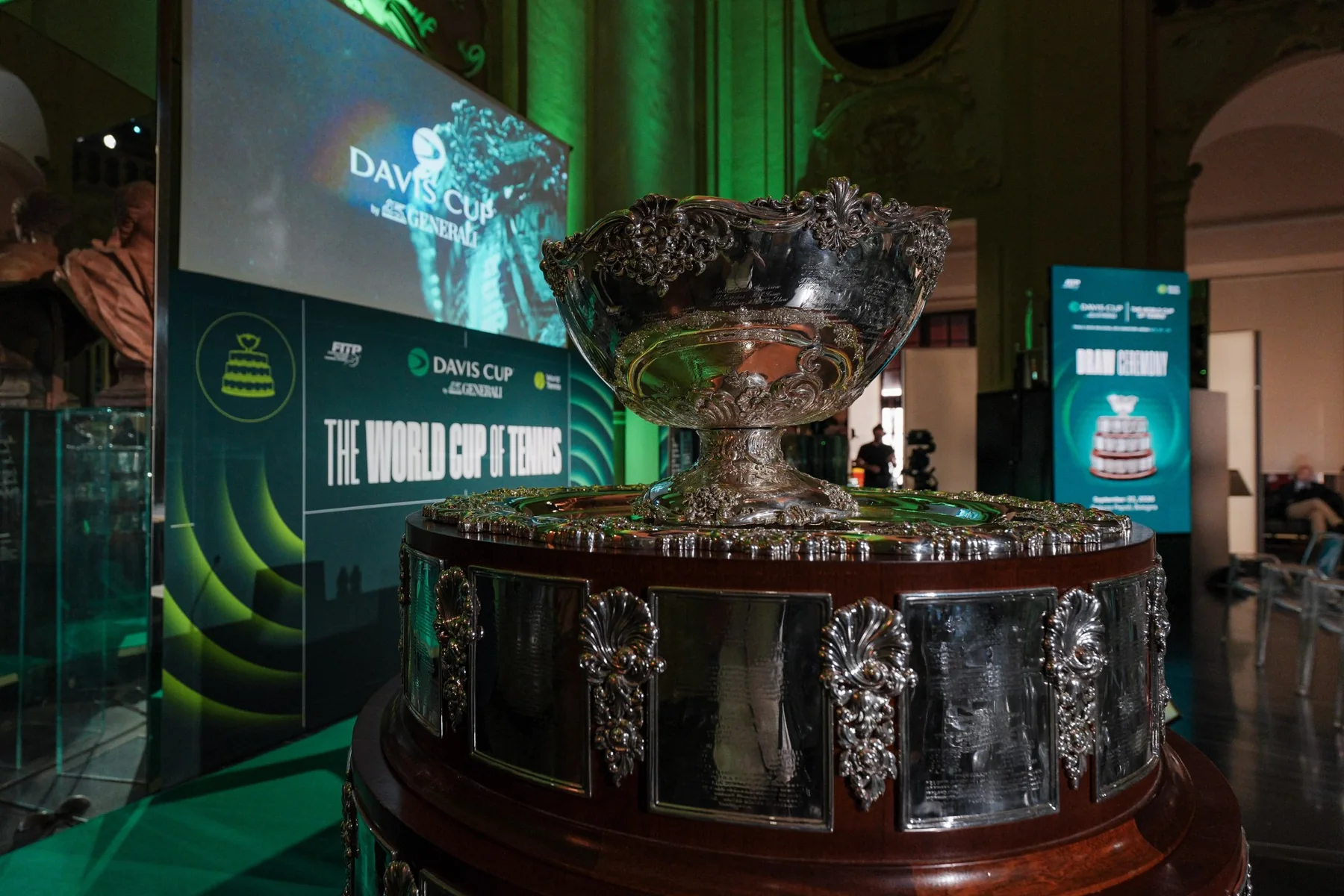
When and where is the Davis Cup Final 8 in 2026?
The 2026 Davis Cup Final 8 runs from November 24 to November 29 at BolognaFiere Arena in Bologna, Italy. It is the concluding knockout stage of the men's national-team competition: eight countries arrive, and one leaves as champion. This guide reflects the information available on November 12, before the first quarter-final has been played.
The official Bologna event listing identifies the venue within the BolognaFiere exhibition complex, also described as the Super Tennis Arena. Those names refer to the Bologna event site; they should not send you looking for the ATP Finals arena in Turin. Check the address and entrance on your actual ticket when arranging your journey.
Italy enters as the host and defending champion after winning the previous three editions. The competition's Final 8 overview explains that the home nation received a wildcard, while the other seven places came through September's second qualifying round. The November week is therefore the finish of a season-long competition, rather than an invitation event built solely around the highest-ranked individual players.
For a fan planning a visit, that distinction changes the first decision. Start with the country and its quarter-final date. A player's name on a nomination list does not yet tell you which singles match he will contest, whether he will also play doubles, or whether his country will survive to the weekend. A later-round ticket offers the occasion and the teams that reach it, rather than a guaranteed appearance by your favorite.
There is also a useful way to read the terminology. A match is the contest between individual players or doubles pairs; a tie is the larger contest between two nations. Keeping those two levels separate makes the schedule and the final score much easier to follow. If you normally follow individual tour events, our guide to the ATP and the different tennis organizations provides the wider context.
The full Bologna schedule and route to the final
The quarter-finals occupy Tuesday through Thursday, followed by one semi-final on Friday, the other on Saturday and the final on Sunday. The official schedule announcement gives the following starts in Central European Time, the local time in Bologna.
| Date | Round and tie | Start, CET |
|---|---|---|
| Tuesday, November 24 | Quarter-final: Czechia vs Canada | 16:00 |
| Wednesday, November 25 | Quarter-final: Italy vs Korea, Republic | 16:00 |
| Thursday, November 26 | Quarter-final: Great Britain vs Germany | 10:00 |
| Thursday, November 26 | Quarter-final: Austria vs Spain | Not before 17:00 |
| Friday, November 27 | Semi-final: Italy/Korea winner vs Czechia/Canada winner | 16:00 |
| Saturday, November 28 | Semi-final: Great Britain/Germany winner vs Austria/Spain winner | 12:00 |
| Sunday, November 29 | Final: the two semi-final winners | 15:00 |
The draw fixes the route, not the identity of the eventual finalists. Italy and Spain occupy opposite halves, so they could meet only in the championship tie. Equally, a Czechia–Germany final or another combination remains possible. Keep the winner labels in your diary until results settle the bracket.
A listed start belongs to the opening match of the tie. It is not a promise that the higher-profile singles player starts at that hour, nor a reservation for doubles later in the evening. The second singles depends on the first match's duration. A deciding doubles match depends on the tie reaching 1–1. This is why a television listing and a player-specific reminder can refer to different moments in the same session.
Converting the tie times to your time zone
During this November week, Bologna is one hour ahead of London, six ahead of New York and nine ahead of Los Angeles. The 16:00 starts therefore mean 15:00 in the UK, 10:00 Eastern and 07:00 Pacific. Sunday's 15:00 final begins at 14:00 UK time, 09:00 Eastern or 06:00 Pacific.
Thursday requires particular care for North American viewers. Great Britain–Germany starts at 04:00 Eastern or 01:00 Pacific; Austria–Spain is scheduled not before 11:00 Eastern or 08:00 Pacific. A reminder labeled only “Davis Cup Thursday” could easily send you to the wrong tie.
The official ticket schedule warns that playing times and the programme can change. Recheck before traveling or setting a recording, and allow a later match to move with the tennis ahead of it. Our order-of-play and start-time guide explains why “not before” is a useful lower limit rather than an exact appointment.
The eight teams and the players to follow
Italy, Czechia, Canada, Korea Republic, Great Britain, Germany, Austria and Spain make up the field. The official October 26 nominations provide a useful starting point. These selected names highlight the choices available; they are not the final order of play or complete squad lists.
| Quarter-final | Selected nominated players |
|---|---|
| Czechia vs Canada | Jakub Mensik and Jiri Lehecka; Felix Auger-Aliassime and Denis Shapovalov |
| Italy vs Korea Republic | Flavio Cobolli, Luciano Darderi and Lorenzo Musetti; Kwon Soonwoo and Chung Hyeon |
| Great Britain vs Germany | Arthur Fery and Cameron Norrie; Alexander Zverev and Jan-Lennard Struff |
| Austria vs Spain | Jurij Rodionov and Lukas Neumayer; Carlos Alcaraz, Rafael Jodar and Alejandro Davidovich Fokina |
The strongest-looking singles name is only one part of the comparison. Ask who is likely to contest the other singles match, which players can contribute in doubles and how a captain might respond if the tie is level. A country needs two match wins, so a balanced route to those points matters more than the appeal of one possible headline encounter.

A nominated player is not a guaranteed singles starter
A nomination puts a player in the available squad. It does not reserve a particular match for him. The event's ticket information explains that captains can change their choices and that the order of play is published on the match day. Treat the names above as a dated guide to the field, then check the actual selection before settling down to watch.
Italy's previous title is a useful reminder of this distinction. As Tennis Canada reported after the 2025 final, Matteo Berrettini and Cobolli delivered the two singles victories against Spain. A national team's success can depend on contributions beyond the one player casual viewers associate with that country.
Why the doubles options change the matchups
Germany nominated Kevin Krawietz and Tim Puetz; Great Britain included Henry Patten and Neal Skupski. Italy can draw on Simone Bolelli and Andrea Vavassori. Those names make the potential third match worth studying before the first singles begins, even though doubles will not be required after a 2–0 singles sweep.
Austria offers a concrete recent example. In the September qualifier against Belgium, Lucas Miedler and Neil Oberleitner won their doubles match 7–6(5), 7–5. The official November 4 profile follows that partnership into Bologna. For viewers, watch whether the return comes back low, who controls the first volley and how partners cover the middle. Those exchanges can explain a decisive point more clearly than comparing two singles rankings.
How a Final 8 tie works, from singles to deciding doubles
Two match wins secure a Final 8 tie. The programme places two singles matches before doubles, all within one day. If the countries split the singles, the doubles match decides which nation advances. A team that loses the tie is eliminated; there is no round-robin table offering another chance later in the week.
The 2026 regulations specify best-of-three tie-break sets for Finals matches and regular advantage scoring for doubles. For a live doubles decider, do not automatically import the no-ad games and deciding match tie-break familiar from many ATP Tour doubles events. Read the match's set score as well as the country's overall position.
A hypothetical example makes the difference clear. Suppose Country A wins the first singles 6–4, 6–4, then Country B wins the second 7–6, 6–3. Each country has won one match, so the tie stands at 1–1. Country A does not carry its first player's service breaks into the doubles match. The deciding pair must win its own contest; whichever nation wins that match takes the tie 2–1.
The order also matters. The regulations put each country's second singles player into the first match, followed by the first singles players. Those descriptions concern the selected players' order within their teams; they do not mean the world's No. 2 plays before the world's No. 1. Check the announced lineup rather than guessing from the promotional poster.
This creates an interesting viewing question before the leading singles players appear. Has the opening player given his country a lead, or must the next player win to keep the tie alive? The same individual matchup can carry a different team consequence at 1–0 and 0–1. That pressure is part of the appeal, but it is not proof that a player will serve better or worse.
The LTA's format guide also distinguishes the Finals from the longer ties used elsewhere in the competition. Avoid applying a remembered five-match qualifying format to Bologna. For attendance, plan around two singles matches and a possible doubles contest, not a guaranteed third match or a fixed finishing time. Individual ATP ranking positions help describe the players, but they are not a substitute for the national tie score.
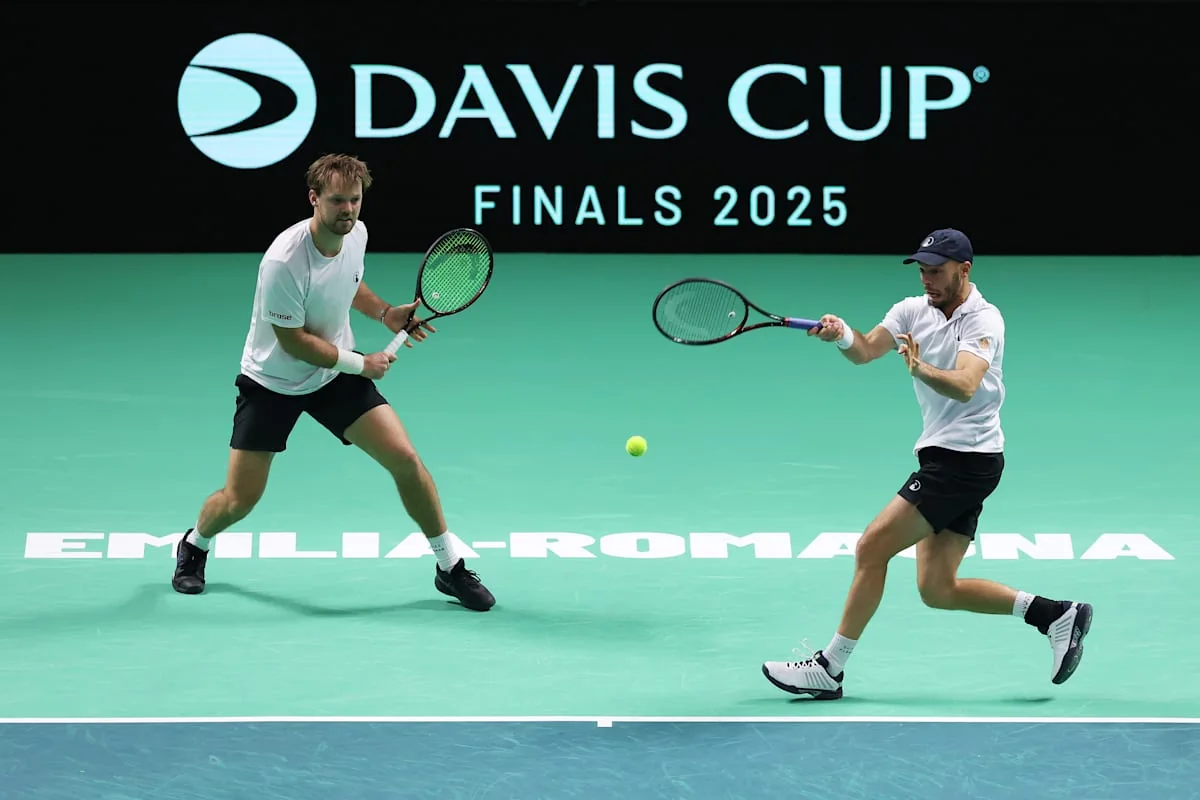
How to find Davis Cup TV and streaming coverage
Start with the official Davis Cup country-by-country viewing page, then confirm that the information covers the November 2026 Final 8. Broadcast arrangements for a February or September qualifying tie are not automatically a promise of coverage from Bologna.
There is one clear subscription boundary: Tennis TV says it does not have Davis Cup streaming rights. An ATP subscription that carries the Turin finals therefore does not solve your Bologna viewing plan. Tennis TV and Tennis Channel are different services; similar names can otherwise make the wrong purchase look reassuring.
What viewers in the USA and UK should check
As of November 12, this guide has not verified a November 2026 Final 8 channel or streaming assignment for either the USA or the UK. The official country table reviewed for this article still described qualifying-round coverage. Its American and British rows should not be presented as a confirmed November broadcast list.
US viewers should check the provider's programme for the actual tie date and ask whether access is through a television package, a direct streaming subscription or both. Look for the country pairing, not merely a generic “tennis” tile. Tuesday's opener is at 10:00 Eastern, while Thursday's first quarter-final is at 04:00 Eastern, so an evening highlights programme would serve a different purpose.
UK viewers should make the same competition-and-date check and confirm whether a listing covers all ties or only selected sessions. Tuesday starts at 15:00 GMT and Thursday's day tie at 09:00 GMT. If a broadcaster announces an online stream, test the relevant account and device before the session; a familiar channel logo alone does not establish which product carries the match.
Free streams, highlights and live scores serve different needs
The official viewing page describes free online availability in certain circumstances, but those conditions must be read alongside the round and territory being discussed. Do not assume an earlier qualifying stream proves that every Final 8 match will be free worldwide. Check the official match page from the country where you will actually watch.
If full live video is unavailable, the official Live Centre and tournament highlights offer useful ways to follow the event. They answer different questions: live scoring tells you the current state, whereas an edited clip shows selected exchanges after they happen. A short video labeled with a player's name is not evidence of a full live broadcast.
Our ATP viewing guide by country remains useful for the surrounding tour calendar. For this national-team event, however, finish the check with Davis Cup's own announcement and the broadcaster's dated programme before paying or setting a recording.
Tickets and a practical plan for BolognaFiere
Use the official Final 8 ticket portal to choose your session, then build the rest of the day around it. The venue's event directions place BolognaFiere Arena on Viale Aldo Moro. Save the entrance information supplied with your ticket rather than relying on a map pin for the entire exhibition complex.
For transport, the BolognaFiere operator's travel page gives the routes from the central station, city center and airport. It also points visitors toward current bus diversions and the Roger journey-planning app. Check the route again on the day: reaching Bologna Centrale and reaching the arena entrance are separate legs of the journey.
Work backward from the session start, allowing time for the final walk, admission and finding your seat. Work forward more cautiously. Two three-set singles matches and a deciding doubles contest can make a long session. Avoid treating an estimated finish as a reliable departure time for a flight, train or dinner reservation that you cannot move.
Choose the session before choosing a favorite player
Thursday's day and evening sessions require separate tickets. Great Britain–Germany is the morning quarter-final; Austria–Spain is the later tie. The official ticket FAQ explains that the arena is cleared between sessions. If you hold both, present both tickets and follow the instructions for waiting between the two events. Do not assume a day-session seat also covers the evening.
A quarter-final is the clearest choice if your priority is supporting one of the eight countries, because its pairing is already known. A semi-final or final is a different choice: you are buying the round and its eventual participants. You can enjoy that uncertainty, but it should be part of the decision before payment rather than a surprise afterward.
Compare the final checkout total and the selected seating category, not an old headline price. The official seller distinguishes ticket pricing from additional service charges. Read the event's transfer and refund terms as well, especially for a discounted ticket; a change in your plans should not be assumed to create a refund entitlement.
Before leaving, keep three things available on your phone: the correct session ticket, the current event entrance instructions and your return-journey options. That small preparation lets you concentrate on the tennis once the first return is struck.
What to watch as the season reaches its last team contest
Bologna offers a different finish from Turin. The 2026 ATP Finals run from November 15 to November 22, with a round-robin phase before the knockout rounds. Davis Cup begins two calendar days later and gives each nation an immediate elimination tie. The calendar connects the events, but their routes to a trophy are different.
For a fan following both, change the question you bring to the opening match. In Turin you may be thinking about an individual's group record and qualification scenarios. In Bologna ask which country can construct two wins from the players it has selected. Our ATP Finals format guide explains the earlier event without applying its group calculations to national-team tennis.
First, watch how the opening singles result changes the next player's task. A favorite's victory may be necessary merely to level the tie, while a less celebrated teammate's opening win could put the country one match from advancing. Keep the individual contest and the team consequence in view together; neither tells the whole story on its own.
Second, follow the quality of the first two shots rather than assuming the indoor setting guarantees a particular kind of match. Is the server earning a short reply? Can the returner put the second serve into a difficult area? In doubles, does a low return force the first volley upward and give the opposing net player time to move? These are observable exchanges. A claim about unusually fast courts or a player's fatigue would need evidence beyond the venue being indoors.
Finally, keep the official bracket beside the screen. The Friday semi-final winner has Saturday free from competition, while the other finalist plays its semi-final on Saturday. That difference is useful context for the weekend, not a prediction of who will recover better or win. Match length, player selection and what actually happens on court still matter.
The champion must navigate three national ties. Follow the current lineup, the live tie score and the choices around a possible doubles decider, and Bologna becomes easier to read than a collection of isolated star appearances. The most revealing moment may come when a captain needs his second singles player or specialist pair to supply the point that keeps the whole team alive.
About the author
ATP Schedule Editorial Team
The ATP Schedule editorial team turns match times, scores, tournament information and verified tennis news into clear answers fans can use quickly.
View all articles by this author →Fan discussion
Comments
Sign in with Google to comment. Keep the discussion helpful and tennis-focused. New comments are reviewed before they appear.
Loading comments…