What Does ATP Stand for in Tennis? ATP Tour Explained
ATP means Association of Tennis Professionals. This fan-first guide explains the men’s Tour, rankings, event levels and its relationship with Grand Slams, WTA and World Tennis.

In tennis, ATP stands for Association of Tennis Professionals. That one expansion answers the acronym, but it does not explain why the same three letters appear beside rankings, tournaments, players, matches and an entire season. This guide builds the useful model: ATP is the men’s professional-tennis organisation, the ATP Tour is its leading circuit, and ATP rankings connect results to future opportunity. It also marks the boundaries that casual coverage often blurs—especially with Grand Slams, the WTA and World Tennis, formerly the ITF.
What does ATP stand for in tennis?
ATP stands for Association of Tennis Professionals. It is the organisation behind the leading international circuit for men’s professional tennis. That competition is called the ATP Tour.
The short answer
When a commentator says “ATP player,” “ATP ranking” or “ATP 500,” the initials point back to the same men’s professional-tennis system. They do not mean that every phrase describes the same thing. An ATP player competes in the men’s professional structure; the PIF ATP Rankings order eligible singles players and doubles players or teams by results; and an ATP 500 is one category of tournament on the main Tour.
ATP
The Association of Tennis Professionals: the governing organisation for men’s professional tennis.
ATP Tour
The top international circuit it organises, including Masters 1000, ATP 500 and ATP 250 events.
ATP Rankings
The results-based lists that help determine entry, qualifying and seeding across men’s professional events.
Organisation, Tour and brand
The cleanest mental model is organisation first, competitions second. ATP sets and administers rules for its circuits, operates the ATP Tour and ATP Challenger Tour, maintains rankings and works with member tournaments and players. “ATP Tour” is the product fans watch from week to week, not the expanded name of the initials.
The distinction also sets up an important boundary: the four Grand Slams can award ATP ranking points and sit at the centre of the men’s season without becoming ATP Tour-owned tournaments. Their governance is different, as explained later in this guide.
So if you searched the initials after seeing a scoreboard, the tennis answer is Association of Tennis Professionals—not the biology, medical or texting meanings of ATP. From there, the fastest practical next step is to check today’s men’s tennis schedule and see how the organisation’s Tour appears in a real competition week.
Why the ATP was created and how the Tour is governed
The ATP was created to give professional players a collective voice and replace subjective tournament access with a credible sporting merit system. Its modern Tour is governed as a partnership between players and tournaments, which is a different model from a league controlled by one team owner or federation.
From the 1972 association to the modern Tour
1972
Leading players form the Association of Tennis Professionals at the US Open.
1973
The first computer ranking lists 186 players, with Ilie Nastase at No. 1.
1990
The ATP Tour era begins as an equal player-tournament partnership.
Today
ATP runs a global main Tour, Challenger circuit and ranking system for men’s professional tennis.
The key reform was not merely producing a list from a computer. Before the first ATP ranking on 23 August 1973, reputation, nationality and a tournament director’s judgment could heavily influence entry or seeding. A results-based list made access more objective. That is why the ranking remains central to the meaning of ATP: it connects results from different weeks into one qualification ladder.
Players and tournaments share the table
ATP’s current governance explainer describes a Board with nine voting members: four player representatives, four tournament representatives and a chairman. The Board decides matters including rule changes, prize-money increases and tournament schedules. The 2026 Board announcement shows that balance in practice, with representatives drawn from both sides of the sport.
That shared structure explains why Tour policy can involve negotiation. A top singles player may prioritise recovery and calendar space; a doubles specialist may focus on draw opportunities; an ATP 250 operator may view the same week through ticketing and event economics. Equal representation does not erase those competing interests—it creates the forum in which they are resolved.
Useful distinction: ATP is a major governing body in men’s professional tennis, but it is not the sole authority for every match on the global tennis calendar. Grand Slam organisers, the women’s WTA and the international federation have separate responsibilities.
What tournaments are actually on the ATP Tour?
The regular ATP Tour is built around ATP Masters 1000, ATP 500 and ATP 250 tournaments. The number is the standard singles ranking-point award for winning the title—not the draw size, prize fund, number of courts or world ranking of the entrants.
The 1000-500-250 ladder
| Level | Champion points | What it means to a fan |
|---|---|---|
| ATP Masters 1000 | 1,000 | The premium regular-Tour tier; nine events are listed in ATP’s current 2026 guide. |
| ATP 500 | 500 | A substantial ranking opportunity with strong fields, but more week-to-week variation than the Masters tier. |
| ATP 250 | 250 | The broadest regular tour-level layer, creating title and ranking opportunities across more calendar weeks. |
Round reached matters as well as category. In the 2026 singles table, an ATP 500 finalist earns 330 points and a semi-finalist 200; at an ATP 250, the comparable awards are 165 and 100. Early-round values can differ with draw format, which is why the category name alone does not tell you every point available.
A useful fan comparison is the ATP tournament-level directory: first identify the category, then check the event’s draw and field. Finally compare court surfaces, because a clay 500 and a grass 500 can carry the same champion points while asking very different movement, rally and scheduling questions.
Where the ATP Finals and Challenger Tour fit
The Nitto ATP Finals is a special season-ending competition, not an “ATP 1500” tier. Its round-robin format awards points match by match: 200 for each group win, 400 for a semi-final victory and 500 for winning the final. An undefeated champion therefore earns 1,500.
The ATP Challenger Tour sits below the ATP Tour but is also operated within the ATP system. Its 2026 categories run from Challenger 50 to Challenger 175, and ATP calls it a stepping stone to the main Tour. That language is more accurate than treating Challenger tennis as recreational or irrelevant: it is where many professionals build the points and match experience needed for stronger entries.
Do not read the badge as a prediction. A higher category offers more ranking points, but one week’s actual difficulty still depends on who entered, who withdrew, the draw and the playing conditions.
How ATP rankings turn match results into opportunity
ATP rankings convert eligible match results into a position on a rolling men’s tennis ladder. That position helps determine who receives direct entry, who must qualify and where seeded players are placed in a draw. It is an access system as much as a weekly leaderboard.
1 · Result
A player advances to a particular round at an eligible event.
2 · Points
The event category and round determine the points earned.
3 · Ranking
A counting result enters the player’s rolling points breakdown.
4 · Opportunity
The position influences future entry and seed placement.
A rolling ranking, not a January reset
The official PIF ATP Rankings look back across the immediate past 52 weeks, with specific rulebook exceptions. A result normally remains until its corresponding point in the next annual cycle, which creates the familiar phrase “defending points.” The system does not simply total every match a player enters.
ATP’s current high-level singles breakdown for leading players uses four Grand Slams, eight automatic-entry Masters 1000 events and six best-other results. The Nitto ATP Finals can be an additional 19th result for those who compete. Replacement scores and mandatory-event rules are why a new win does not always add its full face value to the total.
Entry, qualifying and seeding
Ranking is the usual route into a main draw, but it is not the only route. A qualifier wins through a preliminary draw; a lucky loser can take a vacancy after falling in the final qualifying round; and a tournament can grant a wild card. Once the main draw is made, seeds distribute the highest-ranked entrants so they do not all meet in the opening rounds. The top two seeds are put in opposite halves and can only meet in the final.
This changes how fans should read a draw. No. 40 in the world is not automatically the 40th seed: seed count depends on the event and the entrants who actually appear. Use the player directory for current profiles and the results page to trace the completed matches behind the ranking story.
Singles, doubles and the Race
ATP maintains an individual singles ranking and an individual doubles ranking. The doubles list uses each player’s eligible results, so partners can have different individual positions. A separate calendar-year Doubles Team Rankings follows a specific pair toward the ATP Finals.
The singles Race is also calendar-year based and tracks qualification for the season-ending Finals. By contrast, the official world ranking remains rolling. Live rankings update as matches finish, but ATP treats them as projections: an official No. 1 or Top 10 milestone belongs to the next published ranking, not a temporary midweek position.
Fan takeaway: points reward what happened; rankings shape what becomes available next. Entries, withdrawals and tournament rules still decide the actual field.
Are Grand Slams part of the ATP Tour?
The precise answer is no—but their men’s results are central to the ATP ranking and season. The Australian Open, Roland Garros, Wimbledon and the US Open are independently organised Grand Slam tournaments. They are not ATP Tour events in the same institutional sense as an ATP 250, ATP 500 or Masters 1000. Yet an ATP player’s Slam performance counts toward his world ranking, and a champion receives 2,000 ranking points.
Included in the ranking, independent in governance
Ownership provides the cleanest dividing line. World Tennis’ Grand Slam guide says the relevant national associations own and organise the four majors: Tennis Australia, the French Tennis Federation, the USTA and, at Wimbledon, the AELTC/LTA management structure. World Tennis participates through the Grand Slam Board and provides governance, administrative, officiating and media support. ATP does not own that structure.
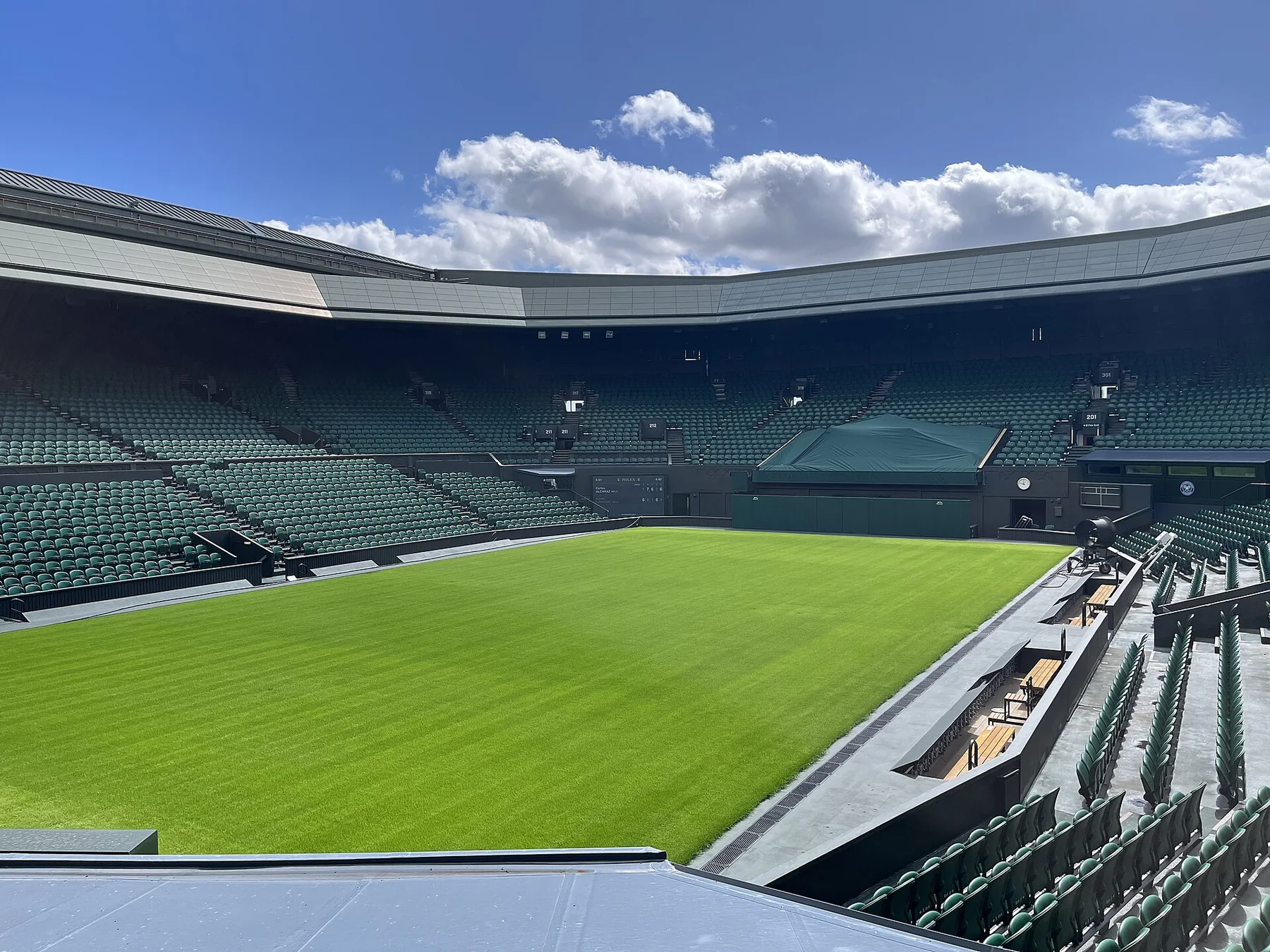
The connection is nevertheless powerful. ATP’s current rankings FAQ includes all four majors in a leading player’s results breakdown, and its 2026 points table awards 2,000 points to a singles champion. Grand Slam regulations also use rankings for entry and seed selection. For example, the 2026 rules use a ranking from about 42 days before an event for direct acceptance and a list from about seven days before it as the basis for seeding.
Why broadcasts still call them part of the ATP season
Commentators often use “ATP season” as convenient shorthand for the entire year of elite men’s professional tennis. In that sporting sense, leaving out four events that offer the most ranking points would make the season impossible to explain. A run to a Slam final changes the rankings, the year-end Race, later seedings and the story of who is No. 1.
Institutional language should be narrower. “ATP Tour tournament” means an event in the ATP 250, 500 or Masters 1000 structure, plus ATP’s own Finals context. “Men’s Grand Slam event” describes a major whose results connect to the ranking but whose operator and regulations are separate. The 2026 Grand Slam rulebook, for instance, provides for a 128-player singles main draw and up to 64 doubles teams unless otherwise authorised; those are Grand Slam rules, not meanings hidden inside the letters ATP.
Two questions, two answers
- Does a major count toward the ATP ranking? Yes—at the highest points level.
- Is a major owned and organised by ATP? No—consult the event and Grand Slam authorities for its rules and operations.
That distinction also helps when browsing the tournament directory: a listing can belong in the men’s calendar without every listed event having the same owner or governing rulebook.
ATP vs WTA vs World Tennis/ITF: who does what?
Tennis has no single organisation that runs every important match. ATP concentrates on men’s professional tennis, WTA on women’s professional tennis, and World Tennis—the public name adopted in 2026 by the International Tennis Federation, or ITF—on the sport’s international rules, member nations, development pathways and selected global competitions. The four Grand Slam organisers add another layer.
| Organisation | Primary remit | What a fan sees | What it is not |
|---|---|---|---|
| ATP | Men’s elite professional Tour and Challenger pathway; men’s rankings | ATP 250, 500, Masters 1000 and Finals coverage | The women’s tour or owner of the majors |
| WTA | Women’s elite professional Tour; women’s rankings | WTA events, WTA ranking and WTA Finals | A branch of ATP |
| World Tennis / ITF | Global rules, member nations, development tours and international team/Olympic responsibilities | Rules of Tennis, World Tennis Tour, Davis Cup and Billie Jean King Cup | The operator of every top-level tournament |
| Grand Slam organisers | Their independently owned major events, working through the Grand Slam structure | Australian Open, Roland Garros, Wimbledon and US Open | One unified ATP-owned series |
The men’s and women’s tours
ATP’s corporate description calls ATP the global governing body of men’s professional tennis. Its ranking lists, Tour categories and season-ending Finals belong to the men’s circuit. The WTA’s official history says Billie Jean King founded the Women’s Tennis Association in 1973; WTA players earn WTA points and qualify for the WTA Finals.
Those are parallel systems, not an open division and a women’s division inside one league. A man can be ATP No. 1 while a woman is WTA No. 1, because each position tops a different ranking. The same distinction applies to ATP and WTA tournament categories even when both competitions use the same site.
The international federation and shared events
World Tennis’ official FAQ says that, from June 2026, World Tennis is the new name for the ITF. It upholds the Rules of Tennis, works with national associations, operates Davis Cup and the Billie Jean King Cup, and runs tours that create a pathway toward ATP and WTA level. Older articles, rulebooks and web addresses may still say ITF, so “World Tennis (formerly ITF)” is the least ambiguous wording during the transition.
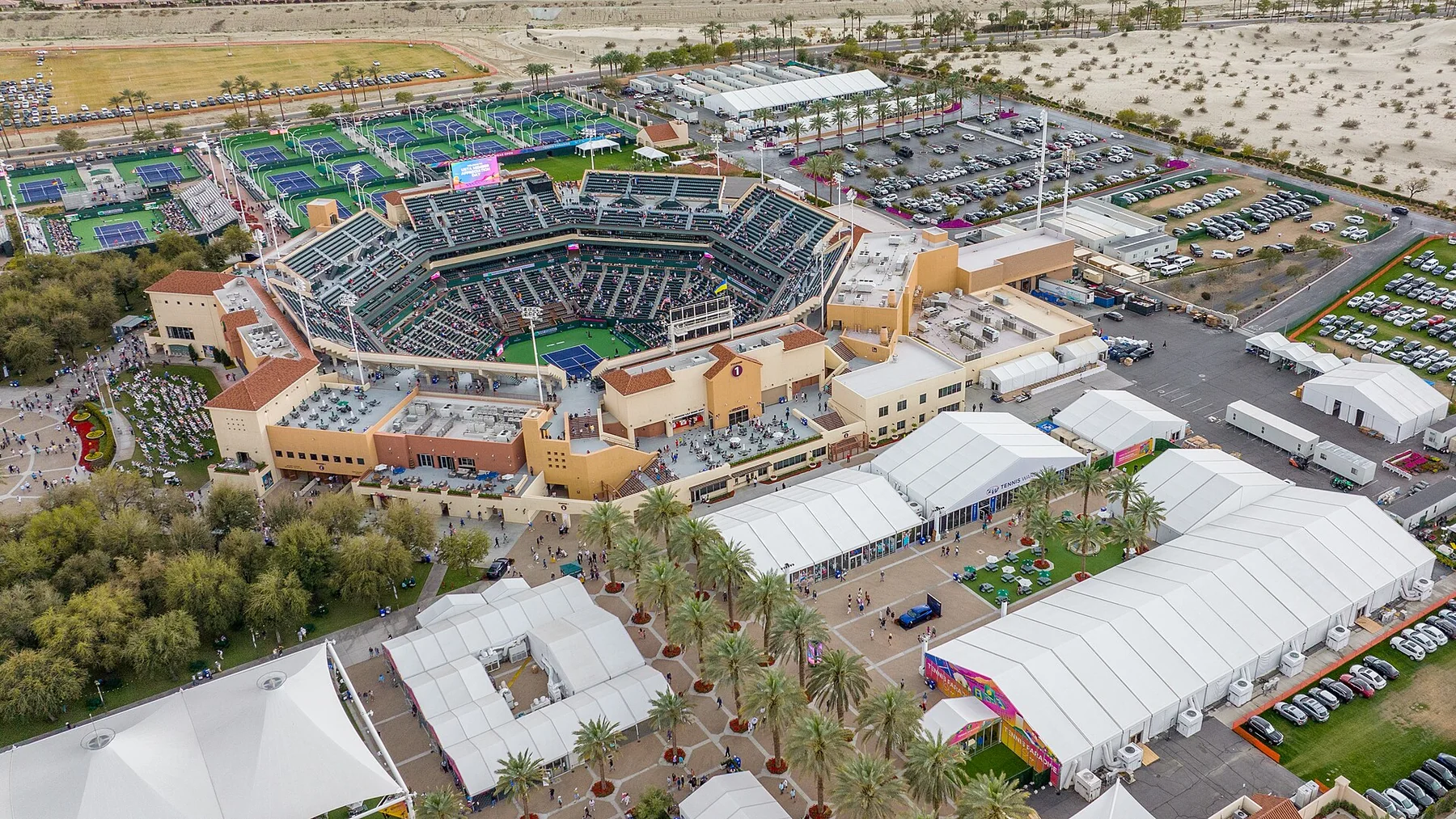
A combined tournament does not erase these boundaries. ATP identifies Indian Wells, Miami, Madrid, Rome and Cincinnati as combined Masters 1000 events: fans can see men’s and women’s matches within one event presentation, while the men earn ATP points and the women earn WTA points. Likewise, a Grand Slam contains both draws but remains independently organised. Shared venue, ticket or broadcast window does not mean shared ranking governance.
Quick reading rule: look at the noun after the initials. An ATP ranking, WTA event, World Tennis rule and Grand Slam draw point to different responsibilities, even when they meet during the same tennis fortnight.
How to use “ATP” correctly as a fan
Once ATP means “Association of Tennis Professionals” in your head, the surrounding phrase becomes easier to decode. The initials usually signal men’s professional-tour context, but the noun that follows tells you whether the speaker means an organisation, event category, ranking, player or match.
Common phrases decoded
| Phrase | What it normally means | Useful correction or caveat |
|---|---|---|
| ATP player | A man competing in the professional ranking/tour system | It does not mean ATP employs him as a team athlete. |
| ATP ranking | The official rolling men’s singles or doubles list | Specify singles, doubles, live projection or Race when it matters. |
| ATP 500 | A Tour event category whose singles champion earns 500 points | It is not a 500-player field, a $500 prize or “the top 500.” |
| ATP match | Usually a men’s match at an ATP Tour or Challenger event | Check the event label; a men’s Slam match is not ATP-operated. |
| ATP Grand Slam | Informal shorthand for men’s Slam action affecting ATP rankings | “Men’s Grand Slam event” is institutionally more accurate. |
ATP’s own tour explainer confirms that 250, 500 and Masters 1000 identify the ranking points available to the champion. The label says nothing by itself about today’s start time, draw size or broadcaster. Those details come from the calendar, tournament profile and local order of play.
A match-week workflow
- 1. Find the weekUse this week’s ATP schedule to see which events overlap, plus their city, level and surface.
- 2. Open the daily slateCheck today’s matches for current statuses, then confirm the event’s order of play for court assignment and local time.
- 3. Read the drawThe draw shows the bracket and possible path. Results show completed outcomes; neither is a substitute for the changing daily order.
- 4. Check your territoryUse the legal viewing guide and official broadcaster directory. Rights vary by country and event.
The official ATP TV page lists broadcasters by region, while ATP’s apps page separates scores/schedules in ATP WTA Live from ATP live and on-demand streaming in Tennis TV. Do not assume a Tour subscription includes a Grand Slam simply because the match affects ATP rankings.
Bottom line: “ATP” tells you the men’s professional context. Event level, draw, order of play, result and regional TV listing tell you what is actually happening.
The definition worth remembering
ATP is the Association of Tennis Professionals. Use “ATP Tour” for the main men’s circuit, “ATP ranking” for the rolling competitive list, and the exact event label when ownership or rules matter. With that vocabulary, a calendar, draw, score and broadcast listing become much easier to read.
About the author
ATP Schedule Editorial Team
The ATP Schedule editorial team turns match times, scores, tournament information and verified tennis news into clear answers fans can use quickly.
View all articles by this author →Fan discussion
Comments
Sign in with Google to comment. Keep the discussion helpful and tennis-focused. New comments are reviewed before they appear.
Loading comments…