Who Runs the ATP Tour? The Chairman, CEO and Board of Directors Explained
Meet ATP chairman Andrea Gaudenzi, CEO Eno Polo, and the 2026 board. See how councils, tournament officials, and ATP Media fit and how to verify a new decision.

Who runs the ATP Tour in 2026
Andrea Gaudenzi is the ATP chairman and Eno Polo is the ATP chief executive officer as of November 21, 2026. Gaudenzi chairs the ATP Board of Directors. Polo oversees the ATP’s global operations. The two offices help explain why an ATP story can quote its chairman about the future of the tour, its CEO about a commercial relationship, and its board about a new policy. Each attribution tells you something different about the action that has taken place. ATP corporate leadership
When a headline says that “the ATP” did something, identify the action before looking for an individual name. A formal policy change, a commercial launch, and a match moved to a later court slot each leave a different public record. A policy change may appear in an official release or season rulebook. A launch typically comes with dates and terms in a partnership announcement. A match time is most directly answered by the tournament’s order of play. Those records are more informative than the seniority of the person quoted.
Andrea Gaudenzi, chairman
Gaudenzi started as chairman in January 2020. The ATP announced his re-election in February 2026 for a third term running through 2028. His public remit includes long-term direction, and the announcement tied the new term to a review of how the tour would operate in coming seasons. Fans who follow that review can use the announcement to establish the chair’s term and the broad aim. An individual event’s date or a new requirement still needs its own confirmation. ATP announcement of Gaudenzi’s third term
Eno Polo, chief executive officer
The ATP announced Polo’s appointment as chief executive in September 2025. It gave him responsibility for global operations and for continuing work on OneVision, its broader strategic plan. Polo had served as a player representative on the board since 2021. That earlier role is relevant experience, especially in an organization shared by players and tournaments. A search for his name can therefore turn up accurate records with different titles that belong to different dates. Use the current leadership roster for his present title and the date on a release when reading about his previous work. ATP CEO appointment
The ATP player directory identifies athletes competing on tour. The board roster identifies people formally representing the player membership. A tennis career can be part of a representative’s background, but the board announcement is the record of who holds a given seat. That distinction matters most when a policy is described as having been made with player representation.
Who votes on the ATP Board of Directors
The ATP describes a board with nine voting members. The chairman serves alongside four player representatives and four tournament representatives. According to the tour, the board normally meets nearly every month and decides on subjects such as rule changes, prize money increases, and tournament schedules. The four seats on each side explain what the ATP means when it talks about its player and tournament partnership. They give each group representation when decisions affect the way events and players work together. ATP governance explainer
| Seat | Representative |
|---|---|
| Chairman | Andrea Gaudenzi |
| Player, Americas | Mark Knowles |
| Player, At-Large | Pablo Andujar |
| Player, Europe | Luben Pampoulov |
| Player, International | Warren Green |
| Tournament, Masters 1000 | Charles Humphrey Smith |
| Tournament, Masters 1000 | Gavin Forbes |
| Tournament, ATP 500 | Herwig Straka |
| Tournament, ATP 250 | Nicolas Lamperin |
The seat descriptions show how the two constituencies are organized. Player seats cover three geographic designations and one at-large role. Tournament seats are organized by event tier, with two places for Masters 1000 tournaments and one apiece for ATP 500 and ATP 250 tournaments. The table uses the ATP’s annual board announcement. The roster is useful when dating an article about a specific disagreement, since people can change jobs between one season and the next. ATP’s 2026 board confirmation
The international player seat illustrates the point. Polo previously held it. The ATP appointed him CEO and announced that Green would fill the international player seat through the end of 2026. That makes Green the relevant person when you are tracing the named seat in the 2026 release. The season media guide likewise puts Polo under senior leadership and management and lists the representatives separately. 2026 ATP media guide
Consider a calendar debate that involves the length of an event and the weeks players spend away from home. The event side has a relationship to the venue, staffing, ticket inventory, and the local dates. The player side has a relationship to recovery time and the weeks needed to travel between events. Those interests may overlap or pull in different directions. The board structure explains how both are represented. An official change notice or rules revision is still the source for what everyone ultimately agreed to do.
The ATP cites profit sharing as one outcome of this governance arrangement. For a calendar outcome, open the dated tour announcement and check the resulting dates against the Masters 1000 calendar. For any specific decision, the published record can confirm the outcome even when it does not disclose each director’s vote or when the individuals supporting a proposal are unknown.
How the advisory councils get a proposal to the board
The ATP has separate advisory bodies for players and tournaments. Their membership lets a wider range of people take part than the board’s nine seats can hold. The two rosters are worth checking when someone describes a person as an ATP “representative.” A council roster can tell you whom that person represents in an advisory setting. The board roster tells you who occupies a formal voting seat for the season.
Player representatives and the 2026 council
The player council elects the player representatives on the ATP board. It also sends recommendations to management and the board through those representatives. The 2026 council included Pedro Martinez and Nuno Borges among its top-50 singles representatives, doubles player Marcelo Arevalo, and coach representative Federico Ricci. Some seats are elected by ATP members in the relevant ranking group, while the coach and alumni seats have their own electorates. The ATP rankings guide explains the two disciplines behind those ranking categories. 2026 Player Advisory Council roster and election details

Martinez’s account of the first 2026 meeting, published during the Australian Open, makes this concrete. He described taking part in the Melbourne meeting shortly before his first-round match. The diary establishes that a council member was there and sets out his own reasons for getting involved. Even a detailed first-person account is a different document from a rule change. If one of the issues discussed eventually changes conditions at events, the announcement or rulebook is where a fan can see the terms. Martinez’s Melbourne diary
Tournament representatives and their advisory group
The tournament council’s published roster spans Europe, the Americas, and an international group. Each group has a Masters 1000, an ATP 500, and an ATP 250 representative. Richard Krajicek and Chris Pollard are listed for the last two European seats in 2026. Compare those names with the four tournament voting directors above and you can see why the title “tournament representative” needs context. A person representing a tier in a region brings an event perspective to the council. A person named to a tournament seat on the board holds one of the organization’s nine voting places. ATP corporate directory and council rosters
The council route is useful context if several tournaments raise a shared operational issue. Look for evidence that event representatives discussed it, then look for a dated decision before assuming it will apply across the circuit. A reported discussion can explain why an issue reached the agenda, and the board or management announcement can establish which events are affected and when.
What the tournament director and match officials handle
A tournament director is the person responsible for running a particular event in cooperation with ATP staff. The ATP rulebook makes the director responsible for tournament compliance and assigns on-court conduct to officials. At the season finale, the event’s own guide identifies Adam Hogg as tournament director and gives November 15–22 as the dates for the 2026 event at Inalpi Arena. The Turin tournament hub gives that event its own place in the season calendar. 2026 Nitto ATP Finals event guide
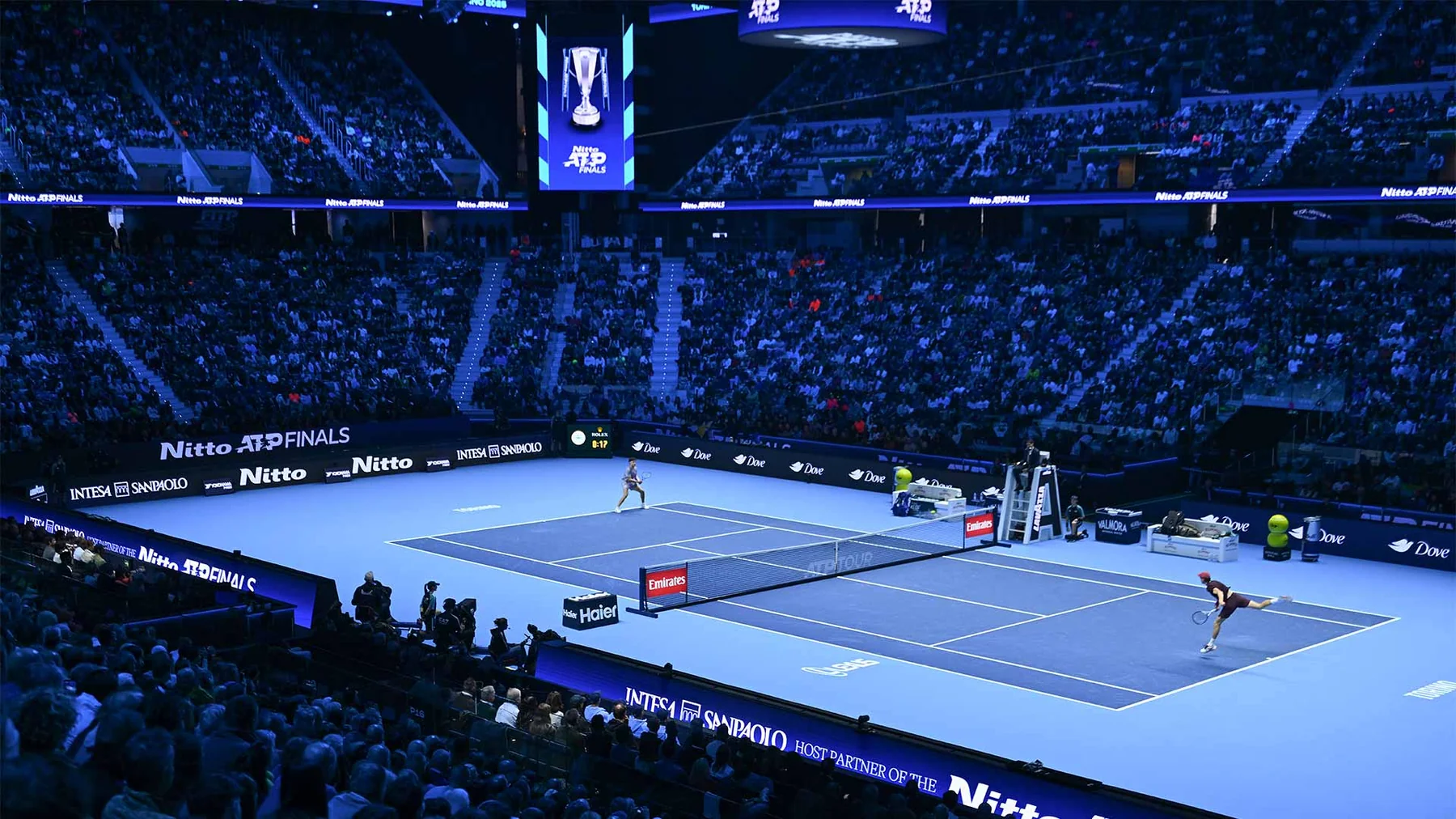
Take a scheduling question. Under section 7.21 of the ATP rulebook, the Referee, Tour Manager, or both prepare the daily order of play. The scheduling committee includes the tournament director, ATP Supervisor, Referee, and Tour Manager. The Supervisor chairs that committee and has the final decision when its members disagree. Once the day’s order of play has been released, a change requires the Supervisor’s approval. That is why a late change may show up on the official order of play without any announcement from a board director or chief executive. ATP Official Rulebook, sections 5.01, 5.04 and 7.21
The officials’ responsibilities continue once a match begins. The Supervisor assigns chair umpires to matches. The chair umpire conducts the assigned match under the applicable rules and on-court procedures. The director’s separate responsibility for the event helps explain why a competition decision and the event’s response to the crowd can come from different voices. An announcement about venue access or a ticket policy can come from the organizer even when a decision about play is made by the officials.
For a fan, the quickest way to use these distinctions is to look at the label on the schedule. The Turin ticket schedule describes a session, and the official order of play names the matches assigned to it. The event guide put the round-robin evening singles match at “not before 8:30 p.m.” local time. That phrase gives the earliest start. The doubles match and turnover ahead of it can affect the actual first point. Check the current order of play for a match assignment and the ticket schedule for the session printed on a ticket. Official early-round order of play, Turin ticket sessions
Where ATP Media and Tennis TV fit
ATP Media is the ATP Tour’s broadcast operation. It sells media rights, produces live coverage, and delivers programming to broadcasters. It also operates Tennis TV, the direct subscription service for fans who want to stream live ATP matches or watch replays. The people who produce the pictures and sell the rights have a different job from the tour officials who establish the competition’s rules and the committee that sets an event’s order of play. ATP Media’s description of its production and streaming work
This distinction helps when the same court appears on two different services. A viewer may find an ATP match through a broadcaster that serves their country or directly through Tennis TV where the match is available. These are two ways of reaching the audience. The production credits tell you where the coverage came from. The channel listing tells you which provider is carrying it for you. The ATP viewing guide organizes that second question by country and points to providers’ schedules.
The Tennis TV help center describes coverage from Masters 1000, ATP 500, and ATP 250 events, plus the Nitto ATP Finals and Next Gen ATP Finals. It says it streams singles and doubles throughout the Masters 1000 and 500 tiers, with selected action at the 250s. A particular camera feed or match can be easier to find by using the service’s order of play for that specific event. For example, start with the Turin match in the official event timetable and then confirm the time and listing on the service you plan to use. Tennis TV’s official coverage help
A different rights check is needed for the Australian Open, Roland-Garros, Wimbledon, or the US Open. Tennis TV’s support pages say it has no streaming rights for those four Grand Slam events, either live or on replay. A player’s familiar name, an ATP ranking next to it, or a score in the app does not establish who has match video. The useful identifiers are the competition, date, and country. Those let you distinguish a rights restriction from a match that is still waiting to start. Tennis TV’s Grand Slam streaming guidance
How to tell an ATP proposal from an effective decision
An ATP decision can have several dates. The first may be when the tour puts an idea up for discussion. Another marks approval, and a third tells players, tournaments, or viewers when it takes effect. Read the verbs in the latest notice and check which decision they refer to. A proposal under consultation, an approved business structure, and a rule in force can all appear in coverage of the same project.
What the 2028 announcement tells fans
Gaudenzi’s October 2026 open letter discussed proposals for player compensation, rankings, the calendar, and competition formats including doubles. It placed the package in a consultation and approval process ahead of meetings in Turin. The October blueprint guide covers that starting point. For what moved forward, use the ATP’s next announcement and read each item on its own timeline. October open letter from the ATP chairman
On November 20, the ATP said its board and ATP Media’s shareholders had unanimously approved ATP Ventures, a business intended to bring media, data, and central sponsorship rights together. The ATP said work on the agreement would take place during 2027 and operations were expected to begin at the start of 2028. It also projected more than $350 million in total ATP player compensation from 2028. In the same release, the tour said it would continue consulting on doubles proposals and expected to announce the 2028 calendar early in the 2027 season. Those statements establish a named approval, an expected operating date, and issues at other stages of the process. A reader interested in buying tickets still needs a published calendar with an event and its dates. November 20 OneVision update
Where to check the rule that applies
The ATP’s safeguarding program offers a comparison. The launch announcement came in December 2025 and covered ATP Tour and Challenger Tour tournaments. The published program document specifies January 1, 2026 as the date it came into force. A reader can therefore use the release to understand what was announced and the program to verify when it began. ATP Safeguarding Program, section 1.3
For a competition rule, start with the ATP’s current rulebook page, check the season and revision date, and open the relevant section. For a match time, use the tournament’s current order of play. For viewing, check the provider’s listing in your location. For a chair, CEO, or voting seat, use the corporate or annual board roster and look at the appointment date. Each source answers one part of what people commonly call an ATP decision. ATP rulebook and revision directory
About the author
ATP Schedule Editorial Team
The ATP Schedule editorial team turns match times, scores, tournament information and verified tennis news into clear answers fans can use quickly.
View all articles by this author →Fan discussion
Comments
Sign in with Google to comment. Keep the discussion helpful and tennis-focused. New comments are reviewed before they appear.
Loading comments…