China Open 2026 Men's Draw After Sinner's Withdrawal: Djokovic, Zverev and the Stakes
Sinner is out of Beijing. Follow the confirmed men's draw, Djokovic and Zverev's opening tests, the October 6 final and the ranking implications.
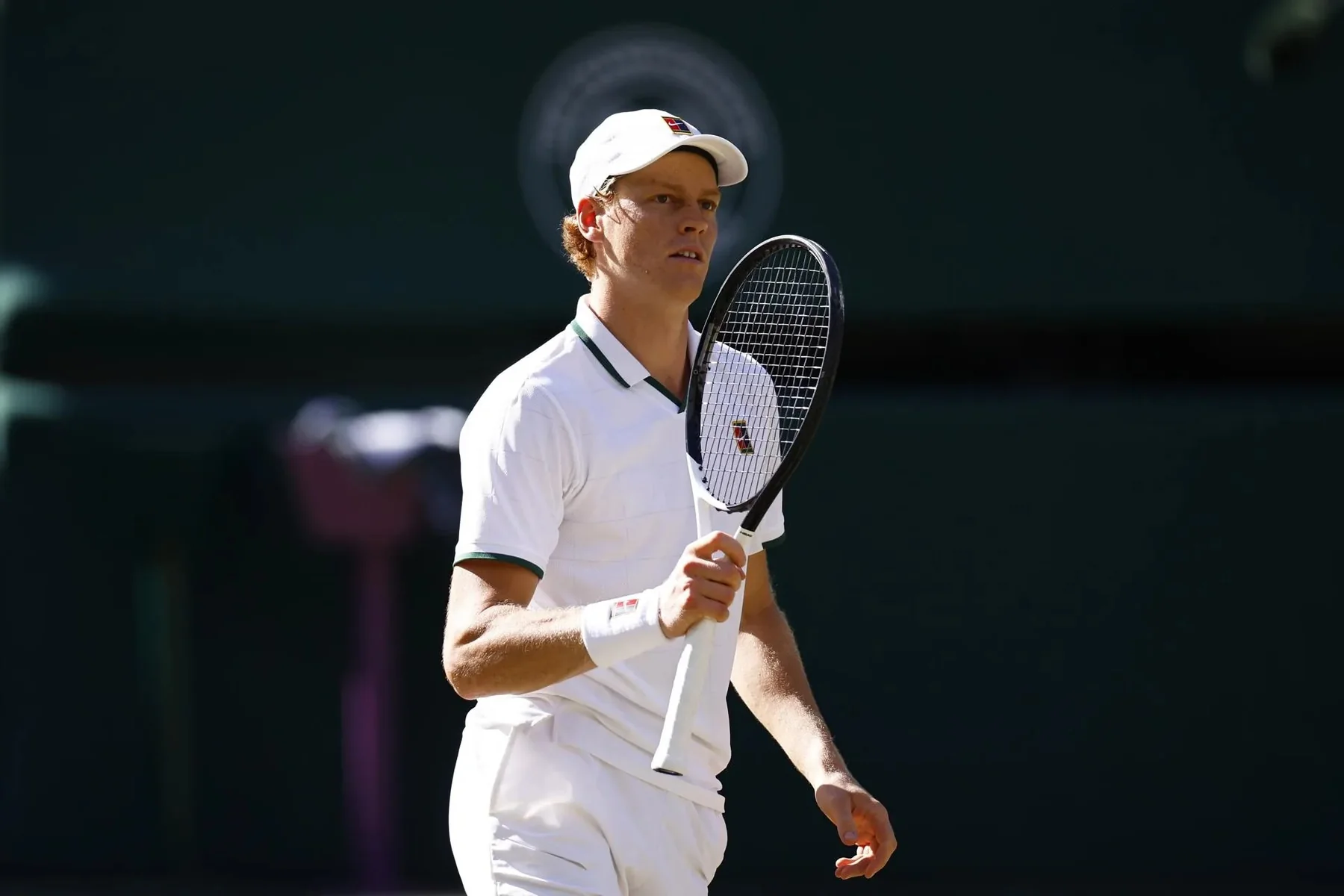
As of 28 September 2026, Jannik Sinner is out of the China Open, and the men's draw places top seed Alexander Zverev and six-time Beijing champion Novak Djokovic in the same quarter. They can meet only if both survive two rounds. This guide identifies the confirmed opening pairings, explains the rest of the ATP 500 bracket, gives the men's schedule through 6 October and separates the ranking implications from the annual Race. Qualifier names, court assignments and results can change after this snapshot.
Sinner is out: what is confirmed and what remains open
Jannik Sinner will not play the 2026 China Open men's event. The defending champion announced his withdrawal on 25 September because his knee was still not ready for competition. His place in the draw is no longer a question of a late fitness test: the published Beijing bracket is headed by Alexander Zverev, and Sinner is absent. For anyone searching an older entry-list preview, that distinction matters. An entry list records an intention to play; the draw reflects who actually made the field after withdrawals and replacements.
In the video statement reported by EFE and Sky Sports, Sinner said he was disappointed to miss a tournament where he has enjoyed success and wanted to return as soon as he could. That was a statement of intent, not a medical timetable. As of this 28 September draw snapshot, there is no sound basis for promising that he will play Shanghai or any other particular event. The next reliable signal will be an updated tournament entry status or a direct announcement from Sinner's team.
The loss is significant because Beijing was not merely a convenient warm-up. Sinner won its men's title in 2023 and again in 2025, beating Learner Tien in last year's final. A third title would have added another major hard-court result to his season. Instead, the knee problem that kept him out of the North American hard-court run and the US Open continues to interrupt a stretch of the calendar in which players normally collect match rhythm before the Shanghai Masters and the indoor finish.
That absence also changes how to read the draw. A preview written before 25 September may still put Sinner in the top line and discuss a title defence. It is now a historical preview, not a current bracket. The published 2026 draw places Zverev at the top, with Djokovic elsewhere in the same quarter. Their potential meeting is one of the new talking points, but each has a first-round opponent before that possibility becomes real. For the longer injury sequence leading to this decision, see our Sinner withdrawal timeline; the Beijing-specific consequences follow below.
How the 2026 Beijing men's draw is arranged
The 32-player men's bracket has eight seeds and no first-round bye for any of them. The important reading rule is simple: names next to each other are confirmed opening opponents; names in the same quarter are only potential later opponents. On the published 28 September draw, the seeds are Alexander Zverev, Félix Auger-Aliassime, Daniil Medvedev, Flavio Cobolli, Alex de Minaur, Novak Djokovic, Learner Tien and Jakub Mensik, in that order. Qualifying places still shown without player names should be treated as unfinished slots, not as byes.
Top quarter: Zverev and Djokovic share a path
Zverev is the top seed after Sinner's withdrawal and draws Cameron Norrie in round one. The adjacent first-round pairing is local wild card Shang Juncheng against Sebastián Báez. In the lower portion of this quarter, Juan Manuel Cerúndolo meets Chinese wild card Bu Yunchaokete, while sixth seed Djokovic plays Nuno Borges. That arrangement creates a possible Zverev–Djokovic quarterfinal. It does not create a booked match. Both men must win their opening two rounds, and any of Norrie, Borges or the players between them could change the expected script.
The first quarter is compelling for more than the headline pairing. Shang and Bu give local spectators two Chinese singles players to follow, while Báez and Borges offer opponents accustomed to competing against seeded players. A top-seed label tells you where Zverev sits in the bracket; it says nothing about the match score against Norrie. Fans who want to track the exact position of a player after a qualifier is inserted should keep the ATP live draw open alongside this dated explanation.
Medvedev and Mensik occupy the other top-half quarter
Third seed Medvedev starts against a qualifier. Jan-Lennard Struff and Thiago Agustín Tirante occupy the next pairing; another qualifier is drawn against Francisco Cerúndolo; and eighth seed Mensik opens against Alexander Bublik. The projected seeded quarterfinal is Medvedev against Mensik, but this is a section where the word “projected” matters. Bublik can make an opening match uncomfortable for a seed, and qualifying winners arrive having already played competitive tennis on these courts. Until the last qualifying places are filled, nobody can give a complete named route for Medvedev or Cerúndolo.
De Minaur, Cobolli, Tien and Auger-Aliassime fill the bottom half
Fifth seed de Minaur begins against Mariano Navone in the third quarter. That same region includes Ignacio Buse against Quentin Halys, Tallon Griekspoor against Andrey Rublev, and Roman Safiullin against fourth seed Cobolli. In the final quarter, seventh seed and 2025 finalist Tien meets Hubert Hurkacz; Zhang Zhizhen awaits a qualifier; another qualifier faces Arthur Rinderknech; and second seed Auger-Aliassime has Karen Khachanov immediately. The bottom half therefore has several first-round matches with genuine established-tour opposition, especially Tien–Hurkacz and Auger-Aliassime–Khachanov. A lower seed's route should not be described as easy simply because Sinner is missing from the event.
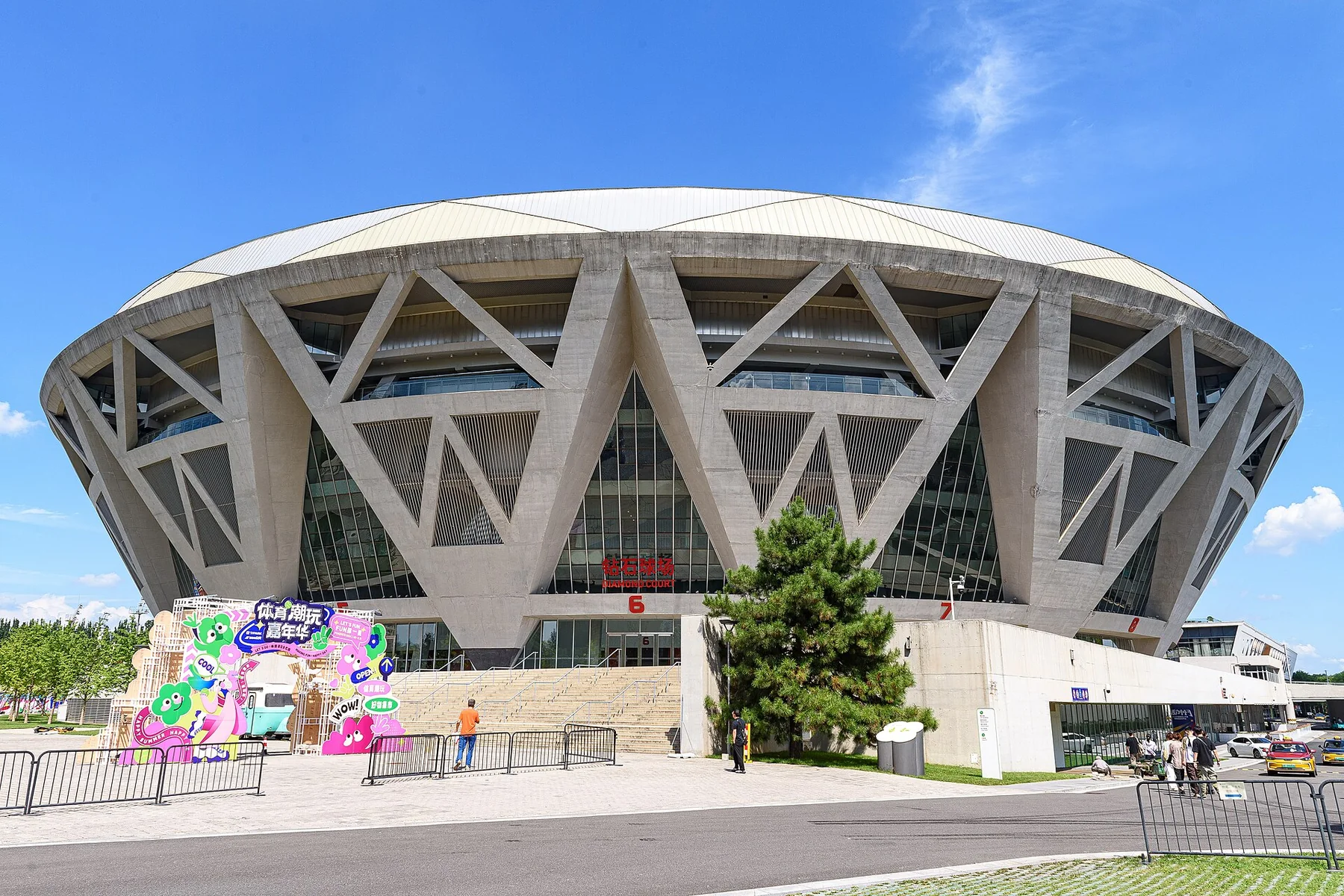
The draw also explains why a broader Asian swing schedule cannot substitute for a current Beijing bracket. It can show where this week sits on the calendar, while the draw settles specific opening opponents. Check the bracket again when the qualifiers and any replacements are named.
The first tests for Djokovic and Zverev
The projected quarterfinal attracts attention because Djokovic and Zverev are the two biggest names in the same eight-player section. Yet a realistic preview starts with the matches they have actually been assigned. Djokovic has Nuno Borges; Zverev has Cameron Norrie. Each man would then have to win a second match before the quarterfinal even exists. The draw is a sequence of tests, not a reservation for the seeds.
Djokovic begins against Nuno Borges
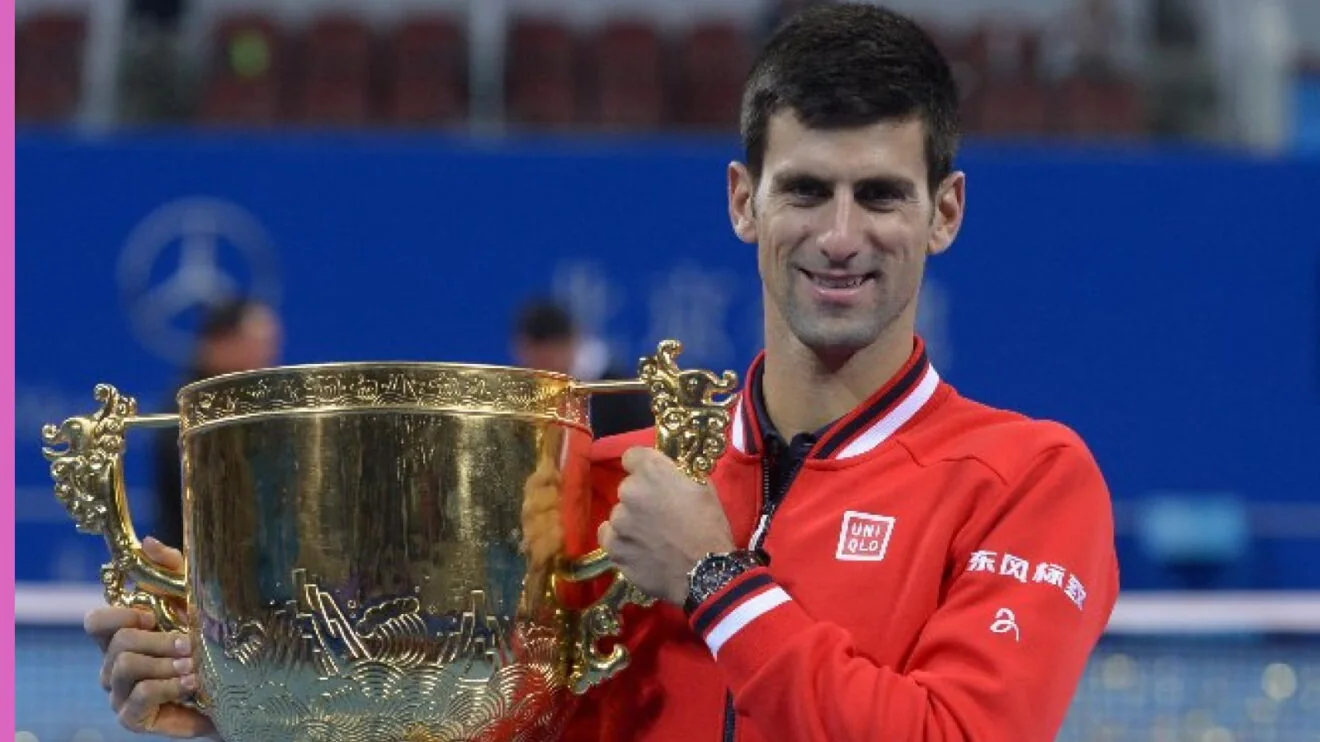
Djokovic comes back to Beijing with an extraordinary record: 29 wins from 29 China Open matches and six titles, the last in 2015. That history explains the reception his return is likely to receive, but it is not a measure of his current form. The 2026 season has included interruptions, and his first-round US Open loss to Mariano Navone in August raised questions about how comfortably he could compete through demanding conditions. The Associated Press account described the physical strain of that match. Beijing is a fresh event, so it would be careless to treat that match as a diagnosis or a forecast; it is context for why his first competitive performance here matters.
Borges is not a random qualifier. Djokovic beat him in the 2025 Athens quarterfinal, 7-6(1), 6-4, a previous meeting in which the first set reached a tiebreak. The tactical question is whether Djokovic can establish depth and control early enough to avoid another long opening match. This is an editorial lens, not a claim that a specific shot pattern has already decided their Beijing meeting. A clean performance would tell fans more about Djokovic's readiness than the mere fact of being entered in a draw.
Zverev opens with Cameron Norrie
Zverev has the top seed but does not receive a free pass into the second round. Norrie, a left-hander, made him work in their Cincinnati meeting in August: Norrie took the first set before Zverev recovered 3-6, 6-3, 6-3. Their match record offers a useful reminder that a favorable prior result can contain difficult passages. Zverev also beat Norrie at the Australian Open earlier in 2026, but the third-round contest included a set won by the Briton.
For Zverev, the first diagnostic will be how reliably he holds serve and starts neutral rallies against a left-handed opponent. For Norrie, extending the points and altering the usual backhand-to-backhand rhythm may be a way to make the top seed build his offense rather than receive it. Neither tactical idea is a statistical prediction. It is what to watch when the match is played. Only then does the draw offer a possible route toward Djokovic. Fans can follow both names through our ATP player directory while the official bracket supplies the live result.
Beijing match dates and how to read the order of play
The men's 2026 China Open runs from 30 September through 6 October, with qualifying on 28–29 September. The ATP 500 finishes before the women's WTA 1000, which continues at the same Beijing complex until 11 October. This difference is easy to miss on a combined China Open calendar. If you are planning specifically around Djokovic, Zverev or another ATP player, follow the men's timetable below rather than treating 11 October as the men's final date.
| Date in Beijing | Men's event stage | What is fixed |
|---|---|---|
| 28–29 September | Qualifying | Main-draw places are decided |
| 30 September–1 October | First round | All 32 players begin |
| 2–3 October | Second round | Last 16 narrow to eight |
| 4 October | Quarterfinals | Potential Zverev–Djokovic stage if both advance |
| 5 October | Semifinals | Two singles matches decide finalists |
| 6 October | Final | ATP singles title decided |
The dates combine the organiser's announced start and final with the LTA's round-by-round plan. They describe tournament stages, not a promise that a specific player will appear on a particular court or at a particular hour. A 32-player draw also means the top seed must play round one; there is no opening bye to push Zverev's first match automatically into October.
For a viewer outside China, the distinction between calendar date and match time is especially important. Beijing uses China Standard Time, UTC+8. A session advertised for Wednesday in Beijing can fall late Tuesday or early Wednesday elsewhere, depending on the viewer's time zone. Convert the published local start time only after the daily order of play names the match. Avoid relying on a schedule card that says merely “Wednesday” without a zone or court.
Qualifying also affects the bracket right now. Several positions in the draw still read “Qualifier,” so an early preview can identify Medvedev's section without naming his actual first-round opponent. Once the qualifying rounds end, use the day's official order of play to confirm that opponent and the court assignment. For the wider week, our match list and Asian swing guide give useful context, while the tournament order of play remains the authority for arrival and viewing plans.
What Sinner's absence changes in the ranking race
Sinner's withdrawal has two different point effects that should be kept apart. He cannot earn points from the 2026 Beijing event, and the 500 points attached to his 2025 title leave his rolling ranking calculation as the old result expires. Meanwhile the 2026 champion can earn 500 event points. None of those facts means Zverev automatically becomes world No. 1 this week. The amount a player gains in the published ranking can differ from the gross points shown for a tournament because old results and previously noncounting scores also move through the calculation.
Five hundred Beijing points are available, not guaranteed
Beijing is an ATP 500, so its men's champion receives 500 tournament points. The 2026 draw's points list shows 330 for the runner-up, 200 for a semifinalist, 100 for a quarterfinalist, 50 for reaching round two and zero for a first-round loss. These are results, not pre-awarded points. Zverev must win five singles matches to collect the champion's 500; Djokovic, Auger-Aliassime and every other entrant face the same requirement. Merely being the top seed or benefiting from Sinner's absence earns nothing on court.
The current No. 1 picture needs that caution. In a 28 September rankings breakdown, Sky Sport Italia put Sinner at 11,000 rolling points and Zverev at 9,630, a 1,370-point gap after Beijing's old-point changes were accounted for. Its analysis concluded that Beijing alone cannot make Zverev overtake Sinner in the published ranking. Even an event title closes only part of that distance. Future tournaments, points to defend, and possible replacement of a lower counting score remain relevant. The numbers are a dated snapshot, and should be checked again after matches are played.
The Live Race and the 52-week ranking answer different questions
The PIF ATP Rankings look back over a rolling period and determine the current official order used for seeding and records. The Live Race to Turin starts from this season's results and points toward the year-end picture and ATP Finals qualification. A player can lead one list while trailing the other. On 25 September, Sky's withdrawal report listed Zverev ahead of Sinner in the Live Race, 8,650 to 7,950. Those figures describe the Race on that date; they are not the 28 September rolling ranking totals above and should not be passed off as an evergreen table.
The simplest way to read a new Beijing result is to ask three questions: what did the player win at this event, what corresponding old result is being removed from the rolling list, and did another score enter the counting set? That is why “Zverev gains 500” and “Zverev's ranking rises by 500” are not interchangeable claims. Our ATP rankings explainer goes through the calculation, while the ATP Finals guide explains what the annual Race is used for. For now, Beijing is an opportunity to alter the balance, not a confirmed handover of the No. 1 position.
What fans should check as the bracket moves
This article is a 28 September snapshot of the men's draw. It can explain the bracket's structure and the story created by Sinner's withdrawal, but it cannot freeze a week of tennis before the first main-draw ball is struck. Three checks will keep the guide useful as the tournament moves: confirm the final qualifier names in the draw, read the daily order of play for exact match assignments, and wait for a verified result before projecting the next round. Each check answers a different question.
First, look again at the official ATP Beijing draw after qualifying finishes. The current bracket includes unnamed qualifier positions, so an opponent described here as “a qualifier” will soon be a specific player. A withdrawal after the draw can also bring in a lucky loser and change one position. A player name on an old entry list is less useful than the current bracket when you are deciding which match to follow.
Second, use the tournament's daily order of play for the court and start window. A round schedule says the quarterfinals are planned for 4 October; it does not tell you which of the quarterfinals will be on the Diamond Court or when Zverev's next match begins. Tennis sessions can move within their published window as earlier matches run long. For a ticket or a television reminder, the day-specific order is the practical document. Check the time zone on the listing, especially if you are watching from Europe or North America.
Third, read actual results before planning around a projected meeting. Zverev–Djokovic is a possible quarterfinal, while Zverev–Norrie and Djokovic–Borges are the real first-round pairings. Our ATP match list helps you follow completed and upcoming matches, and the Asian swing guide shows what comes next. The Beijing men's final is planned for 6 October, as the broader Shanghai Masters event is beginning. That proximity makes recovery, travel and workload relevant after Beijing, but it does not prove a particular player will appear in Shanghai. The only useful 2026 Beijing prediction today is a conditional one, kept separate from the names and dates already confirmed.
Beijing now has an open title race and an unusually intriguing top quarter. The first matches—not the projected quarterfinal—will show who actually benefits from Sinner's absence. Recheck the official draw and order of play as qualifying finishes.
About the author
ATP Schedule Editorial Team
The ATP Schedule editorial team turns match times, scores, tournament information and verified tennis news into clear answers fans can use quickly.
View all articles by this author →Fan discussion
Comments
Sign in with Google to comment. Keep the discussion helpful and tennis-focused. New comments are reviewed before they appear.
Loading comments…