Why Did Jannik Sinner Withdraw From the 2026 US Open? Injury, Return Date and Ranking Impact
Why Jannik Sinner withdrew from the 2026 US Open, what is confirmed about his knee, the possible return window and effects on the draw and rankings.
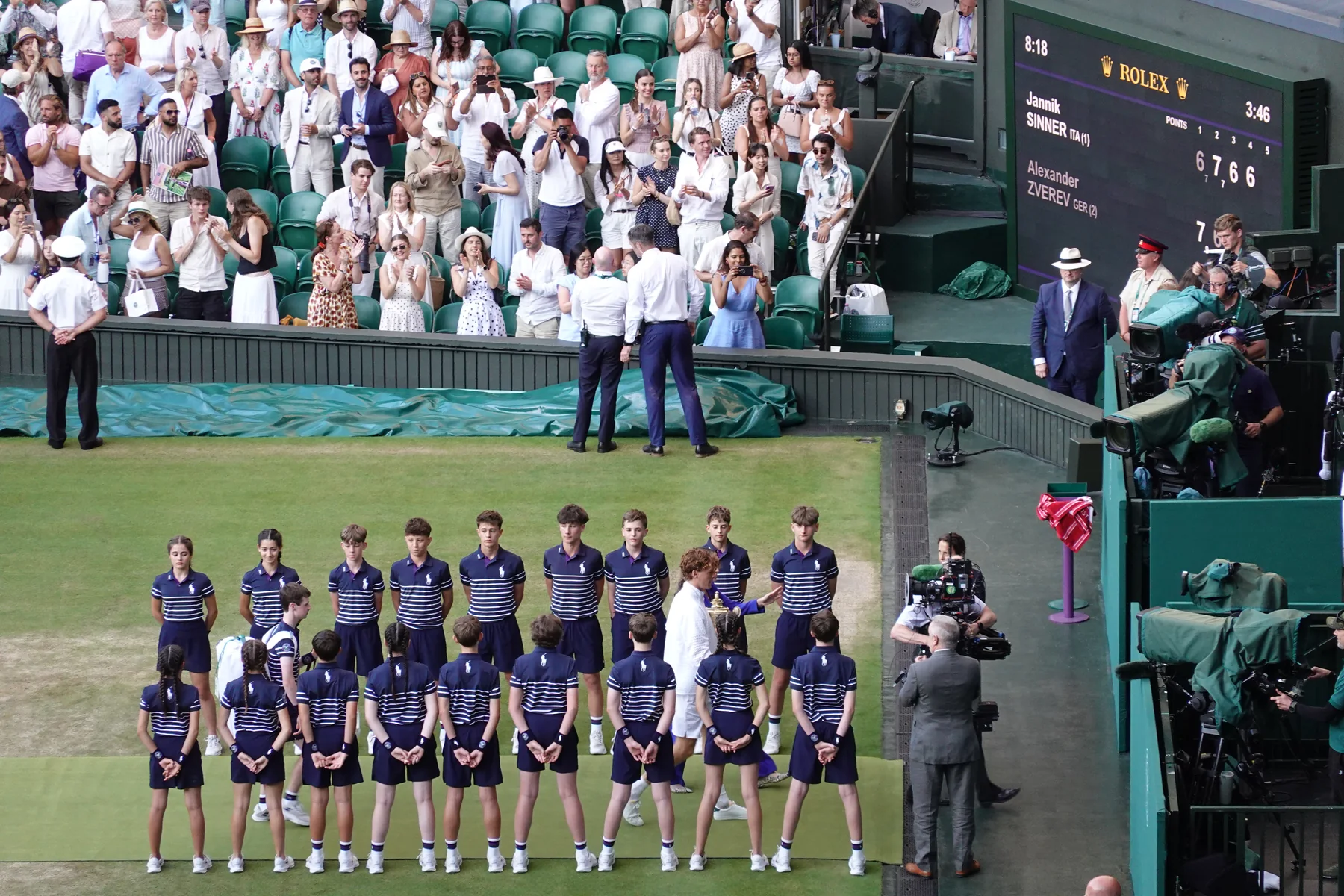
Jannik Sinner withdrew from the 2026 US Open because his right knee had not recovered enough for Grand Slam competition. The World No. 1 had already missed Montreal and Cincinnati, then found during a return to court in Monte Carlo that he needed more time. As of September 9, no public statement had named a diagnosis or guaranteed a comeback date.
This guide separates that confirmed record from speculation. It follows the timeline after his Wimbledon title, explains how the absence changed the New York draw and the rolling ATP rankings, clarifies why his ATP Finals qualification is safe, and assesses Beijing and Shanghai as possible return checkpoints. Dates and status can change, so each forward-looking point is labelled by the strength of its evidence.
Why Sinner withdrew from the 2026 US Open
Jannik Sinner withdrew because his right knee was not ready for the physical demands of the 2026 US Open. The decision was announced on August 21, nine days before the main draw began. The US Open's official report connected the same knee problem to his earlier absences from Montreal and Cincinnati. It did not describe a new accident in New York.
The right knee was still not ready
Sinner had returned to the practice court in Monte Carlo with his team and medical staff, but that test did not produce the green light he needed. His public message said he realised he required more recovery time. That wording matters. Practice can be controlled: duration, movement patterns and intensity can all be reduced. A Grand Slam match cannot. A contender may need to change direction for four or five hours, recover in roughly 48 hours and repeat that load through seven rounds.
The withdrawal was therefore a readiness decision, not evidence that Sinner lacked motivation or had chosen to skip the tournament for ranking strategy. He called New York special and said he was disappointed to miss it. Before the injury interruption, the US Open listed him at 44-3 for the season, with titles at Indian Wells, Miami, Monte Carlo, Madrid, Rome and Wimbledon. That form made the absence more consequential, but it did not make playing through an unresolved knee issue sensible.
What Sinner actually said
The most reliable description remains deliberately narrow: a right knee issue that had not recovered sufficiently. When Sinner withdrew from Cincinnati on August 9, he said the knee was bothering him and that he was not ready to compete after consulting his doctors. At that stage he still hoped to prepare for the US Open. The later practice block changed the decision, which shows why an athlete's target and an official return are different things.
No public statement identified a ligament, tendon, cartilage problem or severity grade. Fans should be cautious when a social post or headline supplies more medical precision than the player did. The useful conclusion is simple: Sinner and his team tested the knee, judged the five-set risk too high and withdrew before the draw. His profile and future results can be followed through the site's ATP player directory, but any prognosis must wait for a named event entry or a new medical update.
The injury timeline from Wimbledon to New York
Sinner's US Open withdrawal was the third stop lost during a six-week interruption, not an isolated late decision. His last completed tournament ended with a major trophy at Wimbledon on July 12. He then withdrew from Montreal, Cincinnati and finally New York. Reading those announcements in order shows how an intended short recovery period became a full North American hard-court absence.
Montreal was the first warning
At Wimbledon, Sinner defeated Alexander Zverev 6-7(7), 7-6(2), 6-3, 6-4 to win a second consecutive title at the All England Club. The final required nearly four sets of high-level movement, but the contemporary match report did not say Sinner had suffered the later-described right knee problem there. That distinction prevents a tidy but unsupported origin story.
Montreal announced his withdrawal on July 24, before the tournament's August window. Sinner's statement said that he and his team had considered all factors and made a difficult decision, without publicly naming the knee. For fans planning the summer swing, this was the first schedule warning. It also removed his first opportunity to adjust from grass to outdoor hard courts and to test his movement under match pressure.
Cincinnati ended the planned US Open buildup
The picture became more specific on August 9. The ATP's Cincinnati report identified a right knee issue and relayed Sinner's assessment that he was not ready to compete. He still said he was focusing on the US Open. That was a target, not a guarantee, and it depended on how the knee responded when he returned to court.
By August 21, the experiment had failed the required test. Sinner had practised in Monte Carlo, consulted his medical team and concluded that he needed more time. Withdrawing before the US Open protected him from entering a best-of-five event without a completed hard-court match since the spring. The site's ATP tournament directory makes the lost sequence clear: Montreal and Cincinnati normally provide escalating preparation before New York, especially for a contender expected to play deep into every draw.

The honest timeline therefore has one firm beginning and one unresolved gap. Wimbledon was his last match; Montreal was the first withdrawal; Cincinnati publicly named the knee; New York confirmed that recovery remained incomplete. It does not establish the precise day or movement that caused the injury.
What is known and unknown about the knee injury
The public record confirms the affected side and the competitive outcome, but it does not support a precise diagnosis or recovery countdown. That boundary is especially important with a World No. 1, because every practice clip can be treated online as proof of either full fitness or a setback. Neither conclusion follows automatically.
| Confirmed | Still unconfirmed |
|---|---|
| The issue involves Sinner's right knee. | The exact tissue, diagnosis and severity grade. |
| It kept him out of Montreal, Cincinnati and the US Open. | The precise date and movement that caused it. |
| He returned to controlled court work in Monte Carlo. | Whether he can tolerate consecutive full matches. |
| That training block showed he needed more recovery. | A guaranteed return tournament or medical clearance date. |
This distinction changes how fans should read updates. A player can hit from the baseline without completing maximum-speed defensive slides, repeated decelerations or several hours of serving and returning. He can also be entered on a preliminary list and later withdraw. Conversely, a cautious withdrawal from one event does not prove that surgery or a long absence is inevitable.
CBS described the problem as ongoing and noted that Sinner had not competed since Wimbledon. The official US Open account reported that his team had worked on the knee and tested it on court. Neither source released imaging or named a medical procedure. Therefore, an article claiming a torn ligament, tendon damage or a fixed number of recovery weeks would go beyond the available evidence.
The most useful editorial rule is to update the conclusion only when the evidence changes. A new player statement, tournament withdrawal, confirmed draw or completed match would qualify. A short practice video or an unnamed forecast should be labelled for what it is. Until then, the accurate description is an unresolved right-knee issue that prevented Sinner from preparing safely for New York. Readers can use the player directory to track verified entries and results without turning limited medical information into certainty.
How Sinner's absence changes the US Open and rankings
The withdrawal changed three things in different ways: the seed order changed immediately, Sinner lost a chance to defend ranking value, and his ATP Finals place remained secure. Combining those effects into one claim creates confusion. A Grand Slam withdrawal can reshape a draw without automatically deciding World No. 1 or removing a player from the year-end championship.
The men's draw lost its top seed
Sinner was World No. 1 when he withdrew, so the tournament lost the player who would have headed the men's bracket. CBS reported that Alexander Zverev moved into the No. 1 seed and returning champion Carlos Alcaraz became No. 2. That affected which halves players occupied and when the highest remaining seeds could meet.
The competitive opening went beyond two names. The US Open's own analysis pointed to Novak Djokovic, Taylor Fritz, Ben Shelton and Felix Auger-Aliassime among those with a clearer opportunity. That did not make any player an automatic finalist. It removed a 44-3 opponent with six 2026 titles from one path through the bracket, while every remaining contender still had to win seven matches. Fans can follow what actually happened through the site's ATP results rather than retroactively treating the draw as predetermined.
Ranking points are a 52-week calculation
Sinner's ranking consequence is best understood as a lost replacement opportunity. ATP singles standings roll through a results window: when the 2026 US Open is processed, the corresponding 2025 result leaves the active calculation. Sinner was the 2025 runner-up, so missing New York meant he could not earn a fresh major result to replace that performance.
That does not allow a precise final ranking to be declared before the tournament ends. Rivals add points according to their own rounds, and other results in the calculation can matter. The safe statement is that Sinner earned zero from the 2026 US Open and left the door open for rivals to reduce or overturn his advantage. Any post-event total should come from the published ATP ranking, not a social graphic that ignores which results are dropping.
Turin qualification is already secure
The year-end event is the simplest part. ATP announced in July that Sinner became the first player to qualify for the 2026 Nitto ATP Finals when he reached the Wimbledon final. His US Open absence can influence seeding, form and the year-end No. 1 contest, but it cannot undo that qualification.
The remaining question is fitness, not eligibility. Turin runs November 15-22, leaving a substantial calendar gap, yet entry on paper does not guarantee participation. The dedicated ATP Finals 2026 guide tracks the field and format; Sinner's own status still requires a later competitive or medical signal.
When could Sinner return to the ATP Tour?
Beijing, beginning September 30, is the earliest widely reported target for Sinner's competitive return, but it should not be presented as a guaranteed comeback date. An entry list shows intention and preserves a player's place. The final proof comes later: continued fitness, remaining in the draw and appearing on an order of play.
Beijing is a reported target, not a confirmation
AS reported on September 2 that Sinner had been confirmed for the China Open field. The ATP 500 runs from September 30 through October 6, giving him several additional weeks after the US Open withdrawal. It would also be a meaningful return because he won Beijing in 2025 and would arrive without a tour match since the Wimbledon final.
There is still a difference between being listed and playing. The same summer already showed how an initial plan can change: after withdrawing from Cincinnati, Sinner said he was focusing on New York, then withdrew when practice exposed that he needed more time. Beijing should therefore be described as the current target. Fans buying a single-session ticket primarily to see him should wait for the draw and daily schedule or accept the normal withdrawal risk.
Shanghai is the next major calendar checkpoint
The official ATP tournament directory places the Shanghai Masters immediately after Beijing, from October 7-18. Shanghai offers more ranking points and a longer event window, but it is not automatically an easier medical choice. A deep Beijing run would create repeated match load and a rapid move between cities; missing Beijing would leave Shanghai as a first tournament back at Masters 1000 intensity.
Reported first target and a title defence, pending fitness and draw confirmation.
Next major checkpoint, not a promised fallback if the knee needs longer.
Reports about rehabilitation can help establish direction, but they should not outrank a player's own statement or tournament documents. The sensible approach is to check the ATP tournament list when entries update, then look for a draw and match time. Until Sinner completes that chain, his return remains planned rather than confirmed.
What fans should monitor before Sinner plays again
A reliable comeback is a chain of evidence, not a single headline. Sinner can be aiming for Beijing while still needing to pass the physical work that determines whether he travels and competes. Fans should give more weight to each signal as the tournament approaches.
- Read the player's current wording. “Targeting” or “hoping” expresses intention. “Cleared” is stronger, although even clearance does not guarantee a match.
- Check the official entry list. It confirms that a place has been reserved, but players often enter before the final fitness decision.
- Wait for the draw. A named first-round opponent is stronger evidence. A withdrawal can still create a replacement or lucky-loser change.
- Use the daily order of play. A court and start window provide the first practical viewing confirmation. “Not before” remains a floor rather than an appointment.
- Confirm the match status. Only a completed warm-up and opening point end the pre-match uncertainty; only the result confirms a completed return.
This hierarchy also helps with competing reports. A newspaper may have good information about rehabilitation, while an official event list controls tournament details and Sinner controls what he discloses about his health. When those sources differ, describe the gap instead of choosing the most optimistic version. His 2026 US Open decision is the clearest warning: Cincinnati was once the route to New York, yet later court work showed that the knee needed longer.
For viewers, the final checks belong on the live schedule. The ATP schedule this week provides the event context; the today page narrows that to a match, local time and status. For ticket buyers, the risk threshold should be stricter. A session contains multiple matches, so buy for the event experience unless the order of play is published and the ticket remains worthwhile if one player withdraws.
Sinner has already qualified for Turin and has no need to prove his value by rushing. The meaningful next update will be one that changes competitive evidence: a confirmed draw, a first match or a revised withdrawal. Until then, Beijing is a target, Shanghai is the following checkpoint, and recovery remains the controlling issue.
The current position is cautious but clear: Sinner is recovering from a right-knee issue, Beijing is a reported target, and no match return is guaranteed. The next reliable answer will come from the entry, draw and order-of-play chain rather than a guessed medical timetable.
About the author
ATP Schedule Editorial Team
The ATP Schedule editorial team turns match times, scores, tournament information and verified tennis news into clear answers fans can use quickly.
View all articles by this author →Fan discussion
Comments
Sign in with Google to comment. Keep the discussion helpful and tennis-focused. New comments are reviewed before they appear.
Loading comments…