Why Joao Fonseca Ended His 2026 Season and What It Means for 2027
Fonseca chose recovery over a Basel title defence and Paris. His decision has ranking consequences, while his 2027 return and Australian Open seed remain unresolved.
Why Fonseca stopped before Basel and Paris
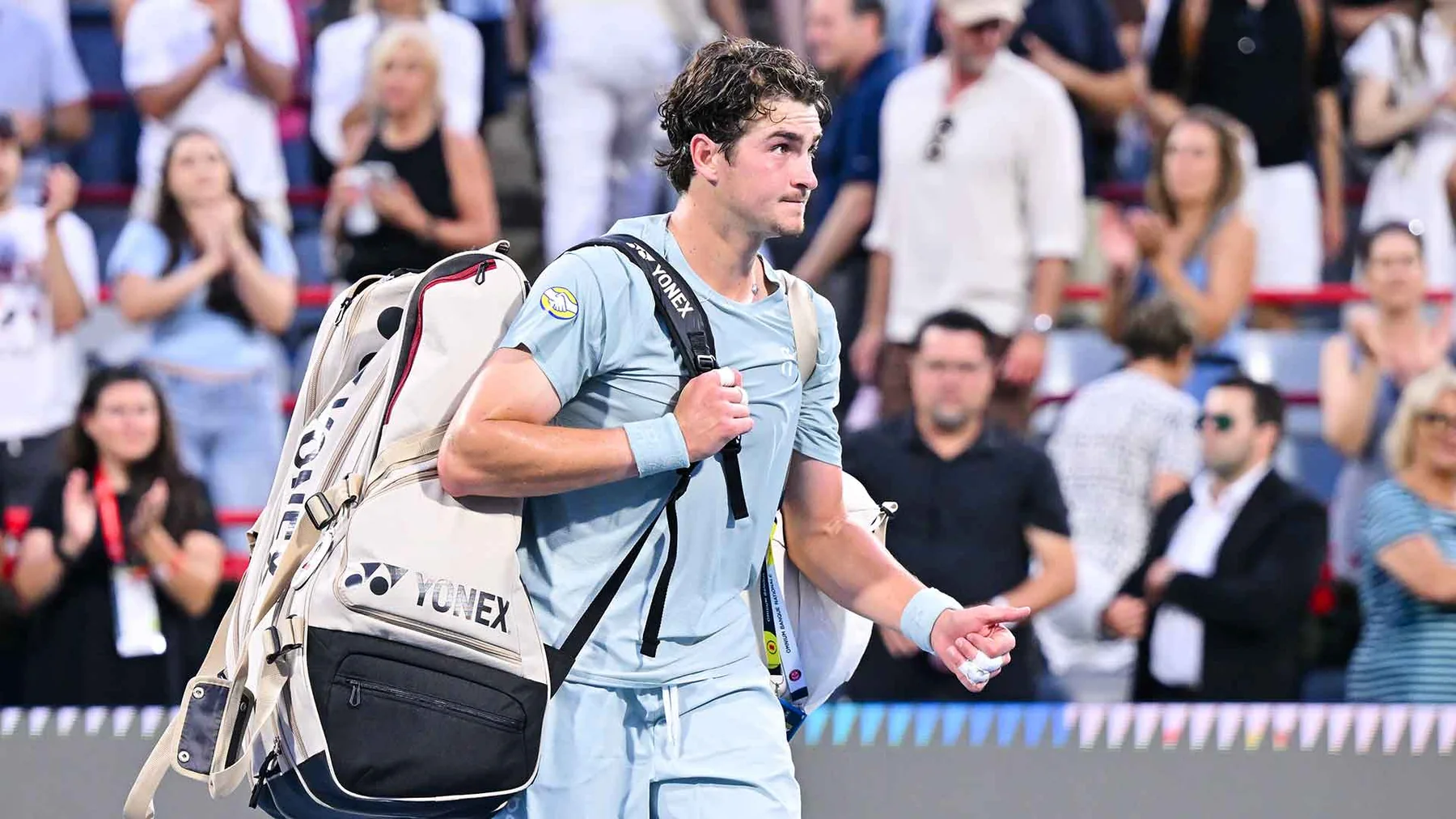
Joao Fonseca ended his 2026 season because he and his team judged that he was still not ready to compete at his intended level. The October 17 decision removed him from Basel and Paris and shifted his preparation toward 2027. As of October 30, that announcement is the clearest explanation of his absence during the European indoor swing.
What his October statement actually confirmed
In the video reproduced by the ATP's October 17 report, Fonseca described an attempted sequence: miss Asia to recover, return in Europe, then reconsider after discussions with his team. The decision therefore followed a recovery period that had already disrupted his calendar. It was not an announcement that an otherwise uninterrupted season had suddenly ended.
His choice also has an unusually visible consequence in Basel: he cannot defend the tournament where he won his biggest title to that point. That makes the withdrawal more disappointing for supporters, but it does not tell us how close he was to competitive readiness. A title, a ranking position and the emotional appeal of returning to a successful venue cannot measure whether a player is ready for repeated matches.
For fans checking this week's ATP schedule, the practical answer is simple: do not expect a late addition to either field on the basis of an earlier plan. His announced priority changed. An old entry listing or a promotional photograph cannot override a subsequent withdrawal.
What it did not reveal about the injury
Field Level Media's account explicitly distinguishes the unspecified injury in this announcement from the abdominal problem associated with his earlier US Open absence. That distinction matters. The October message does not provide a fresh diagnosis, a clinical severity grade, a surgical plan or a guaranteed recovery date.
It is reasonable to read the decision as a preference for a more sustainable return; that follows his stated priorities. It would go further than the evidence to identify a particular stroke as the cause, declare a permanent limitation, or promise that extra rest will eliminate every problem. Supporters can acknowledge the frustration without turning a statement about readiness into an amateur medical report. The next useful update will be one that changes what is actually known about his availability.
How his attempted return developed during 2026
The end-of-season decision came after several separate attempts to manage his availability. The useful timeline starts with an August withdrawal, includes a September Davis Cup appearance, and ends with the abandoned European return. Those stages explain why seeing Fonseca on court once did not mean that his autumn schedule was secure.
From Cincinnati to the missed US Open
The ATP's August 18 Cincinnati report identified discomfort on the left side of his abdomen during practice. He had beaten Botic van de Zandschulp but withdrew before a third-round meeting with Christopher O'Connell. This was a withdrawal before that match began, rather than a defeat completed on court or a retirement partway through their encounter.
On August 24, the ATP reported his US Open withdrawal. His statement described tests and the start of treatment, with more time needed before he could compete at a high level. Those are the details he made public then. They establish an abdominal issue in that period; they should not be expanded into an October diagnosis that the later announcement did not give.
The calendar makes the distinction between intention and outcome especially clear. Missing Cincinnati's next round did not produce a ready player for New York. Missing the Asian swing did not produce the European return he had hoped for. A target event is a planning reference, and the decision can change when the target approaches.
Why a Davis Cup appearance did not settle the question
Fonseca did play for Brazil against Switzerland in September. The official Davis Cup record records a 4-6, 6-3, 6-2 win over Dominic Stricker in the September 18-19 tie. That completed three-set match belongs in his season story and explains the additional victory between the ATP's August and October season totals.
It does not establish that he was subsequently ready for an uninterrupted run of tour events. That is a limited conclusion about what a result can prove, not a medical opinion about why his condition changed. A score records the contest that happened. It cannot certify readiness for a future tournament or tell a spectator what the player felt the following morning.
When revisiting tennis results, keep the date and competition attached to each appearance. The September national-team win and the October tour withdrawals are compatible facts. Reading them together produces a more accurate picture than either describing him as absent since August without qualification or treating that single return as evidence that his later decision was unnecessary.
What happens to his Basel ranking points
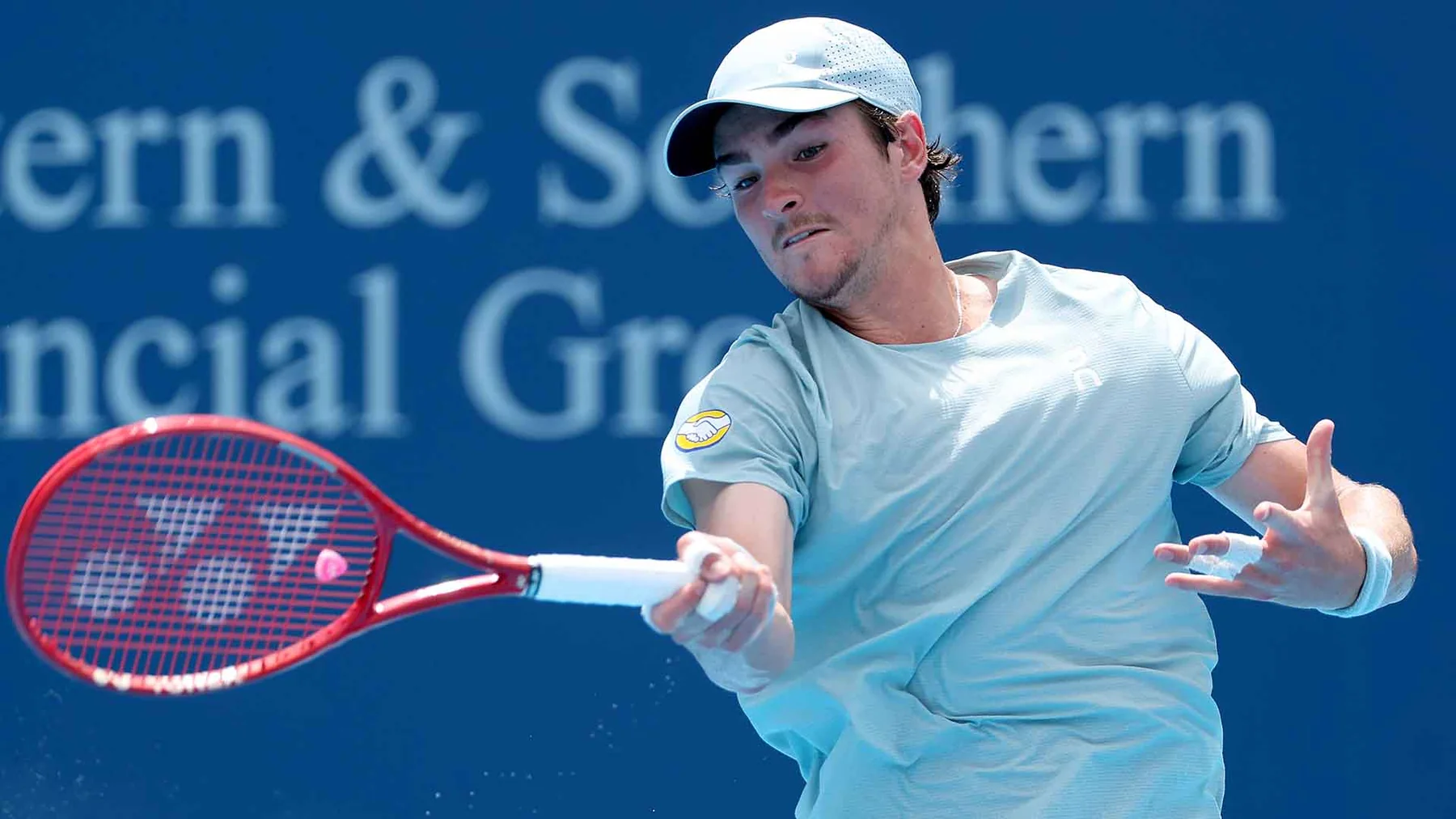
Fonseca's 2025 Basel title was worth 500 ranking points. Ending his season means he cannot earn a new Basel result in 2026. The important distinction is that the old result leaves the ranking calculation under the normal ranking calendar; announcing a withdrawal does not itself trigger an immediate 500-point fine.
An expiring result is different from a new penalty
He earned that title by beating Alejandro Davidovich Fokina 6-3, 6-4 in the 2025 final. It was his second tour-level singles title and his first at ATP 500 level. The achievement remains part of his career record even when its points cease to contribute to his current ranking.
The ATP's 2026 ranking rules use the preceding 52-week period, subject to specified exceptions and counting requirements. That rolling calculation is why supporters talk about defending points: a player has a result leaving the period and an opportunity to earn another. He is not required to repeat the same finish for the original win to remain legitimate.
| Question | What it measures |
|---|---|
| Did he win Basel in 2025? | A permanent historical result. |
| Does that title still count now? | The result's position in the ranking period. |
| How many points does he have? | The total after eligible results and counting rules. |
| Where is he ranked? | His position relative to other players. |
Why losing 500 points does not fix his exact ranking
A movement in points and a movement in places are different calculations. Other players are adding results and losing old ones too. A prediction made on October 17 cannot become an official October 30 ranking simply by being repeated, and the number printed beside his name in that announcement belongs to its publication date.
Nor should every simplified subtraction be presented as a complete ranking audit. The counting rules determine which results belong in a player's total, with different treatment for mandatory events and other eligible tournaments. A precise calculation needs the current breakdown, relevant expiry dates and any applicable replacement results. The honest conclusion here is the directional one: a major result is leaving without a fresh Basel campaign to replace it.
Our ATP rankings explanation sets out the wider distinction between points, ranking and entry. For Fonseca, the sporting cost is clear without claiming a final year-end position: he gives up opportunities to build his total while competitors continue. His health decision and its ranking consequence can both be real without one serving as proof that the other was mistaken.

Is Fonseca certain to be unseeded at the 2027 Australian Open?
No official January seed list can be inferred from his October withdrawal. Losing the opportunity to replace important points puts his seeding prospects under pressure. It does not settle the ranking that will be used, the composition of the field, or even his own eventual availability for Melbourne.
Seedings depend on the relevant ranking and field
The 2026 Grand Slam rulebook bases seed selection on the ranking list dated approximately seven days before the tournament and says seedings become official with the final draw. That is the current rules framework, rather than a published decision about Fonseca in 2027.
The Australian Open's own explanation of rankings and seeds illustrates why entry and seeding need separate attention. Main-draw acceptance is determined earlier; the usual 32 singles seeds are selected much closer to the draw. A player can be safely inside a main-draw field while sitting outside its seeded group.
The consequences are sporting rather than cosmetic. Seeds are distributed through the bracket to keep them apart in the early rounds. An unseeded Fonseca could face one immediately, making a return more demanding from the first match. But 'could' matters: an unseeded player is not automatically drawn against the top seed, and a favorable draw does not guarantee an easy opening match.
There is still time for other players' totals to move and for the field to change. A forecast should state its date, assumptions and uncertainty. Saying that a seed is at risk is a defensible reading of a lost scoring opportunity. Saying the tournament has already assigned him an unseeded place confuses a projection with an official list.
Protected ranking does not create a seed
Protected ranking is another separate question. Under the ATP's entry-protection provisions, a qualifying absence, an application and supporting evidence are required; it is not switched on automatically whenever an injury is announced. Most importantly for this discussion, entry protection is not used for seeding.
That distinction rules out an easy but misleading shortcut: he cannot simply preserve an old position for the purpose of becoming a Melbourne seed. Nor should readers assume that he has applied for protection or meets every condition. His September appearance belongs in any eligibility timeline, and a season-ending announcement in October does not establish a six-month absence before January.
When comparing names in the ATP player directory, ask three different questions: can the player enter, will he play, and will he be seeded? An answer to one does not answer the others. For Fonseca's supporters, confirmed fitness and participation will matter before the number beside his name in the draw.
What his shortened season still achieved
Fonseca's year combined meaningful progress in major tournaments with a failure to sustain the calendar he wanted. Those assessments can coexist. The most convincing evidence of progress is his first Grand Slam quarterfinal, reached through difficult matches against established opponents, rather than a prediction about where his career must eventually lead.
Deep runs and a disrupted calendar can coexist
At Roland Garros he beat Novak Djokovic 4-6, 4-6, 6-3, 7-5, 7-5 in four hours and 53 minutes. The ATP's match report records three consecutive aces to finish the contest after Djokovic threatened another break. That is a specific example of executing under pressure, not simply hitting spectacular shots in a short compilation.
Backing it up made the achievement more substantial. Two days later, he beat two-time finalist Casper Ruud 7-5, 7-6(8), 5-7, 6-2 to reach his first major quarterfinal. He saved three set points in the second-set tiebreak, lost the third set and then regained control in the fourth. That sequence gives fans something concrete to discuss about competitive resilience.
It would be misleading to use those matches as proof that he had no physical concerns later, just as it would be misleading to let the autumn withdrawals erase them. Performance describes what he achieved in those contests. Availability describes whether he could keep entering and completing tournaments across the season. They answer different sporting questions.
Earlier in the year, his first Masters 1000 quarterfinal came in Monte-Carlo. The ATP's April account of his development also placed that run alongside competitive meetings with Jannik Sinner in Indian Wells and Carlos Alcaraz in Miami. A close defeat to a leading player does not equal a title, but these encounters help explain why expectations remained high despite interruptions.
For an assessment across ATP tournament levels, the distinction is useful: a first Slam quarterfinal, a Masters quarterfinal and a previous ATP 500 trophy each demonstrate something different. None can stand in for the others, and none tells us exactly how many matches he would have won in an uninterrupted year.
The editorial judgment is therefore measured. He showed the ability to solve demanding tennis problems and remain competitive through long matches. He did not turn that into a complete, stable season. That leaves a clear ambition for 2027 without converting talent into a guaranteed top-ten finish or an injury into a permanent verdict on his future.
What to watch before his next tour match
The most useful next development will be a confirmed competition plan supported by Fonseca and the event involved. His October statement set a direction toward 2027 but did not name a first tournament or an opening-match date. Treat a predicted return as a prediction until the evidence changes.
Confirmation matters more than a predicted return date
There are several stages between planning a comeback and playing a match. A player update explains intention. An entry list indicates a tournament commitment at its relevant deadline. A draw gives an opponent, subject to withdrawals. An order of play supplies the scheduled day and court. Each step answers a narrower question than a headline announcing that a player is 'back.'
The ATP's competition rules distinguish advance entry deadlines from the daily order of play. The latter is the published summary of matches scheduled for a particular day. This is why an early entry announcement should not be turned into a precise viewing appointment months beforehand.
For fans considering travel, make the same distinction between an advertised appearance and a tour return. An exhibition, if confirmed, is a separate type of engagement. It is not evidence of ranking points earned, a Grand Slam entry, or an uninterrupted run of ATP matches afterward. Check the conditions of any ticket separately rather than buying on an assumed comeback narrative.
Judge the comeback across matches, not one highlight
When he does compete again, the first result will be interesting, but several matches will offer a better sporting picture. Watch how he builds points on serve, how he responds when opponents extend rallies, and whether his level holds after a difficult set. Those are tennis observations; they cannot substitute for his team's assessment of his health.
A short clip can show a powerful forehand without showing the preceding return game, the score pressure or the next day's recovery. Equally, an early defeat can reflect a strong opponent or poor execution on the day without establishing that the entire comeback has failed. Keep the opposition, surface and match situation in the assessment.
Use the ATP schedule for today once his participation is confirmed, then check the event's latest order of play near the match. That produces a practical viewing plan while leaving room for changes. For now, the established story is a promising season interrupted by health concerns, a missed Basel defence and an uncertain next competitive start. The ranking question will develop on its own timetable; the next match should be confirmed on its own evidence.
About the author
ATP Schedule Editorial Team
The ATP Schedule editorial team turns match times, scores, tournament information and verified tennis news into clear answers fans can use quickly.
View all articles by this author →Fan discussion
Comments
Sign in with Google to comment. Keep the discussion helpful and tennis-focused. New comments are reviewed before they appear.
Loading comments…