Stan Wawrinka Retires in Basel: His Final Match and Three-Slam Legacy
Wawrinka’s final professional match ended in defeat to Jiri Lehecka in Basel. The score, three major titles and influence on younger players explain the farewell.
Has Stan Wawrinka officially retired?
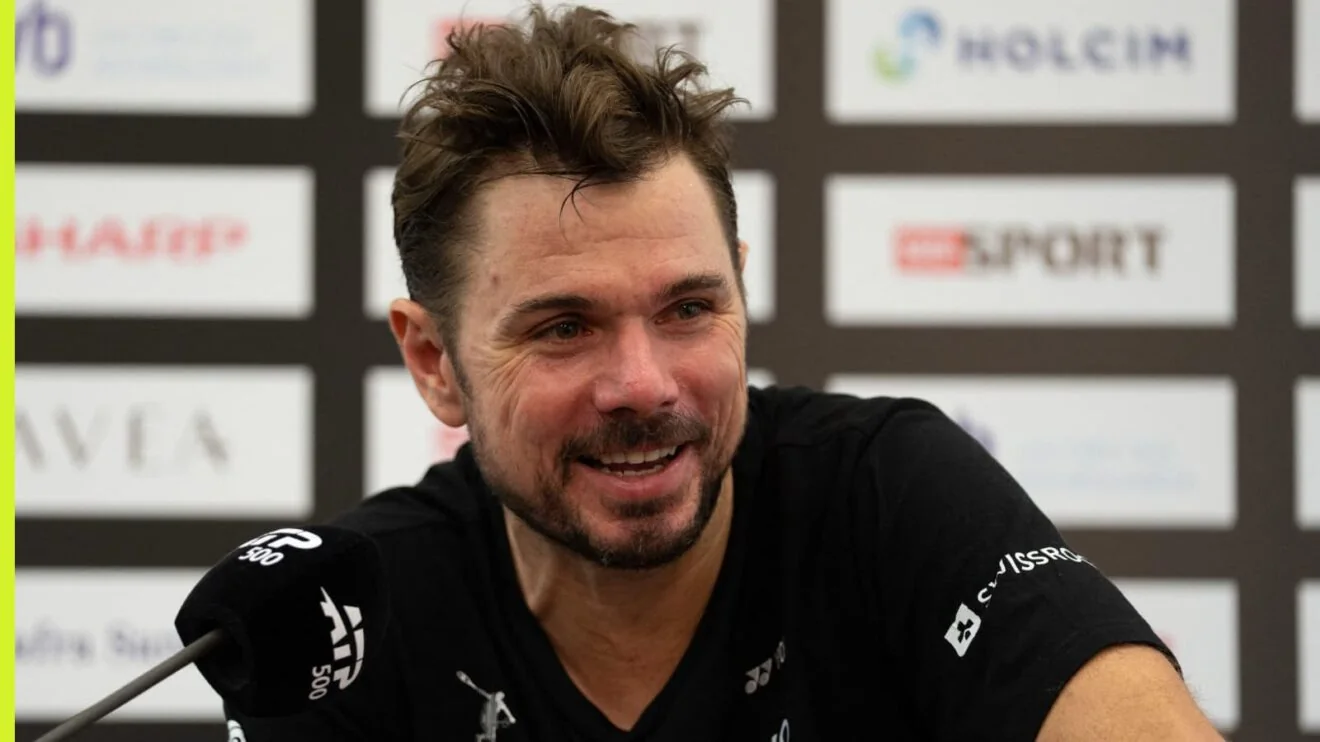
Stan Wawrinka ended his professional playing career in Basel on October 27, 2026. Jiri Lehecka defeated him in the first round of the Swiss Indoors, and the host tournament explicitly described it as Wawrinka’s last match as a professional. At this point, the story has moved beyond a proposed farewell season: the final competitive appearance has happened.
The location gave the ending a particular weight. Wawrinka was playing in Switzerland, at an event the organiser credits him with entering 19 times. The familiar setting connected the player remembered for major finals around the world with the supporters who had followed him at home. That relationship helps explain why an opening-round defeat could still become a major occasion.
The match and the ceremony happened on different nights
There were two separate moments in Basel. According to the ATP’s post-match interview, the formal tribute took place on Monday, October 26. Wawrinka received messages from former rivals including Roger Federer and Novak Djokovic, alongside contributions from his parents. His match against Lehecka followed on Tuesday evening.
Keep those dates separate when watching clips. A farewell speech or a tribute from Federer can show the ceremony before the last contest had been played. The subsequent handshake and final scoreboard belong to the competitive ending. Combining them into one indistinct “retirement night” can obscure what actually happened and when.
In reflecting on the experience, Wawrinka stressed his satisfaction at remaining competitive and being able to choose his ending, while acknowledging the sadness of leaving. That is a more revealing account than assuming he needed a final trophy to consider the year successful. At 41, he could value the standard of his tennis and the response of the crowd even after losing.
The Basel organiser’s confirmation settles the immediate question for fans planning the rest of the season. A later public appearance, interview or exhibition would be a separate engagement; it would not turn the Lehecka match into an unfinished farewell tour. There is no reason to assume another ATP start simply because tennis might still feature in his life.
For the competitive record, begin with the completed ATP results. For the significance of the occasion, look at the career behind that final line. Both deserve attention: the last opponent won a real match, and the departing champion had already earned the celebration that followed.
How Lehecka won Wawrinka’s final match
Lehecka won 7–5, 7–6(2). The result contains two close sets, with the second decided by a tiebreak that Lehecka took 7–2. From Wawrinka’s perspective, the set scores are 5–7, 6–7(2). The parenthetical figure records the losing player’s tiebreak points; it is not another set or a game score of seven to two.
The completed Basel match page is the useful reference if you encounter a farewell clip without a scoreboard. This was a completed straight-sets defeat, rather than a match abandoned through injury. Wawrinka’s career retirement and a player retiring during an unfinished match describe different things.
A close score without a deciding set
The Swiss SDA account, published by Watson, identifies an important first-set contrast. Wawrinka had two break opportunities early, at 1–1, but Lehecka saved them. The Czech later broke for 6–5 and took the set. Chances existed on both sides; converting them made the difference.
In the second set, Wawrinka reached 5–4 and 30–30 on Lehecka’s serve. That put him two points from taking the set, but it was not a set point. Lehecka held his nerve, and Wawrinka never forced a third. Keeping that distinction preserves the tension without exaggerating how close the result came to changing.
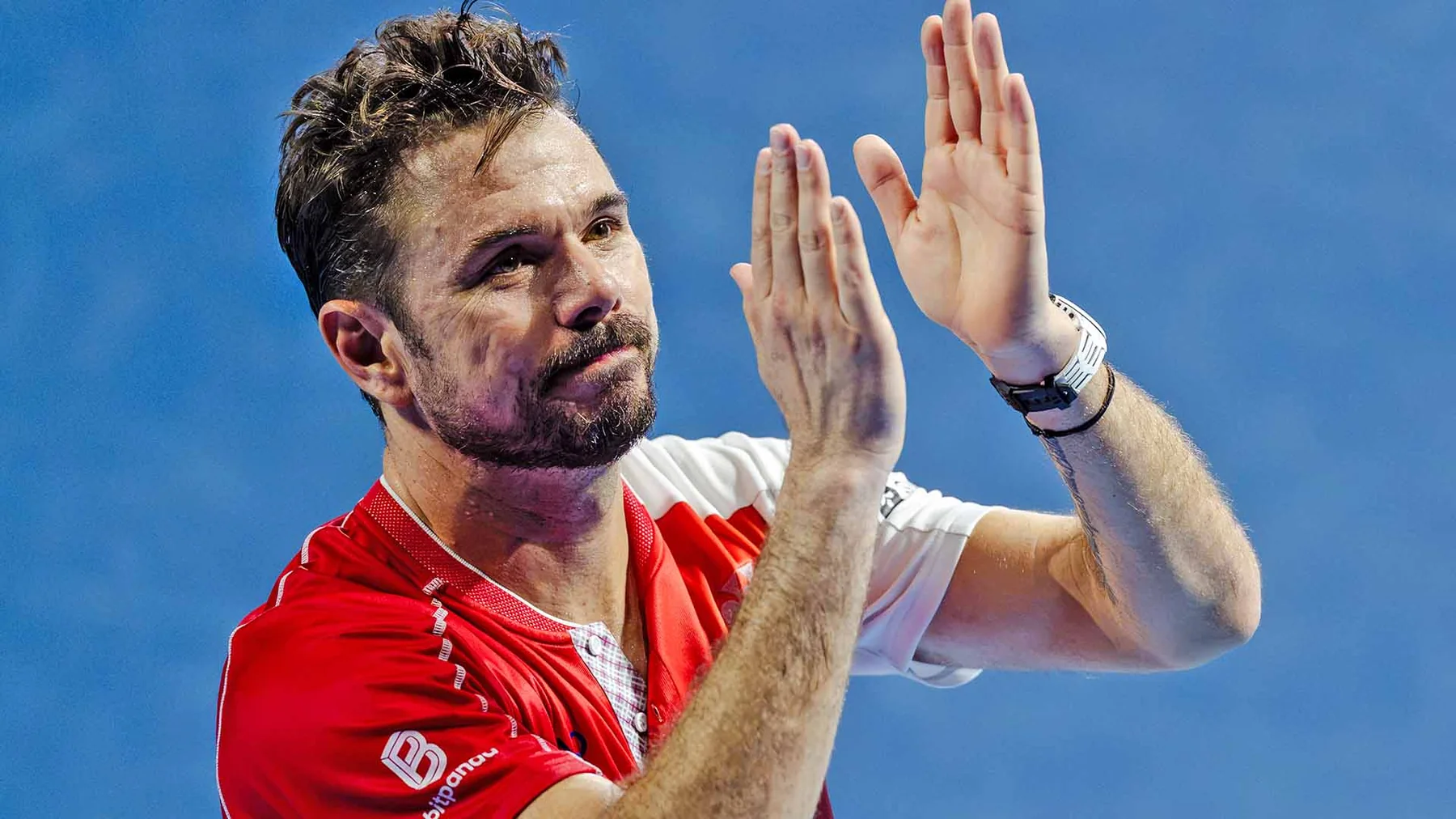
For the spectator, this was a useful reminder that emotional momentum and scoreboard pressure are separate. A standing crowd can sustain a player’s energy, but the opponent still controls his own service points. Lehecka’s task was to keep executing while the arena hoped for another chapter. Winning the tiebreak decisively completed that task.
It is tempting to explain a farewell result entirely through age, nerves or the occasion. The available evidence supports a narrower sporting account: Wawrinka threatened on return, Lehecka protected those moments and claimed the crucial passages. Without a full statistical breakdown and point-by-point review, assigning precise responsibility to serving speed, fatigue or error rates would go beyond what the result establishes.
The match is therefore worth remembering on its own terms. Wawrinka remained involved deep into the second set; Lehecka earned a place in the next round. Respecting the winner does not diminish the tribute. It acknowledges that the departing player was still competing in a contest whose ending had to be earned.
The three Grand Slam titles that define his peak
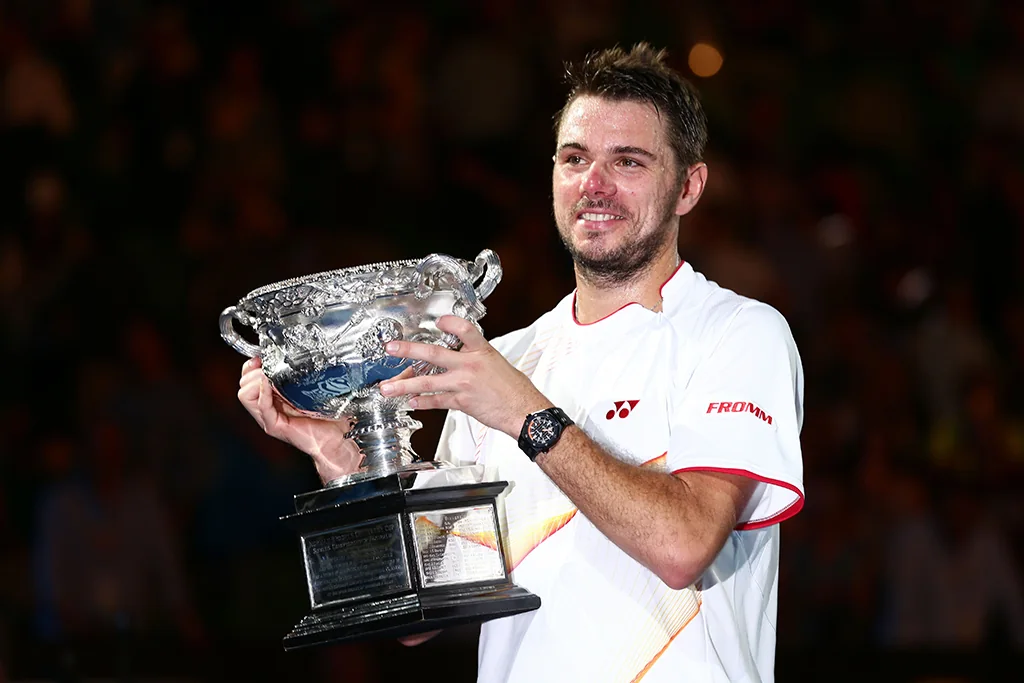
Wawrinka won the Australian Open in 2014, Roland-Garros in 2015 and the US Open in 2016. Each title required a victory over the reigning world No. 1 in the final. The sequence captures his unusual place in the era: he could defeat its dominant players on the biggest stage without matching their season-long title totals.
| Major | Final opponent | Wawrinka’s winning score |
|---|---|---|
| Australian Open 2014 | Rafael Nadal | 6–3, 6–2, 3–6, 6–3 |
| Roland-Garros 2015 | Novak Djokovic | 4–6, 6–4, 6–3, 6–4 |
| US Open 2016 | Novak Djokovic | 6–7(1), 6–4, 7–5, 6–3 |
Australian Open 2014: the breakthrough
The first title arrived at 28. The Australian Open’s retrospective places a crucial step before the final: Wawrinka beat Djokovic 9–7 in the fifth set of their quarterfinal. He then defeated Tomas Berdych before overcoming Nadal. The breakthrough was a tournament-long achievement, rather than one isolated result against an injured finalist.
That distinction matters because a major champion must survive different opponents and different kinds of pressure. Beating Djokovic opened an opportunity; it did not remove the semifinal or the final from the route. Wawrinka still had to produce the tennis required when the expectation around him changed.
Roland-Garros 2015: beating Djokovic on clay
Paris supplied a different surface and another formidable final opponent. Wawrinka lost the first set to Djokovic before winning the next three. The tournament’s ten-year retrospective records the 4–6, 6–4, 6–3, 6–4 result, alongside the much-remembered checked shorts. The clothing became an image; the sustained quality behind the result is the sporting achievement.
For a viewer returning to that match, watch the construction before the spectacular finish. A powerful backhand is more useful when the previous shot gives time and balance to play it. Consider where Wawrinka receives the ball, how he changes direction and whether Djokovic is defending from a stretched position. Those questions explain a sequence better than a compilation of winners alone.
US Open 2016: a third major on another hard court
New York brought another comeback from a set down against Djokovic. The US Open’s official account records the final score and an earlier escape: Wawrinka saved a match point against Dan Evans in the third round. The eventual champion had come within a point of leaving long before the trophy match.
That history complicates the idea of an effortless peak. His best tournaments included uncomfortable passages, not simply overwhelming attacks from first ball to last. Staying alive against Evans was part of winning the title, just as taking control against Djokovic was.
Three majors across hard courts and clay make a substantial legacy. They do not constitute a career Grand Slam, since he never won Wimbledon. Nor should three victories be translated into an unbeaten record in major finals: Nadal beat him in the 2017 Roland-Garros final. Accurate limits make the achievements easier to appreciate, because they preserve the actual career rather than a polished legend.
Why Wawrinka’s backhand was more than a highlight shot
Wawrinka’s one-handed backhand mattered because it could influence an entire rally, rather than merely provide its most attractive frame. The down-the-line winner became the signature image, but its value depended on reaching the ball in a position from which the opponent had to respect more than one direction.
The ATP’s legacy feature records how strongly the shot influenced Lorenzo Musetti, who grew up admiring Wawrinka and earned his first tour-level win against him in Rome in 2020. That is a concrete connection between generations. It also avoids the impossible task of proving that one backhand was aesthetically superior to every alternative.
When revisiting the official full match of the 2015 Roland-Garros final, watch the preparation as closely as the finish. Does the previous shot give him time to set his feet? Is contact made from a balanced position? Does the crosscourt exchange leave the down-the-line change available? These are viewing questions, rather than claims about an unpublished technical measurement.
The distinction between a drive and a defensive response also matters. A highlight package selects the ball struck cleanly in an attacking position. A complete match includes awkward returns, stretched recoveries and points in which simply keeping depth is valuable. Assessing the stroke only through winners removes the situations in which its owner first had to earn the right to attack.
Nor was the rest of Wawrinka’s game a delivery mechanism for one shot. The serve begins the point, the forehand can create an opening and court coverage determines whether the next backhand arrives comfortably or under pressure. A returner who threatens one wing still has to manage the ball coming toward the other. The fascination lies in how those elements work together.
Basel’s farewell report describes the crowd reacting to those familiar backhand changes of direction. The recognition was understandable: supporters were watching a movement they could identify almost immediately. Their response, however, is evidence of the bond with the player, not a statistic proving that every final-season shot matched his peak.
For fans exploring today’s ATP players, that is the useful legacy to carry forward. Admire the distinctive stroke, then examine the point that makes it possible. Wawrinka’s best tennis rewards both reactions: the immediate pleasure of the shot and the closer attention required to understand why it worked.
The career beyond the three singles majors
The ATP’s completed-career account credits Wawrinka with 16 tour-level titles, 590 tour-level wins and a career-high ranking of No. 3. These are separate measures: titles record tournaments won, match victories record successful contests and the ranking describes his highest position against the field. None should be substituted for another.
The distinction also helps when comparing eras or event categories. A Grand Slam, a Masters 1000 and another tour event contribute different kinds of context to a player’s record. Our Masters 1000 winners guide explains that category separately. Wawrinka’s three majors belong within a wider career, without turning every title into an equivalent achievement.
Olympic doubles and the Davis Cup
His Olympic gold medal came in men’s doubles with Federer at Beijing 2008. It was a shared title, requiring the pair to solve the court together. A doubles return has consequences for the partner at the net; positioning, communication and the next volley can matter as much as the original strike. Describing the medal as another singles triumph would erase that different sporting task.
Switzerland’s 2014 Davis Cup victory added a national team achievement. The competition’s own retrospective recalls Federer and Wawrinka winning the doubles against France’s Julien Benneteau and Richard Gasquet before Federer secured the decisive singles victory. Wawrinka contributed to a collective result; the trophy cannot be explained through one man’s final match alone.
That same account describes the effect on a young Shintaro Mochizuki watching in Japan. A Swiss doubles performance could inspire a future Davis Cup player elsewhere. The audience for a career extends beyond the country represented on the scoreboard.
What younger players learned from him
There are more direct connections too. In the ATP’s legacy feature, Henry Bernet describes practising with Wawrinka and receiving his support. They also played doubles together in Gstaad in 2025. The example is specific: an established champion shared a competitive court and practice time with a developing Swiss player.
That experience offers something a highlight reel cannot. A younger player can encounter preparation, decision-making and responses to frustration at close range. It would be excessive to attribute his future results to one mentor, but reasonable to recognise why access to that experience matters.
Wawrinka’s impact therefore has both a public and a personal dimension. Fans can revisit the finals; players who worked beside him can carry forward habits and encouragement that are less visible. The documented encounters make that influence concrete, while leaving the next generation responsible for the careers it will build.
How to revisit the career after the Basel farewell
A useful Wawrinka retrospective needs more than the three trophy ceremonies. Choose a breakthrough match, a peak performance and something from the final season. Together, they show the player developing belief, testing the best opponents and continuing to compete after the title-winning years.
The 2014 Australian Open quarterfinal against Djokovic offers the breakthrough test; the 2015 Roland-Garros final shows the clay-court peak. The latter now has an official full-match page published on October 29, 2026, after his retirement. Begin with that legitimate entry point, then check what playback is available on your device and in your location.
For the final season, his second-round Australian Open victory over Arthur Géa is a revealing choice. The tournament’s account records a four-hour, 33-minute match in which Wawrinka, then 40, won 4–6, 6–3, 3–6, 7–5, 7–6, taking the deciding tiebreak 10–3. The result put him into the third round; it was not another title run.
That match is valuable precisely because it belongs to a different stage of his career. The questions are about maintaining concentration, finding a workable pattern and continuing after setbacks. Reducing the late years to a sequence of farewell speeches would miss the effort required to win an actual five-set contest.
When watching, keep the score visible for a few ordinary games. Observe how he begins points when level, how he responds after falling behind and what he does with the next ball after an attacking shot. A full passage lets you distinguish a repeatable pattern from a memorable exception. Highlights are enjoyable, but they select the evidence before you have a chance to judge it.
Use our tennis viewing guide to check the appropriate service for current ATP coverage and look to the original tournaments for their own major archives. These are different competitions with different video rights. The existence of one official replay does not guarantee that every match from every stage of his career is available through the same subscription.
Future exhibitions or public engagements need their own announcements. The verified ending remains Basel on October 27. What is already available is substantial: a completed career that can be revisited through real matches, correct dates and opponents who made the achievements difficult. Watching those contests closely gives the farewell its sporting meaning.
About the author
ATP Schedule Editorial Team
The ATP Schedule editorial team turns match times, scores, tournament information and verified tennis news into clear answers fans can use quickly.
View all articles by this author →Fan discussion
Comments
Sign in with Google to comment. Keep the discussion helpful and tennis-focused. New comments are reviewed before they appear.
Loading comments…