ATP Toilet Break Rules: The 2026 Time Limits and Bergs–Alcaraz Debate
Understand the ATP's three-minute toilet limit, five-minute changing limit, permitted breaks and penalties, then assess the reported Bergs–Alcaraz Shanghai absence without confusing it with the official timer.
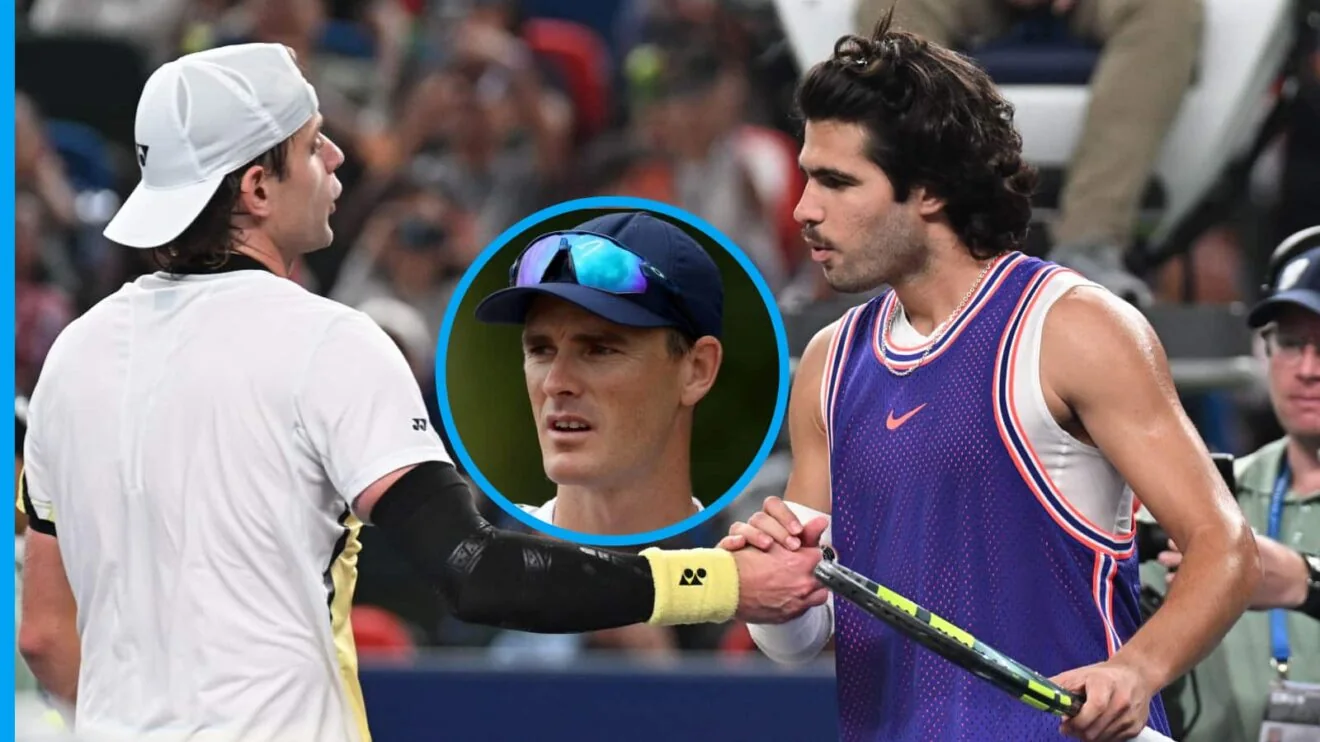
ATP toilet breaks are limited to three minutes from toilet entry; permitted changing breaks have a five-minute maximum from entry into the off-court changing area or toilet. The reported delay during Zizou Bergs’ win over Carlos Alcaraz in Shanghai on 12 October 2026 renewed questions about those limits. Here is what the 2026 rules say, how penalties work, and what the published accounts establish about that match.
How long is an ATP toilet break in 2026?
An ATP toilet break allows a maximum of three minutes from the moment the player enters the toilet. A combined toilet and change-of-attire break allows a maximum of five minutes from entry into the off-court changing area or toilet. A change of attire alone has that same five-minute maximum. These are the allowances in section 7.22 Q of the 2026 ATP Official Rulebook.
The clock starts inside the facility
The starting point matters whenever a television broadcast shows a player leaving the court. The ATP wording starts the toilet clock at toilet entry; for a changing break, it starts at entry into the off-court changing area or toilet. It does not define the allowance as three or five minutes from the last point of the previous set.
Consequently, a spectator's stopwatch covering the entire absence measures a different interval. It can include getting off court, reaching the facility and returning. That distinction does not give a player permission to delay indefinitely. It means that deciding whether the specified allowance was exceeded requires knowing the relevant entry time and break type, rather than comparing two numbers that start at different moments.
Three minutes for the toilet, five for changing
| Authorized activity | Maximum allowance | Where the clock starts |
|---|---|---|
| Toilet only | 3 minutes | Entry into the toilet |
| Toilet plus change of attire | 5 minutes total | Entry into the off-court changing area/toilet |
| Change of attire alone | 5 minutes | Entry into the off-court changing area/toilet |
The combined allowance is five minutes in total. Adding three minutes for a toilet visit to another five minutes for clothing would produce an eight-minute allowance that this provision does not grant. Likewise, the five-minute rule is not a general entitlement to leave the court for any purpose.
The ATP's published March 2026 rulebook changes do not amend this toilet/change-of-attire provision. This guide follows the 2026 text checked on 13 October. It addresses ATP competition; a similar-looking WTA or Grand Slam summary should be checked against the rules governing that event. If you are watching the matches on today's ATP order of play, identify which competition's rules apply before interpreting a delay.
When can a player leave, and how many breaks are allowed?
The normal authorized toilet or change-of-attire break must be taken between sets and used for its stated purpose. Finishing a service game or reaching an ordinary changeover does not automatically create a fresh three-minute or five-minute entitlement. Players also need permission to leave the court; the rulebook's conduct provisions prohibit leaving without the chair umpire's or supervisor's permission.
One break in a best-of-three singles match
The ATP entitlement is one toilet or change-of-attire break in a best-of-three match. Those purposes share an allowance: a player cannot use one changing break and then assume a separate full toilet break remains. Leaving during the opponent's break also counts as using the authorized break. A toilet visit after the warm-up has begun counts too.
The 2026 ATP text specifies two breaks for a best-of-five match, with one available during the first three sets and the second only after the third set has ended. That is a statement of the ATP rulebook, rather than a promise that every Grand Slam applies an identical procedure. In doubles, each team has one authorized toilet or changing break in all matches. Partners leaving together use the team's allowance, rather than two individual allowances.
Further requests can be authorized, but the rulebook attaches timing consequences if the player is not ready within the allowed time. Its example of a second toilet visit during a changeover uses the ordinary 90-second changeover window. A permitted extra visit therefore does not necessarily carry another full three-minute allowance.
What can be changed off court?
The apparel detail is narrower than the phrase “change clothes” suggests. Players may leave at a set break to change wet shorts or underwear. Shirts, socks and shoes should be changed on court. The chair umpire can consider an individual changing request on its merits when the provisions for equipment being out of adjustment take precedence.
This is why an outfit change reported on television needs context: which garments were changed, which request was authorized, and when it occurred. A clothing change alone is a recognized category in the present rulebook, but the five-minute maximum is not permission for an unrestricted locker-room visit.
The November 2021 announcement reported by Tennis Majors emphasized one break and set-end timing for the incoming 2022 rules. That historical shorthand explains many familiar online answers. For a match played in 2026, the complete current provisions supply the finer distinctions about doubles, clothing, additional requests and best-of-five timing.
What happens if a player exceeds the permitted time?
The toilet/change-of-attire provision says players who exceed the allowance are penalized through back-to-back Time Violations. A break being authorized does not remove its time limit. Conversely, the existence of a lengthy absence does not itself tell viewers which violation was recorded, because the applicable clock and the player's previous warning history still matter.
Time violations were part of the ATP's original timed-break announcement, as Tennis Now reported in November 2021. The present debate concerns clarity and application of an existing system, rather than a complete absence of a penalty rule.
The special penalty after a toilet break
The 2026 rulebook's Time Violations provision, on printed page 258, starts with a warning for the initial violation. Subsequent violations generally mean a fault for the server or a point penalty for the receiver. It then specifies a point penalty for either server or receiver following a toilet break. That exception matters: the ordinary server's time-violation fault is not the complete answer to a late return from a toilet break.
A previous warning counts even if it was issued when the player occupied the other role. For example, a player warned for slow serving earlier in the match cannot assume that returning late after a toilet visit starts a new warning sequence. This is an illustration of the rule's warning history, not a claim about what warnings Bergs received in Shanghai.
The additional-visit case on printed page 214 is also useful. If a player has used his break in a best-of-three match and asks for another visit at a changeover before serving, the chair may allow it but must explain that delay beyond the 90-second changeover will attract consecutive time violations. Permission to go and entitlement to extra time are separate questions.
Another official case explains resumption: after the player returns and has an opportunity to retrieve his racquet, the chair announces “Time” to signal play should resume. The return journey, retrieval and restart therefore should not be casually equated with time spent inside the toilet. Nor should these time-violation provisions be replaced with the separate warning, point and game sequence commonly associated with other conduct offences.
What happened in the Bergs–Alcaraz Shanghai match?
Zizou Bergs defeated Carlos Alcaraz 7-5, 7-6(4) in the third round of the Shanghai Masters on 12 October 2026. His departure after winning the first set prompted the toilet-break discussion. The result and the timing of the break were reported by Tennis365; TennisUpToDate's match report also described an outfit change.
Jamie Murray questioned an absence of more than eight minutes and argued that the walk from centre court to the changing rooms in Shanghai was very short. Tennis365 also reported journalist Jose Moron's estimate of nine and a half minutes. Those estimates describe the observed delay around the break. Neither is presented in the reporting as an official measurement of Bergs' time inside the toilet or changing area.
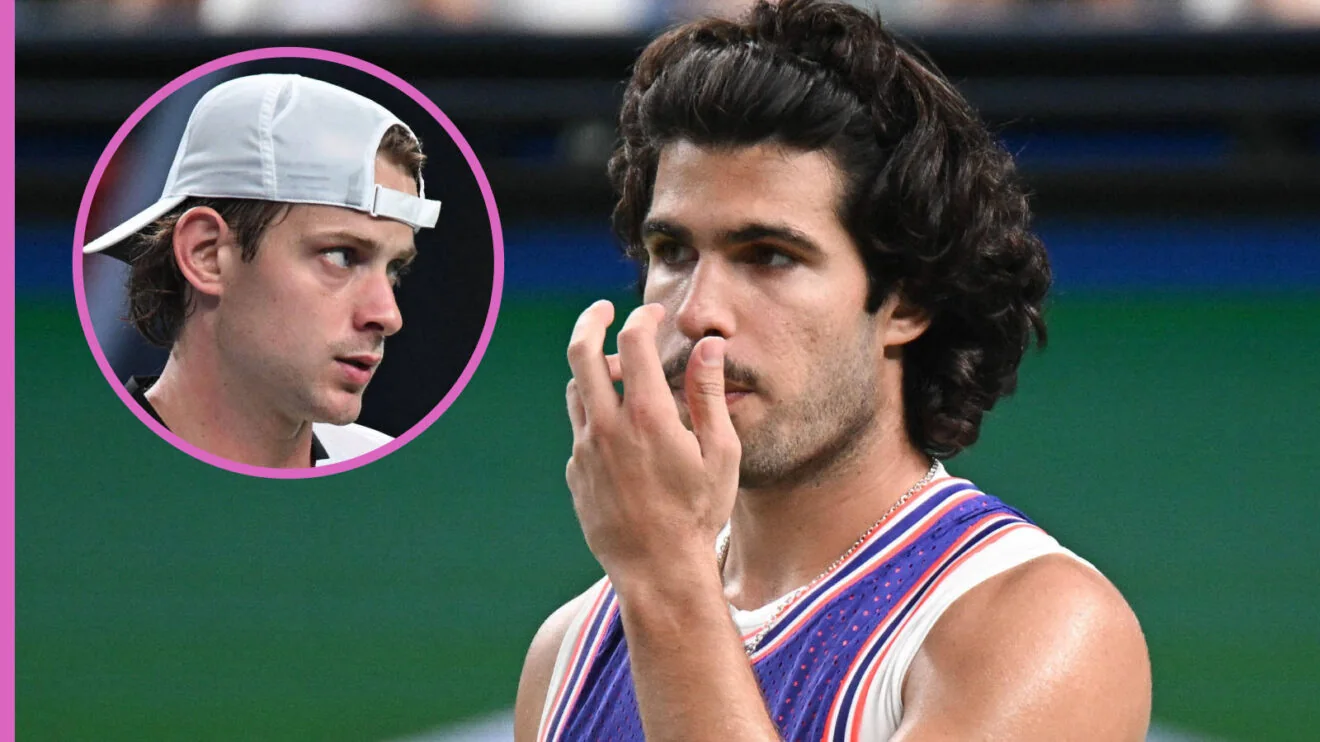
Brad Gilbert joined the discussion with a call for clearer comfort-break rules and a proposed point penalty for every 30 seconds beyond the allowed period. His response reflects an opinion about how enforcement should work. It does not establish that this match's officials applied that proposed interval, or that the ATP had adopted a new rule.
The match continued through a competitive second set. Bergs served for the match at 6-5, was broken, and then won the tiebreak, according to Tennis Now's post-match account. That sequence is useful context: the break was between sets, rather than the final incident deciding the score through a penalty. It also shows why a match recap and a rules assessment answer different questions.
The reports establish a notable win and public criticism of the delay. They do not establish that Bergs deliberately used the visit to disrupt Alcaraz, that the break caused the defeat, or that an official finding of misconduct was issued. Even a strongly worded spectator reaction is not a substitute for the relevant timing record. To follow how the Shanghai draw develops after the upset, consult the ATP results page; use the rulebook and any official clarification to assess enforcement separately.
Does an eight-minute absence prove a rule breach?
No: an eight-minute absence from the court does not, by itself, prove that the three-minute toilet allowance or five-minute changing allowance was exceeded. It can justify asking for an explanation. It cannot supply missing information about when the applicable clock began, what activity was authorized, and how the officials recorded the interval.
Reconstruct the correct clock before comparing times
Consider a hypothetical broadcast in which eight minutes pass between a player leaving court and the match restarting. If the toilet visit itself occupies three minutes, the total eight-minute interval does not establish a breach of the toilet's three-minute maximum. Other parts of the absence would still need explaining; this example is not an assertion that every eight-minute absence is acceptable.
Now consider a different hypothetical: reliable timing shows a combined toilet/changing break lasting five and a half minutes from entry into the relevant off-court area. That interval exceeds the five-minute maximum. The extra time would not be erased merely because the walk back to court was short. These examples apply the ATP's specified clock origins; neither reconstructs Bergs' actual visit.
Even the endpoint visible to spectators can differ. A return to court and the first point of the next set are distinct moments. The rulebook's resumption case includes the opportunity to retrieve a racquet before the chair's “Time” announcement. A stopwatch stopped at the next serve therefore is not automatically the facility timer.
What the available reports do not establish
Tennis365's account reports Moron's claim that there was no warning, alongside Murray's criticism of the delay. It does not provide an official facility-entry timestamp, a complete authorization record or a supervisor's decision explaining the incident. Those omissions limit what can be concluded from that account.
To assess the specific case, the useful questions are whether the request was toilet-only or included permitted changing, when the player entered the timed area, what interval officials measured, and what warning or penalty history applied. An official clarification could resolve those questions. An estimate of the total absence cannot resolve all of them.
The wider Masters 1000 tournament format provides context for Shanghai, but does not change this distinction. A criticism of the delay, a finding of a timing breach and a claim that the delay determined the result are three separate propositions requiring different evidence.
Why are Murray and Gilbert asking for clearer rules?
Murray's criticism focused on the visible length of the interruption and his assessment that the changing rooms were close to the court. Gilbert's response focused on making the limits and penalties clearer. As Tennis365 reported, their comments question whether the public-facing experience of a break matches what spectators expect from a timed rule.
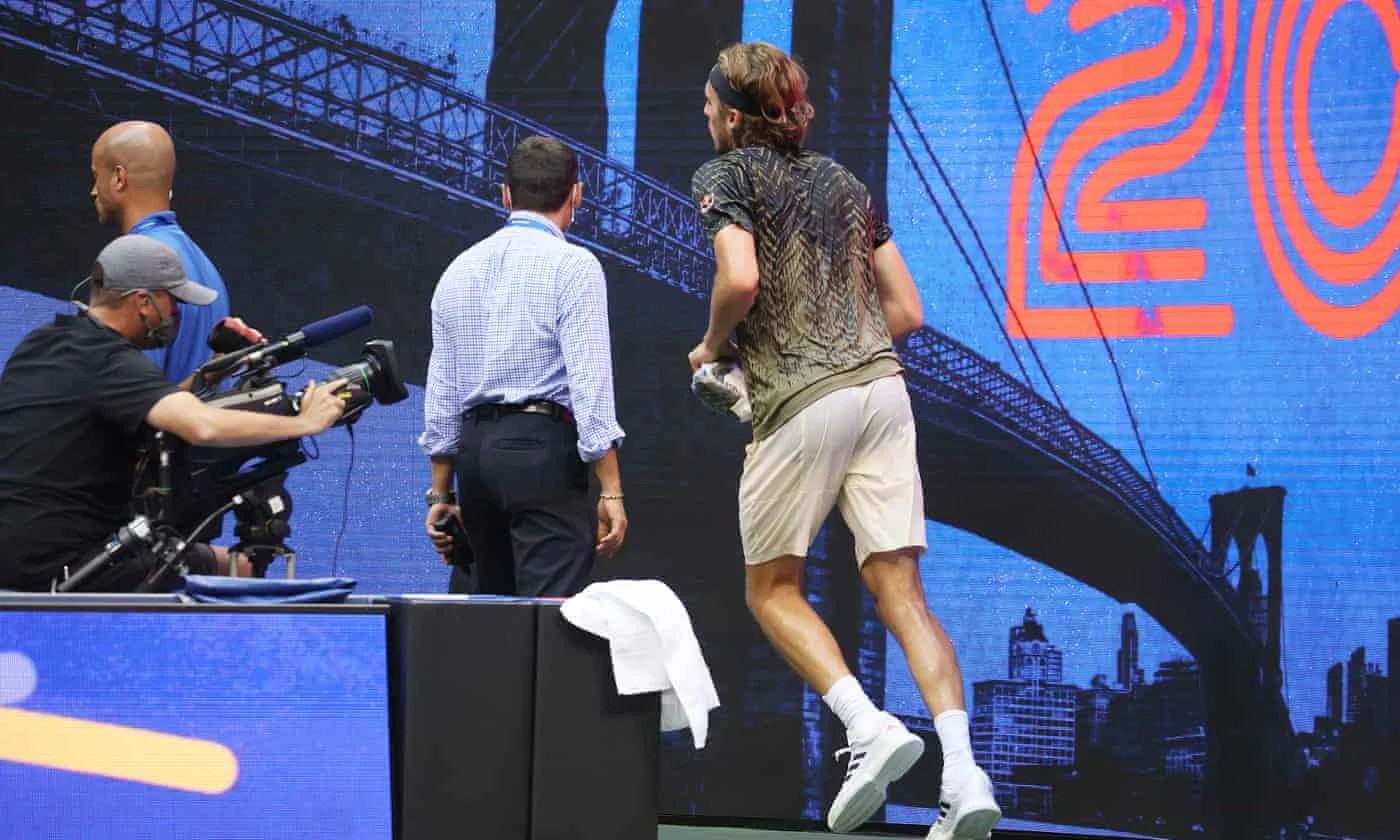
There is a historical reason that three-minute and five-minute figures are familiar. The Guardian's November 2021 Reuters report described new ATP guidelines after controversies involving Stefanos Tsitsipas. It also reported Tsitsipas' position that he had not broken the rules. That debate preceded the timed-break package introduced for 2022; it is background to today's discussion, rather than evidence against Bergs.
An existing time limit and a proposed reform
Some elements of Gilbert's suggested approach already appear in the 2026 ATP rules: the normal break belongs between sets, and the relevant limits are three minutes for toilet-only or five for permitted changing. His suggested point penalty for every 30 seconds of excess time should be understood as a proposal. The provisions discussed here specify consecutive time violations and the post-toilet point penalty; they do not state that proposed 30-second cadence.
A clearer explanation of the authorization and measured interval would help viewers distinguish a legitimate changing break from a delay that attracted a penalty. It would also prevent an entire absence being mislabeled as time inside the toilet. That is an editorial implication of the mismatch between the rule's clock and the estimates in the reporting, rather than a claim that the ATP announced a new procedure after Shanghai.
When a similar stoppage occurs, use this short checklist:
- Identify whether the authorized request was toilet-only, changing, or both.
- Check whether the player used the normal break between sets or requested an additional visit.
- Distinguish the facility-entry timer from the broadcast's total delay.
- Listen for any time-violation announcement and consider previous warnings.
- Wait for an official explanation before attributing misconduct or a match outcome to the visit.
For planning a viewing session, the guide to today's and tomorrow's ATP schedule explains match order and timing. During the match itself, the most useful distinction remains the authorized break, its measured interval and the official response. The Shanghai criticism raises those questions; the reported absence alone does not answer them.
About the author
ATP Schedule Editorial Team
The ATP Schedule editorial team turns match times, scores, tournament information and verified tennis news into clear answers fans can use quickly.
View all articles by this author →Fan discussion
Comments
Sign in with Google to comment. Keep the discussion helpful and tennis-focused. New comments are reviewed before they appear.
Loading comments…