Rafael Jodar's 2026 Breakthrough: Shanghai, His Game and the Race to Turin
From Virginia and Challenger titles to a first Masters final, Rafael Jodar has made a rapid rise. His Shanghai tennis and the separate ranking and Race standings explain what comes next.
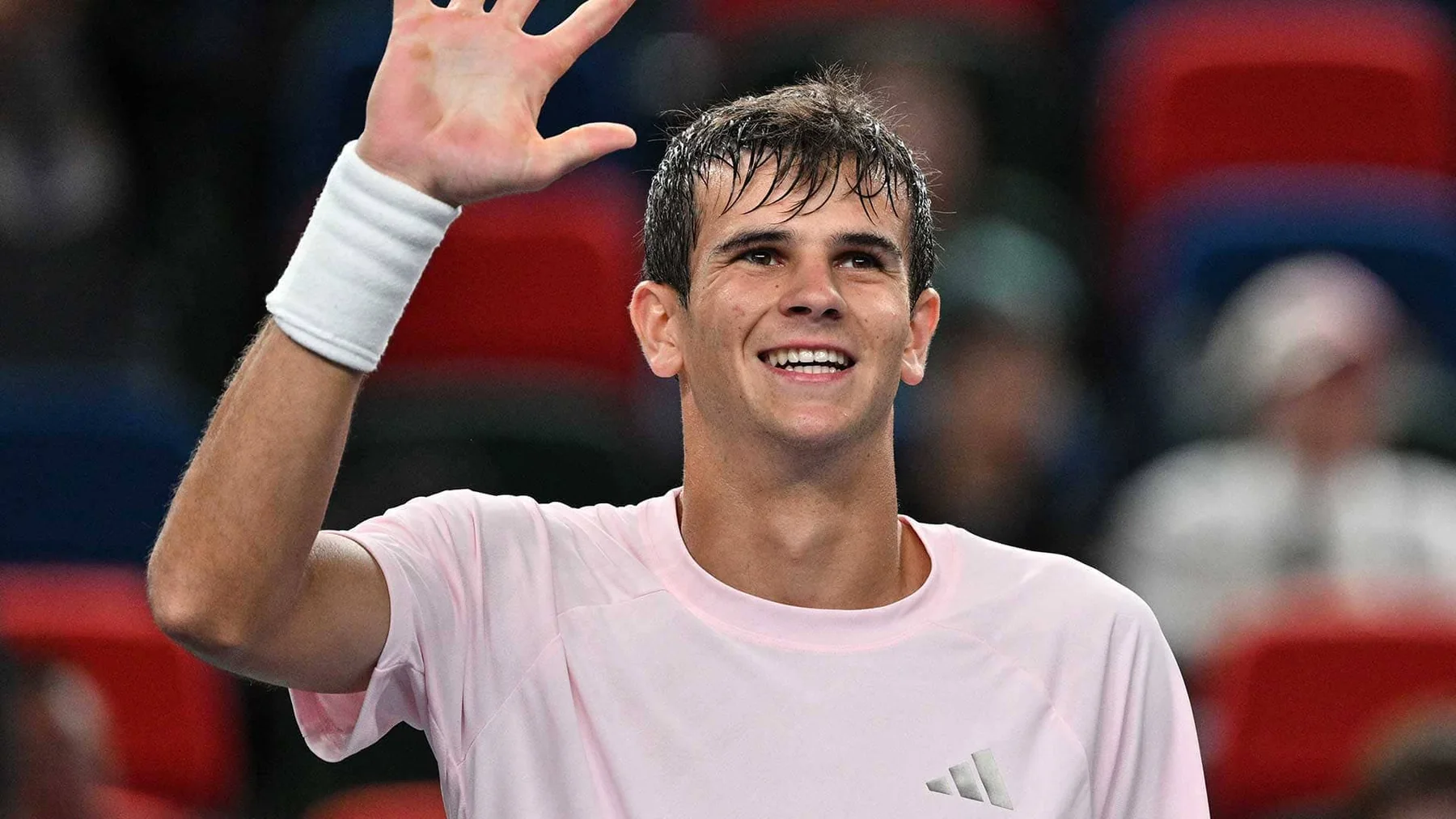
Who is Rafael Jodar after his Shanghai breakthrough?
Rafael Jodar is a 20-year-old Spaniard whose first full professional season has taken him from college-tennis prospect to a Masters 1000 finalist and a contender for Turin. His Shanghai run ended with a runner-up finish on 18 October 2026, but the larger story is how quickly his results have become relevant near the top of the Tour.
Jodar did not win the Shanghai title. Alejandro Davidovich Fokina recovered to beat him in the final. Yet reaching that match, after wins over Casper Ruud and Daniil Medvedev, strengthened the evidence that Jodar's breakthrough extends beyond one favourable week or one surface. By the end of the tournament, the ATP recorded his 2026 tour-level season at 43 wins and 17 losses.
A first Masters final, with more still to prove
According to the ATP's Shanghai milestone profile, Jodar became the youngest finalist in the tournament's history. That is a meaningful achievement at an event demanding repeated wins against established opposition. It is also a starting point for evaluation, rather than a guarantee of the titles he will win next.
The distinction matters when following a rising player. A first major-level final can reveal a high competitive ceiling; sustaining that level over different weeks tests something else. Jodar's season contains evidence of both progress and unfinished work. He has won a Tour title, handled several comeback matches and also experienced early defeats and a final he could not close.
His post-final comments reflected that balance: he took encouragement from the week while acknowledging areas to improve. The useful question for fans is therefore how his tennis works and what the next stage requires. Our ATP player directory provides the wider player context; this profile follows the path, match evidence and ranking implications behind his rapid rise through October.
How college tennis fitted into his route to the Tour
Jodar's professional rise did not begin with Shanghai, and college tennis was not a gap in his development. It was one stage of a route that also included Challenger competition before he committed to a full professional career for 2026.
Virginia was a stage in his development
The University of Virginia's official account records that he joined the team in January 2025 and finished his freshman singles season 19-3. He was 15-2 on the top singles court and ended the year No. 4 in the ITA singles rankings, earning ITA National Rookie of the Year and All-American recognition.
Those are college achievements, not ATP ranking positions. Keeping the systems separate prevents an impressive university record from being misrepresented as an earlier professional Top-10 season. It also preserves what the experience actually shows: he was already handling a leading role in a strong team while developing his individual game.
Team competition creates a different kind of pressure from playing only for one's own progress. A point can affect teammates as well as an individual result. That provides a reasonable context for understanding why players value college experience, without claiming that it alone caused Jodar's later success.
The move into a full professional season
The ATP's January announcement confirmed his decision to give up his remaining college eligibility. He had already won three Challenger titles in 2025 and gone 2-1 at the Next Gen ATP Finals, including victories over Learner Tien and Martin Landaluce. He therefore entered the full-time transition with experience against professional opposition.
This distinction explains an apparent contradiction in descriptions of a debut season. Calling 2026 his first full professional season does not mean he had never played professional tournaments before it. Challenger results and the Next Gen event were part of the preparation. Our Challenger Tour guide explains how that competition supports the route toward regular Tour-level play.
The interesting point is the sequence: university tennis, successful lower-tier professional events, a decision to turn fully professional, and then sustained ATP results. It gives fans a more useful picture than treating him as a player who suddenly appeared in a Masters final.
Why his 2026 season is bigger than one tournament
Shanghai is the largest final on Jodar's record so far, but the season's strength lies in the results that preceded it. He has progressed through different tournament levels and produced significant performances on clay and hard courts. That variety gives the breakthrough more substance than a single result viewed in isolation.
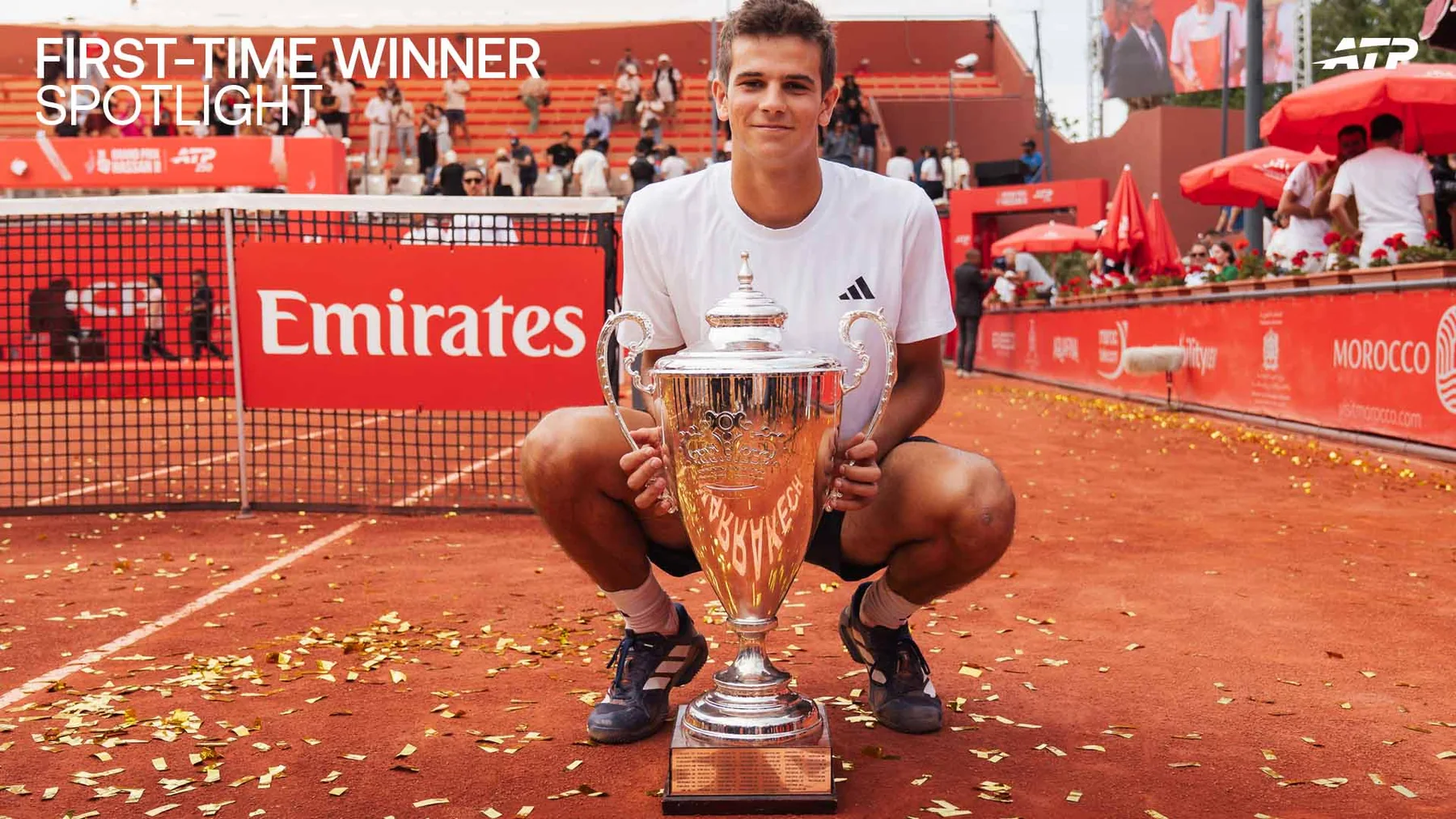
His first ATP Tour title came on clay in Marrakech on 5 April. Jodar, then 19, beat Marco Trungelliti 6-3, 6-2. The ATP's final report recorded a 69-minute victory built around forceful baseline hitting. A first trophy also tested a different pressure from an encouraging early-round upset: he had to complete a title run when the opportunity arrived.
| 2026 milestone | Level and surface | What it adds to the picture |
|---|---|---|
| Marrakech champion | ATP 250, clay | First Tour title |
| Madrid and Rome quarter-finals | Masters 1000, clay | Deeper results against stronger fields |
| Washington finalist | ATP 500, hard | A title-match run at the next category |
| Montreal semi-finalist | Masters 1000, hard | A major hard-court breakthrough before Shanghai |
| Shanghai finalist | Masters 1000, hard | His highest-level final yet |
The table describes stages of the season, not a promise of uninterrupted improvement. A quarter-final and a final are different achievements; clay success does not automatically transfer to hard courts. Jodar's actual results on both are why the comparison is useful. The ATP 500 season guide supplies context for Washington's place between the 250 and Masters tiers.
These milestones also answer a question raised whenever a young player becomes suddenly visible: was the new result supported by a wider body of work? In Jodar's case, multiple Masters runs and a completed Tour title provide that support. They make him worth following even in weeks when he does not reproduce the Shanghai finish.
The next test is consistency across the less celebrated weeks. A season is built from opening rounds as well as finals, and a player who climbs quickly becomes a more carefully studied opponent. The breakthrough earns attention; repeating the underlying quality is what will determine how durable it becomes.
What makes Jodar's game dangerous?
Jodar's rise is easier to understand as an all-court problem for opponents than as the product of one spectacular shot. He can hit cleanly from the baseline, change the direction of exchanges and compete through difficult phases. The Shanghai semi-final offers a specific example of that combination working against an established elite player.
Clean hitting with more than one way to win
In his 6-3, 6-4 victory over Medvedev, Jodar struck 22 winners to his opponent's 14, according to the ATP match report. The account described his accuracy and timing moving Medvedev from corner to corner. That is useful evidence of attacking effectiveness against a player whose defensive coverage usually demands more than simply hitting hard.
The winner count does not supply an entire tactical explanation. Without the corresponding full error and point-pattern breakdown, it cannot tell us the risk of every attacking choice. What it does establish is that Jodar generated enough successful offence to shape a straight-sets win. The important viewing question is how he earns the shorter or less balanced reply that makes the next attack possible.
There is also movement behind the hitting. In the tournament's midweek feature, Felix Auger-Aliassime discussed Jodar and Alexander Blockx as tall young players who could move and remain solid from the baseline. That assessment is more informative than assuming height confines a player to first-strike serving tennis.
Serving, returning and handling the next ball
After beating Medvedev, Jodar highlighted his handling of important moments and his serving and returning. The match was not free of setbacks: he lost a break advantage in the second set before winning three of the final four games. Regaining control after that interruption was part of the performance, not merely an emotional footnote.
For fans watching his next match, follow the ball after the serve or return. Does a strong serve produce a manageable first groundstroke? Can a return neutralise the server rather than simply reach the court? When he moves forward, does the approach leave an obvious passing lane? These questions help assess the structure of his game without inventing a percentage or a season-long statistical ranking.
Auger-Aliassime also identified transition play and season management as areas that come with experience. Those remain useful development points to watch. Jodar already has ways to hurt strong opponents; the next step is making the patterns hold up when they anticipate them and when his timing is less precise.
What Shanghai revealed about his resilience
Jodar's route to the final showed an ability to stay competitive after losing control of a match. The ATP's semi-final report records that he recovered from a set down in each of his first four Shanghai matches. That sequence required repeated adjustment and sustained belief, before his straight-sets win over Medvedev offered a different route through a difficult opponent.
The achievement should not turn into praise for falling behind. Comebacks can demonstrate resilience while also adding physical and emotional cost. A player hoping to repeat deep runs will benefit from winning more matches without needing a rescue. Shanghai showed that Jodar could find a solution; it also raised the useful question of how often he can establish control earlier.
The final exposed the next margin to improve
Against Davidovich Fokina, Jodar was the player who began in command. He won the opening set 6-1 and later led by a set and a break. The official final report noted that he won all seven first-set points lasting more than nine shots. His early dominance therefore involved extended exchanges as well as quick attacking success.
The match still turned. Davidovich Fokina won 1-6, 7-6(5), 6-4, forcing Jodar to experience a different challenge from recovering after a poor start: maintaining an advantage when the opponent refuses to go away. In his reaction, Jodar identified the small second-set margins and his opponent's better play on the third-set break points.
That gives the loss a specific development value. The next improvement is not an abstract demand to become tougher. It involves preserving effective patterns under scoreboard pressure, choosing clearly on important points and responding when a lead disappears. One final cannot tell us which adjustment will solve those situations, but it can identify where the next useful gains may lie.
Fans checking the latest ATP results should keep that wider picture in view. A runner-up finish does not erase the wins that produced it, and a strong season does not make every defeat meaningless. The useful evaluation holds both ideas together.

Is Jodar No. 9 or No. 11, and can he reach Turin?
Both numbers describe real positions, but in different standings. Jodar is No. 11 in the ATP singles rankings dated 19 October 2026 and No. 9 in the post-Shanghai Race to Turin. His Shanghai finish improved his position in both, without making them the same ranking.
World ranking and the Race answer different questions
The ordinary singles ranking measures results within the applicable rolling ranking period. The Race tracks the current season's qualification contest. Points carried in those systems can therefore differ, as can a player's position. Comparing the date and the name of the table is essential before repeating a ranking claim.
| Measure | Dated position | Points | Meaning |
|---|---|---|---|
| ATP singles ranking | No. 11, 19 October | 3,234 | His overall ranking after Shanghai |
| Race to Turin | No. 9, 18 October update | 3,159 | His current-season Finals qualification position |
The dated official singles list shows a two-place rise to No. 11. The ATP's 18 October Race update lists him ninth. He did not enter the singles Top 10 by losing the final; the pre-final possibility of doing so with a title is now an expired scenario.
A qualifying position is not a qualification announcement
ATP described Jodar as effectively occupying the final qualifying position because Jannik Sinner had ended his 2026 season through injury. Sinner remained second in the published Race table, so simply counting the visible rows without that availability context would miss why ninth mattered.
However, Jodar had not secured his place. In that dated table he led Alex de Minaur by 279 points and Novak Djokovic by 319, while trailing eighth-placed Arthur Fils by 166. Those gaps explain both the opportunity and the pressure: further results can still change the order. A qualifying position today is a snapshot, whereas a confirmed place requires the remaining qualification process to settle.
Fans should follow the official Race updates and qualification announcements, then the draw. Our ATP Finals groups guide explains that later stage. Assigning Jodar a Turin group now, or describing his Shanghai runner-up finish as automatic qualification, would run ahead of the evidence.
What to watch in the next stage of his career
The next stage is about making Jodar's best tennis available more often. A Finals qualification would be another milestone, but it would not remove the underlying development tasks. Equally, missing Turin would not undo the season that put him in contention.
Start with his opening-round level. The official Shanghai feature noted first-round defeats at the US Open and Tokyo before his rebound in China. Those results are a reminder that momentum is not permanent. Watch how quickly he establishes useful serving and returning patterns in a new week, rather than judging every tournament only by whether it ends in another final.
Then watch the transition from a neutral rally into attack. His Shanghai hitting showed he can move a strong defender and finish points. The next question is whether he can recognise the right moment consistently when opponents deny him an obvious opening. An approach that works from a balanced court position can be a much lower-percentage choice when made under pressure. This is a tactical question to follow, not an assertion that one particular stroke needs rebuilding.
Season management is another important test. Repeated comeback wins demonstrate competitive qualities, but they also add time on court. The useful balance is between seeking matches, preparing for bigger events and arriving with enough energy to play them well. There is no need to diagnose fatigue from a photograph or assume that a lost final proves a conditioning problem.
Finally, assess him as his own player. Comparisons with earlier Spanish stars can illustrate the scale of a milestone, but they do not determine his future. The evidence already offers enough to discuss: a university development stage, Challenger success, a first Tour title and a first Masters final in a remarkably productive year.
Use the weekly ATP schedule to follow his next confirmed opportunities and keep the dates attached to ranking claims. The more interesting story now is how Jodar responds when opponents have studied him, when his timing is ordinary and when a close match reaches its deciding points. Shanghai showed why he belongs in that conversation. His next matches will show which parts of the breakthrough become dependable habits.
About the author
ATP Schedule Editorial Team
The ATP Schedule editorial team turns match times, scores, tournament information and verified tennis news into clear answers fans can use quickly.
View all articles by this author →Fan discussion
Comments
Sign in with Google to comment. Keep the discussion helpful and tennis-focused. New comments are reviewed before they appear.
Loading comments…