Was the Laver Cup 2026 Court Too Slow? What the Evidence Shows
Fans called the 2026 Laver Cup court slow. What did match reports actually show, and why can't ace rates alone provide an official court pace rating?
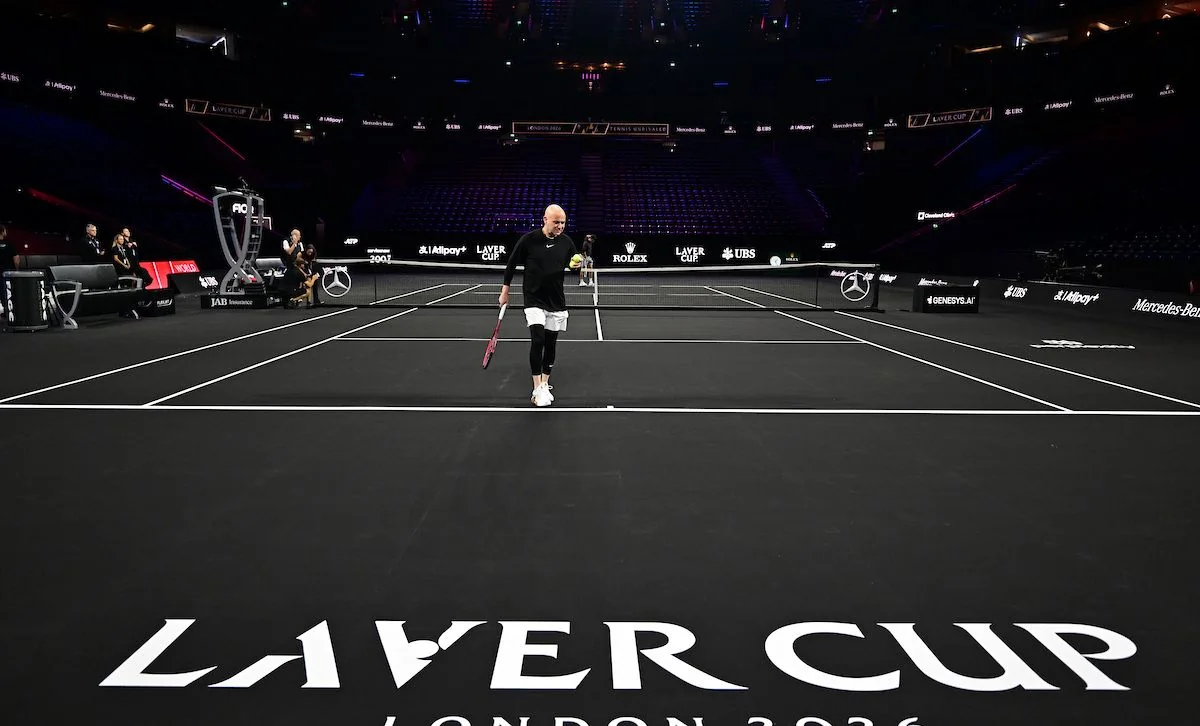
The black court at the 2026 Laver Cup in London prompted a pointed question: was it too slow? Viewers complained about rallies that seemed hard to finish, and a reporter inside The O2 described unusually slow conditions. Those are serious observations, but neither supplies a certified pace number. This guide checks the official court information, the ITF's measurement method and the matches that prompted the debate. It also separates a testable claim about ball bounce from the personal judgment that a particular style of tennis is entertaining.
Why did the 2026 Laver Cup court become a talking point?
The court looked slow to many people watching the 2026 Laver Cup in London, and an on-site reporter made the same judgment. That is a sound description of the debate, but it is not the same as a published laboratory rating for the surface. The event ran at The O2 from September 25 to 27, and the unusually long or difficult-to-finish exchanges, particularly on Saturday, became a story of their own even as Team Europe recovered the trophy. The most useful answer to “was it too slow?” starts by saying exactly what evidence we have.
In his report from The O2, the Guardian's Tumaini Carayol described the courts as extremely slow and judged that the conditions did not always help the quality of play. He also described packed crowds and competitive matches. Those points belong together: calling the surface slow does not mean the entire event failed, and calling the atmosphere lively does not settle the question of whether every rally was satisfying. Both can be true for the same weekend.
The event's first-look feature said the signature black court was assembled from 460 pieces at The O2. That is a useful, verified detail about this installation. It is not, by itself, an explanation of its playing speed. A black topcoat, a temporary build and an indoor setting are visual and logistical descriptions. To turn any of them into a claim about why the ball slowed after the bounce, we would need specifications or test results for this court.
Fan reaction makes the editorial question clear. In a discussion of Learner Tien's Saturday win over Flavio Cobolli, viewers said it seemed unusually hard to end a point with an attacking shot. Some found the resistance fascinating; others found the rallies repetitive. These comments tell us what spectators noticed and disliked. They are not a controlled test, and the viewers did not all describe the same cause. Treating the thread as a measurement would overstate its value, while ignoring it would miss the very experience behind the search query.
The final score offers another reason to keep the questions separate. Europe's 13–5 victory was shaped by a format that awards more team points on later days, as our full 2026 results and scoring guide explains. It does not reveal court pace. A match can be tense on a slow surface; a fast surface can produce a dull one. The rest of this guide looks at how pace is actually measured, what particular matches showed, and where a fan can reasonably draw a conclusion.
Can we measure how slow the London court was?
Yes, a tennis court's playing pace can be tested. But the specific number that would settle much of this argument has not appeared in the 2026 Laver Cup's publicly opened court material. The difference matters. “It played slow” is a legitimate match observation. “It was an ITF Category 1 slow court” is a formal classification claim that requires a test result. The latter should not be inferred simply because an observer used the word slow.
What an official Court Pace Rating measures
The International Tennis Federation's classification programme divides surfaces into five pace bands. Its technical booklet explains that Court Pace Rating, or CPR, measures the interaction between a ball and the surface. The test considers friction, which largely affects the ball's horizontal speed after impact, and vertical restitution, which affects its upward rebound and the time before the next bounce. The specified procedure fires a ball at the surface at a controlled speed and angle and measures motion before and after impact. That is more specific than watching a broadcast and counting long points.
| ITF category | Court Pace Rating |
|---|---|
| Slow | 29 or less |
| Medium-slow | 30–34 |
| Medium | 35–39 |
| Medium-fast | 40–44 |
| Fast | 45 or more |
These bands are a guide to what a test number would mean. They are not ratings assigned here to the Laver Cup. The ITF itself distinguishes classification of a surface product from recognition or testing of a particular installed court. Its booklet also notes that supporting material beneath a playing surface may affect a court's CPR. That point makes the 460-piece temporary build interesting, but it does not tell us which rating this installation would receive. A responsible 2026 explanation ends that sentence with “not publicly verified,” rather than inventing a value.
Why ace rates and rally length are imperfect shortcuts
A popular fan comparison suggested that the previous season's Laver Cup ace rate was only a little above Monte Carlo's. It is an intriguing prompt to investigate court pace. It is neither a measurement of London's 2026 court nor a controlled comparison: the servers, returners, balls, competitive setting and number of matches all differ. The thread itself contains disagreement over whether a slow hard court is an enjoyable change of rhythm. Even if the numerical comparison were reproduced from a database, it would describe an outcome produced by several variables.
The same caution applies to rally length. An excellent returner can keep a point alive on a quick court; a large serve can win a quick point on a slow one. Players can deliberately choose safer targets, extra spin and deeper court position. Laver Cup also uses a match tiebreak in place of a full third set, changing the sample and the pressure at the end of close matches. To compare conditions scientifically, one would want the surface test itself and careful adjustment for who played whom. The 2026 match-by-match result contains only ten completed rubbers, a small and distinctive sample. It is useful for understanding what spectators saw; it cannot reverse-engineer a certified CPR number.
Which 2026 matches made the surface look slow?
Saturday supplied the strongest case for the complaint because viewers could point to particular rallies rather than a general impression of the black court. It also supplied a useful warning about overreading those rallies. Learner Tien's match with Flavio Cobolli made some spectators ask whether attacking was being punished. Alex de Minaur's comeback against Alexander Zverev showed that a player could still change the pattern by moving forward, varying returns and opening angles. Neither match comes with a published instrument reading of the bounce.
Tien versus Cobolli: the point-ending complaint
Tien beat Cobolli 6–3, 2–6, 10–7 on Saturday, drawing Team World level at 3–3. In the post-match fan discussion, several viewers argued that aggressive balls kept coming back and that point-ending shots looked unusually difficult. One description combined a low bounce with a slow pace. That is valuable contemporaneous evidence of the *complaint*: the court seemed to reward patience and retrieval more than immediate finishing power. It does not verify that every shot bounced low, or establish which ingredient—surface, ball, player positioning or shot selection—had the strongest effect.
The scoring format amplified the impression. A split in two sets goes to a ten-point match tiebreak, so this encounter ended in a concentrated series of high-pressure points. The official Day 2 account says five of the first six singles matches across the opening two days were settled by a Laver Breaker. A tiebreak can feel especially defensive when neither player wants to donate an error. Long tension in those points is part of the viewing experience, but it is not automatically a court-speed statistic.
De Minaur versus Zverev: forward movement still worked
In the next singles, Zverev initially seemed to have the commanding offensive game. The official match report describes his booming serve and heavy baseline strikes as he took the first set 6–2. De Minaur then moved forward more, used angles to displace Zverev and changed his return position. He came back 2–6, 7–6(5), 11–9, saving a match point in the deciding tiebreak. That tactical sequence does not prove the court was fast. It does show that the simplified line “nobody could attack” is too strong.
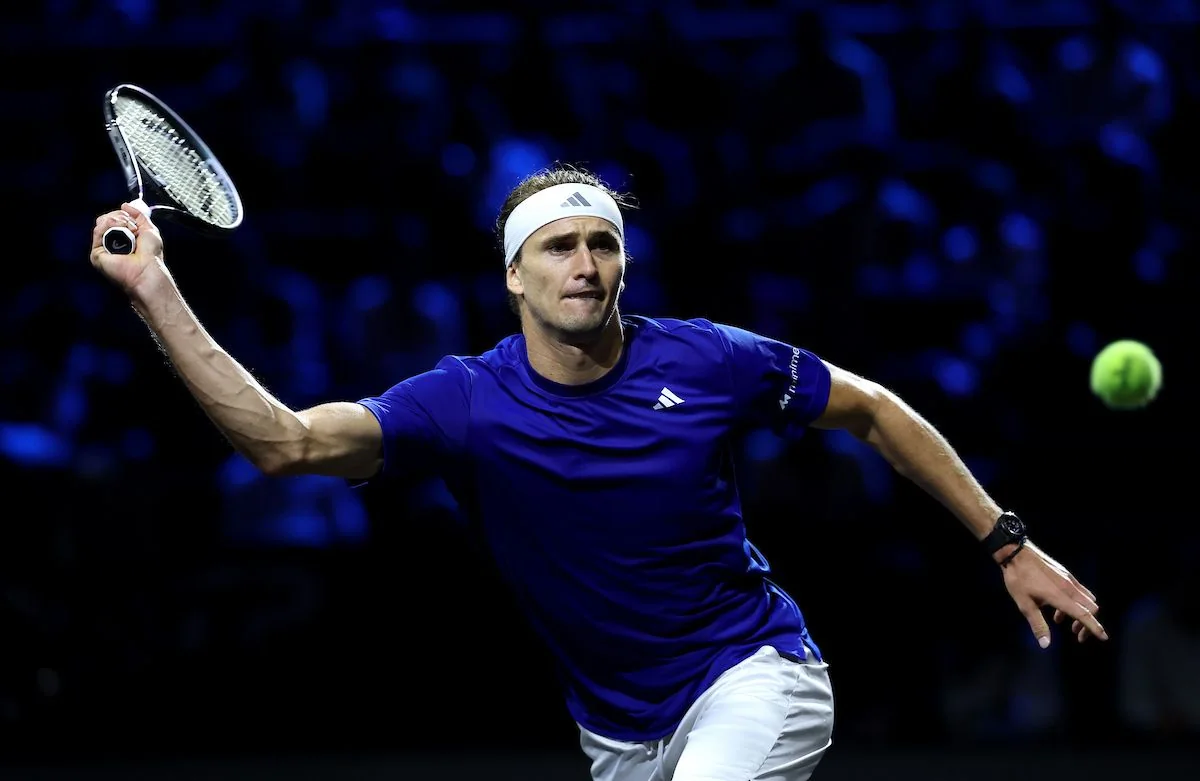
De Minaur said after the match that he tried to change the looks Zverev received and get more returns into play. That is a player's account of a controllable adjustment, not a verdict about the court's material. The result also temporarily put Team World ahead 5–3, despite Europe ultimately winning the title. In both Saturday examples, the spectator's frustration is understandable: extra shots were often required to finish points. Yet the matches show a range of responses—retrieval, return position, net approaches and heavy serving—rather than a single court-driven outcome. Readers tracking the regular circuit can check current ATP results without confusing those tour matches with this short team event.
Did a slow court necessarily make the event worse?
That is partly a matter of what a fan wants from tennis. A viewer hoping to see serves penetrate, early strikes rewarded and many clean winners may reasonably have found the London play frustrating. Another viewer may value extended defense, changing angles and the pressure of constructing a point. The court-pace thread contains both reactions: some describe the event as excessively slow; one says a genuinely slow hard court is a welcome variety. This is an argument about sporting taste as well as physics. It should not be flattened into a single fan verdict.
The trade-off between rallies and easy winners
Carlos Alcaraz's Saturday win over Taylor Fritz shows why the event could still be compelling. According to the official report, Alcaraz won 6–3, 4–6, 13–11 after saving two match points. The account describes an opening-set lob, a backhand approach pass, several timely drop shots and Fritz pushing back from a deficit in the match tiebreak. In other words, the court did not prevent all attacking variety. At the same time, Fritz said he would have liked more free points from his serve. That is a player's own description of a challenge he faced, but it does not establish that surface friction alone denied those points. The opponent's return and his own serve quality also matter.
A slow-feeling surface may lengthen the work needed to finish a rally. For some players and fans, that exposes craft and athleticism; for others, it rewards caution too much. There is no clean counterfactual: the same Fritz–Alcaraz match on a faster court might have produced more short points, fewer extended exchanges or a different score, but nobody observed that version. Calling the real contest a classic does not invalidate an argument that certain other matches needed more pace. Likewise, calling one exchange laborious does not erase the tension of two saved match points.
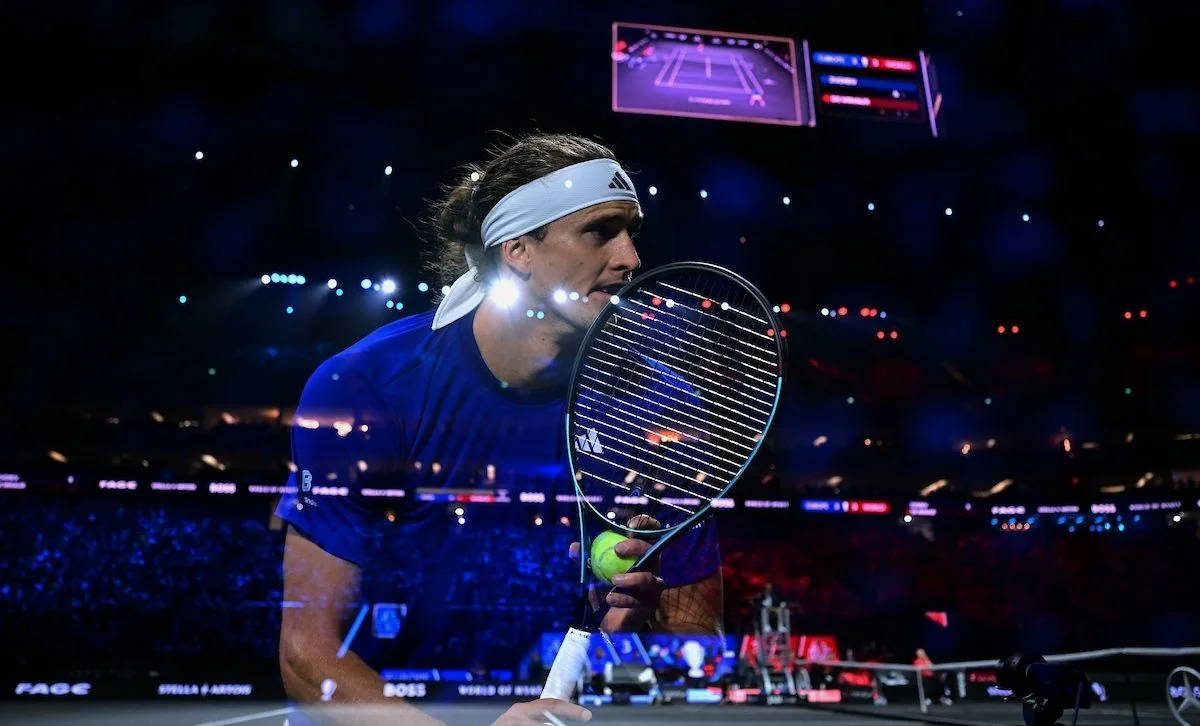
Event structure was a second source of drama. The official format gives Friday wins one team point, Saturday wins two and Sunday wins three; the first team to 13 wins. Split-set matches use a ten-point tiebreak, concentrating the ending. Europe's lead was only 7–5 after Saturday, yet two Sunday wins made the final 13–5. Those abrupt shifts can make a weekend exciting even if a particular court plays slowly. They can also make a close match more memorable than its rally profile suggests. Our results and scoring breakdown follows the exact point path, while the surface debate is best judged on how the tennis played within it.
What should fans ask before calling the next court too slow?
The first question is whether someone has published a pace test for the court actually used. The ITF's test method offers a controlled way to discuss ball-surface interaction. A product classification, a court construction photograph or a number from a different year's event is less specific than an installed-court result. The distinction is especially useful when an event travels: the same colour scheme can cover a different floor assembly, and the ITF notes that material beneath the top playing layer may affect a rating. Asking for a number is a request for clarity, not a claim that one particular number would automatically make the tennis good or bad.
The next question is which balls were used and how they were managed. Tennis balls have their own tested properties, and the ITF rule text says organisers must announce the number in play and any ball-change policy before the event. Those details do not excuse an unpopular surface, but they prevent the common mistake of attributing every bounce, lost serve point or tiring rally to the court alone. If a player criticises “conditions,” ask whether the comment names the surface, the ball, the lighting, their physical state or a combination. A headline that silently substitutes one for another can mislead fans.
Finally, ask what comparison is being made. If an ace percentage comes from a prior season, it cannot certify the next year's surface. If a single match featured two strong returners, it may say more about them than about the arena. If one server struggled, look at serve quality and the opponent's positioning before declaring that every server would struggle. The strongest public argument would combine a measured court pace, transparent ball details and several match samples with appropriate player context. Even then, the judgment “too slow for an entertaining team event” remains a sporting opinion rather than a laboratory result.
For London 2026, the defensible conclusion is narrower but still meaningful. A credible reporter watching at The O2 and many fans perceived very slow conditions. Saturday contained stretches that some found too hard to finish. Other passages, including Alcaraz's inventive comeback against Fritz and De Minaur's tactical change against Zverev, produced genuine variety and drama. The opened official material does not give us a public CPR with which to declare the court formally Category 1 or to rank it against every other event. That leaves room for criticism without false precision.
The official Laver Cup format page says the competition moves to Intuit Dome in Inglewood, California, on September 24–26, 2027. Its announced venue and dates say nothing yet about the pace of that future court. As the event moves, the fairest fan discussion will start fresh: inspect the published surface information, watch the tennis and make clear which conclusions are measurements and which are preferences. For broader scheduling context, see our ATP tournaments guide; for the completed London score, consult the 2026 results breakdown.
The 2026 Laver Cup looked slow to many viewers, and Saturday's play gave them specific reasons to say so. Yet no public test number in the opened official material lets us label the London installation with an ITF pace category. The strongest account keeps both truths in view: the criticism of how the matches felt is legitimate, and the physics of the surface remain unquantified in public. London produced draining passages, clever adjustments and memorable finishes on the same court. A measured rating and transparent ball details would make the next debate much more precise.
About the author
ATP Schedule Editorial Team
The ATP Schedule editorial team turns match times, scores, tournament information and verified tennis news into clear answers fans can use quickly.
View all articles by this author →Fan discussion
Comments
Sign in with Google to comment. Keep the discussion helpful and tennis-focused. New comments are reviewed before they appear.
Loading comments…