Rafael Jodar's Shanghai Ball-Kid Incident: What Happened and Which ATP Rules Apply
A clear account of Jodar's Shanghai outburst, the umpire's warning and his public apology, with the ATP conduct and towel rules that explain the controversy.
What happened between Jodar and the Shanghai ball kid?
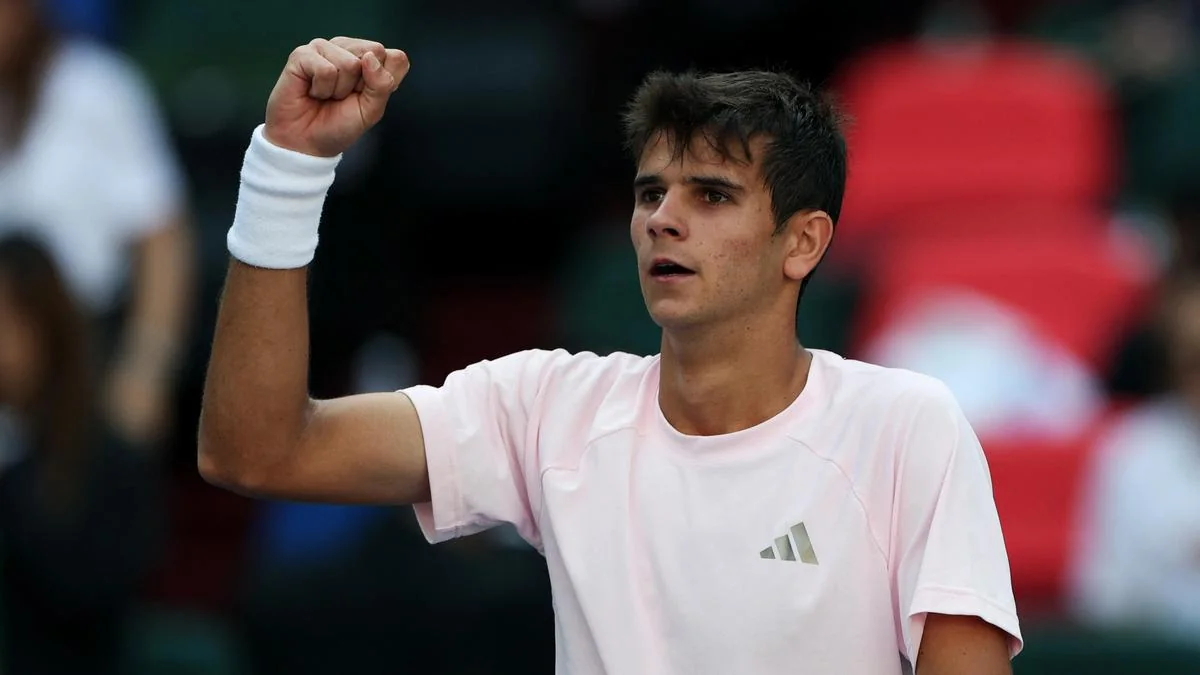
Rafael Jodar received an unsportsmanlike-conduct warning after swearing at a ball kid while asking for a towel during his Shanghai fourth-round match on October 14, 2026. He was playing Botic van de Zandschulp, had lost the opening set in a tie-break and was early in the second set when the exchange occurred. The match continued; Jodar won 6-7(4), 6-4, 6-2.
The contemporary Sportstar report, with AFP inputs, identifies Ecuadorian chair umpire Jimmy Pinoargote as the official who intervened. Jodar complained about the response to his towel request. Pinoargote understood the Spanish exchange and did not accept that complaint as an excuse for the language.
That sequence matters because short clips often arrive with the match context removed. A towel request, an objection to the warning and the later result are three separate parts of the story. The reported sanction was a warning. Describing it as a lost point, a disqualification or a confirmed monetary fine would add something that this account does not establish.
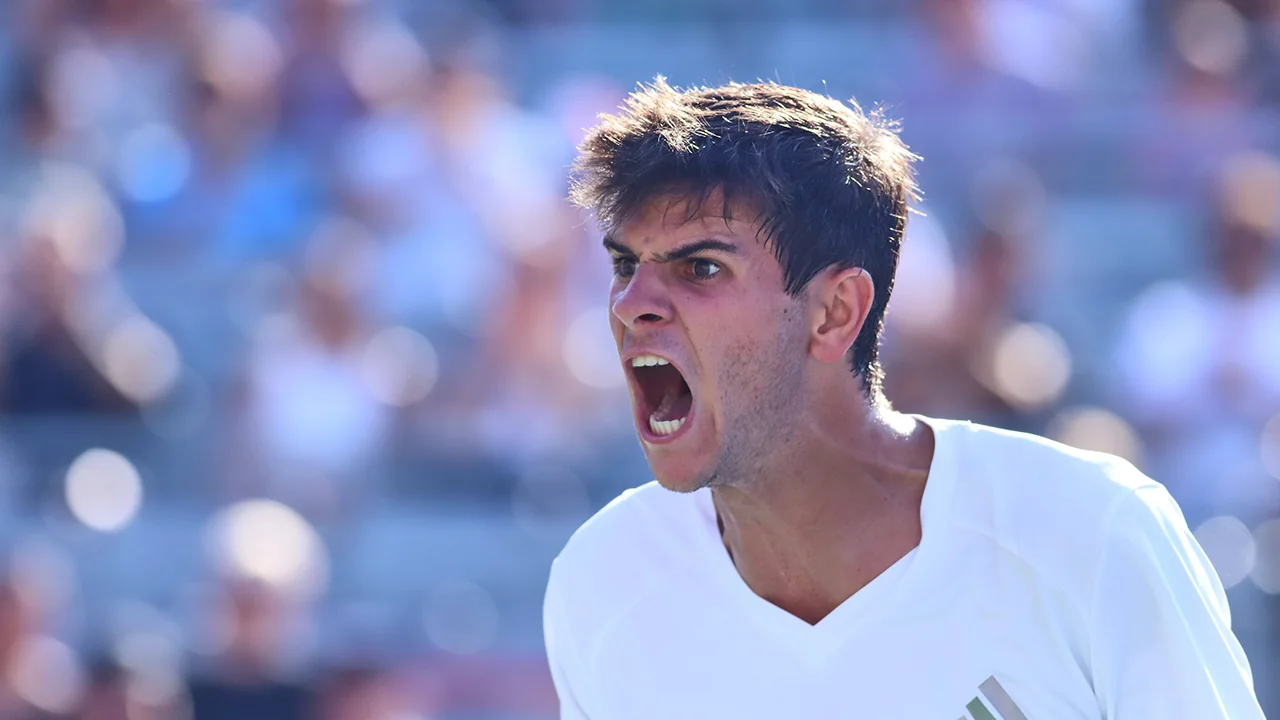
There is also a date distinction. The incident took place in the round of 16 on Wednesday. Jodar's fuller public response came on Friday after his quarter-final victory over Casper Ruud. A headline about his apology should not move the original incident into that later match.
For fans revisiting Shanghai through the ATP results pages, the sporting outcome is straightforward: Jodar recovered to win. The conduct question deserves its own assessment. Winning the remaining sets neither erases the outburst nor proves that the warning improved his tennis. There is no need to make either claim to explain why the chair intervened.
Why did Jimmy Pinoargote issue an unsportsmanlike-conduct warning?
The warning addressed how Jodar spoke to the ball kid. Asking for a towel was not the misconduct, and losing a close set was not a disciplinary offense. The distinction is simple but essential: a player can have a practical courtside problem and still handle it in an unacceptable way.
The Independent's account identifies unsportsmanlike conduct as the warning announced by Pinoargote. Fans should use that description when discussing this incident, rather than replacing it with a more dramatic category because a clip contains profanity.
The 2026 ATP code separately addresses abusive language, audible obscenity and broader unsportsmanlike behavior. Those provisions help explain why language can be sanctionable. They do not authorize a viewer to announce extra findings on the chair's behalf.
The language of an outburst does not change the standard
Pinoargote, who is from Ecuador, understood the Spanish exchange. There was therefore no need to rely on an English translation posted later to identify what had been said. A viewer hearing only a shortened clip may lack that context, particularly when an argument with the umpire follows the original words.
Our assessment is that the important dividing line is the target and treatment of another person. Competitive frustration explains the setting; it does not transfer responsibility to the person fetching equipment. There is also no need to assume that using Spanish was a deliberate attempt to escape scrutiny. That would speculate about intent beyond the established exchange.
This was different from the questions covered in our video review and hindrance guide. A point review asks what happened during play and what result the rules require. A conduct intervention addresses behavior around the contest. Confusing those two kinds of decision encourages the mistaken idea that an official must prove the outburst changed a rally before acting. The central question here was the way a ball kid was treated.
Does a code violation mean a point penalty, fine or default?
No. Those terms describe different consequences. In this case the announced consequence was a warning. Anyone discussing what happened to the score should start with that announcement, rather than treating every reference to a code violation as a point awarded to the opponent.
How the normal penalty sequence works
The ATP code's normal progression is a warning, then a point penalty, then game penalties. After the third code violation, the supervisor assesses whether subsequent offenses warrant default. A sufficiently serious single violation can also lead to immediate default; the sequence is not permission to commit several offenses first.
| Term | Meaning for the contest | Established here? |
|---|---|---|
| Warning | A formal conduct intervention without a score deduction | Yes |
| Point penalty | A scoring consequence | Not established for this incident |
| Fine | A financial sanction | No confirmed amount identified |
| Default | The player loses the match by disciplinary decision | No; the match continued |
The comparison helps when watching future matches, too. Listen for the whole announcement: the type of conduct and the consequence attached to it. A commentator's shorthand may omit the second part. For a different example of the consequences of disciplinary removal, see our China Open default explainer.
Why a fine is a separate question
A fine concerns money rather than a point on the scoreboard. A warning during a match therefore does not, by itself, tell a viewer what financial decision followed. Equally, the absence of a score deduction is not proof that the incident had no disciplinary significance.
Some contemporary coverage anticipated a fine. That is different from a published decision giving an amount, an offense classification and a date. This account does not claim a confirmed fine amount, suspension or ban. Fans looking for an update should ask for the decision itself rather than a repeated prediction.
There is room to debate whether a warning was an adequate immediate response while keeping that distinction intact. Supporting firmer protection for ball kids does not require inventing a punishment that was never announced. Conversely, noting that the match continued does not diminish the seriousness of directing an outburst at someone helping it run. Accuracy makes that debate stronger.
What did Jodar say in his apology?
Jodar accepted responsibility and said the umpire's warning had been justified. In his October 16 Shanghai mixed-zone interview, after beating Casper Ruud, he acknowledged that frustration with his own performance had led him to treat the ball kid improperly.
The important development was his change of position about the official's intervention. On court he had argued. In the later interview he accepted that he should have taken the warning. That is a specific admission, more informative than a vague expression of disappointment about how an incident looked.
A public apology and a personal apology are different events
The same transcript records an intention to apologize directly if he saw the ball kid at the venue. It does not establish that the meeting had already happened. A public acknowledgment can therefore be reported accurately without turning it into an invented account of a private encounter.
Nor should supporters or critics speak for the child. There is no reason to assume the ball kid accepted an apology, wanted a photograph, wished to comment publicly or felt a particular way afterward. A responsible follow-up can assess the player's words while leaving the other person's privacy intact.
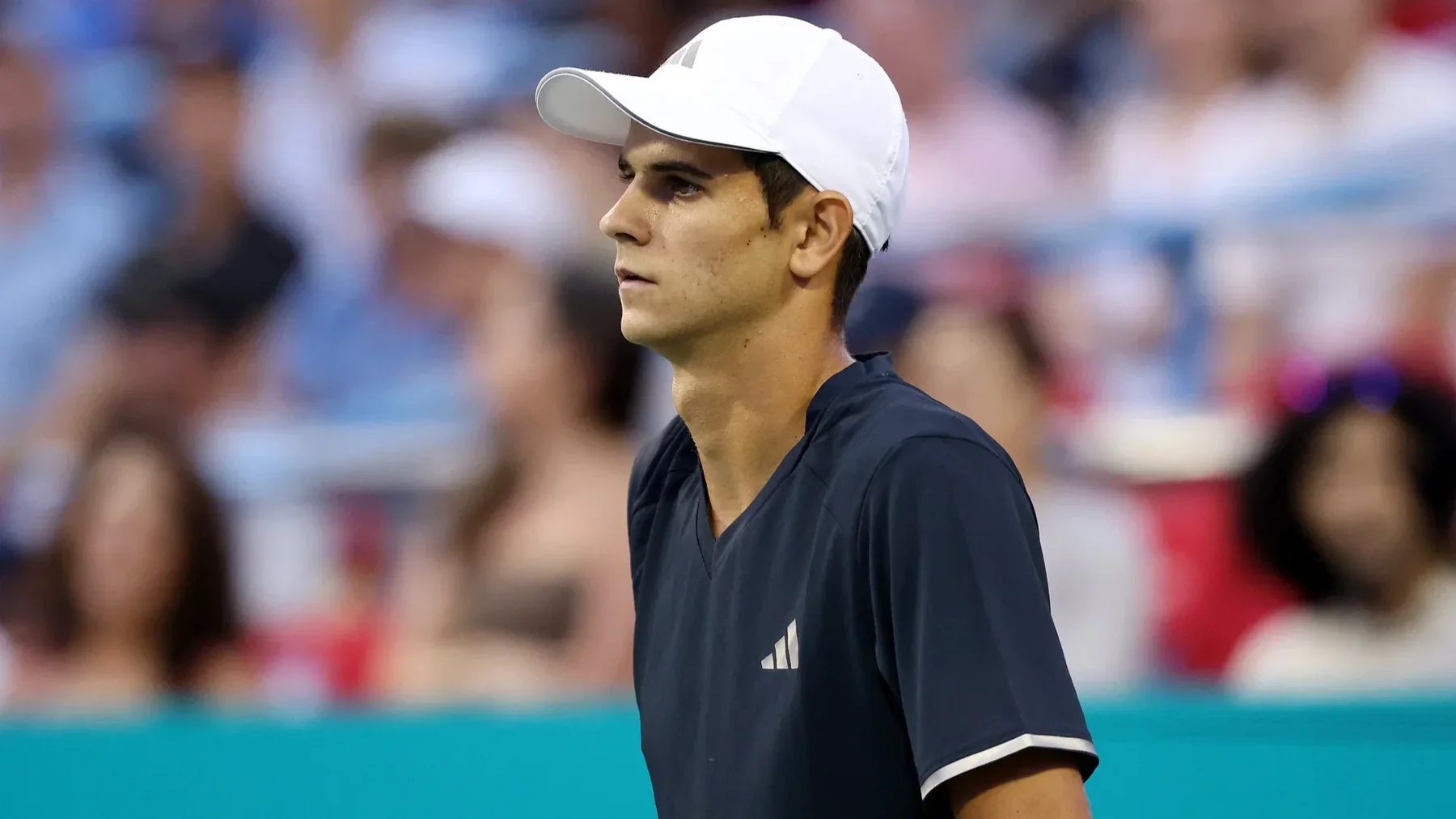
Our view is that accepting the warning was a necessary response, while consistent future conduct will be more persuasive than any single interview. Fans do not have to choose between pretending the outburst was harmless and deciding that improvement is impossible. Accountability can begin with an admission and remain open to evidence of change.
That is also a fairer standard than trying to determine sincerity from a player's facial expression. The words are on record. The private feelings of the people involved are not. The useful next question is whether the player handles the next frustrating courtside problem with more restraint.
Are ball kids expected to bring players their towels?
ATP's 2026 arrangements allow players to request and be handed towels between points. The rulebook also provides for designated towel baskets. It would therefore be misleading to explain this incident by assuming that a blanket pandemic-era prohibition on towel assistance still applied.
That is the useful answer to the practical question raised by the clip. It does not answer the conduct question in Jodar's favor. Permission to request assistance says nothing about permission to swear at the person providing it. The two issues need to be kept separate even when a match is tense.
The reports establish that Jodar complained about his request not being attended to as he expected. They do not establish that the child deliberately ignored him. From the stands or a television angle, a spectator may not know what instructions a ball kid heard, what else needed attention or whether a gesture was visible. Assigning blame on that basis would go further than the evidence allows.
Our practical view is that a repeated difficulty with towels should be taken calmly to the chair. An official can address how the court is operating without leaving a child to manage an angry player's complaint. That is an editorial recommendation for handling friction, not a claim that a new Shanghai procedure was formally adopted after this match.
Time pressure helps explain why players care about a quick routine. It still does not make disrespect necessary. Fans interested in the timing question can read our guide to ATP serve-time rules; a clock dispute and an outburst directed at another person are different things to assess.
The best courtside routine should be easy for everyone to understand: a clear request, a clear response and an official available if the arrangement is not working. It should not depend on a young helper absorbing a player's frustration. Explaining that standard is more useful than arguing that players must either receive instant service or be left to handle every task themselves.
Why did the incident upset so many tennis fans?
The concern is the treatment of someone helping the match, particularly a young person with little room to answer back. In the contemporary r/tennis discussion, contributors repeatedly separated ordinary frustration with tennis from directing an outburst at a ball kid. Some also praised the chair for intervening calmly.
Respect for ball kids is a different issue from competitive frustration
A player missing a return can be angry about his own execution. A player addressing a helper brings another person into that emotion. That difference helps explain why this exchange drew objections beyond the usual argument about whether tennis allows enough personality.
Our view is that intense competition and a basic standard of respect can coexist. Fans can appreciate a player fighting through a difficult match while objecting to how he treats the people around it. Calling the sport demanding does not answer the objection; the demand is part of the job the player has chosen.
Consistency matters, too. A useful standard should apply when the player involved is a favorite, an opponent or an emerging name. Otherwise a discussion about protecting ball kids quickly becomes an argument about which fan base gets to excuse which outburst.
Judge the response without inventing a verdict about character
The later apology discussion shows disagreement about how much weight to give Jodar's acknowledgment and whether improvement should be expected. These are examples of fan concerns, not a representative survey of tennis supporters.
The productive question is what accountability should look like: accepting the official's decision, acknowledging the effect on another person and changing the response to future frustration. It is less useful to pretend that a comment thread can establish a player's private motives or forecast his entire career.
Neither instant forgiveness nor permanent condemnation is necessary to follow that approach. Fans may remain critical of the incident while recognizing the public admission. They may also wait for evidence that the promised change holds under pressure. That keeps attention on observable behavior rather than turning one courtside exchange into an unsupported psychological profile.
What should fans watch for after Shanghai?
The useful follow-up is a combination of observable conduct and any published disciplinary decision. A new report should add something concrete: an official sanction, a verified account of a direct apology or a meaningful example of how Jodar handles another difficult moment. Repeating the original clip with a harsher headline does not supply that information.
The tennis story moved on during the same week. Jodar beat Ruud and Daniil Medvedev before losing the final to Alejandro Davidovich Fokina. In his Sunday reaction published by ATP, he described a positive tournament with things still to improve. That sporting progress is worth following in its own right.
For viewers, the next practical test is an ordinary one: what happens when a request is missed, a point is lost or a decision goes against him? Does he address the chair, accept the answer and resume play? Does frustration stay directed at the competitive problem? Those are more useful observations than trying to infer a permanent personality from either an apology or a trophy run.
Use today's ATP matches to find his next appearance and the player directory to follow his broader progress. The same standard should apply throughout the Tour: players can compete intensely while treating courtside helpers with respect.
As of October 19, the central facts in this account are the fourth-round outburst, Pinoargote's unsportsmanlike-conduct warning and Jodar's later public acceptance that he had been wrong. His stated wish to apologize personally remains distinct from a verified meeting. A financial penalty should be reported when its details are established, with no guesswork about an amount. Keeping those distinctions clear leaves room for both a firm judgment about the incident and a fair assessment of what follows.
About the author
ATP Schedule Editorial Team
The ATP Schedule editorial team turns match times, scores, tournament information and verified tennis news into clear answers fans can use quickly.
View all articles by this author →Fan discussion
Comments
Sign in with Google to comment. Keep the discussion helpful and tennis-focused. New comments are reviewed before they appear.
Loading comments…