ATP Serve-Time Rules: The 25-Second Clock, Second Serves and Ball-Toss Restarts
Understand the ATP 25-second limit, second-serve timing, caught tosses and time-violation penalties, plus how De Minaur's and Gilbert's reform proposals differ from current rules.
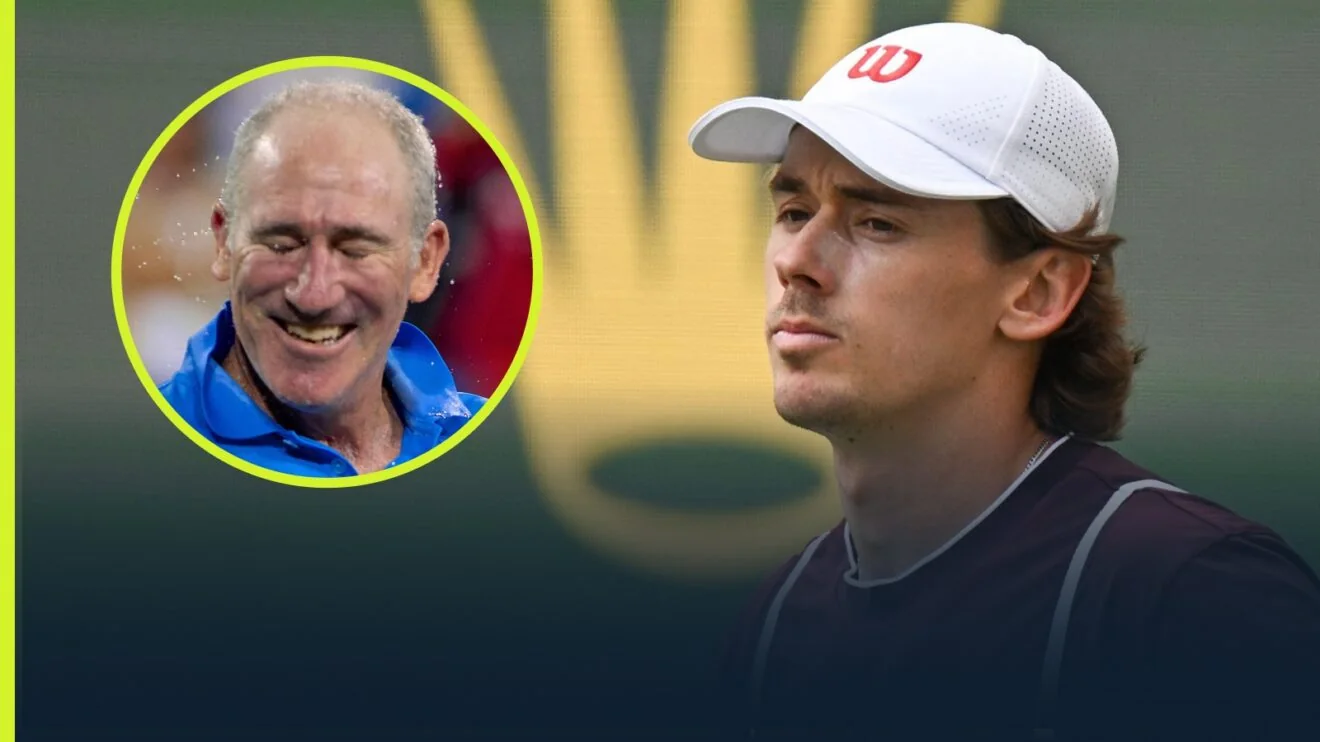
ATP players normally have 25 seconds between points, with the next serve struck before that interval expires. Second serves must follow without delay, while catching a toss without attempting to hit it is not a service fault. Here is how those current rules differ from the changes Alex de Minaur and Brad Gilbert have discussed, checked against the official 2026 rules on October 14.
What does the ATP 25-second serve-time rule require?
The ATP allows a maximum of 25 seconds from the ball going out of play until the ball is struck for the next point. That is the wording of the Continuous Play provision in the current 2026 ATP Official Rulebook, on printed page 258. It is a limit on the interval between points, rather than a separate allowance for every part of a serving routine.
The interval ends when the ball is struck
The endpoint is important. Beginning to bounce the ball, moving into a serving stance or releasing a toss is not the same action as striking the serve. The 2026 ITF Rules of Tennis, rule 29, likewise describe the maximum interval from one point finishing to the first service being struck for the next point.
For a hypothetical uninterrupted interval, tossing before the 25-second limit but striking the ball after it does not establish compliance with that written endpoint. This example explains the rule; it is not a reconstruction of a particular player's serve or a claim about how every electronic clock is started and stopped.
The routine before the first serve has to fit within the applicable interval. Counting bounces alone does not answer whether a player was late: ten quick bounces and a smaller number of slower preparations can occupy different amounts of time. The governing provision sets a time limit, rather than a fixed permitted number of bounces.
Changeovers and set breaks use different allowances
| Context | Ordinary allowance |
|---|---|
| Between points | 25 seconds to the next first-service strike |
| Ordinary end-of-game changeover | 90 seconds |
| End of a set | 120 seconds |
The changeover and set-break allowances are exceptions to the ordinary between-point interval. They are not 90 or 120 seconds followed by an automatic extra 25 seconds. The ITF rules also specify no rest after the first game of a set or while changing ends during a tiebreak; those changes of ends should not be confused with an ordinary seated changeover.
When watching today's ATP matches, identify the context before comparing elapsed time with a number. A point interval, a set break and the gap after a first-service fault answer different timing questions.
How much time is allowed between first and second serves?
The current ATP provision requires the second serve to be struck without delay after a first-service fault. It does not grant a fresh standard 25-second interval between those two attempts. The ATP Code chapter states that obligation directly after its between-point limit.
The 2026 ITF Rules, rule 20, likewise require a second service without delay after the first is a fault. The two documents therefore separate the interval before the next point's first serve from the pace between service attempts within that point.
Without delay is not another 25-second allowance
Consider a hypothetical first serve faulting 12 seconds into an ordinary point interval. It would be wrong to assume the player receives another full 25 seconds for the second serve. It would also be misleading to calculate the remaining 13 seconds and present that as the specified second-serve allowance. The governing text uses the without-delay requirement, rather than either of those calculations.
This distinction explains why a second-serve routine can attract discussion even when viewers do not see the same countdown they watched before the first serve. No separately specified numeric interval in this provision does not mean no obligation to keep play moving. Repeating a long preparation routine is not automatically authorized merely because it happens after a fault.
There is a corresponding obligation on the receiver. ITF rule 21 says the server should not serve until the receiver is ready, but the receiver must follow the server's reasonable pace and be ready within a reasonable time. That protects ordinary readiness without providing a tactical right to hold up the second serve indefinitely.
When De Minaur discussed a possible clock between first and second serves in Shanghai, he was proposing another way to regulate that gap. The idea is relevant precisely because the existing pace requirement is not the same thing as a newly specified second-serve countdown. His remarks do not establish that such a clock, or a new number of permitted seconds, has been adopted.
For an actual ruling, distinguish the applicable obligation from what the television graphic happens to display. The written without-delay requirement remains relevant even when a first-serve countdown is not an adequate measure of the second-serve gap.
Is catching a bad ball toss a service fault?
Not if the player abandons the toss without trying to hit the ball. The current ITF rule expressly permits that situation. It is different from making a genuine attempt to strike the serve and missing the ball, which is a service fault.
Abandoning the toss without a hitting attempt
In case 1 under rule 19 of the 2026 ITF Rules of Tennis, the server tosses the ball, decides not to hit it and catches it. The decision says this is not a fault. The player can catch it with a hand or the racquet, or allow it to bounce.
For example, a server can reject a toss that has drifted out of the intended hitting position without automatically losing that service attempt. The important feature of the example is the decision not to attempt the hit, rather than simply where the ball eventually lands.
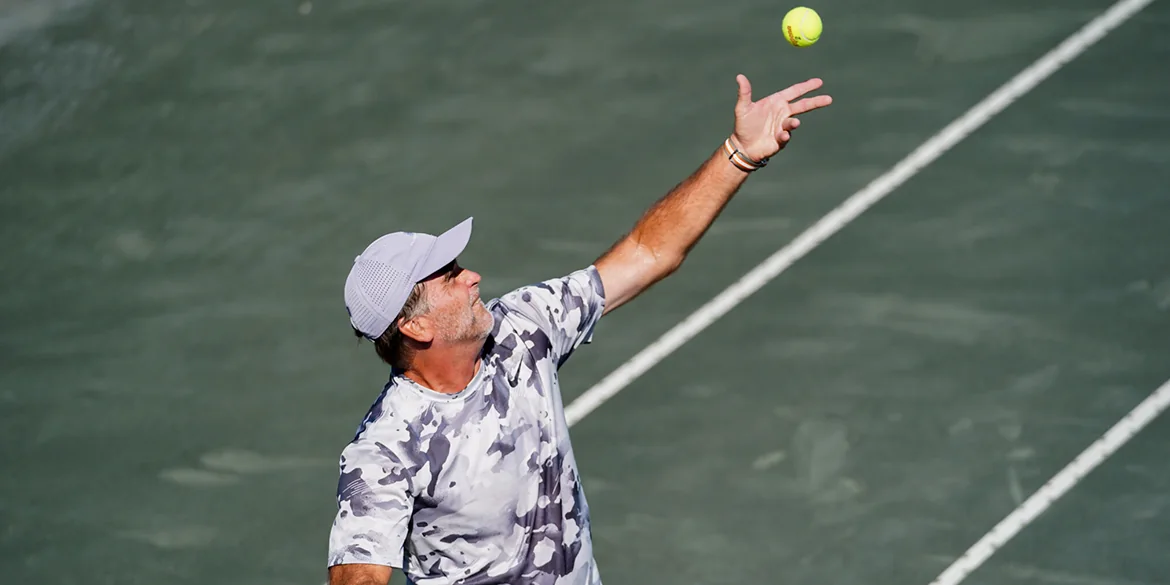
This also applies while the player is on a second serve. Abandoning that toss without a hitting attempt does not restore a first serve: the player remains on the second service attempt. The earlier first-service fault has not disappeared.
Swinging at the ball and missing
Rule 19(b) makes missing the ball while trying to hit it a fault. Therefore, a genuine serving swing that misses counts even though the racquet never makes contact. If it was the first attempt, the player proceeds to a second serve. If it was the second, it produces a double fault and loss of the point, consistent with USTA's basic serving explanation.
| Action | Service-fault consequence |
|---|---|
| Toss rejected without a hitting attempt; ball caught or allowed to bounce | No fault merely for abandoning the toss |
| Player tries to strike the serve but misses | A fault; on the second attempt, the point is lost |
The permission to reject a toss is not permission for unlimited delay. The ATP timing requirements still govern the first-service interval and the second serve's pace. A legal aborted toss does not create a fresh 25-second entitlement. It is possible to avoid a service fault under the toss case while still having a separate timing issue.
What penalty follows an ATP time violation?
An initial ATP time violation brings a warning. In ordinary play, a later violation brings a fault for the server or a point penalty for the receiver. The current Code's Time Violations provision therefore does not say that every late serve automatically costs a point.
Server and receiver penalties are different
| Ordinary time-violation situation | Sanction |
|---|---|
| Initial violation, as server or receiver | Warning |
| Subsequent violation while serving | A fault |
| Subsequent violation caused by the receiver | Loss of one point |
A serve-related fault is not necessarily the immediate loss of the point. If the first serve is removed, the player still has to play the second serve. A useful recent example came in the China Open semifinal on 5 October 2026: AP reported that Djokovic received a warning and later lost his first serve on a break point against Medvedev. He nevertheless won that point. The sanction altered his service opportunity without deciding the rally's outcome in advance.
Warning history does not restart when a player changes roles. The ATP's own example is a player warned for slow serving who is later judged too slow as receiver. That later infringement is a second violation and produces a point penalty, rather than a new first warning because the player is now returning.
The receiver must also follow the server's reasonable pace. The Code permits a time violation before the 25 seconds have expired when the receiver is delaying that pace. Thus, the between-point maximum is not a personal right for a receiver to remain unready until the last second regardless of the server.
Consistent or obvious receiver delay can instead be treated as unsportsmanlike conduct under the Code. That distinction makes the umpire's announced category important: the ordinary warning/point/game code-violation ladder is not interchangeable with the time-violation sanctions in the table.
When checking ATP match results, separate the final score from the enforcement history. A player's warning, service fault and later successful point can all occur in the same sequence. The visible countdown alone does not identify which sanction applies without the role, previous warnings and actual ruling.
What exactly are De Minaur and Gilbert proposing?
Alex de Minaur has suggested a clock between first and second serves and a separate rule making an abandoned service toss a fault. Brad Gilbert has supported criticism of repeated toss restarts. These are proposals and public opinions, rather than adopted changes to the ATP rules checked for this article on October 14, 2026.
Reports published on October 12 describe De Minaur discussing the ideas during Shanghai media duties. His answer about a second-serve clock addressed the time players take after a first-service fault. His personal suggestion about allowing only one toss addressed a different question: whether rejecting a release should cost the server a service chance. The reported comments do not specify a new countdown length.
| Issue | Current rule | Reported proposal |
|---|---|---|
| Time after a first-service fault | The second serve must be struck without delay. | Use a clock between the two serves; no adopted numerical interval is established by the comments. |
| Rejecting a service toss | Catching or abandoning the toss without a hitting attempt is not a fault. | Allow one toss and treat abandoning it as a fault. |
Gilbert's support, reported by Yahoo Sports and Tennis365, focuses on frustration with repeated toss restarts. A coach or commentator endorsing that complaint does not announce an ATP implementation date. Nor does a headline about possible reform establish that an umpire should already call every caught toss a fault.
The distinction matters when weighing the ideas. A countdown would make the existing demand for prompt second serves measurable through a specified display and procedure. A one-toss rule would change what counts as a service fault: rejecting an unsuitable release could consume a chance even without an attempt to hit it. Those are different consequences, and the second requires changing the current exception rather than merely enforcing the existing time limit more firmly.
Until an official amendment establishes otherwise, judge a match by the published rules and the umpire's announced ruling. Our tennis viewing guide helps you find coverage where you can hear that explanation alongside the point.
How should fans judge a delay or a shot-clock headline?
Start with the applicable rule, the kind of interval and the umpire's explanation. A cropped countdown or a player's complaint can identify a question worth examining, but it does not by itself establish the correct penalty. The service attempt and any earlier time-violation warning are essential context.
For example, a broadcast showing a caught toss leaves several questions open. Was there an attempt to hit the ball? Was this a first or second serve? Was the eventual ruling about the toss, elapsed time or the receiver's readiness? Watching the preceding point and listening to the announcement is more useful than treating every visible restart as the same offence. The rule permitting an abandoned toss does not establish that a player may take unlimited time.
Separate current rules from older procedures and trials
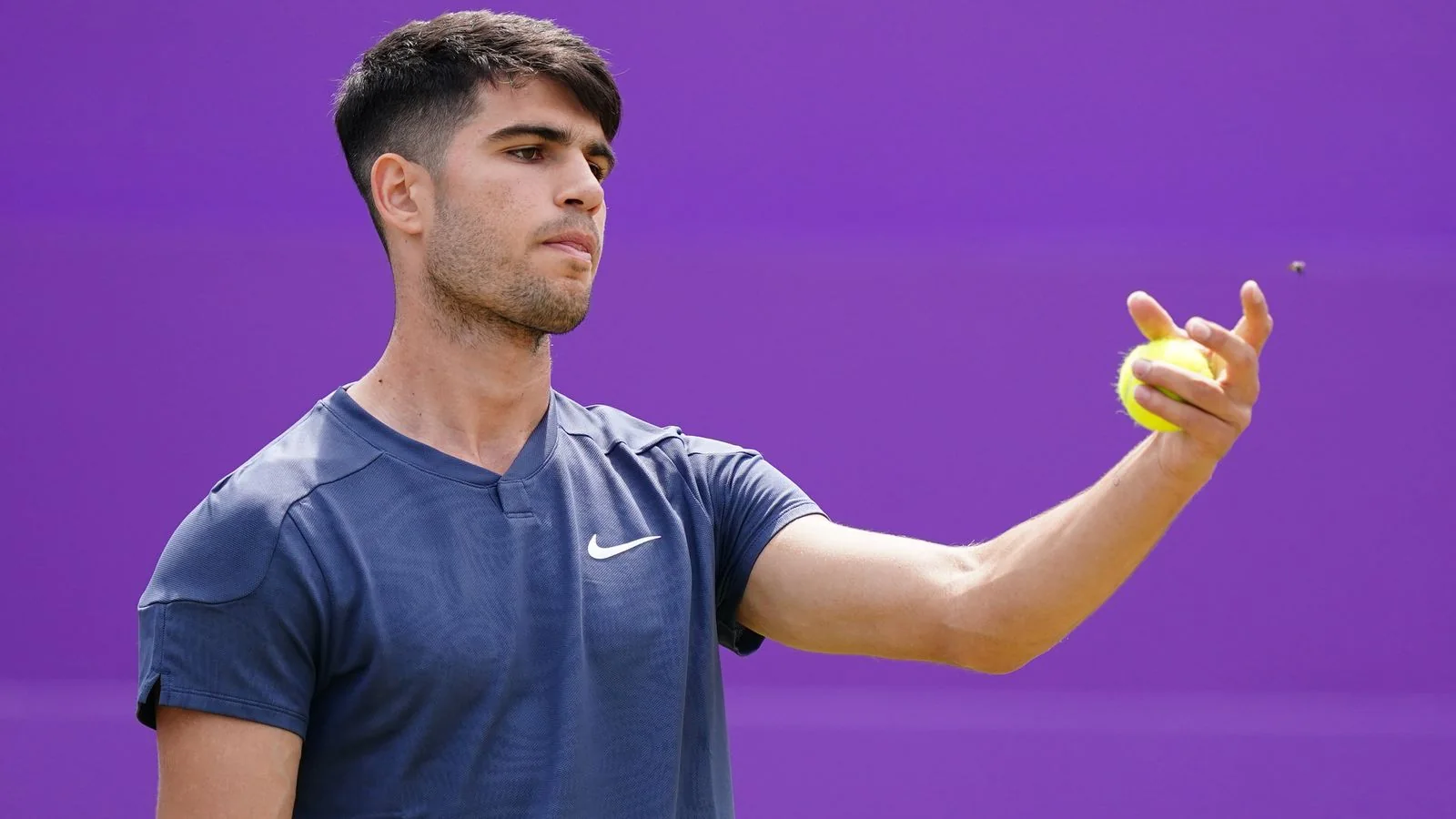
Dates matter. In a June 21, 2024 report, Sky Sports described Carlos Alcaraz's objections after his Queen's Club defeat by Jack Draper. That dispute concerned a trial starting the countdown almost immediately after a point, rather than waiting for the score announcement. Alcaraz described feeling rushed through his preparation. The report concerns a 2024 trial; it is not an announcement that a second-serve countdown or one-toss fault rule took effect in 2026.
An older LTA procedure sheet dated 2023 also describes starting a clock with the score announcement and refers to the start of the service motion. Those dated operational instructions should not replace the current ATP rule's ball-struck endpoint. Nor should they be used to assert the same clock controls or interruption procedures at every 2026 tournament.
The fair comparison is between what the published rule requires and what the complete sequence shows. Separate a player's desire for reform from a governing body's amendment, and a legal rejected toss from an attempted miss. A slow routine can warrant scrutiny without proving deliberate gamesmanship. This approach lets fans debate consistency without inventing either a new rule or a player's motives.
To follow those situations in current matches, use our today and tomorrow schedule guide to find the order of play, then assess the actual ruling in its match context.
About the author
ATP Schedule Editorial Team
The ATP Schedule editorial team turns match times, scores, tournament information and verified tennis news into clear answers fans can use quickly.
View all articles by this author →Fan discussion
Comments
Sign in with Google to comment. Keep the discussion helpful and tennis-focused. New comments are reviewed before they appear.
Loading comments…