How Mariano Navone Beat Novak Djokovic at the 2026 US Open
A set-by-set and tactical analysis of Mariano Navone?s five-set upset of Novak Djokovic at the 2026 US Open, including health facts and records ended.
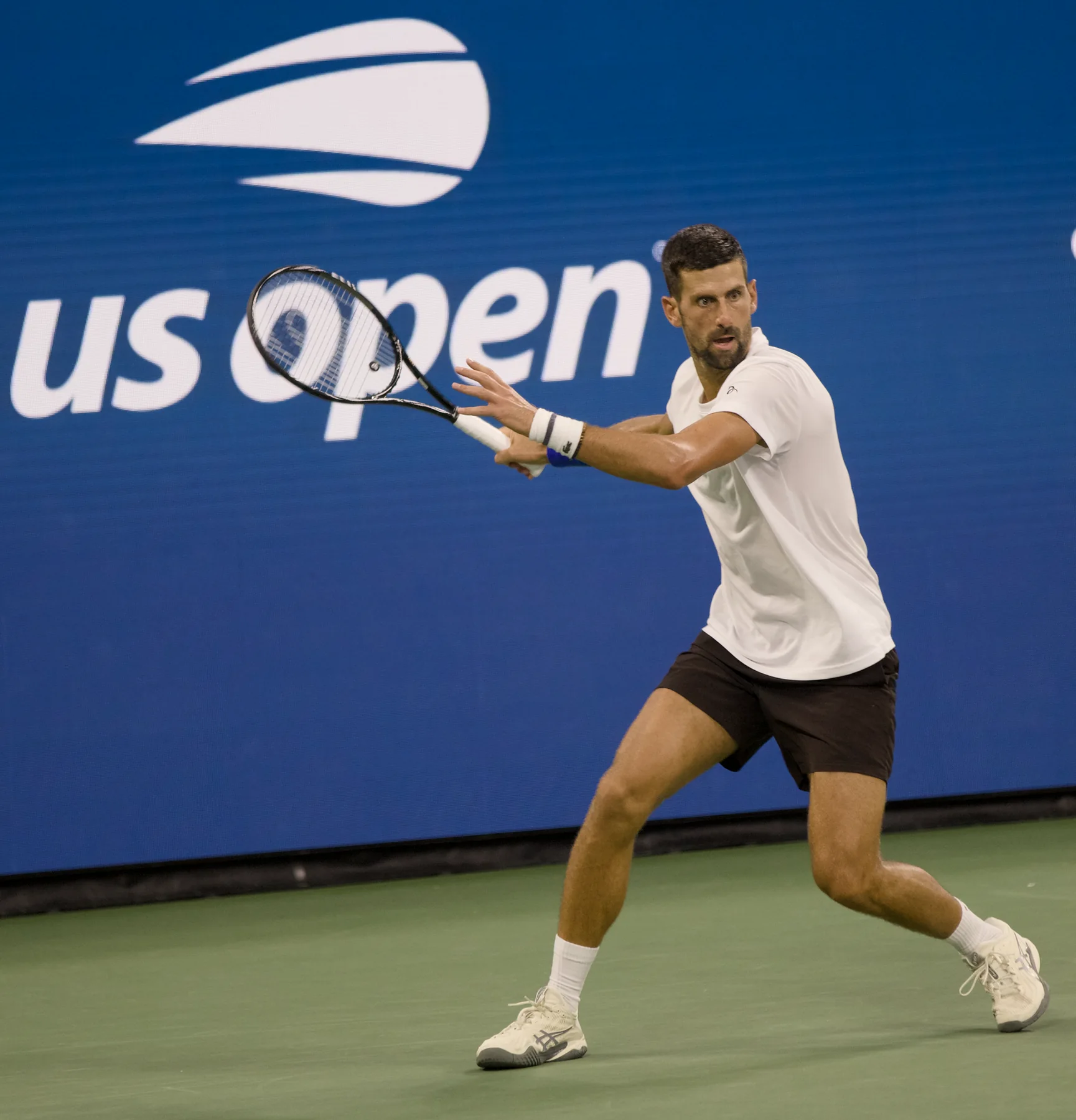
2026 US Open match analysis
Mariano Navone beat Novak Djokovic 7-6(5), 5-7, 4-6, 6-2, 6-1 in four hours and 36 minutes. This analysis reconstructs the momentum swings, explains what Navone controlled, separates confirmed health facts from speculation and puts the records into context.
Djokovic vs Navone result at a glance
Mariano Navone defeated fourth seed Novak Djokovic 7-6(5), 5-7, 4-6, 6-2, 6-1 in the first round of the 2026 US Open. The match lasted four hours and 36 minutes on Arthur Ashe Stadium. Navone came back from two sets to one down and won the last two sets decisively, turning a difficult first-round assignment into the defining victory of his career.
The complete five-set score
| Player | 1 | 2 | 3 | 4 | 5 |
|---|---|---|---|---|---|
| Mariano Navone | 7 | 5 | 4 | 6 | 6 |
| Novak Djokovic | 6 | 7 | 6 | 2 | 1 |
The first set went to Navone in a 7-5 tiebreak. Djokovic responded by taking the next two sets, the pattern expected from a champion who has solved hundreds of long matches. Instead of fading, Navone increased the score pressure while Djokovic's physical condition deteriorated. The Argentine conceded only three games across the fourth and fifth sets.
Why the result was historic
Djokovic had never lost his opening match at the US Open. His previous first-round defeat at any Grand Slam came at the 2006 Australian Open, two decades earlier. That history made the result far more than a seed losing early: one of the sport's most dependable major-tournament patterns ended in a single night.
The result also removed a four-time champion and 24-time major winner before the tournament's second round. It interrupted Djokovic's pursuit of a 25th major, but it did not answer when he will retire or whether he can contend again. Those are future questions. The completed fact belongs in the ATP results record: Navone won five sets by staying in the contest after Djokovic had apparently regained control.
How the momentum changed across five sets
The scoreline contains two separate comebacks. Djokovic first lost an early advantage, then rebuilt the match to lead by two sets to one. Navone answered that response with the strongest stretch of the night. Reading the contest only through Djokovic's physical trouble misses how often the Argentine had to regain control.
Djokovic let the first set escape
Djokovic opened a 3-0 lead and was still ahead 4-1 in the first set. At that point, the expected script appeared intact: the four-time champion had early scoreboard room against an opponent playing his first match against him. Navone refused to let one poor start define the set. He worked back to level terms, extended the set to a tiebreak and won that breaker 7-5.
That reversal mattered because it made Djokovic spend more than an hour without even holding a one-set lead. Navone also gained proof that he could recover on the sport's largest tennis stadium. The first set did not decide the match, but it established the pattern: an advantage had to be closed, and neither player could assume that one good passage would be enough.
The favourite recovered in the middle
Djokovic's response looked familiar. He took a tight second set 7-5 and followed it with a 6-4 third, turning a one-set deficit into a two-sets-to-one lead. For viewers checking only the score, the upset threat might have seemed to be passing. Djokovic had survived the opening disruption and was one set from advancing.
The middle sets also prevent a simplistic account in which his level declined from the first ball onward. He found enough solutions to win two consecutive sets. Navone therefore had to solve a new problem: remain committed after surrendering the lead, while facing a champion renowned for improving inside long matches.
Navone owned the final two sets
Navone's answer was emphatic. He won the fourth set 6-2 and the decider 6-1, claiming 11 of the final 12 games. The contrast with the narrow first three sets was sharp. He stopped merely surviving and made the scoreboard move quickly, while Djokovic struggled physically and could no longer contain the run.
Those last two sets are the essential competitive fact. Djokovic's condition belongs in the explanation, but Navone still had to hold his nerve, protect his advantage and finish a player whose career is filled with escapes. After four hours and 36 minutes, he did exactly that. The completed result records a five-set upset; the sequence shows why it was also a comeback built on patience, recovery and a ruthless finish.
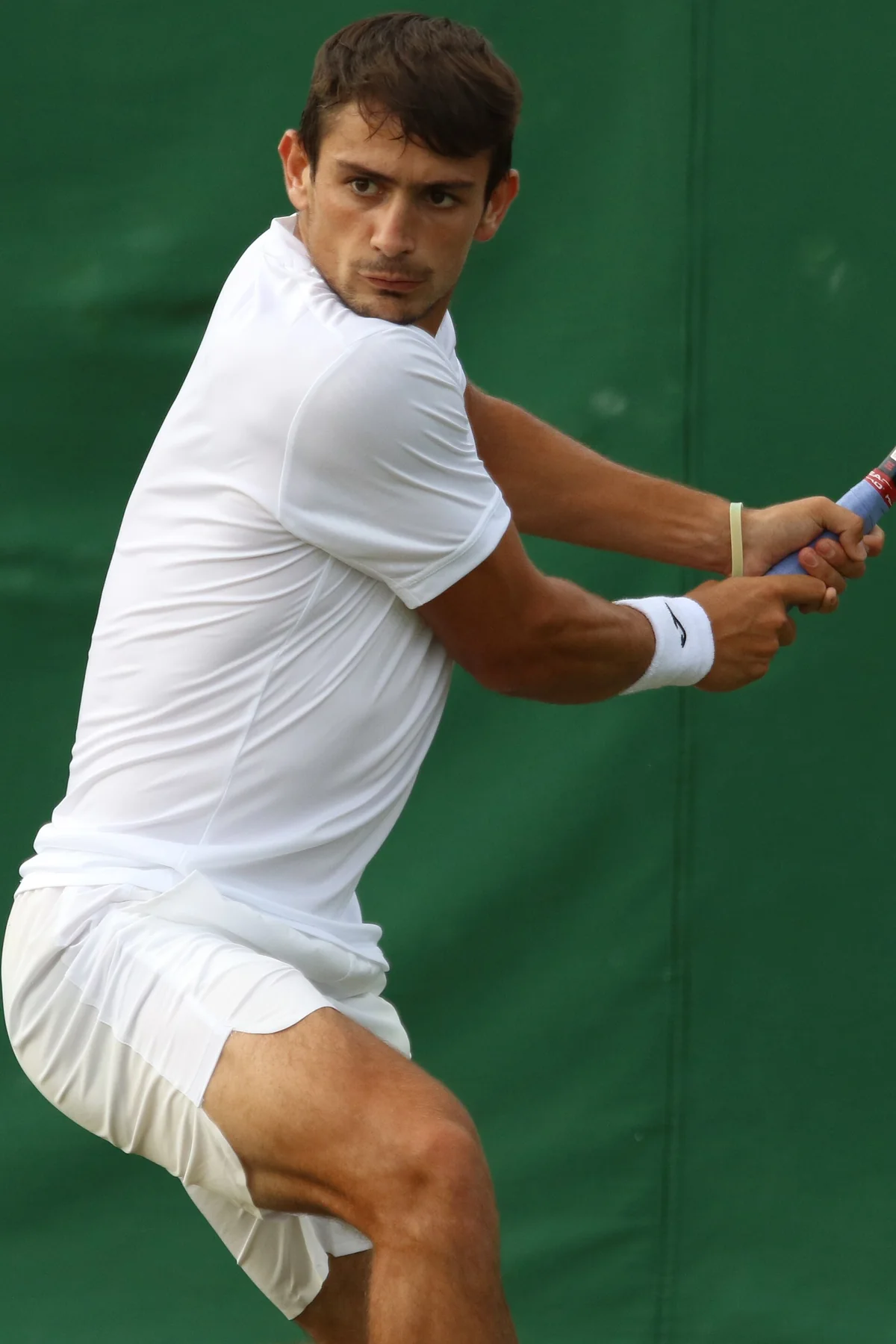
What Navone did well against Djokovic
Djokovic's physical distress was visible, but it does not erase Navone's part in producing the upset. A five-set win still required him to absorb the favourite's recovery, keep rallies alive and recognize when caution would give Djokovic time to escape. Navone did all three.
He kept making Djokovic play
The most useful number for understanding the pressure is Djokovic's 70 unforced errors, reported by the Associated Press. That figure describes Djokovic's execution; it does not mean Navone simply waited for mistakes. To benefit from a high error count, an opponent must continue returning enough balls, defend the court and remain willing to play another rally after losing a close one.
Navone demonstrated that tolerance twice. He recovered after falling behind 4-1 in the opening set, then recovered again after Djokovic won sets two and three. Each reset denied Djokovic the psychological shortcut that often follows a momentum swing. Navone did not need to dominate every passage. He needed to prevent a bad passage from becoming permanent.
He stayed aggressive when the opening appeared
Resilience alone would not have closed the match. Once Djokovic's movement and tolerance declined, Navone accelerated the score. Winning 11 of the final 12 games shows sustained control rather than one lucky break. He took the fourth set 6-2 and the fifth 6-1, avoiding the hesitant finish that can afflict a player approaching the biggest win of his career.
His on-court message about staying present and continuing to fight matched the shape of the contest. It was especially significant because Djokovic's reputation makes every late lead feel provisional. Navone kept attending to the next game instead of the career résumé across the net.
The tactical lesson is modest but real. He extended exchanges when Djokovic was offering errors, survived the period when the Serbian improved, and became more assertive when the physical imbalance grew. Public match reports do not provide enough shot-location data to claim a single forehand pattern or return position decided it. They do support a clearer conclusion: Navone forced the match to remain competitive long enough for his patience and finishing instinct to matter. His profile among the site's ATP players should now include more than clay-court promise; he owns a five-set hard-court win over the most successful men's major champion.
Djokovic's physical problems: confirmed facts and limits
Djokovic was clearly unwell during the match, and his own post-match account confirms that health affected him. Precision matters because visible symptoms are evidence of difficulty, not a diagnosis. The safest reading separates what Djokovic and match reports established from what remains private.
| Confirmed in public reporting | Still unknown |
|---|---|
| Djokovic said he had an ongoing health issue. | The precise medical diagnosis. |
| He said heat, humidity and nerves made the problem worse. | How much each factor contributed to the defeat. |
| His official site reported vomiting and cramps; reports also described pain and treatment. | The required treatment and recovery timetable. |
| He completed all five sets. | His next confirmed tournament or any calendar changes. |
This distinction protects both players from a distorted account. Ignoring Djokovic's condition would omit a major part of the final two sets. Treating illness as the whole explanation would reduce Navone's four hours and 36 minutes of work to an accident. The record supports both statements: Djokovic was compromised, and Navone managed the match well enough to capitalize.
It is also too early to turn one difficult night into a retirement announcement. Djokovic has played through injuries and altered schedules before, but past recoveries cannot establish this recovery. A return date requires a player announcement, an official entry list or a tournament confirmation. Until one appears, any specific week is speculation.
Fans following his status should prioritize Djokovic's official channels and tournament entry information over social posts diagnosing him from television footage. The distinction is practical: a medical label can sound certain while adding no reliable information, whereas a withdrawal or draw entry directly changes what spectators need to know.
The reasonable conclusion is therefore narrow. Heat and humidity aggravated an existing issue, Djokovic experienced serious symptoms, and his level declined late in a match he nevertheless finished. The severity beyond that night and the effect on his remaining 2026 schedule are unresolved. Future updates belong with verified ATP player information, where the source and announcement date can remain visible.
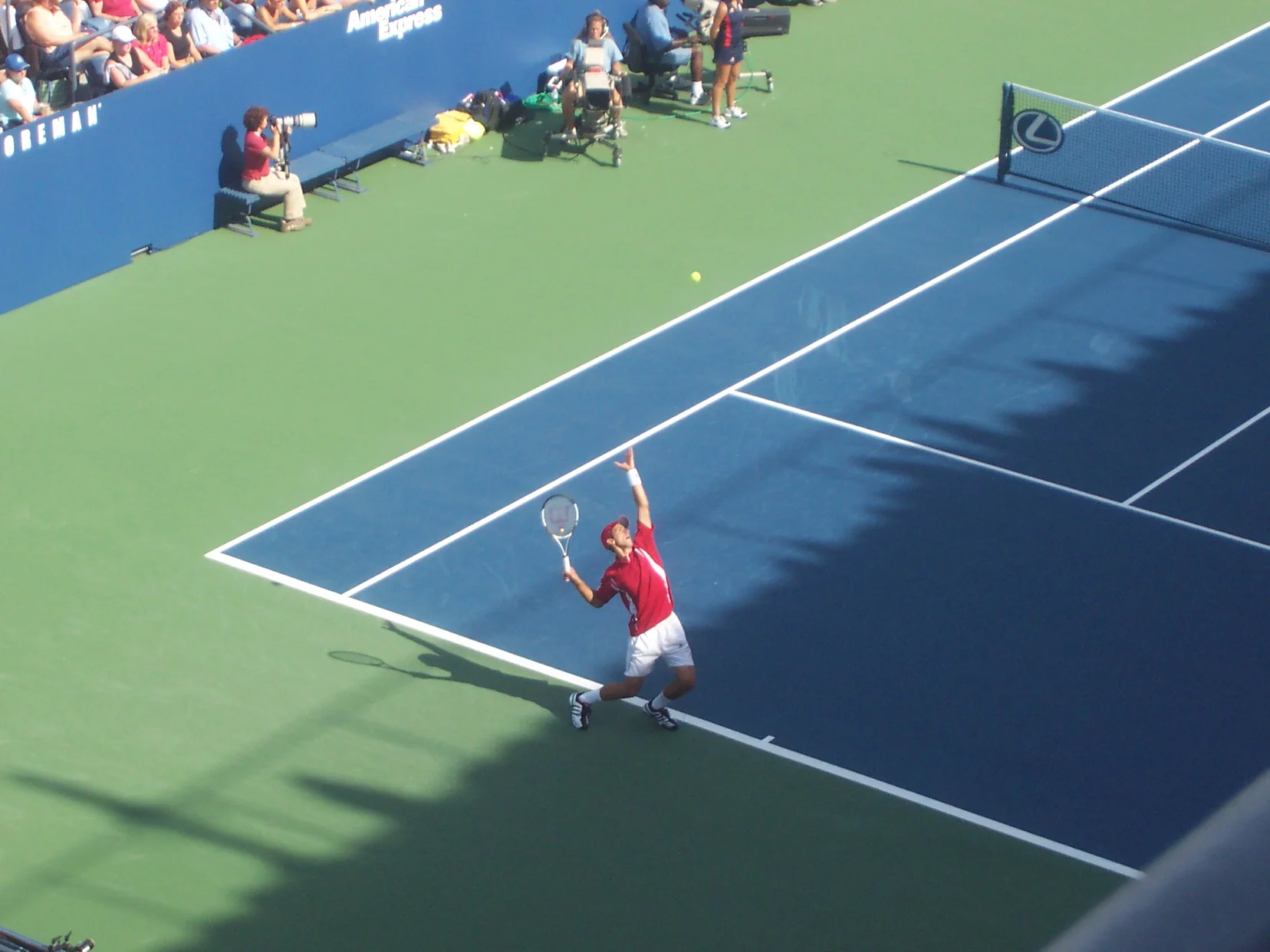
The records that ended at Arthur Ashe Stadium
The shock becomes clearer when its records are separated. Navone did not merely eliminate a highly seeded player. He ended a major-opening streak that spanned two decades, handed Djokovic a first at this particular tournament and stopped the latest attempt to reach an unprecedented men's singles title total.
A 20-year Grand Slam opening streak ended
Djokovic had won 78 consecutive first-round matches at Grand Slam tournaments. His previous loss in the opening round of a major came against Paul Goldstein at the 2006 Australian Open. The gap between those defeats covered virtually his entire championship career: every one of his 24 major titles and years in which simply reaching the second round felt automatic.
The figure measures reliability rather than dominance in later rounds. A player can miss tournaments, withdraw before a first-round match or lose later without changing it. What made 78 consecutive wins extraordinary was the absence of the early shock that catches even elite players. Navone became the first opponent in 20 years to complete one against him.
It was Djokovic's first US Open first-round loss
Djokovic arrived with a 19-0 record in US Open opening matches and left at 19-1. That event-specific record is separate from the all-major streak. New York had produced painful finals, disqualification in 2020 and a missed edition, but never a completed first-round defeat.
Arthur Ashe Stadium amplified the contrast. Djokovic had won four US Open titles on these grounds and understood the noise, night-session rhythm and hard-court conditions. Experience could not neutralize the combination of Navone's resistance and his own worsening physical state this time.
The 25th-major chase paused again
Djokovic remains on 24 major singles titles. The number 25 matters because it would move him beyond the total he shares with Margaret Court in the usual all-time singles comparison. A first-round exit closed that possibility at the 2026 US Open before the draw had properly developed.
“Paused” is the responsible word. The loss proves that this attempt ended; it does not prove that another attempt will never begin. His health, tournament choices and results will decide whether the pursuit continues. Treating the record as finished would require information Djokovic has not supplied.
For Navone, these milestones make the win permanent even if neither player follows the path spectators expect. Future results may change rankings and narratives, but they cannot restore the streaks. Anyone browsing the season's ATP tournament record will find a rare historical break beside a simple first-round score.
What the upset means for Djokovic and Navone
One result can change a tournament immediately without settling either player's future. Djokovic left with a health question and another major opportunity gone. Navone left with the largest win of his career and the responsibility to play again. Their next evidence is different, so the conclusions should be different too.
Djokovic needs health evidence before calendar predictions
Djokovic's official account confirms an ongoing issue and serious symptoms in New York, but it does not provide a diagnosis, recovery timetable or next tournament. That absence rules out confident predictions about a return week. A social-media claim that he “will be back” at a particular event is no more reliable than a claim that he is about to retire unless it points to an official entry or statement.
The best indicators are concrete: a confirmed entry list, practice update, draw placement or withdrawal notice. Even an entry is provisional because players can withdraw before the draw. Fans planning to watch him should recheck the ATP schedule this week close to the event and use the tournament's own draw as the final confirmation.
The competitive concern is nevertheless real. Best-of-five matches demand repeated recovery, and Djokovic has now had a major campaign end while physically compromised. His age and pursuit of 25 attract larger conclusions, but the New York result only demonstrates that his body did not support his usual level through this particular match.
Navone earned more than a famous result
Navone avoided the common follow-up to a career-defining upset: an immediate loss. In round two, he recovered from a set down to beat Matteo Berrettini 3-6, 6-3, 6-4, 7-6(4), reaching the third round. That second victory matters because it required him to reset after the attention, physical load and emotion of four hours and 36 minutes against Djokovic.
It does not guarantee a permanent leap in ranking or hard-court results. It does show the Djokovic win was useful tournament progress rather than a single headline detached from the draw. Navone adapted to a different opponent and again won after losing a set.
His longer-term test will be repeatability: holding serve efficiently, sustaining hard-court aggression and recovering between matches across a full schedule. The upset gives coaches and opponents new evidence, while the Berrettini result gives it context. Check the daily ATP schedule for his next verified match instead of assuming that a famous win determines the outcome. Navone has already done enough to own the achievement; the rest of his trajectory must still be played.
The durable conclusion
Navone earned the upset by recovering twice and finishing decisively. Djokovic's symptoms were real, but their diagnosis and schedule consequences remain unconfirmed. The score, the ended streaks and Navone's subsequent second-round victory can be stated with confidence; forecasts should wait for official evidence.
About the author
ATP Schedule Editorial Team
The ATP Schedule editorial team turns match times, scores, tournament information and verified tennis news into clear answers fans can use quickly.
View all articles by this author →Fan discussion
Comments
Sign in with Google to comment. Keep the discussion helpful and tennis-focused. New comments are reviewed before they appear.
Loading comments…