ATP Tennis Results Today: Live Scores, Winners and Completed Matches
Read today's ATP results accurately, from final scores and tiebreaks to retirements, walkovers, doubles results and the stats that explain a match.
ATP tennis results today can change from live score to final in one point, and unusual endings require more than a winner's name. This guide shows how to find the correct dated result, decode sets and tiebreaks, distinguish retirements from walkovers, and use official match statistics responsibly.
Find today's ATP results without reading a stale score
Open the dated ATP results page when you want winners and completed scores; open ATP matches today when the match may still be live. That distinction prevents the most common mistake in a “results today” search: treating an in-progress score as the final result. Always read the date, tournament, draw and status together before sharing a winner.
Start with completed matches
The results view opens on a completed-match date and groups entries by tournament. Choose Singles or Doubles, find the round, then look for the highlighted player or team and the final set score. If your intended date contains no completed main-tour matches, move through the date picker instead of assuming the page is broken. Tennis schedules include off days, postponed sessions and matches that finish after midnight in another region.
For an older event, use the ATP Tour's official Results Archive as the verification layer. Search by tournament and season, then compare the player names and round with the local result card. This catches similar event names, qualifying matches and duplicate player surnames. A search-engine snippet is only a route to the page; it may have been captured before the last point or after a later calendar refresh.
Use live scores when the match is still moving
A live match belongs on the today view because its games, sets and status can still change. “Live” means play has begun and no final outcome is recorded. “Scheduled” means the match is waiting, even if its advertised start has passed because the previous court match ran long. Only “Final,” “Retired,” “Walkover” or another terminal status turns the entry into a result.
Read a completed tennis score from winner to tiebreak
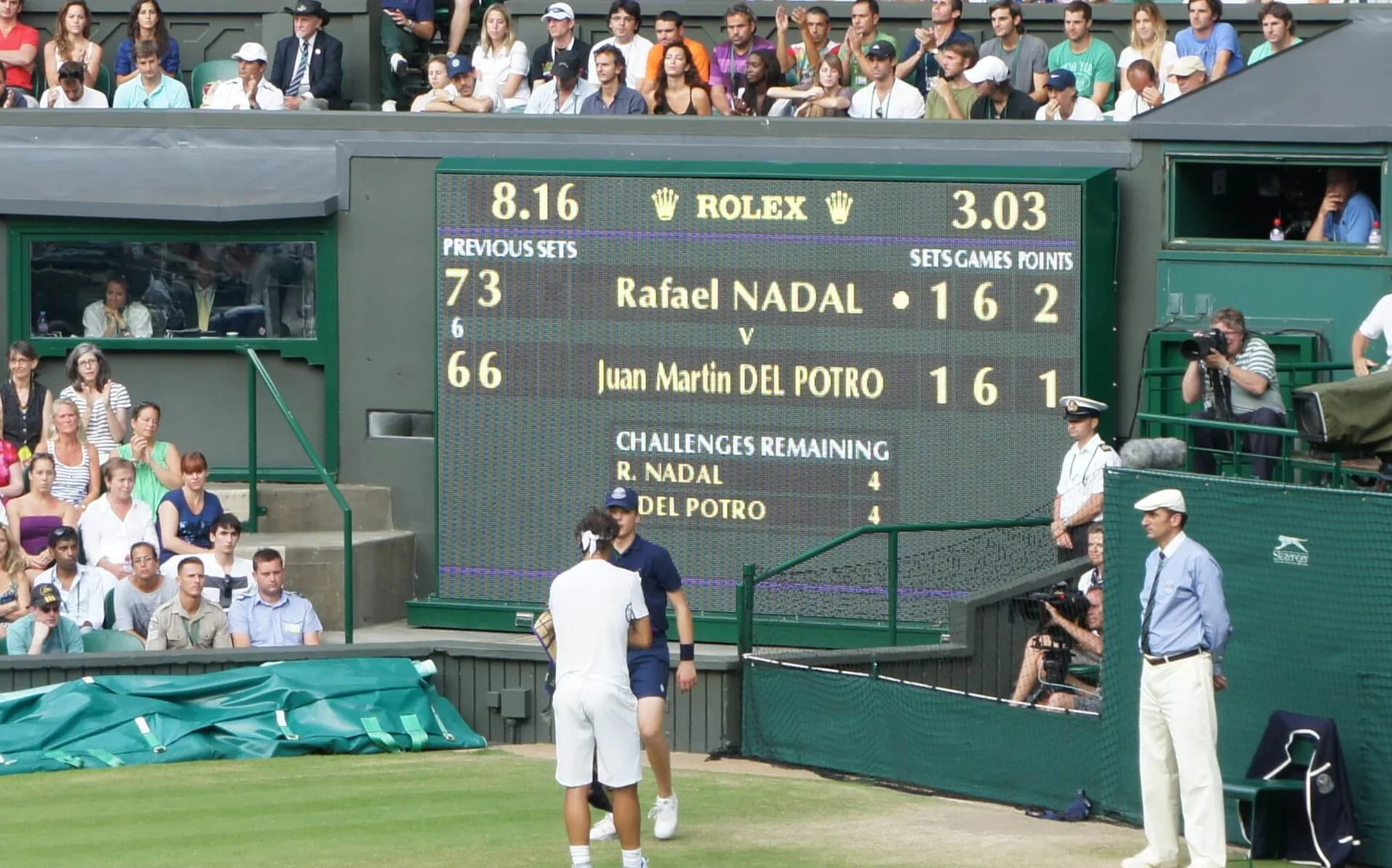
Read a finished result in three layers: terminal status, match winner and set-by-set score. The large set total tells you who won the match; the sequence such as 6–4, 3–6, 7–6 explains the route. Parentheses beside 7–6 or 6–7 record the tiebreak points. They are detail inside that set, not a fourth score line.
Winner and set total come first
Suppose a card highlights Player A, shows a 2–1 set total and lists 6–4, 3–6, 7–6. Player A won two sets; Player B won one. Read every set from the same left-to-right player order shown on the card. Do not flip the numbers in the middle because the other player won that set. The highlighted winner and terminal status anchor the interpretation.
A lopsided score is not necessarily a short match, and a close set total does not tell you the quality of every set. Three sets can contain two one-sided sets and one tiebreak. Use the match-duration and statistics fields, when available, for context rather than estimating from set count alone.
A tiebreak belongs to the set
In 7–6 (7–3), the set score is 7–6 and the deciding tiebreak was won 7–3. If a result page shows only 7–6, the set winner is still clear; the precise tiebreak points are simply unavailable. A match tiebreak used as a doubles decider may instead appear as its own final component, commonly a race to ten with a two-point margin. The draw type and format tell you which notation you are reading.
Best-of-three and best-of-five require different thresholds
Most ATP Tour singles matches are best-of-three, so the first player to two sets wins. Men's singles in the four Grand Slam main draws are best-of-five, so the target is three. That is why a 2–1 live set total can be final at a tour event but still incomplete at a major. Check the event and round before assuming the match is over.
| Notation | Meaning | What to verify |
|---|---|---|
| 6–4, 6–3 | Straight-sets win | Winner/status |
| 7–6 (7–3) | Set won in a tiebreak | Parenthetical tiebreak points |
| 2–1 sets, Live | May still be underway | Match format and status |
Know what Final, Retired, Walkover and Default mean
A winner can advance without a normally completed score, so the status belongs in every accurate recap. Final, Retired, Walkover and Default all identify a player or team that moves on, but they describe materially different events. A results list should preserve that distinction instead of converting every terminal entry into “won in straight sets.”
| Status | Did play begin? | Score to expect | Safe wording |
|---|---|---|---|
| Final | Yes | Completed set score | Defeated |
| Retired | Yes | Partial played score | Advanced after opponent retired |
| Walkover | No | No played score | Advanced by walkover |
| Default | May vary | Played portion may appear | Advanced by default |
A retirement is the easiest status to misread. If Player A leads 6–4, 2–1 when Player B retires, the partial numbers document what was played; they do not mean Player A completed a two-set victory. The winner is determined by the retirement status. Conversely, a walkover should not acquire a fabricated 6–0, 6–0 score. No points were played, even though one player enters the next round.
A suspension or postponement is different because the outcome remains open. Weather, darkness or a venue problem can pause a match and carry the existing score into a later session. Keep it on the live or scheduled surface until a terminal status arrives. The same caution applies to a data feed that briefly displays “interrupted”: do not place either player among today's winners.
Separate singles results from doubles results
Apply the Singles or Doubles filter before scanning winners. The two draws can share a tournament, court and date, but a singles result belongs to one player while a doubles result belongs to a two-player team. Treating the first surname as the whole entry can make a correct score sound wrong.
Singles results follow one player
In singles, verify the player, round and opponent. A player can appear twice in the broader tournament record if he also entered doubles, so the draw label prevents confusion. Open the player's profile through the result card when two competitors share a surname or when you want to connect the win with ranking, nationality and recent form.
Qualifying and main-draw rounds also need exact labels. A win in the final qualifying round can put a player into the main draw, but it is not a first-round main-draw victory. Likewise, a lucky loser may appear in the main draw after losing in qualifying. The result remains correct when the draw stage is preserved.
Doubles results follow the team
ATP competition rules define the doubles entry as a team. Record both partners on the winning and losing sides, even when the better-known player dominates the headline. The same left-to-right team order applies across every set on the score card. If one partner cannot continue, the retirement or withdrawal affects the team's result.
Many doubles formats replace a full third set with a match tiebreak. A result such as 6–4, 3–6, [10–7] means each team won a conventional set and the first team won the deciding match tiebreak. Brackets or another visual treatment often distinguish it from a normal set. Read the tournament format before describing the decider as a “10–7 third set.”

Use match stats to explain the result
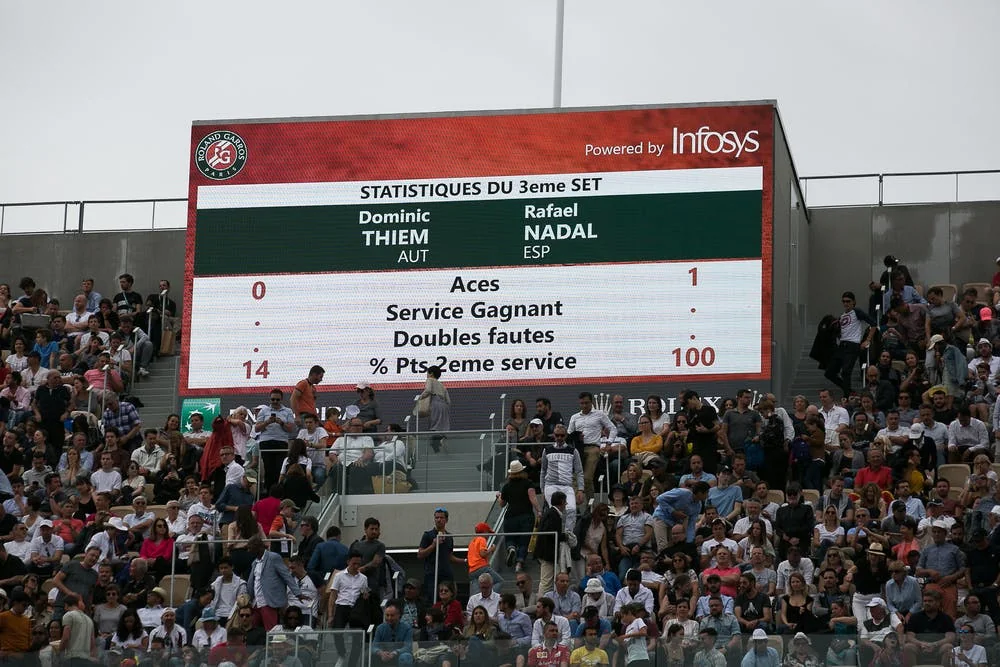
The final score says who won; ATP match stats help explain where the contest turned. Start with serve and return performance, then inspect the pressure points. Avoid turning one number into a complete story. Surface, opponent, match length and score state all affect the box score.
Serve numbers show who protected games
First-serve percentage measures how often the first serve landed, while first-serve points won measures what happened after it landed. They answer different questions. A player can land fewer first serves but win a high share of those points, or land many and still face pressure. Add second-serve points won, double faults and service games won to see whether the weaker delivery became a target.
Aces are visible, but they are only one form of effective serving. An unreturned serve and a first ball that creates an easy next shot can matter without entering the ace column. Break points saved show survival in high-pressure games; write the fraction as well as the percentage because saving two of two is not the same workload as saving eight of ten.
Return and break points show pressure
ATP's official return fields include first- and second-serve return points won, return games won and break points converted. Together they show whether a player consistently entered the opponent's service games and whether those chances became breaks. A low conversion rate may mean missed opportunities, but it can also reflect excellent serving under pressure. Use neutral language unless point video or reports support a tactical conclusion.
Total points can mislead in a close match
Tennis awards sets and matches, not a cumulative point victory. A player may collect many points in a one-sided set, then lose two close sets and therefore the match. Total points won can describe overall balance, but it cannot overturn the result or tell you which points came at 30–30, break point or tiebreak.
Serve
First serve in, points won, double faults, games held.
Return
Return points won, chances created, breaks converted.
Context
Surface, score state, opponent and match duration.
Resolve date, time-zone and tournament-name confusion
When a result seems missing, check the displayed date and event identity before searching again. “Today” is a viewer-relative label. Sponsor names can also change while the tournament's city, calendar week and historical record stay recognizable. Those two checks solve many apparent discrepancies.
The results date should follow the selected zone
A New York night session can finish after midnight in Europe and in the morning in Asia. One source may file the match under the venue's Tuesday order of play while a local-time interface displays a Wednesday finish. Neither is automatically wrong. On the results page, read the full written date, then use the picker to check the adjacent day.
Delayed finishes create another boundary case. A match scheduled Monday can end Tuesday after rain or a late start. For “who won today?” the completion date is most useful; for reconstructing a tournament's order of play, the scheduled session may matter. State which date you mean when citing the result.
Tournament identity outlasts sponsor wording
Commercial titles can add or replace a sponsor while the event remains in the same city and week. Search the tournament directory by recognizable location, then verify level, surface and season. The ATP archive supplies the historical record when the current event page uses a new title.
Do not merge events merely because they share a country or surface. ATP 250, ATP 500, Masters 1000 and Grand Slam tournaments can run in nearby regions, and qualifying may begin before another event's final. Match the event, draw, round and date as a set. Player names alone are insufficient when the same athlete plays singles and doubles during the week.
Catch up on a full ATP day in five minutes
A fast results check works best as a fixed sequence: date, draw, status, score, context and consequence. Starting with headlines can overemphasize one upset and miss a retirement, a doubles final or a result filed on the adjacent local date.
- 1. Lock the date. Read the complete date at the top of the results page and confirm the selected time zone. If the list looks too short, inspect the day before and after.
- 2. Split the draws. Scan Singles first, then Doubles, or reverse that order if you follow a team. Keep qualifying separate from the main draw.
- 3. Read terminal status. Distinguish a normal final from retirement, walkover and default before describing how the player advanced.
- 4. Decode the score. Confirm set total, each set and any tiebreak notation. At a Grand Slam, remember that men's singles uses a different winning-set threshold from ordinary tour matches.
- 5. Add one useful statistic. Use service games, return performance or break-point volume when it actually explains the contest. Preserve both opportunities and conversions.
- 6. Open the draw. The winner's next opponent is confirmed only when the paired result is settled. Do not convert a possible matchup into a scheduled one.
- 7. Check what comes next. Move to the ATP schedule this week for the next session, then verify the official order of play near match time.
This routine scales from a quiet one-event Monday to a crowded week with simultaneous tournaments. It also keeps the record honest: the result answers what happened, the draw answers what it changes, and the schedule answers when the next match is expected. If one of those layers remains provisional, label it rather than filling the gap with an assumption.
Save the dated results URL when you need to cite a match later. A homepage will move with the calendar, while an explicit date and official archive trail make the winner, round and status reproducible.
Read the result in the right order
Confirm date and status first, then winner, score, draw and context. Use the draw for next-round consequences and the schedule for what happens next.
About the author
ATP Schedule Editorial Team
The ATP Schedule editorial team turns match times, scores, tournament information and verified tennis news into clear answers fans can use quickly.
View all articles by this author →Fan discussion
Comments
Sign in with Google to comment. Keep the discussion helpful and tennis-focused. New comments are reviewed before they appear.
Loading comments…