Why Are ATP Players Complaining About Tennis Balls? The Shanghai Debate Explained
Alcaraz and Fritz put ball consistency back in the spotlight in Shanghai. Understand what changes during play, what approval means and how ATP is responding.
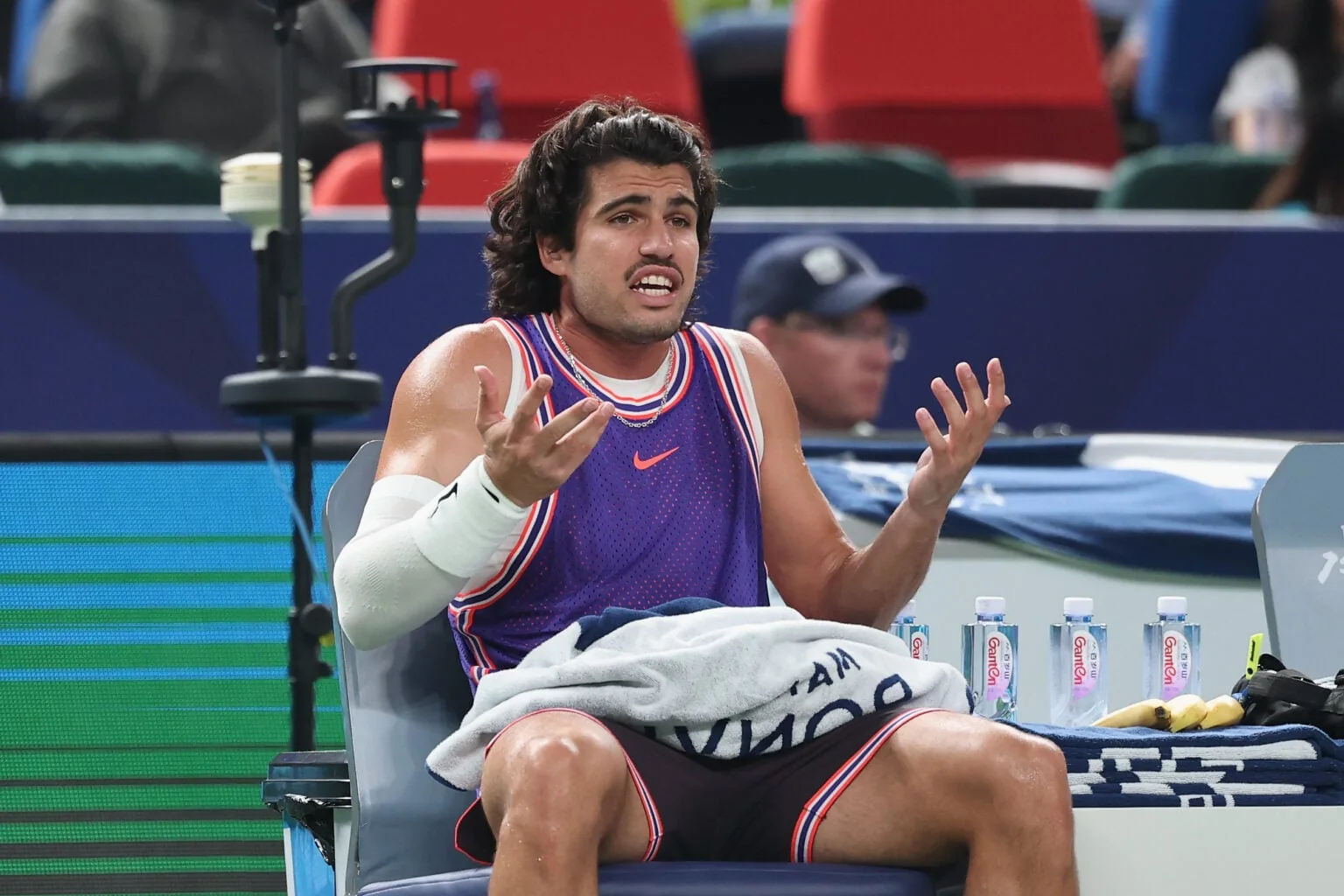
ATP players are complaining about the predictability of tennis balls: how differently they can seem to behave, how their response changes during play, and the adjustments required between events. Shanghai brought those questions back into focus through Carlos Alcaraz and Taylor Fritz. This explanation, updated on 13 October 2026, separates their reported experiences from measured standards, replacement rules and the action ATP has already announced.
What did Alcaraz and Fritz complain about in Shanghai?
The Shanghai debate concerns two related experiences: balls apparently behaving differently from one another, and balls changing markedly as they age during play. Neither observation, by itself, establishes that an approved product failed its specifications. It does explain why players can find the same match conditions difficult to read.
Alcaraz described inconsistent behaviour
During his 12 October match against Zizou Bergs, Carlos Alcaraz was reported to have complained that some balls bounced while others seemed to skid. That is a description of perceived inconsistency, rather than simply a demand for a faster ball. The account comes from Tennishead's report of his on-court comments.
Bergs won 7-5, 7-6(4), as confirmed by the official ATP match report. That score establishes the result; it does not establish why Alcaraz lost. A comment made during an intense contest is useful testimony about a player's experience, but it supplies no controlled comparison between the balls he struck, their age and the contact he made.
Fritz complained after winning
Taylor Fritz raised a different emphasis after beating Matteo Arnaldi in straight sets on 10 October. In the report of his post-match interview, he described fast new balls becoming worn quickly, after which finishing rallies became much harder. His complaint followed a victory, a useful detail when assessing the suggestion that criticism is merely an excuse for losing.
The distinction helps fans interpret future interviews. A complaint about variation between individual balls calls for a different investigation from a complaint about predictable change between the start and end of a replacement cycle. Both can affect timing, yet improving one does not automatically improve the other.
There is also a difference between reporting dissatisfaction and endorsing every explanation attached to it. A player can accurately describe how difficult an attacking shot felt without proving a manufacturing defect. Follow the Shanghai Masters schedule and draw guide for the tournament context, while keeping the equipment discussion separate from predictions about who should win.
Why can new and worn tennis balls feel so different?
A tennis ball has more than one part that can change. Its felt covering affects flight, while its pressurised rubber core contributes to the response on impact. In Giri Nathan's reported examination of the issue, fluffier worn felt is associated with greater air resistance. That does not make visible fluff a measurement of pressure loss.
This distinction matters when players describe a ball as slow, heavy or dead. Those words can convey a real experience without identifying a single physical cause. A shot that loses speed through the air, a lower rebound and a softer sensation on the strings are different observations. An explanation that uses one as proof of all three skips a necessary step.
Consider an attacker who chooses to approach the net after a deep drive. If the shot leaves the opponent more recovery time than expected, the same tactical decision can feel less rewarding. That is an illustration of why predictability matters, not a reconstruction of a specific Shanghai point. The important question is how reliably a player can anticipate the response while selecting a shot.
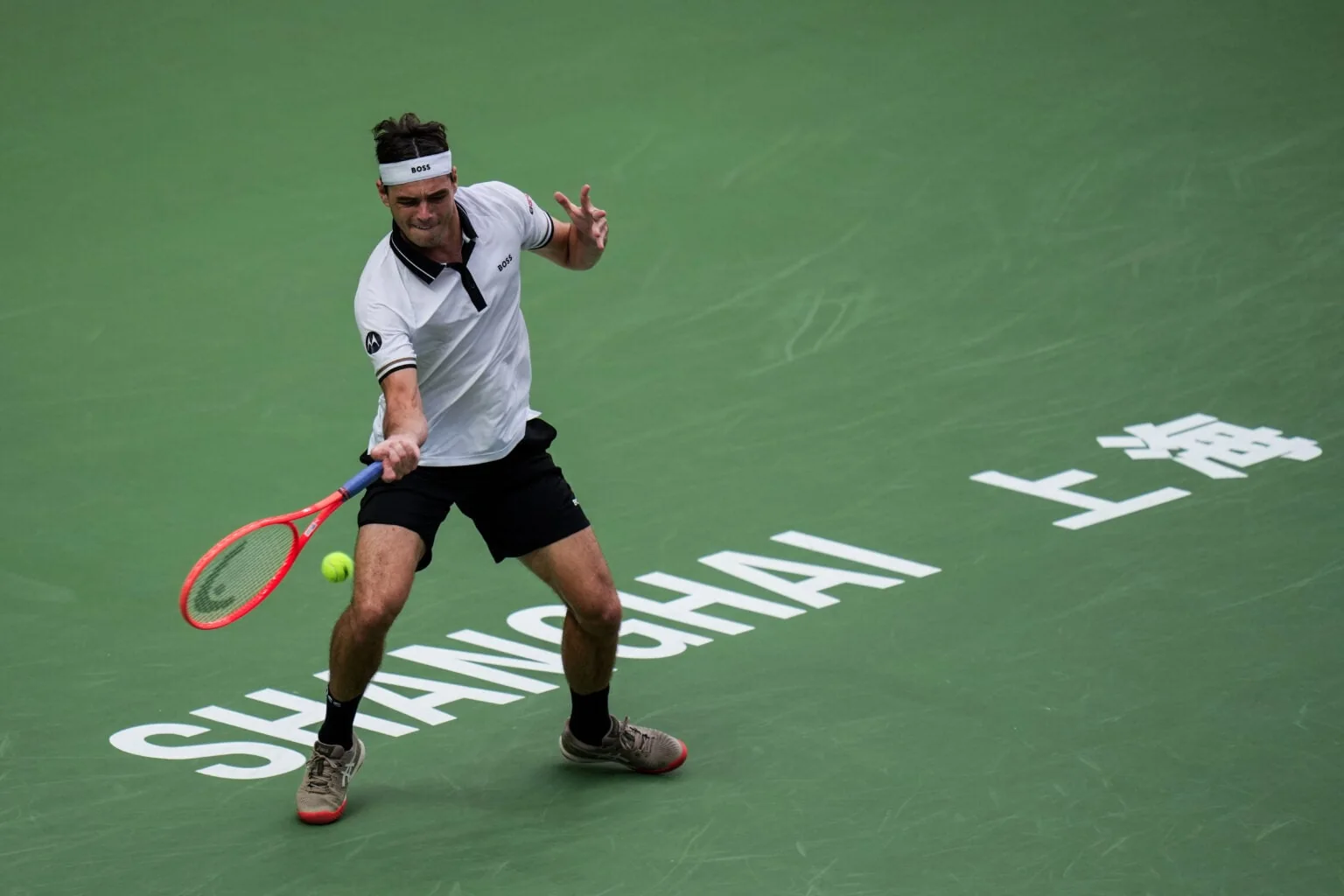
Manufacturers offer a counterpoint to broad claims that every product has deteriorated. Penn executive Jeff Bardsley discussed testing and quality control in Nathan's article and challenged some player explanations. His account concerns his company's products and circumstances; it cannot certify the balls used in this Shanghai match.
A useful investigation would compare new and used samples under the same conditions and identify what changed: rebound, deformation, surface texture or measured flight. Without that comparison, photographs and complaints can identify a question worth examining, but cannot give a numerical answer. For viewers, the safest interpretation of Fritz's account is specific: he found it harder to finish points as the balls became worn. The reported interview does not quantify how quickly their performance changed compared with another model.
What does ITF approval actually guarantee?
Approval means a ball must satisfy defined requirements. It does not mean every approved model produces an identical sensation. The ITF specifications reproduced in Appendix I of the 2026 ATP Rulebook provide a better starting point than judging legality from a frustrated comment.
The measurable specifications
| Property | Permitted range |
|---|---|
| Mass | 56.0–59.4 grams |
| Diameter | 6.54–6.86 centimetres |
| Rebound | 135–147 centimetres |
| Forward deformation | 0.56–0.74 centimetres |
| Return deformation | 0.80–1.08 centimetres |
There are durability requirements too. The specified laboratory test simulates nine games of play and limits changes in listed properties, including a maximum four-centimetre change in rebound. That is evidence that durability is part of the standard, rather than an entirely unregulated concern.
A range matters. Two values can both satisfy a requirement without being equal. This does not demonstrate that two particular cans differ by the full permitted amount; it explains why compliance and complete uniformity are different questions. A claim of noncompliance needs measurements taken under the appropriate test conditions, not a television impression.
Approval does not make every ball identical
For a fan assessing the controversy, there are three separate questions: Is the model approved? Does the supplied batch meet the applicable requirements? Do players find its behaviour suitable and predictable in competition? Answering the first does not settle the other two, and dissatisfaction with the third does not automatically disprove the first.
ATP itself recognises a distinction between consistency and quality. Its June 2025 policy announcement described continuing work on specifications and certification alongside supplier coordination. That leaves room to improve the playing experience while retaining an objective approval process.
The Shanghai complaints discussed here come without a published, match-specific test establishing a breached limit. They warrant examination of the right samples and conditions. They do not justify declaring a ball illegal, or assuming that a sponsor's marketing statement supplies the missing test.
When are balls changed, and what was the 2026 experiment?
The normal schedule in section 6.03 of the 2026 ATP Rulebook uses six balls, with replacement after the first seven games and every nine games thereafter. The shorter opening interval accounts for the warm-up. This is a games-based cycle, rather than a fixed number of minutes.
In a straightforward match without a relevant exception, the first batches would end after seven, sixteen and twenty-five completed games. Counting both players' games is essential: the interval is not seven service games for each player. Tie-break timing can defer a scheduled change, so a viewer should not assume every deviation from simple counting is an officiating mistake.
Games are a convenient shared unit, but do not represent an identical quantity of hitting. Compare, as an illustration, an interval containing quick holds with one containing repeated deuces and long rallies. The same number of games can expose the balls to different workloads. That observation explains why changing them on schedule does not answer every question about their condition.
A reported five-and-seven-game trial
An EssentiallySports report carried by Yahoo on 17 July 2026 described a planned singles experiment at the Lexington Challenger starting on 3 August: a first change after five games, followed by changes every seven. The account attributed the information to tennis insider Parsa Nemati. It described a trial, not a permanent rule for the entire ATP Tour.
Shortening an interval could reduce how much play takes place with older balls. It would also mean more replacements. Those are different considerations from whether the underlying product should change, and an experiment could reasonably examine both player feedback and the practical consequences.
As of this 13 October explanation, the evidence cited here does not establish the trial's outcome or a tour-wide adoption. Readers should therefore avoid describing Shanghai as subject to the reported five-and-seven system. Our ATP Challenger Tour guide explains the circuit where the proposed test was situated. A dated trial report is useful context for the debate, while an official implementation notice would be needed to establish a changed rule.
Why ball behaviour and court speed are different questions
A fast court and complaints about difficult-to-attack worn balls can coexist. Court response is one part of a shot's journey; flight before and after the bounce is another. Saying that a surface feels quicker does not settle how a particular ball behaves throughout that journey.
The ATP's Shanghai match report described fast conditions. That is a match-report description, not a published laboratory court-pace number. It should not be converted into an exact rating or treated as evidence that every ball-related concern is mistaken.
The court-pace framework in the rulebook's ITF appendix distinguishes surface categories and the ball types intended for them. The useful point here is that ball selection and surface response are considered together. A label such as hard court gives background, rather than a complete prediction of how a match will play. Our tennis surfaces overview explains those broader court families.
Conditions introduce further questions. In Defector's reporting, Penn's representative identified temperature, humidity, altitude and surface texture as possible influences. Those are hypotheses to examine in a particular comparison, not evidence that any one caused the Shanghai complaints. Weather should not become a substitute explanation simply because the ball explanation is unproven.
For a useful comparison, ask what was held constant. Were the same models compared at a similar age? Did they face comparable conditions and hitting? Was a statement about faster serves also true for slower rally shots? Without those distinctions, an average can hide the experience a player is describing.
Aces and short rallies are informative match observations, but they also reflect who served, who returned and the choices made. They cannot independently measure ball quality. The separate Laver Cup court-speed discussion provides another example of how pace becomes a talking point. Shanghai's current ball debate is best evaluated with its own evidence, rather than importing a conclusion from another event.
Does using the same ball affect both players equally?
Both players face the same rules and the same pool of match balls. That is an essential fairness baseline, but it does not imply identical tactical effects. A characteristic one player welcomes may make another player's preferred shot less effective. This is a reason to separate fair competition from a claim that the equipment suits everyone equally.
In Peter Bodo's 2023 reporting, coach Craig Boynton described players adjusting strategies as balls changed during a cycle. That historical account offers context for the tactical question; it does not establish Shanghai's ball quality or today's supplier policy.
For an illustrative comparison, imagine one player seeking to end a rally immediately and another comfortable extending it. A response that gives the defender more time may change the balance of that exchange. Both still encounter the same condition. The illustration shows why adaptation matters, without claiming that a particular Shanghai product systematically favoured Bergs.
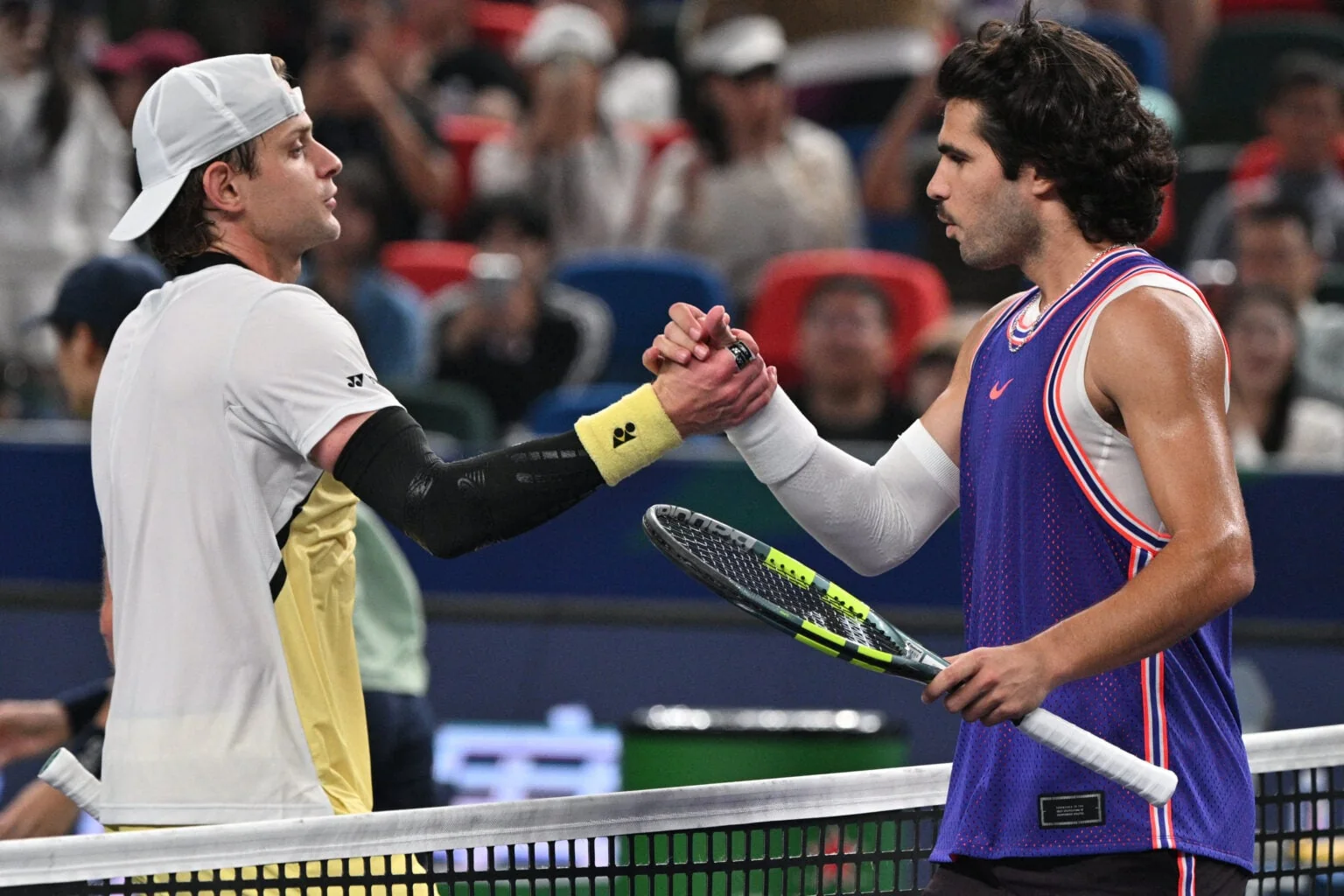
Bergs' performance deserves its own explanation. ATP reported that he won 37 of 47 points behind his first serve, or 79 per cent, and broke Alcaraz three times. Those are concrete contributions to the victory. They give more substance to a match assessment than a general claim that the balls decided everything.
Neither side of the argument can prove its case from the result alone. Bergs winning does not demonstrate that the balls were ideal. Alcaraz losing does not demonstrate they were defective. We cannot replay the contest with different equipment while holding every serve, decision and contact constant.
The same care applies to physical complaints. A report of discomfort should be taken seriously, but it is not, on its own, proof of a ball causing an injury. That conclusion would need evidence beyond the match reports discussed here. Use the ATP results page to establish what happened, then judge explanations by the evidence they offer rather than by how strongly a player expressed them.
What is ATP already doing about ball consistency?
ATP has already changed how ball suppliers are selected. The relevant distinction is between coordinating choices across a tournament swing and ensuring that balls retain a satisfactory response during a match. The first can make preparation more consistent without automatically solving every complaint about the second.
Centralisation started in 2025, with alignment expected by 2027
In its 11 June 2025 announcement, ATP identified 2025 as the first season of centrally coordinated supplier selection, working with tournaments. It expected full alignment within swings by the 2027 season as earlier contracts expired. The announcement also described work on quality data, player feedback, specifications and certification.
That is a meaningful response to repeated changes between tournaments. It is also a dated policy expectation, not evidence that every part of the programme has already finished. The correct question is how the programme is progressing and what it delivers, rather than assuming either that nothing has changed or that all variation has disappeared.
Dunlop's separate ATP partnership extension through 2028 should not be confused with the alignment timetable. The November 2023 release called Dunlop the tour's official ball while saying close to half of tournaments used it at that time. A sponsorship designation is therefore insufficient to identify Shanghai's match-ball model, or to establish that every event uses one product.
What fans should ask before judging the next complaint
A more useful discussion starts by identifying the claim precisely. Before accepting an explanation, ask:
- Is the concern about different balls, ageing within a change cycle, or adapting between tournaments?
- Has the exact event model been confirmed by the organiser or an authoritative equipment record?
- Is there a measurement, or only an account of how a shot felt?
- Were court response, ball age and conditions considered in the comparison?
- Is a proposed remedy an experiment, an announced policy or an implemented rule?
These questions do not dismiss players. They make a complaint more actionable by identifying what would need to improve and how success could be judged. Shanghai's debate deserves that attention: preserve the distinction between reported experience and demonstrated failure, give Bergs credit for his tennis, and evaluate ATP's response against its actual commitments.
About the author
ATP Schedule Editorial Team
The ATP Schedule editorial team turns match times, scores, tournament information and verified tennis news into clear answers fans can use quickly.
View all articles by this author →Fan discussion
Comments
Sign in with Google to comment. Keep the discussion helpful and tennis-focused. New comments are reviewed before they appear.
Loading comments…