Zverev vs Sinner for World No. 1 in 2026: Rankings, Beijing and Shanghai
Sinner still leads the weekly ATP ranking while Zverev leads the 2026 Race snapshot. See the dated gaps and what Beijing, Shanghai and Turin can change.

Jannik Sinner is still the official World No. 1 on the 28 September 2026 ATP ranking, while Alexander Zverev leads a dated 2026 Race to Turin snapshot. The two figures answer different questions. Here is the dated gap, the points that Beijing and Shanghai can put in play, and the later results that will decide the year-end contest.
The No. 1 picture on 29 September: two leaders, two tables
Jannik Sinner remains the official men's World No. 1; Alexander Zverev leads a dated 2026 Race to Turin snapshot. Those statements describe different tables and different time windows. On the weekly singles ranking dated 28 September 2026, Sinner has 11,000 points and Zverev has 9,630, a 1,370-point lead for the Italian. In the calendar-year Race table published after the US Open on 15 September, Zverev has 8,650 to Sinner's 7,950, a 700-point lead for the German. The Race figures need their snapshot date attached; they are not a live Beijing result.
| Measure and snapshot | Sinner | Zverev | Who leads? |
|---|---|---|---|
| ATP singles ranking, 28 September | 11,000 | 9,630 | Sinner by 1,370 |
| 2026 Race to Turin, 15 September snapshot | 7,950 | 8,650 | Zverev by 700 |
The weekly ranking numbers appear in the dated 28 September ranking table and are corroborated by other published lists. The 2026 Race numbers come from a separate post-US Open Race table. This is a dated reading of two competitions, not a live claim that either gap will stay unchanged after Beijing begins. A reader who subtracts 700 from 1,370, or adds a future champion's full points to one figure without accounting for points being removed, will get a misleading forecast.
Zverev's Race lead reflects a striking Grand Slam year. He won Roland-Garros and then beat Ben Shelton 6-3, 7-6(2), 5-7, 6-2 in the 2026 US Open final. Sinner, meanwhile, still carries enough results from the previous 52 weeks to hold the official top spot despite his current knee-related absence. The immediate test is Beijing: Sinner is confirmed out of that tournament, while Zverev is its top seed. Neither fact awards him the trophy or the World No. 1 ranking in advance.
Why the Race lead does not make Zverev world No. 1
The apparent contradiction has a straightforward cause: the two lists answer different questions. The weekly PIF ATP Rankings order players for entry and seeding using a rolling results window. The Live Race to Turin tracks what players have earned during the current season and signals who is moving toward the year-end top spot. On the dated figures above, Zverev leads the season's Race, yet Sinner still leads the ranking that determines the official World No. 1 today. ATP Staff itself describes the Race as a barometer for year-end honours, rather than a substitute for the weekly ranking.
The 52-week ranking carries results from last autumn
The 2026 ATP Official Rulebook, sections 9.01 and 9.03, says the ranking period covers the immediate past 52 weeks, with a special drop rule for the Nitto ATP Finals. That means Sinner's powerful 2025 autumn scores can still support his September 2026 ranking even though none of them belongs to his 2026 Race total. Conversely, Zverev's new 2026 Grand Slam success appears in both calculations, but it does not erase Sinner's unexpired 2025 results all at once. Each old tournament rolls out on its prescribed schedule.
The counting formula deserves care. For a commitment player, the rulebook starts with the four Grand Slams, eight mandatory Masters 1000 tournaments, the Finals and six best other eligible results. It also sets conditions that adjust the number of counted results and permit certain replacements. A reader looking at two recent trophies alone therefore cannot reconstruct a player's exact ranking. The number of points available at an event and the points added to the published total are related but are not automatically identical.
A title is added to a rolling total, not to a blank slate
Imagine a player wins an ATP 500 title worth 500 tournament points. If a 200-point score in a counting slot falls away in the same update, the simple net improvement is 300, not 500. If a noncounting result moves into one of the player's six best other slots, or a mandatory result changes, the arithmetic can be different again. Those numbers are an illustration of the rule, not Zverev's Beijing projection. Calculating his real next-week figure requires his complete breakdown and the ranking update date; guessing from a headline 500-point prize would be false precision.
There is a useful historical check on the distinction. On 21 September, the official ATP Finals Race table placed Zverev 700 points ahead of Sinner while the rolling rankings still had Sinner ahead. The same ATP report specifies that Laver Cup supplied no Race points, so that exhibition did not silently alter their ATP totals. Our ranking explainer gives a longer account of the counting rules; for this contest, the essential habit is to label the list and its date before comparing a gap.
What Beijing can change before Shanghai
Beijing is the first concrete opportunity to change the numbers, but its impact has an upper limit. The China Open is an ATP 500: its singles champion receives 500 event points, the runner-up 330, a semifinalist 200 and a quarterfinalist 100. Those are gross event awards. The change in a player's weekly ranking can be smaller after old results and counting slots are accounted for. Against the 1,370-point official ranking gap on 28 September, even Zverev's maximum Beijing award alone cannot make him No. 1, assuming no other ranking changes. It can, however, bring him closer before a much larger Shanghai prize becomes available.
Sinner's withdrawal is confirmed for Beijing only
Sinner was the 2025 China Open champion, but he withdrew on 25 September because his knee was not ready. Some earlier promotional entry lists still include him; the later withdrawal and published draw supersede them. The decision removes his chance to defend the Beijing title on court and clears the top seed position for Zverev. It does not establish that Sinner will miss Shanghai. There was no confirmed return date in the withdrawal report, so a fan should treat any Shanghai comeback or absence as open until a current tournament or player announcement settles it.
There is also a timing trap in the numbers. Sinner's 2025 Beijing title was worth 500 ranking points, but the published 28 September ranking used above already reflects the relevant 2025 event-week points coming off. Subtracting those 500 again from the 11,000 baseline would count the same change twice. This is why a dated official ranking, not an old article saying he is “defending 500,” is the correct starting point for a new scenario.

Zverev has matches to win before any points scenario applies
Zverev is the No. 1 seed in the published 32-player Beijing singles draw, which gives him Cameron Norrie in round one and no opening bye. A possible quarterfinal with Novak Djokovic depends on each man winning twice. Five victories, not a favorable draw position, would give Zverev the title's 500 points. One early loss would dramatically reduce the Beijing contribution, although the Race and rankings would still be affected by whatever result he actually records.
The tournament organiser sets the men's main draw for 30 September through the 6 October final. For a useful running calculation, mark each verified Zverev result, then compare the official updated ranking breakdown after the event. Do not treat a conditional Djokovic meeting as a fixture or assign Zverev the finalist's 330 points before he reaches that round. Our Beijing draw and withdrawal guide maps the full bracket and the status of Sinner's withdrawal; the No. 1 question then moves to Shanghai.
Shanghai is a conditional chance, not a coronation
The Rolex Shanghai Masters is where the possible weekly No. 1 handover becomes more than a Beijing-only headline. The event's singles champion receives 1,000 tournament points, twice Beijing's maximum, and the 2026 draw is planned as a 96-player field. According to the Shanghai government event programme, qualifying runs 5–6 October, the singles main draw begins 7 October and the final is set for 18 October. The expected next Monday ranking, on 19 October, is therefore a natural checkpoint for this question. Its order will be determined by matches and the ATP calculation, not by a pre-event projection.
The 19 October ranking depends on both players
A deliberately simple ceiling illustrates why Shanghai matters. Zverev trails by 1,370 points in the published 28 September ranking. If he won both Beijing and Shanghai, the two trophies would carry 1,500 gross event points, only 130 more than that starting gap. That does not establish an exact No. 1 path. Some older results will leave the rolling window, some new results may replace another counted score, and Sinner could collect points himself. The 2026 ATP points table gives Shanghai's winner 1,000, finalist 650, semifinalist 400 and quarterfinalist 200; the ranking rules elsewhere in the same book determine what actually appears in a player's total.
Both men exited Shanghai in the third round in 2025. Sinner retired against Tallon Griekspoor after cramping, while Arthur Rinderknech beat Zverev on his way to the semifinals. Their Shanghai event result was 50 points each. That symmetry is useful context, but it is still unsafe to simply subtract 50 from each September total and add 2026 rounds. Event-week dates and each man's full counted-score breakdown must be checked before calculating the real change.
Sinner's Shanghai status remains an open question
At this 29 September snapshot, the official Shanghai draw page still says it has no matches. An earlier entry list may show Sinner; his subsequent Beijing withdrawal shows why that list is not final proof of attendance. His team has not established a Shanghai return date in the cited Beijing report, and a confirmed Beijing absence cannot be converted into a confirmed Shanghai absence. If he competes and wins rounds, Zverev's required result rises. If he does not play, the German still has to earn his own points; nobody receives a ranking promotion just because a rival misses a tournament.
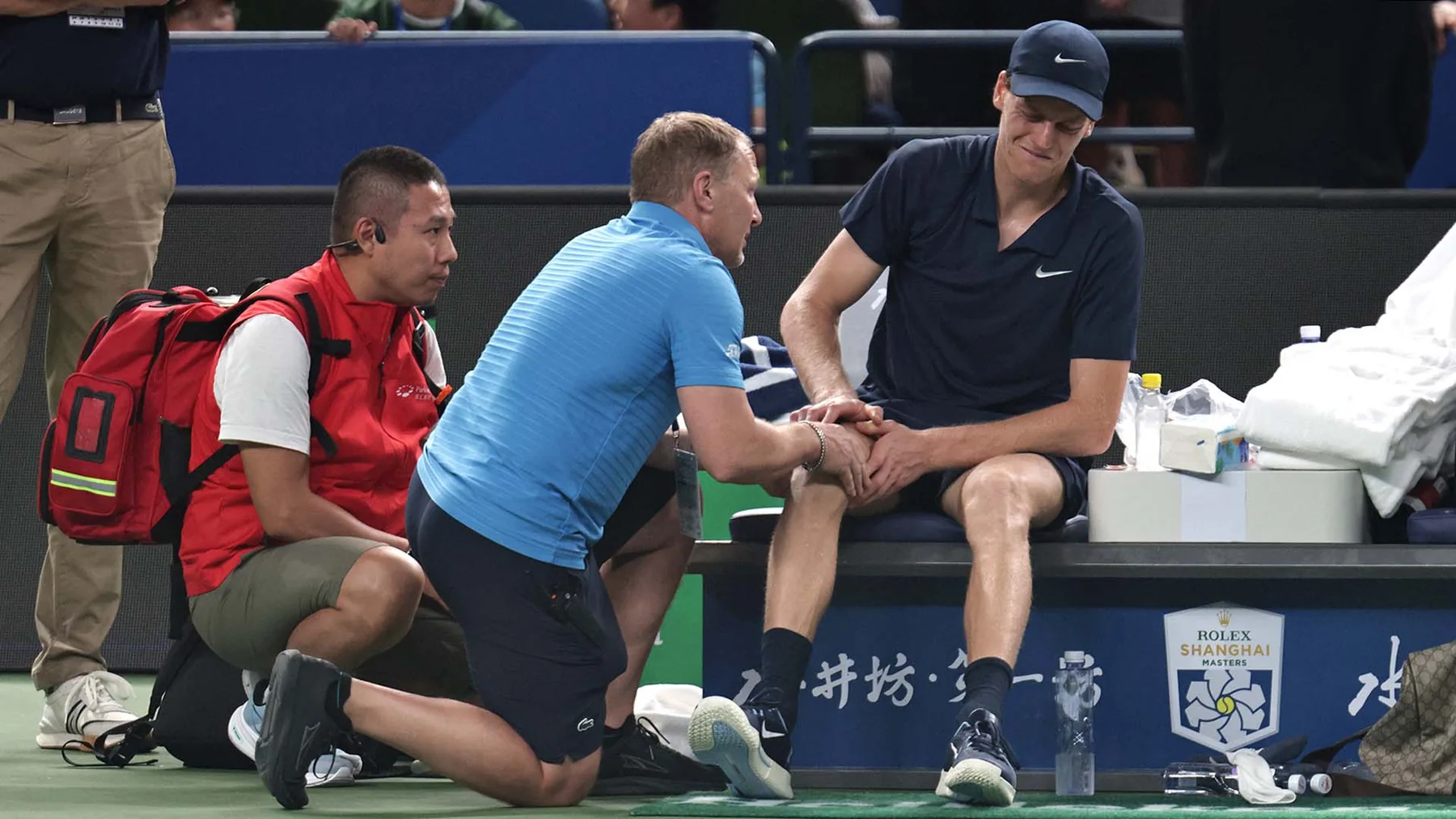
The practical method is to wait for the official 2026 draw, record each completed match, then read the updated Live Rankings and the published Monday list together. Our Shanghai schedule and draw guide has the key tournament dates and official links. It should be used as a route to current information, not as evidence that either player has already taken the court.
The year-end contest goes beyond the Asian swing
Even a change at No. 1 after Shanghai would be a weekly milestone, not the final verdict on 2026. The remaining stretch includes the Vienna ATP 500 from 26 October to 1 November, the Paris Masters from 2 to 8 November, and the Nitto ATP Finals in Turin from 15 to 22 November. Both Sinner and Zverev had qualified for Turin in the ATP's 21 September Race table. Each stop can alter the season's Race, while the rolling ranking simultaneously sheds corresponding results from 2025.
| 2026 checkpoint | Last year's Sinner result | Last year's Zverev result | 2026 gross ceiling |
|---|---|---|---|
| Vienna, 26 Oct–1 Nov | Champion | Finalist | 500 |
| Paris, 2–8 Nov | Champion | Semifinalist | 1,000 |
| ATP Finals, 15–22 Nov | Champion | Exited in group stage | Up to 1,500 if undefeated |
Points to defend are different from points available
The 2025 records explain why the comparison keeps moving. Sinner beat Zverev in the Vienna final, which made their event results 500 and 330 points. He then won Paris after beating Zverev in the semifinal, worth 1,000 and 400 event points respectively. At the 2025 Finals, Sinner was champion again; Zverev left after group play. These are historical results to watch as their rolling points expire, not an invoice for points to deduct immediately from today's totals.
In the 2026 Race, neither man's 2025 points count at all. Their new Vienna, Paris and Turin performances are the relevant additions. In the weekly ranking, the relationship is more complicated: old scores roll off, new ones come in, and the counting set can change. The ATP rulebook gives a useful Finals example: an undefeated
The rulebook says the year-end PIF ATP Rankings are published on the Monday after the Finals. That is the actual finish line for year-end No. 1, with the Race an increasingly accurate guide as the season closes. A Shanghai lead could survive November, disappear in Paris, or be reversed in Turin. Our ATP Finals guide explains the final event's schedule and format, and the dated official Race table should be checked after each tournament rather than treating a September lead as the outcome.
The next checks that will settle the debate
For fans following a fast-moving No. 1 story, the order of checks matters more than a dramatic forecast. Start with the completed Beijing scores. Zverev's name in the draw identifies an opportunity; only wins tell us how many 2026 points he has earned. Use the Beijing draw guide for the matchup context, then consult the current bracket and score page for the result. A projected quarterfinal or final is useful as a route through the draw, never as a points entry.
Next, wait for a fresh Shanghai participation update and the official Shanghai draw. The draw page had no matches at our 29 September check, so an old entry list cannot confirm Sinner's appearance or Zverev's first opponent. Once play begins, use the day-specific order of play for an exact match appointment and completed scores for the next ranking calculation. Our Shanghai guide separates the qualifying, main-draw and final dates.
Then compare like with like: a dated official ATP Live Ranking against the next published weekly ranking, and a dated Race to Turin table against a later Race update. The live projection may change while matches remain unfinished; the published list is the stable record for a particular Monday. The expected 19 October ranking after Shanghai will answer whether a handover happened that week. It will not answer who finishes 2026 at No. 1, because Vienna, Paris and Turin still follow.
Finally, check the Race after Paris and the ATP's year-end ranking after the Finals, which the rulebook schedules for the following Monday. As of this article's 29 September 2026 snapshot, Sinner leads the official weekly ranking and Zverev leads the dated September season Race snapshot. Both positions are real, but their dates and counting methods explain the difference. The outcome of the contest will be earned over the remaining matches, not inferred from the September headline.
The next reliable answer comes from completed matches and an updated ranking breakdown. Check the source and date attached to every new number; the Race leader and the current World No. 1 can legitimately be different until the season reaches its finish in Turin.
About the author
ATP Schedule Editorial Team
The ATP Schedule editorial team turns match times, scores, tournament information and verified tennis news into clear answers fans can use quickly.
View all articles by this author →Fan discussion
Comments
Sign in with Google to comment. Keep the discussion helpful and tennis-focused. New comments are reviewed before they appear.
Loading comments…