US Open Tennis Etiquette Explained: Noise, Flash Photography and Influencer Controversy
A practical US Open etiquette guide covering noise, movement, flash photography, recording and the 2026 influencer controversy involving player complaints.

A bright light and loud filming interrupted Naomi Osaka?s first-round match at the 2026 US Open, turning basic tennis etiquette into a tournament-wide argument. The verified story is more useful than the outrage: spectators need clear timing rules, players need an undisturbed point, and creators can help tennis grow when their access respects both.
What happened during Naomi Osaka's 2026 US Open match?
A group in an Arthur Ashe Stadium suite talked, moved and used phone lighting while Naomi Osaka was preparing to play, prompting chair umpire Kader Nouni to interrupt and tell them to sit down. Viral clips turned the episode into an argument about influencers, access and whether the US Open's party atmosphere had overtaken the tennis.
The interruption in Arthur Ashe Stadium
The disturbance occurred during Osaka's first-round match against Anastasia Zakharova. Reports described voices carrying from a hospitality suite and a bright phone or clip-on light during a quiet phase of play. The umpire addressed the group because the players were ready. New signs then reminded spectators to avoid flash photography and other lighting during match play, while the USTA also sent messages to ticket and suite holders.
The incident was unusual enough to stop play but not evidence that every session had become unmanageable. The USTA called such disruptions infrequent and noted that chair umpires can address noise or light when it affects competition. Fans can use the site's results page for the sporting record; the viral clip explains a stoppage, not the quality or outcome of an entire match.
Credentialed creators were not the whole story
About 100 content-creator media credentials were issued for the 2026 tournament, nearly twice the number in the program's 2025 debut. That statistic helped the “influencer problem” framing spread. ABC News also reported a crucial correction from the USTA: the people responsible for the Osaka disruption were not members of the formal credentialed creator program.
That does not make the broader debate imaginary. Creator partnerships, brand suites and a culture of filming can change crowd behavior. It does mean conduct should be judged accurately. A credentialed tennis analyst filming during a changeover and an invited guest switching on a ring light during a point are not the same case.
The useful question is therefore not whether a social-media job title belongs at tennis. It is whether every guest receives clear instructions and follows them. Traditional reporters, sponsors, celebrities and longtime fans can all distract a player. Creators can also introduce the sport to audiences who never read a match report. Access becomes a problem at the moment content production interferes with the content everyone came to see.
What are the US Open rules for noise and movement?
Stay seated and keep your voice down while a player is serving and throughout the point; cheer, talk and move during the organized pauses. The US Open is deliberately more energetic than some tournaments, so etiquette does not require silence for an entire match. It asks spectators to recognize when the athletes are actively competing.
During points
Once a server begins the routine, conversations should stop. Do not stand, walk down an aisle or hold a phone above another spectator's sightline. A sudden shout is more disruptive than a steady background murmur because it changes the sound environment at the exact moment a player tosses the ball or reacts to an opponent's strike. Turn phone sounds off before taking the seat.
The official visitor guidance makes the boundary simple: remain quiet or keep voices down while players serve and during points, then cheer when the point ends. An umpire may ask the crowd to settle, and the guest code requires compliance with staff and security directions. Arguing that another section is also noisy will not help; respond immediately and let play continue.
During changeovers and breaks
Changeovers are the best time to enter or leave a seating area, take a quick photo and hold a conversation. Players normally sit after every two games, with the first-game exception, and longer set breaks create another window. Ushers may hold spectators until a suitable pause, so follow their signal instead of trying to beat the next serve.
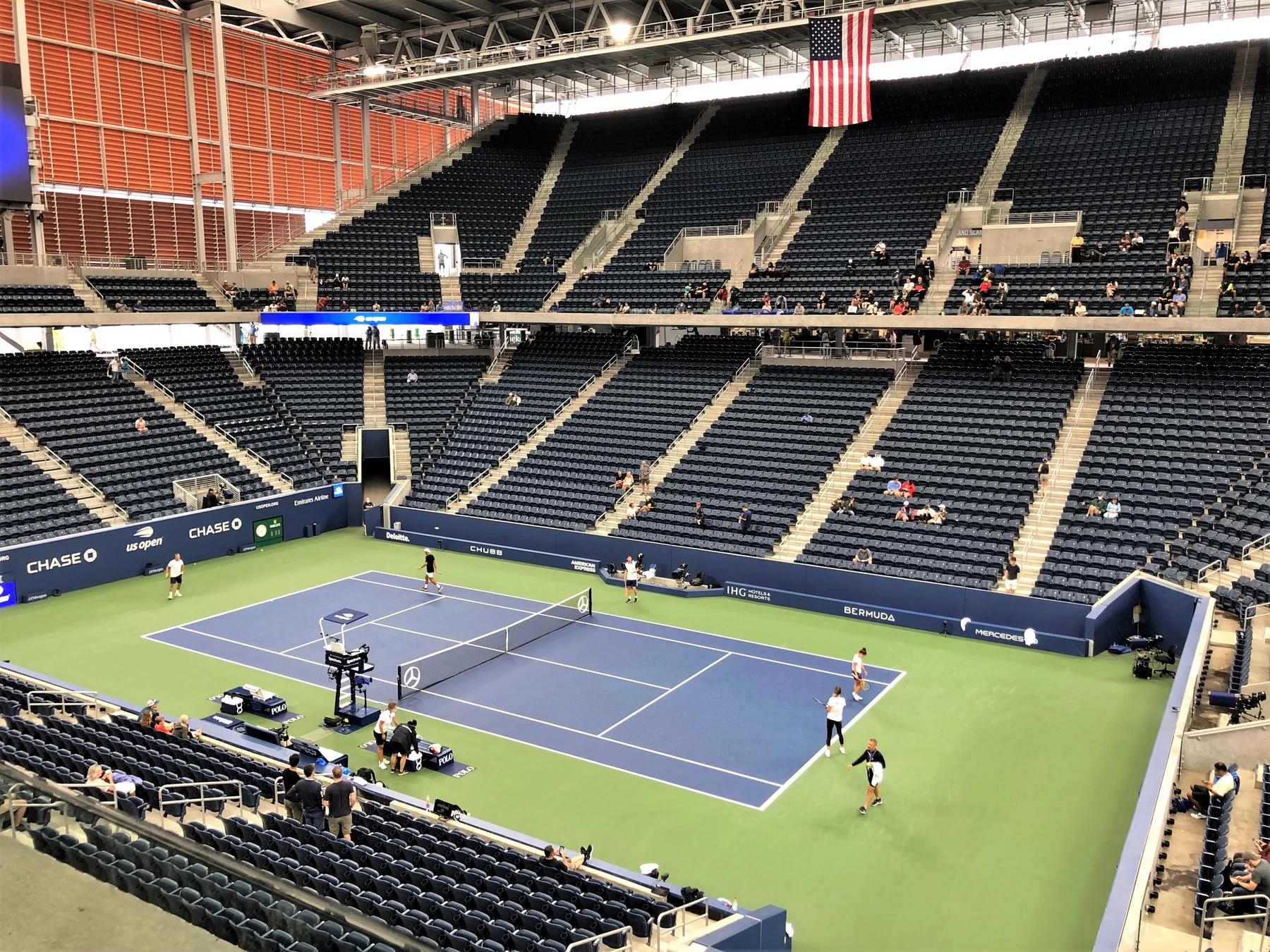
Between points is more nuanced. A quick cheer belongs there, and the stadium may play music, but the next point can begin within seconds. Do not start a long trip down the row or stage a photo shoot. Wait for the changeover. Check the day's matches on ATP Schedule today before entering so you understand whether a decisive tiebreak or routine early-round game is underway.
The culture is welcoming when the rule is framed around timing rather than expertise. A first-time fan need not learn obscure traditions. Watch the players and umpire: when the server has the balls and approaches the line, attention returns to the court; when both players sit, the social part of the event can breathe.
Can fans take photos and videos at the US Open?
Fans can take ordinary personal photos, but flash, ring lights, obstructive equipment, continuous recording and unauthorized commercial capture cross important boundaries. The safest approach is a silent phone, no added light, a brief shot during a changeover and immediate attention back on the court.
The prohibited-items policy allows cell phones and SLR cameras with lenses no longer than 300mm as exceptions to the general restriction on video and recording equipment. It bars monopods, tripods and other professional gear. That means a permitted device is still subject to rules about how it is used. A phone may enter the grounds; a bright lighting setup during a player's serve may still prompt intervention.
The guest code draws another line around purpose. Visitors may not use streaming applications or recording devices to transmit on-court action for piracy, betting data or other unlicensed commercial activity. Creators should not assume that a personal ticket grants commercial production rights. Sponsored posts can also raise restrictions against implying an unauthorized association with the tournament or its partners.
Flash and ring lights are the easiest decisions: switch them off. During the 2026 controversy, the USTA increased signage specifically asking guests to refrain from both during match play. Even a phone light that appears modest at arm's length can be conspicuous across a darkened stadium, especially near the server's sightline. It can also block or irritate nearby ticket holders.
Safe photo routine
- Disable flash, focus-assist light and shutter sound before entering.
- Wait for a changeover or set break.
- Keep the device below the sightline of the person behind you.
- Take a short personal clip or photo rather than recording play continuously.
- Follow an usher's instruction immediately.
Policies can change by year, equipment and accreditation type, so check the official page before packing. The site's tournament directory helps locate the event; the tournament's own prohibited-items page controls what enters the venue. Good etiquette is stricter than the maximum permitted equipment: the fact that a camera is allowed does not make every moment an appropriate time to use it.
Why can light and noise affect professional players?
Tennis demands precise visual tracking and self-controlled timing, so a sudden light or isolated shout can intrude at the exact instant a player begins a serve or reads the opponent's swing. Professionals train concentration, but that skill does not make an avoidable distraction irrelevant. The players also differ: Osaka said the voices were especially noticeable, while Coco Gauff emphasized flash photography.
Serve routines depend on predictable cues
The serve begins with a repeatable sequence—breathing, bouncing the ball, setting the feet, tossing and accelerating upward. The player controls when it starts, which makes an unexpected flash during the toss particularly jarring. A restart may appear trivial, but it breaks rhythm and can add pressure on a break point or second serve.
Returners face a different task. They read toss position, shoulder rotation and racquet path, then initiate a split step around contact. A bright light behind the server or movement low in the sightline competes with those cues. At tour speed, the returner cannot simply look again. Fans exploring the player directory will see different return positions and rituals, but every style depends on extracting information in fractions of a second.
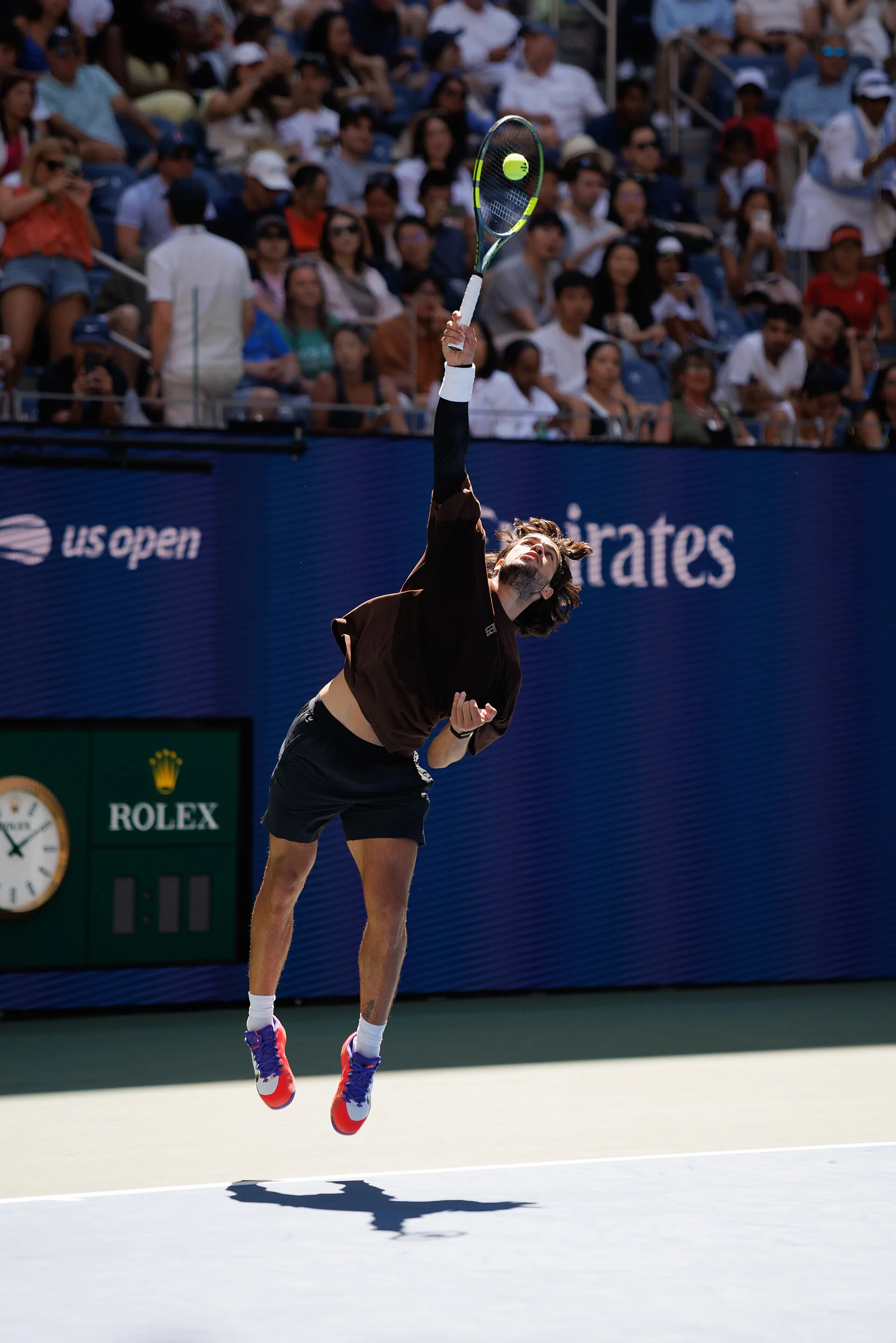
A quiet stadium can amplify one voice
A packed stadium produces a low, continuous sound bed. Players often adapt to it. A single shout from a suite can travel cleanly across the bowl precisely because everyone else has quieted for the point. Its unpredictability matters more than raw volume. The same principle explains why applause after a point is welcome while a loud conversation before second serve draws an umpire's request.
Daniil Medvedev offered a balanced view: creator attention has more upside than downside, but a light during play can be challenging and should be addressed. That is a useful standard. Tennis does not need museum silence, and players are not entitled to control every audience reaction. They are entitled to a fair attempt free from deliberate or preventable intrusion.
Officials manage the boundary in real time. Umpires can pause and address the crowd; ushers can delay movement; supervisors have authority over conditions affecting participants. Spectators help most by responding without argument. A brief correction protects the next point and prevents one person's mistake from becoming the event's main story.
Are influencers good or bad for tennis?
Influencers are useful to tennis when they introduce the event to new audiences without altering the competition; they become a problem when access rewards disruption. The category is too broad for a yes-or-no verdict. A knowledgeable creator explaining a tiebreak and a guest staging a lit photo shoot during serve share a platform, not a standard of conduct.
The audience-growth case
The USTA created a formal social-first credential program in 2025 and said that cohort generated more than 5.5 million engagements. In 2026, it issued close to 100 creator credentials, nearly double the first year. Those numbers explain the strategy: younger fans encounter sport through short video, personalities and lifestyle coverage as well as traditional broadcasts.
Several players accepted that logic. Medvedev said the upside outweighed the downside if a one-time mistake is corrected. Frances Tiafoe welcomed bringing more kinds of people into the seats. The US Open has always mixed elite tennis with New York fashion, food and celebrity culture; creators are a new distribution channel for an established identity. The best work can lead a curious viewer from a venue clip to the site's ATP watch guide and then to a real match.
Where promotion crosses the line
Jessica Pegula articulated the boundary: showcasing the experience can help, but interrupting people doing their job is disrespectful. Fans added a fairness complaint. They pay high prices to watch tennis and resent losing sightlines or concentration to invited guests producing content. That frustration becomes stronger when a disruptive guest appears to receive privileged access.
The solution is accountability, not a profession-wide ban. Brands and suite hosts should brief every invitee before arrival, with a one-screen guide explaining points, changeovers, lighting and commercial recording. Accreditation should name a responsible host. A first mistake earns an immediate correction; repeated interference should cost the relevant access. The same rule should apply to celebrities, sponsors and conventional media.
Metrics also need care. Five million engagements demonstrate reach, but not whether viewers watched another match, bought a ticket or learned the sport. The tournament should measure conversion and complaints together. A creator campaign that reaches fewer people while respecting play may be more valuable than a viral disruption that makes loyal customers feel excluded.
Tennis grows by lowering the knowledge barrier, not the behavioral standard. New fans should hear “here is when to cheer,” rather than “you do not belong.” Once the timing is explained, respecting it is the price of sharing the stadium with athletes and thousands of other spectators.
A simple US Open etiquette checklist for first-time fans
If the ball is live or a player is preparing to serve, sit, watch and stay quiet; if the players are seated, it is usually time to move, talk or take a photo. That single distinction covers most situations. The table below turns it into a match-day plan.
| Moment | Good choice | Avoid |
|---|---|---|
| Player serving / point live | Stay seated, silent and attentive | Talking, standing, lights, filming over heads |
| Between points | Brief cheer, then settle quickly | Starting a long trip down the row |
| Changeover | Move seats, talk, take a quick light-free photo | Delaying when players return |
| Staff instruction | Follow it immediately | Arguing during play |
Before leaving home, silence the phone and disable flash, focus-assist lighting and shutter sound. Check the current bag and camera rules; a permitted phone or camera does not authorize continuous recording, streaming or commercial use. Leave tripods, monopods, ring lights and noise-making devices behind.
At the grounds, consult the day's ATP schedule and allow enough time for security and walking between courts. Enter a stadium when the usher releases the aisle. If you must leave, wait for the next changeover unless there is an emergency. Keep drinks, hats and bags secure so they do not fall or require retrieval during a point.
Cheer generously once the point ends. The US Open's energy is part of its appeal, and etiquette does not demand emotional restraint. It asks for predictable timing. Avoid calling out immediately before a serve, coaching a player or insulting an opponent. Applause for a brilliant rally is appropriate whichever player won it.
Watching remotely is easier, but the same respect improves online conversation: do not amplify harassment or treat a short clip as the full match. Use the watch guide for legal coverage and the score page for context.
First-time fans are not the problem. Every tradition had to be learned by someone, and clear venue communication makes the sport more welcoming. If uncertain, watch the umpire and the players. Balls in hand and feet at the baseline mean quiet; players in chairs and music in the stadium mean the social moment has arrived.
Respect the point, enjoy the event
The US Open can remain loud, fashionable and open to new audiences. The workable boundary is simple: content, conversation and movement belong in the pauses; once play starts, the athletes and the point take priority.
About the author
ATP Schedule Editorial Team
The ATP Schedule editorial team turns match times, scores, tournament information and verified tennis news into clear answers fans can use quickly.
View all articles by this author →Fan discussion
Comments
Sign in with Google to comment. Keep the discussion helpful and tennis-focused. New comments are reviewed before they appear.
Loading comments…