Why Monfils Can Have a Paris Farewell Without Playing the Masters
Monfils is retired and still due to receive a Paris Masters tribute. The November 3 plans make sense once ceremony attendance, entry and return eligibility are separated.
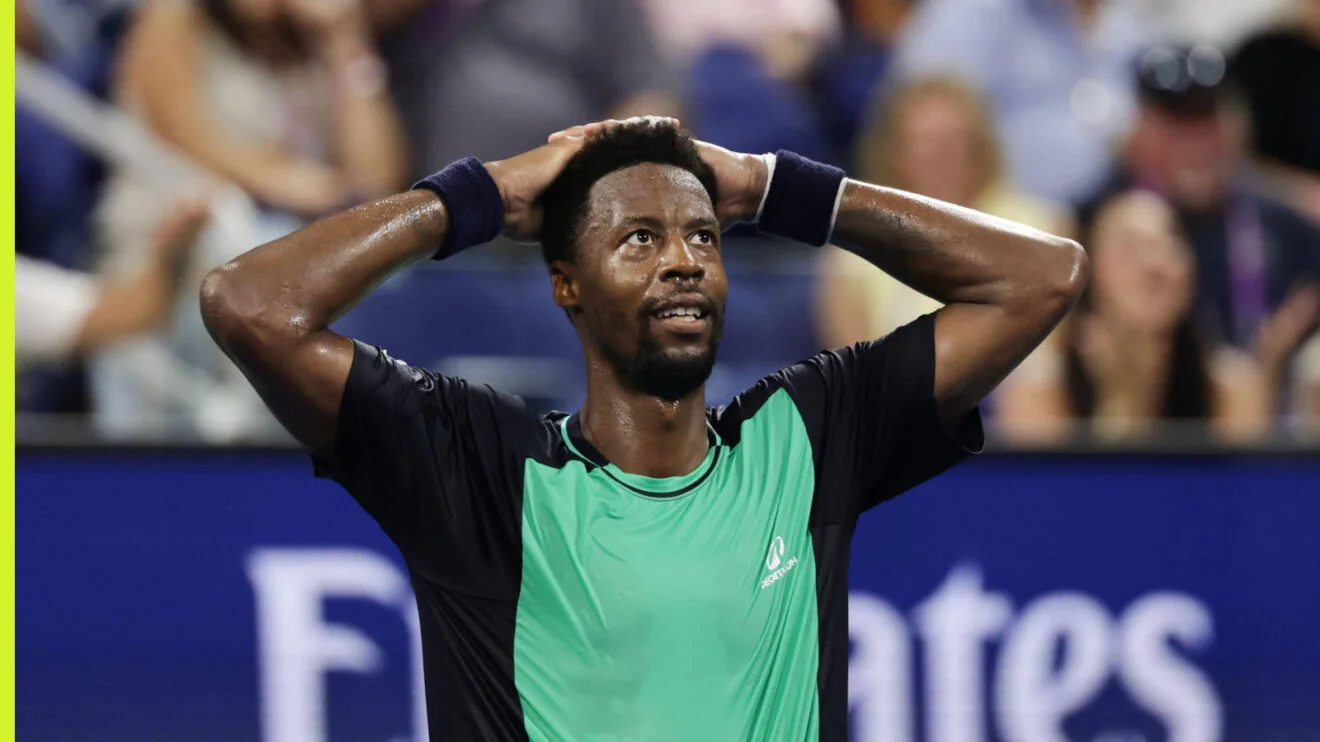
Can Monfils attend the Paris farewell without playing?
Yes. Gael Monfils can be honoured at the Paris Masters without entering its competition. The planned November 3 tribute is a public farewell, while his retired status governs participation in professional matches. Appearing in the arena, addressing supporters and being part of a ceremony do not amount to returning to the singles draw.
That distinction resolves the apparent contradiction in headlines saying he is both retired and due to appear in Paris. “Appearance” can describe a match, a ceremony, an interview or another engagement. The purpose must be read before a sporting conclusion follows. In this case, the announced purpose is a tribute to his career.
When the tribute is planned
The organiser’s October 26 announcement, reproduced in Tennis365’s report, identifies the evening session on Tuesday, November 3, 2026. TennisActu’s account of Monfils’ livestream adds that the tribute is planned after the first night-session match.
The first match is scheduled from 19:00 Paris time. That is not a 19:00 ceremony appointment. The duration of the match comes first, so the announcement cannot be converted into an exact finish-to-tribute timetable. Fans attending for Monfils should allow the evening to unfold and check the organiser’s latest instructions close to the date.
The venue is the Plenitude Arena in Nanterre, also known as Paris La Défense Arena. A report using the old “Bercy” shorthand can describe the tournament historically without identifying its current building. Follow the present venue and session information when planning a journey.
Nothing in the announcement supplies a main-draw opponent for Monfils. It also does not announce a comeback through a wild card or promise an exhibition match during the ceremony. Those would be additional sporting arrangements requiring their own confirmation. A tribute should be understood according to what has actually been announced.
Use the ATP week’s schedule to follow the tournament surrounding the occasion, while keeping the ceremony plan alongside the organiser’s event information. The competition can continue normally as Paris celebrates a player whose professional career has already ended. For supporters, that still creates a meaningful opportunity to say goodbye in person.
What the ITIA retirement list actually confirms
The ITIA’s retired players list records Gael Monfils with a retirement date of October 5, 2026. That entry is the clearest public reference for his formal status. It is a retirement record, rather than a finding that he committed an anti-doping offence.
This distinction matters because the agency also administers anti-doping rules and publishes sanctions. Seeing its name beside a player does not tell you that the player has been punished. You must identify which record you are reading. Retirement, a testing obligation and a sanction are separate concepts with different consequences.
The date also needs careful handling. AFP’s confirmation was reported in mid-October, but a report appearing on October 14 does not shift the registered retirement date from October 5. One date describes the status recorded by the agency; another describes when readers encountered a news report. Confusing them can distort the sequence of later tournament plans.
A public list has limits too. It does not explain every private discussion between a player, his representatives, the agency and a tournament. It does not justify speculation about motives, testing history or a hidden dispute. For this question, the relevant information is narrower: Monfils is registered as retired, and returning to professional competition is governed by the applicable programme.
The ITIA’s anti-doping introduction explains the programme’s role in maintaining a level competitive field. Rules governing retirement and return sit within that system. Their existence is not evidence against an individual player; they explain why a retired player cannot treat a future entry as a purely informal decision.
For readers using an ATP player directory, the same distinction applies. A profile can preserve a retired player’s biography, achievements and historical matches. Remaining visible on a tennis website does not mean he is entered in the next tournament. Historical presence and current eligibility answer different questions.
It is therefore accurate to say that Monfils formally retired on October 5 and is due to be celebrated in November. It would be inaccurate to convert the retirement entry into an accusation of wrongdoing, or to announce an automatic comeback date by adding six months to that entry alone. The return process requires a closer reading of the rule.
How the six-month return rule works
The ordinary return route is more specific than “wait six months after retiring.” Article 1.4 of the 2026 Tennis Anti-Doping Programme sets out notice and testing requirements for retired players wishing to compete again. The rule concerns competition in a covered event or a national-level event; a farewell presentation is a different activity.
Notice and testing come before competition
Subject to the exception provision, Article 1.4.3 requires at least six months’ written notice of the intention to return to the ITF, ITIA and the player’s national anti-doping organisation. It also requires the player to be available for testing for six months before returning, including providing whereabouts information if requested.
The ITIA’s whereabouts guidance explains the purpose of information that allows players to be located for testing. Availability is therefore an active obligation, rather than a calendar interval during which the player merely refrains from entering tournaments. The retirement date alone does not tell an outside observer when a return process began.
That is why an automatic calculation from October 5 would be misleading. The relevant questions include whether notice of an intended return has been given, when the required availability began and which conditions apply. The public retirement list does not supply that whole set of answers.
Nor does the rule establish a simple public count of negative samples that any fan can use as an alternative. The stated requirement is availability for testing under the programme. Training footage, an exhibition announcement or a player saying he misses competition would not, by itself, demonstrate that the return conditions had been met.
The programme contains an exception process
Article 1.4.4 allows WADA, in consultation with the ITIA and the national anti-doping organisation, to exempt a player from the six-month written-notice requirement where strict application would be unfair. The World Anti-Doping Code’s return provision also recognises that notice-exemption process. It is a formal decision, not an informal permission supplied by the tournament.
The wording matters: the exception specifically addresses the notice requirement. Readers should not turn its existence into a promise that every other condition disappears. Equally, describing the ordinary six-month route as an absolute rule with no exception would omit an express provision of the programme.
The Paris tribute announcement does not confirm that Monfils has received such an exemption. His planned appearance is not evidence that he has applied for one or that a return has been approved. The confirmed event can be explained without inventing either process.
For fans, the practical conclusion is straightforward. A competitive comeback would require evidence of the applicable return conditions being satisfied. The November ceremony requires no comeback at all. Keeping those questions separate avoids both an unsupported claim that he is banned and an unsupported claim that he is about to play.
Why a wild card cannot settle the return question
A wild card addresses entry into a tournament. It does not, by itself, satisfy the anti-doping conditions governing a retired player’s return. The event’s wish to include a popular player and that player’s eligibility to compete are separate decisions under different rules.
Entry permission and eligibility answer different questions
The ATP competition rules describe wild cards as players included at the tournament’s discretion, within the applicable regulations. This allows an event to admit someone who has not entered through the ordinary ranking route. It does not give the tournament authority to set aside the Tennis Anti-Doping Programme.
For a hypothetical retired player considering a comeback, two questions therefore follow. Has the player met the conditions necessary to compete? If so, has the player secured a place in this particular event? A wild card can help answer the second. It cannot be treated as evidence that the first has already been resolved.
There is a further nuance in Article 1.4.6 of the anti-doping programme. A player may apply for entry while the required period is still running when the event will take place after that period expires. An application deadline and the date of competition need not be the same. Saying that no application can even be submitted until six months have elapsed would overstate the rule.
That provision does not authorise early competition. It makes room for the ordinary timing of tournament entries while retaining the return requirements. An entry announcement would still need to be interpreted alongside the actual event date and applicable eligibility conditions.
In Monfils’ case, the confirmed November announcement is a ceremony. The organiser’s October 27 main-draw wild-card list names Titouan Droguet, Arthur Géa, Quentin Halys and Kyrian Jacquet. It does not turn the Monfils tribute into a singles invitation. Readers should avoid constructing a late sporting comeback from two unrelated announcements.
The same care applies when browsing the ATP tournament directory. A player can be connected to an event through its history, promotion or a farewell without being part of its current draw. Check the nature of the connection before assuming that a name on an event page represents a scheduled match.
There is no need for a workaround to explain his presence in Paris. He can be celebrated because the planned activity is a tribute. That preserves the farewell opportunity while leaving the competition’s eligibility rules to govern actual competitors.
Why Paris is a meaningful place for the farewell
Monfils does not need to have won the Paris Masters to have a substantial place in its history. He reached consecutive finals in 2009 and 2010, giving the home crowd two opportunities to follow him into the tournament’s deciding match. The announced tribute recognises that relationship and the wider career behind it.
Two finals at the old Paris venue
The organiser’s anniversary history records the results. Djokovic beat Monfils 6–2, 5–7, 7–6(3) in 2009; Robin Soderling won 6–1, 7–6(1) in 2010. Those are the champions’ winning scores. They establish Monfils as a two-time finalist, rather than a former winner of the event.
The first final provides a particularly clear example of competitive drama. The ATP’s retrospective recalls Djokovic leading by a set and 4–1 before Monfils recovered. What had looked comfortable became a deciding-set tiebreak. The final result remained a defeat, but the route to it gave the crowd a very different experience from the opening scoreline.

The 2010 final ended in two sets. Remembering both results avoids turning every appearance into the same dramatic story. A player’s connection with a tournament includes difficult defeats as well as comebacks. Reaching successive finals is itself a concrete achievement, even when the trophy goes elsewhere.
Those matches took place at the old Bercy venue. The 2026 farewell is planned at Nanterre, following the event’s 2025 move. The continuity belongs to the tournament, its history and its supporters; it should not be described as a literal return to the same physical court used for the 2009 final.
There is also more to Monfils’ appeal than the spectacular movement that fills short clips. Recovering from a difficult court position can keep a rally alive, but the next decision still matters: defend again, change direction or move forward. A complete match shows the discipline surrounding the athletic moment. That is a more useful sporting appreciation than reducing him to a collection of tricks.
The tribute can therefore have significance without a final competitive outing. Supporters can recognise the two finals, the memorable rallies and the years of following a distinctive player. The career being celebrated is already real; an invented November matchup would add nothing to its meaning.
How to plan for the November 3 evening session
For an in-person farewell, start with the correct appointment: November 3, evening session, Plenitude Arena. Then check the exact ticket product and the organiser’s latest event information. A general Paris Masters ticket, a daytime booking and a seat on another court should not be assumed to include the announced tribute.
The official provisional programme lists evening play not before 19:00, with night-session arena access not before 18:30 following the end of the day session. Those are separate references for entry and competition. Neither gives a precise tribute start, because Monfils’ appearance is planned after the first evening match.
A close first match may run longer than a straightforward one. Allow flexibility in any later transport or dinner plan and avoid using an estimated tennis duration as though it were an appointment. The relevant update near the session is the official running order, followed by any announcement made on the day.

Check the day’s ATP match schedule for the tennis around the occasion, but use the tournament’s own information to confirm ceremony details and admission. A competition listing and a ticket entitlement serve different purposes. If attending specifically for Monfils, read the evening-session description before committing to a booking.
Remote viewers need a separate check. The FFT’s broadcast announcement sets out tennis coverage in France and a defined official YouTube programme. That does not establish that every international match service will carry the tribute, or that the ceremony will automatically be streamed live on YouTube.
Use the ATP viewing guide to identify the relevant provider in your territory, then look for a specific ceremony listing or organiser announcement. A subscription that carries matches may handle presentations differently. If no tribute stream is confirmed, keep that uncertainty visible instead of promising supporters a link that has not been announced.
The plan remains a farewell within an active tournament. The first match will have its own players and sporting stakes; the tribute then offers a different kind of occasion. Arriving with those expectations lets supporters appreciate both, without waiting for a Monfils comeback that the announced programme does not contain.
About the author
ATP Schedule Editorial Team
The ATP Schedule editorial team turns match times, scores, tournament information and verified tennis news into clear answers fans can use quickly.
View all articles by this author →Fan discussion
Comments
Sign in with Google to comment. Keep the discussion helpful and tennis-focused. New comments are reviewed before they appear.
Loading comments…