Are Double Hits Legal in Tennis? The Jodar Shanghai Review Explained
An accidental double contact can be legal. The Shanghai discussion shows why deliberate action, review evidence and doubles team contact need separate explanations.
Are double hits legal in tennis?
Yes. An accidental double contact during a continuous stroke can be legal in tennis. A player does not automatically lose the point simply because the ball touches the racket twice. The important distinction is between an accidental mishit and a deliberate extra action to control or strike the ball again. That distinction explains why a return can look untidy, make an unusual sound and still remain in play.
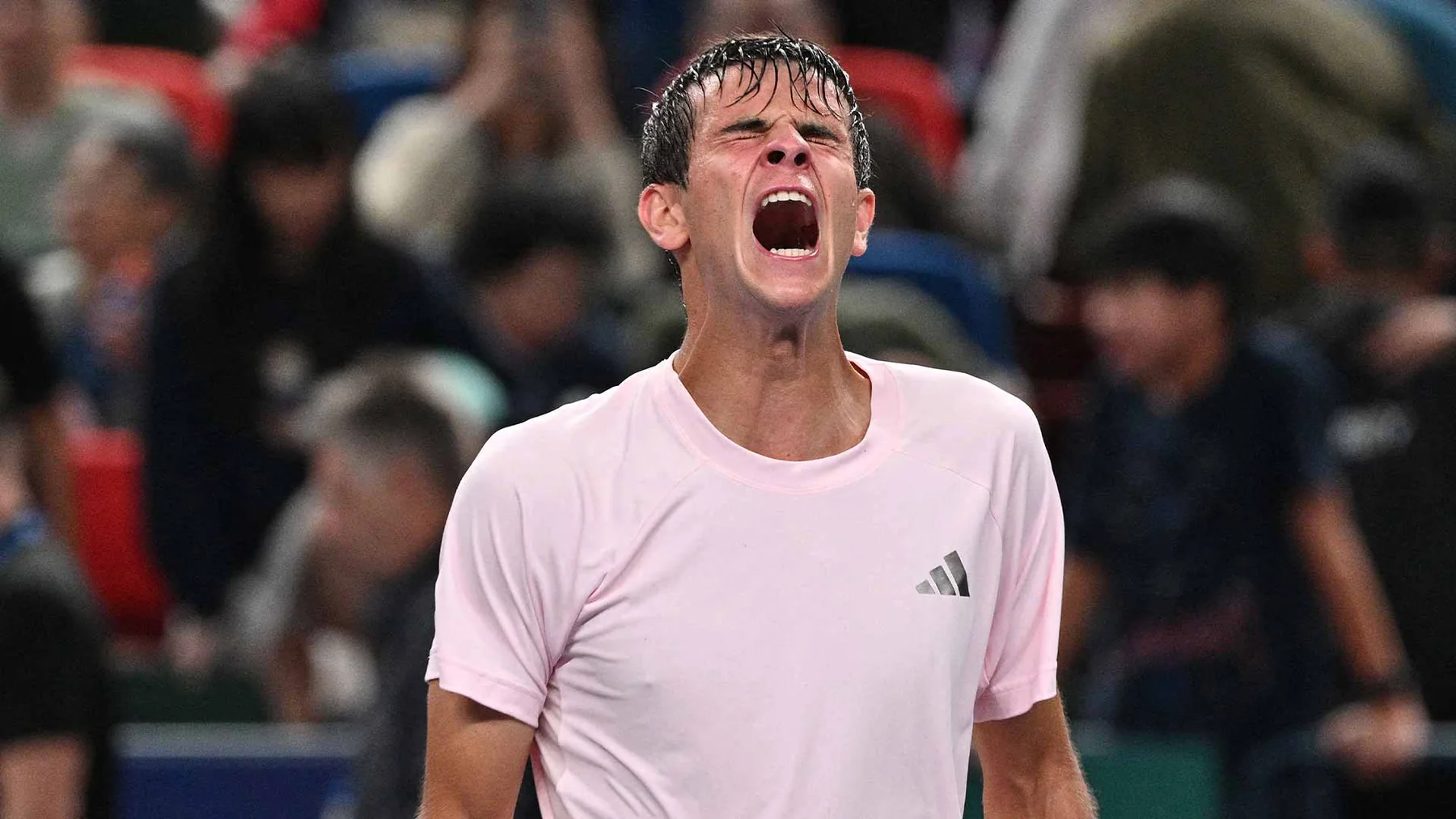
The issue resurfaced during Rafael Jodar's Shanghai meeting with Botic van de Zandschulp in October 2026. A shared clip and the discussion around a video-review request prompted a familiar question: surely two contacts must mean a foul? They do not, by themselves. This guide explains the applicable 2026 rules and separates that question from speculation about a player's intentions in requesting a review.
The word that decides the call
In ITF Rule 24(f), the crucial qualification is deliberate action. The provision covers deliberately carrying or catching the live ball on the racket and deliberately touching it more than once. It does not say that every audible second contact automatically ends the point.
There is an important difference between deciding to hit a forehand and deciding to make an additional contact with a ball already struck. Every normal forehand is intentional in the first sense. A ball glancing from the frame to the strings during that forehand does not become deliberate double hitting merely because the player intended the original shot.
The USTA's practical explanation focuses on a continuous movement without a purposeful second swing or push. That is a useful way to watch the action, provided it is understood alongside the rule's deliberate-contact test. For other disputed calls, our ATP video-review guide explains why identifying the correct rule comes before deciding what a replay proves.
What the Jodar Shanghai review actually shows
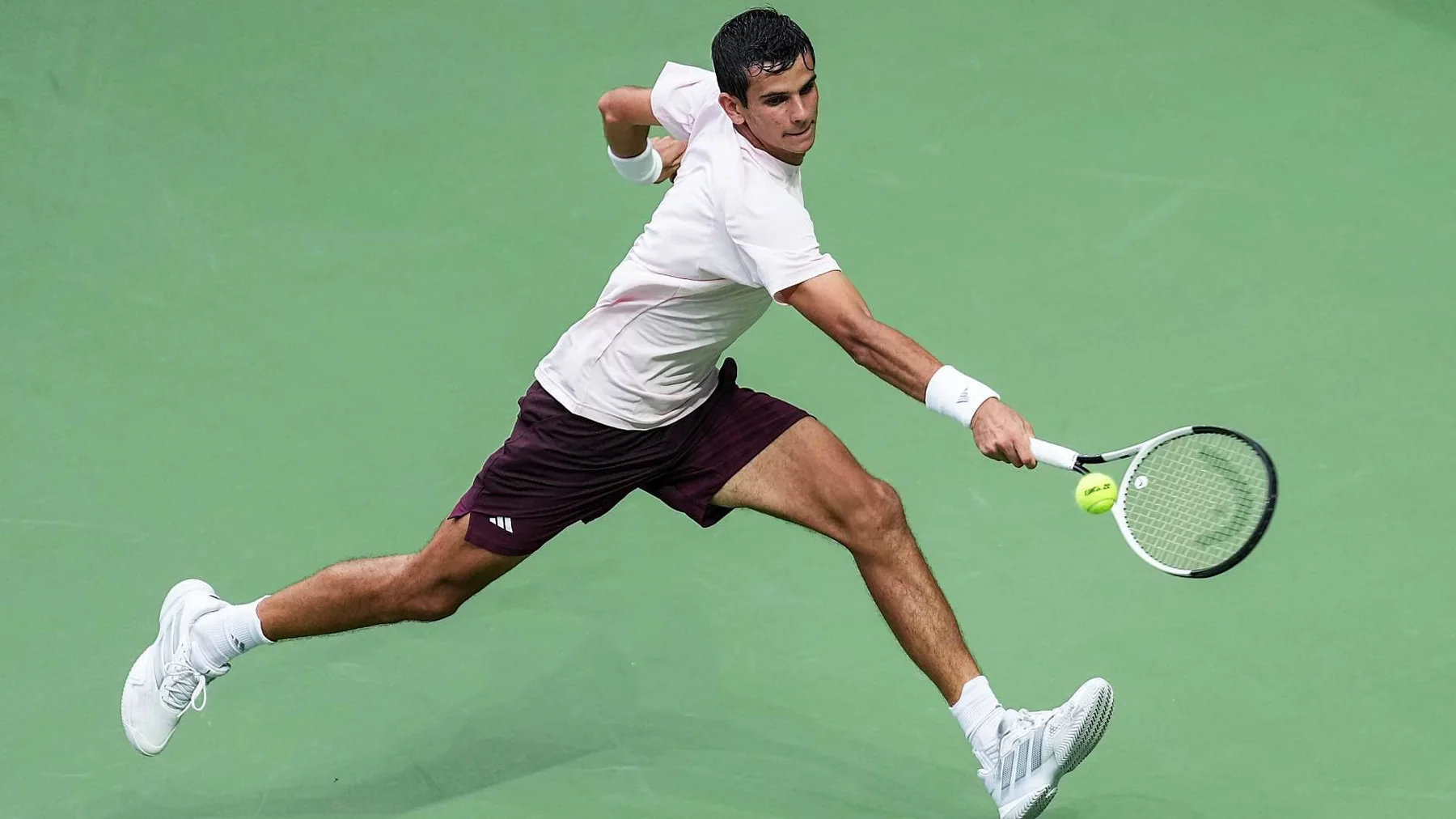
The Shanghai discussion concerns a van de Zandschulp return and Jodar's request to examine the contact. The useful rules question is whether there was a deliberate additional action. A claim that the ball touched the racket twice, even if established, would leave that question unanswered.
The ATP's report of the fourth-round match supplies the reliable competitive context. On 14 October, Jodar beat van de Zandschulp 6-7(4), 6-4, 6-2 in two hours and 30 minutes. It was their first tour-level meeting. The Spaniard, 20, recovered from a set down for the third consecutive match, after doing the same against Thiago Agustin Tirante and Jiri Lehecka.
The fan thread sharing the review clip is valuable for a different reason: it shows how easily viewers confuse double contact, two swings and an illegal shot. Some commenters struggled to identify the contact at all; others focused on the apparent single movement. Those responses illustrate the uncertainty of watching a small replay. They are not an official explanation of the chair's adjudication.
Neither the official match report nor the highlights page supplies a written, shot-by-shot ruling on this particular exchange. That limits what can responsibly be concluded about the exact review outcome or whether an unsuccessful request was charged. The clip also cannot establish that Jodar requested a review to interrupt his opponent or gain extra recovery time. Such a motive needs evidence beyond disagreement with the challenge.
For viewers, the distinction is practical. Ask what feature of the stroke was being questioned before debating whether a review was sensible. A racket moving through one return is compatible with accidental additional contact; a deliberate correction after the initial strike would raise a different issue. The final match result tells us who advanced, while the applicable rule tells us how to judge the disputed type of action. Neither needs the other to become a character verdict on either player.
One swing, a second push and a deliberate carry
A continuous stroke is helpful evidence of an accidental mishit. It is not a licence to catch, steer or deliberately strike the ball again. The distinction becomes easier to understand through examples rather than arguments about whether a shot looked elegant.
Accidental contact in a continuous stroke
Imagine a player blocking a hard serve. The ball clips part of the frame and then the strings while the racket continues through the same return. There is no separate correction or purposeful extra push. This is the kind of accident described in the USTA's officiating scenarios. The resulting shot can remain legal even if its flight is unusually short, high or awkward.
Now imagine a stretching volley that contacts the racket unevenly. The player's follow-through might look different from a normal volley because balance has already been lost. An awkward finish is not itself proof of a deliberate second strike. Watch the interaction between racket and ball, rather than treating unusual body movement as a separate offence.
Deliberate control changes the answer
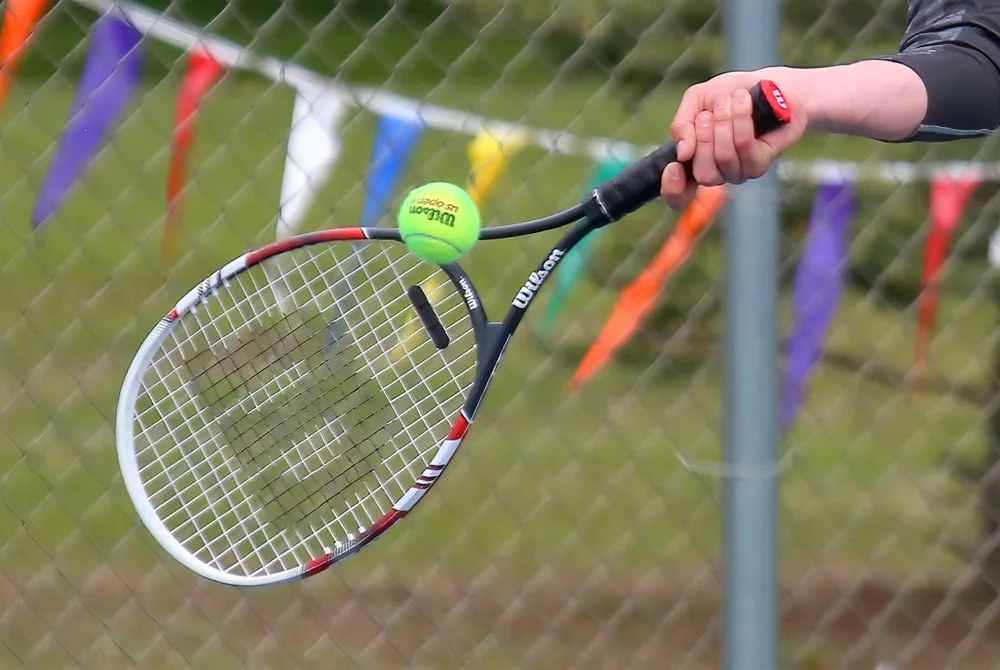
By contrast, suppose the first hit pops the ball up and the player deliberately takes another swipe to send it over. That is a new attempt to play a ball already contacted. Or suppose the player intentionally holds the ball on the strings and guides it before releasing it. Calling that movement smooth would not remove the deliberate carry. The MHSAA explanation makes the same practical distinction between an accidental contact sequence and purposely controlling the ball again.
| Illustrative action | What matters | Likely rule application |
|---|---|---|
| Frame then strings in an accidental return | No deliberate additional hit | Play continues if otherwise good |
| First hit followed by a purposeful extra swipe | Deliberate second contact | Player loses the point |
| Ball intentionally caught or carried on the racket | Deliberate control | Player loses the point |
| Two noises but the contact is obscured | Evidence is incomplete | Noise alone does not establish an offence |
These examples explain the test; they do not replace an official's assessment of a real shot. Nor does a missed swing, by itself, establish a double hit: the relevant question involves contact with the live ball. Counting every movement of the racket without establishing what actually touched the ball is a poor shortcut to a ruling.
How ATP video review handles a disputed shot
ATP video review gives the chair additional evidence for specified judgment calls. It does not change the underlying rule about deliberate contact. The official still has to decide what happened and then apply the appropriate provision.
What a replay can establish
Section VII.M of the 2026 ATP Rulebook requires video review on all match courts at ATP Masters 1000 and ATP 500 events. Its reviewable categories include foul shots, such as carrying the ball, alongside other questions involving touches, a second bounce and hindrance. Other event categories operate under their applicable approval and equipment arrangements.
A player must make a timely request and clearly communicate what is being questioned. The operator locates the best available camera view and sends it to the screen at the chair. That can help distinguish an uninterrupted racket movement from a purposeful additional action, or clarify a contact hidden from the official's original angle.
Timing is a separate issue from whether a shot was legal. The ATP protocol expressly allows the legitimacy or timing of a request to be examined alongside the incident. A social-media debate about the stroke cannot, by itself, settle whether the request satisfied that procedure. Nor should a television line-call animation be confused with reviewing how a player contacted the ball.
Why the original call can stand
The chair looks for clear evidence to support or overturn the original decision. If there is no clear evidence, the original decision stands and the request is not recorded as a lost video review under that provision. An inconclusive replay therefore does not automatically certify every detail of the shot; it may simply fail to justify changing the decision.
The published rules allow three incorrect video-review requests per player in a set, with an additional request when that set reaches 6-6. Those general limits should not be used to invent Jodar's remaining allowance at an unspecified moment in Shanghai. A count for an individual incident requires the actual match record or broadcast sequence.
The useful viewing habit is to listen for the question the chair is reviewing and the reason given afterward. Our guide to ATP video review and hindrance covers the wider procedure. A replay makes the discussion more informed; the crowd's certainty is not part of the evidence standard.
Why an accidental double hit is not a hindrance
An accidental double hit does not become a hindrance merely because its flight surprises the opponent. The 2026 ITF rules address that exact question in Rule 26, Case 1, and answer no. A player cannot turn an otherwise legal mishit into a replay simply by explaining that the ball was difficult to read.
That matters because two different ideas are often mixed together after an awkward return. One is whether the player made an illegal contact. The other is whether the opponent was disadvantaged. A legal shot can certainly disadvantage the opponent: a framed return can land short, bounce unexpectedly or force a rushed change of direction. Competitive difficulty alone does not establish a rules violation.
Consider an illustrative rally in which a return glances off the frame and drops just over the net. The server has moved backward expecting a deep ball and cannot reach it. If the contact was accidental and the return was otherwise good, the server's wrong anticipation does not create a right to replay the point. The frame-contact example in Tennis.com's rules column helps explain why the number of contacts is insufficient to award the opponent the point.
Nor should a viewer assume that every pause after a strange shot is a hindrance discussion. The official may be considering a foul shot, reviewing a touch or clarifying what the player is challenging. Those questions can lead to different decisions. Listening for the category of the call is more useful than attaching the word hindrance to any disruption in rhythm.
There is also no need to invent a special Shanghai exception. The rule already anticipates accidental double contact. Applying it consistently means accepting that some ugly shots remain good tennis points. Fans can dislike the luck involved while still recognising why an official allows play to continue.
Doubles partners cannot pass the ball between them
The accidental-contact explanation for one player does not allow a doubles team to combine two touches into a return. ITF Rule 24(l) states that the point is lost when both players touch the ball while returning it. The team cannot treat one player's deflection and the partner's follow-up as a single shared stroke.
Imagine a fast exchange at net. The first partner gets a racket on the ball but sends it upward on the team's own side. The other partner then volleys it across the net. However impressive the recovery looks, both partners have played that return, so the team loses the point. It does not matter that the initial deflection was unplanned.
Compare that with one partner's volley glancing twice against that same player's racket during an accidental continuous action. The second situation brings us back to the deliberate-contact test. The identity of the person making contact is therefore essential. A television angle showing two rackets close together can obscure this difference, which is why a reviewer needs the actual contact sequence.
A racket clash is a different question
The USTA officiating scenarios also distinguish the rackets hitting each other from both rackets hitting the ball. A clash does not, on its own, establish an illegal return. If only one player's racket touched the ball, the noise of the collision is not proof that both partners played it. The fact that a teammate was reaching for the same volley is similarly insufficient.
There are other limits to remember. The accidental-double-hit allowance does not turn a ball striking a player's hand, body or clothing into a legal racket contact. Rule 24(i) separately deals with the live ball touching the player or something worn or carried, apart from the racket. Likewise, a legal contact sequence does not excuse touching the net while the ball remains in play.
For doubles spectators, watch the ball rather than the crowd of equipment around it: which racket touched it, did the partner also touch it, and did any separate prohibited contact occur? Our guide to ATP tournament levels helps place the singles and doubles competitions within the wider event; the point-level distinction here remains about the actual return.
How to judge the next double-hit controversy
Start with the action, then the rule, then the available evidence. That order helps avoid the most common error in double-hit discussions: deciding a shot is illegal because it looks unusual, then searching for a reason afterward.
First, identify the contact being questioned. Was the concern that the same racket touched the ball twice, that both doubles partners touched it, or that the ball struck the player's body? These are different situations. A general claim that there was a double hit can conceal disagreement about what the alleged offence actually was.
Second, watch the whole stroke at normal speed before concentrating on isolated frames. Then examine any useful slow-motion angle for a purposeful additional action. A replay can reveal another contact without revealing a deliberate second hit. A still frame can show proximity without establishing contact at all. If the ball or racket is hidden, acknowledge that limitation rather than filling the gap with certainty.
Third, separate shot legality from the review procedure. A player can be wrong about a shot while still raising a question that an official must assess. Conversely, an arguable concern about contact does not automatically make every timing of a request valid. Those judgments need their own evidence. Criticism becomes more useful when it identifies which of those decisions is being challenged.
Recreational players should also distinguish their match arrangements from the professional tour. The USTA's question-and-answer page says the hitter makes the call in the self-officiated situation described. That advice should not be lifted out of context to claim an ATP opponent can overrule the chair by declaring a shot legal. In an officiated match, use the appointed official and the applicable review process; in local competition, follow the event's established procedure.
The Shanghai exchange is a good reminder to keep the conclusion proportionate to the evidence. An accidental double contact can be legal; a deliberate second hit or carry is not. A short clip can start a worthwhile rules discussion without proving everything claimed in its comments. When checking the next ATP matches, that distinction will make an awkward return easier to understand before the replay is even shown.
About the author
ATP Schedule Editorial Team
The ATP Schedule editorial team turns match times, scores, tournament information and verified tennis news into clear answers fans can use quickly.
View all articles by this author →Fan discussion
Comments
Sign in with Google to comment. Keep the discussion helpful and tennis-focused. New comments are reviewed before they appear.
Loading comments…