ATP Medical Timeout Rules: Treatment, Bleeding and the Bublik Case
Separate medical assessment from the treatment clock, understand bleeding and cramp provisions, and see why care and conduct are different questions in Bublik's case.
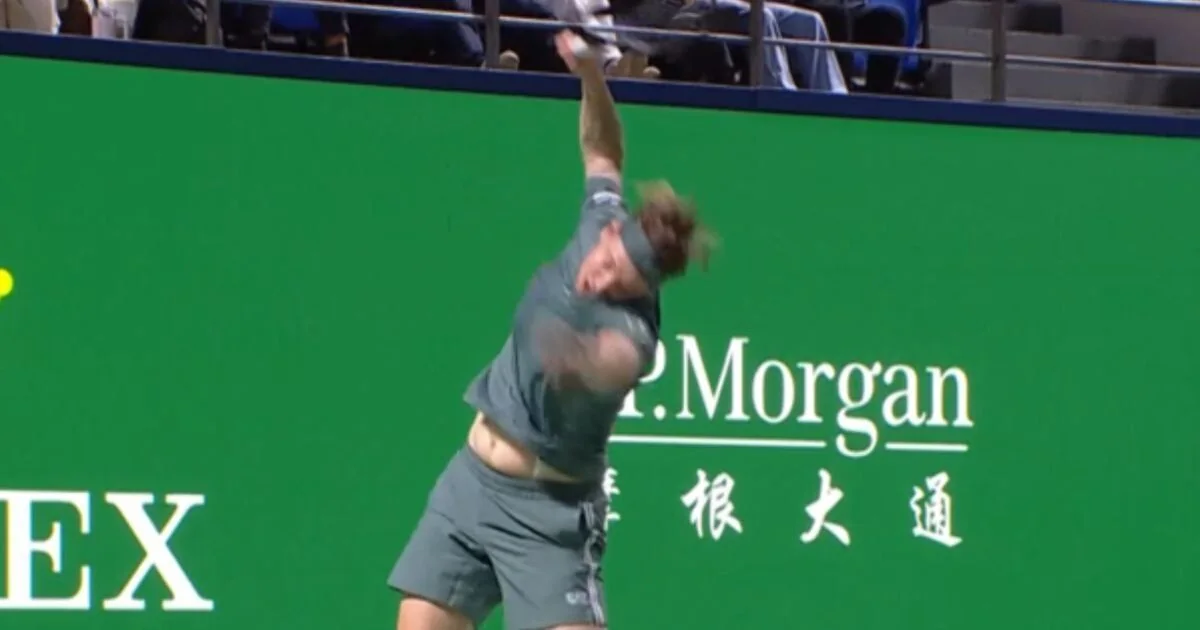
ATP medical timeout rules separate assessment from treatment, allow specific handling for bleeding and distinguish medical eligibility from conduct penalties. Updated on 14 October 2026, this guide explains those procedures through the reported Bublik hand injury in Shanghai, without assuming that a news description supplies a complete clinical record.
What happened to Bublik in Shanghai?
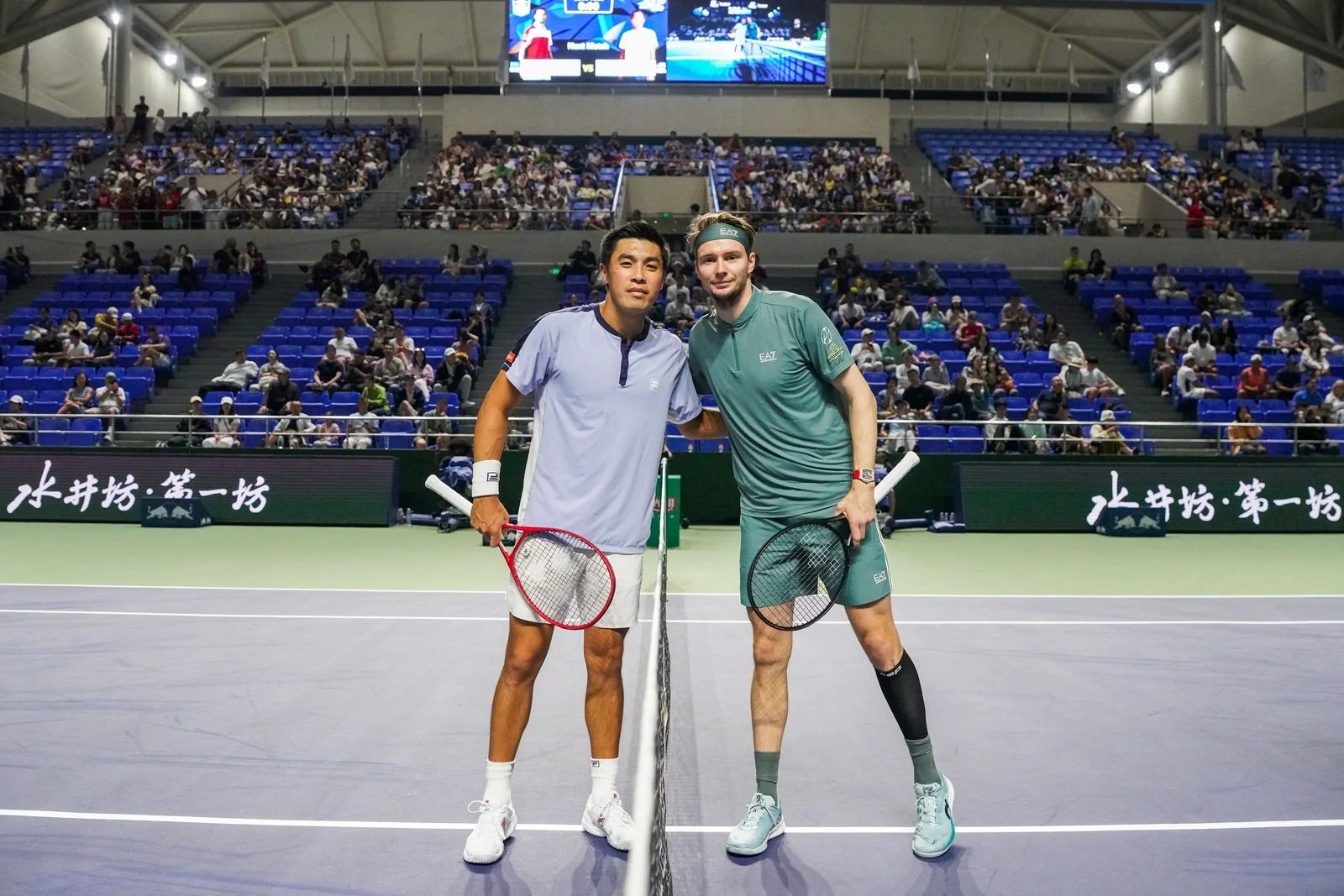
Alexander Bublik's Shanghai match against Brandon Nakashima produced an unusual rules question: can a player receive medical attention after injuring himself in an angry outburst? The reported sequence involved a hand injury and bleeding, not simply a player asking for a rest.
After losing the opening-set tie-break on 11 October 2026, Bublik repeatedly smashed his racket and struck a drinks cooler. Express reported that his hand began bleeding, the physiotherapist attended and the chair announced a three-minute medical timeout. TennisUpToDate's account also described medical assessment after the outburst.
Bublik returned to win 6-7(7), 6-3, 7-6(5), a result reported by both publications. The Shanghai Masters tournament guide provides wider event context. His recovery in the score does not establish the severity of the wound, or prove that receiving treatment created a decisive competitive advantage.
There are several distinct questions underneath the interruption. What condition required attention? When did evaluation end and treatment begin? Was the bleeding provision relevant? What conduct consequences followed the equipment abuse? A television sequence may draw attention to all four, but it does not necessarily answer them.
The term medical timeout in a match report is useful description. It is not a complete clinical or officiating record. Even a report of an announced three-minute break does not independently establish the precise treatment start time, every pause or the medical staff's classification of the problem.
The rules explanation below therefore uses the incident as a starting point, while keeping the official provisions separate from assumptions about Bublik's treatment. It is possible to disapprove of the behaviour and still recognise that an injured player may need assessment. Conversely, receiving care does not erase responsibility for an outburst. Understanding those separate processes gives fans a more reliable way to interpret what they see during a match.
Does the three-minute clock include the medical assessment?
No. The ordinary three-minute allowance refers to treatment during an authorised medical timeout. Evaluation is a separate stage. Timing the entire television interruption from the moment somebody calls for the physiotherapist can therefore produce the wrong conclusion about a rule violation.
Under section 7.22 R of the ATP Rulebook, evaluation determines whether the condition is treatable and when treatment is warranted. It should take a reasonable amount of time, balancing safety with continuous play. That qualification matters: assessment is not an unlimited period that a player can use simply to prolong a break.
The treatment clock starts when the physiotherapist is ready
The medical timeout starts when the physiotherapist is ready to begin treatment. Waiting for staff, explaining the problem and examining it should not all be assumed to fall inside that treatment allowance. The player does not personally determine the clinical conclusion or switch the treatment clock on whenever he wishes.
| Stage | Question it answers |
|---|---|
| Evaluation | What condition needs attention, and is it treatable under the rules? |
| Authorised treatment | Is additional treatment time required, and when is the physiotherapist ready? |
| Resumption | Has the permitted intervention ended so play can continue? |
There is a narrow extension provision to read carefully. The February 2026 change retained in the April amendments permits the Supervisor to extend treatment if necessary at professional events with prize money of US$50,000 or €43,000 or less. It replaces the older wording limited to Challenger 50 events. It is not a general extra-time entitlement at a Masters 1000 tournament.
The tournament levels overview helps place those competitions in context. More importantly, a viewer needs the current amended rule rather than an outdated label. For Bublik's Shanghai case, the reports describe medical attention and an announced timeout, but do not provide a complete record separating evaluation and treatment. Comparing a broadcast pause with three minutes would therefore be insufficient to establish that the allowance was exceeded.
What happens when a player is bleeding?
Bleeding has a specific provision. The chair must stop play as soon as possible and call the physiotherapist for evaluation and treatment. The source of the bleeding is assessed, with the tournament doctor involved if appropriate, and a medical timeout can be requested if necessary.
Section 7.22 R7 of the ATP Rulebook allows up to a total of five minutes to assure control of bleeding when requested by the physiotherapist or doctor and allowed by the Supervisor or chair. It is a conditional provision, not an automatic five-minute break available whenever a player points to a cut.
The word total matters. This should not be described as three minutes plus an extra five, or as a promise that every bleeding incident receives the maximum. The rule identifies the purpose and who may request and permit the allowance. It does not give spectators a basis to choose the treatment or classify the wound.
There is also a court requirement. If blood has spilled onto the playing surface or its immediate vicinity, play must wait until it has been cleaned appropriately. That is a condition for resuming competition, separate from a claim that somebody deliberately interrupted the opponent's rhythm.
In the Bublik reports, bleeding and bandaging are described, but the public account does not establish that officials used the five-minute provision. It would be inaccurate to select that category merely because the rule exists. The evidence supports explaining the available process while keeping its application to that particular interruption qualified.
For fans watching another match, the useful distinction is between noticing bleeding, the medical evaluation, an authorised treatment allowance and readiness of the court. These steps can occur within the same visible pause. Describing them separately helps explain why a broadcast interruption may contain more than a single three-minute stopwatch period.
Which conditions qualify for an ATP medical timeout?
A player does not obtain a medical timeout simply by naming a symptom. The physiotherapist evaluates whether there is a treatable condition and whether additional treatment time is warranted. That professional assessment is the link between a request and an authorised interruption.
Acute injury and an aggravated condition are assessed differently
The ATP medical provisions distinguish an acute condition requiring immediate attention from a non-acute illness or injury that develops or is aggravated during the warm-up or match and can receive attention at a changeover or set break.
This distinction concerns when attention is needed; it does not mean every condition present before a match is automatically excluded. Aggravation during play can matter. Conversely, a condition that has neither developed nor been aggravated during the warm-up or match falls within the listed non-treatable categories.
Another limit concerns what the available intervention can appropriately improve within the allowed time. A medical timeout is a short competition procedure, not an assurance that every illness or injury can be resolved so the player may continue. It should not be read as a requirement to play through whatever remains after three minutes.
Cramping and general fatigue do not create a medical timeout
General fatigue is listed as non-treatable under the medical rule. Muscle cramping has a separate provision: treatment can occur during the time allotted for ordinary changeovers or set breaks, but players do not receive a medical timeout for cramping.
This does not mean a possible treatable muscle injury should be labelled cramping by a spectator. Where the clinical classification is uncertain, the physiotherapist, with the tournament doctor if appropriate, makes the decision. A player's movement, grimace or request for massage is not enough to establish that classification from the stands.
The Australian Open's 2026 explainer makes a similar distinction between cramping, fatigue and an eligible condition. That is useful background, while the ATP rulebook governs the tour procedure discussed here.
For viewers, the important question is what the medical staff determined, rather than whether the player appeared exhausted. The rules can deny a formal timeout for one category while permitting care for another. Neither conclusion should be converted into a personal diagnosis of Bublik or another athlete without the relevant evidence.
When can treatment happen, and how many timeouts are allowed?
The general rule places a medical timeout at a changeover or set break. An immediate interruption is possible when the physiotherapist determines that an acute condition requires immediate treatment. It is therefore inaccurate to say that all medical care must wait until the end of a set, or that every request can immediately stop play.
The current ATP provision allows one medical timeout for each distinct treatable condition. That is different from a single fixed timeout per match. It also does not permit a player to obtain a fresh allowance simply by describing another symptom of the same underlying problem.
The rule groups all clinical manifestations of heat illness as one condition. It also groups treatable musculoskeletal injuries that form part of a kinetic-chain continuum. For a viewer, the implication is that counting visible body parts or complaints is not the same as counting distinct qualifying conditions.
Two consecutive medical timeouts can be allowed in the special circumstance where medical assessment establishes at least two distinct, acute and treatable conditions. This is a qualified exception requiring the relevant determination, rather than an automatic six-minute option that a player can choose.
Ordinary-break treatment is another separate category. Players may receive on-court treatment or supplies during a changeover or set break. As a guideline, the rule limits this to two breaks per treatable condition, which need not be consecutive and can occur before or after a medical timeout. The AO rules explainer provides a similar spectator distinction between routine treatment and a formal interruption.
Consequently, seeing the physiotherapist return at another changeover does not, on its own, prove a second medical timeout was awarded. Ask whether play was formally stopped for additional time, or whether treatment took place within an existing break.
The ATP results page can establish what happened after an interruption. The score cannot determine how many clinical conditions existed, or show whether ordinary treatment was miscounted as another formal timeout. Those conclusions require information about the procedure rather than the eventual winner.
Can a self-inflicted injury receive treatment?
A self-inflicted injury is not automatically excluded from medical assessment by the ATP provisions. The relevant questions concern the condition, whether it is treatable and what attention is needed. That does not grant an automatic timeout for every injury caused by anger, nor does it excuse the conduct that caused it.
Medical care and conduct penalties are separate decisions
The ATP Rulebook addresses medical procedures and behaviour in separate provisions. Its Code covers racquet or equipment abuse and unsportsmanlike conduct. A player can consequently require care while also facing a disciplinary decision about an outburst.
In Bublik's case, Express and the Telegraph report carried by Yahoo described an unsportsmanlike-conduct warning from chair umpire John Blom. Those reports are evidence of a reported warning; they do not establish a subsequently imposed fine or supply a complete disciplinary file.
This separation avoids a false choice between approving the behaviour and allowing treatment. Medical staff can assess an injury without endorsing how it happened. Officials can enforce conduct rules without treating denial of necessary assessment as the penalty.
Do not infer the exact ruling from a television interruption
The reports do not publish the medical staff's clinical assessment. A spectator therefore cannot determine solely from the broadcast whether the intervention was classified under a particular injury provision, how the treatment clock was administered or whether an additional bleeding allowance was requested.
Equally, a player returning and serving well does not establish that the original request was fabricated. Performance after treatment and the earlier need for assessment are different pieces of information. The rulebook also provides penalties for abuse of the medical rule, but that does not justify labelling an individual request abusive without the relevant evidence.
The defensible explanation is narrower: medical eligibility is assessed through the medical procedure, while the reported angry conduct can be addressed through the Code. That distinction lets fans question the handling of an incident without inventing a diagnosis, a punishment or a motive.
How can fans judge a medical interruption fairly?
Judge the procedure that can be established, rather than guessing the diagnosis or motive. The most useful explanation separates evaluation, treatment time, any special provision and conduct enforcement. Those categories can all be relevant to the same interruption without being interchangeable.
For the current rule, consult the official ATP rulebook directory together with its amendments. The February extension change discussed here remains in the April cumulative document. Finding an older paragraph in a full PDF does not remove the need to check whether it has been replaced.
When a player calls for help, these questions provide a sound starting point:
- Was the player being evaluated, receiving treatment within an ordinary break or taking an authorised medical timeout?
- When was the physiotherapist ready to begin treatment, rather than merely present on court?
- Was bleeding reported, and was any additional allowance actually confirmed?
- Did the medical staff classify distinct conditions, or are commentators simply describing different symptoms?
- Was a conduct warning or other sanction documented, rather than predicted from the footage?
A short clip may show an angry player and a later return to court while leaving all those questions unanswered. A longer broadcast can provide more context, but it still may not reveal private clinical details. Missing information should remain missing information; it should not be filled with a confident story about why a player wanted a break.
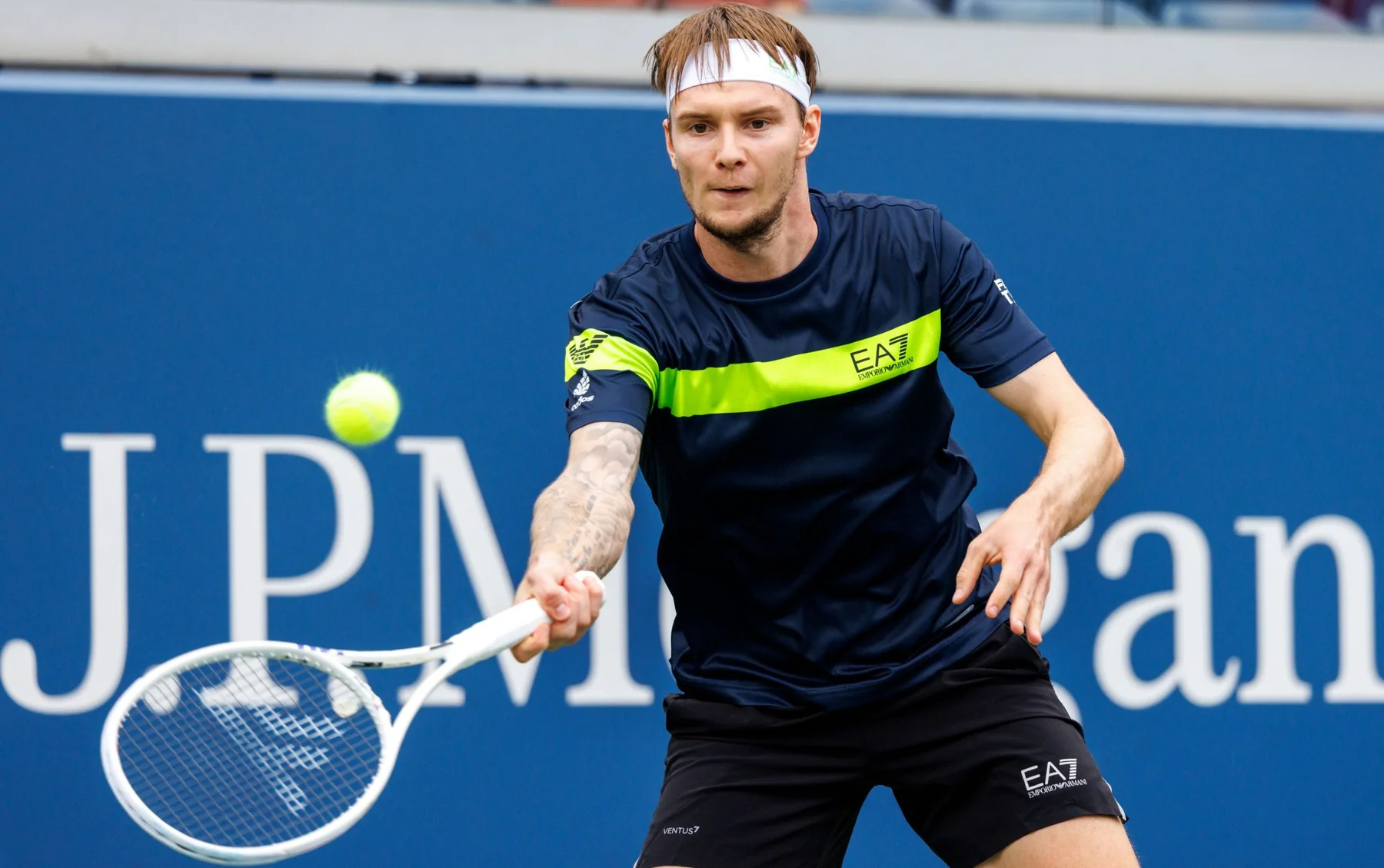
The official Bublik–Nakashima replay entry identifies the Shanghai match, and our ATP viewing guide helps fans find legal coverage. Neither a replay landing page nor a photograph substitutes for the medical staff's assessment.
Bublik's case is a useful reminder that criticism of an outburst and an explanation of medical eligibility can coexist. The rules allow officials to address behaviour while medical staff evaluate the condition. Understanding both processes is more informative than treating care as an endorsement of the conduct, or the eventual victory as proof that the interruption was improper.
About the author
ATP Schedule Editorial Team
The ATP Schedule editorial team turns match times, scores, tournament information and verified tennis news into clear answers fans can use quickly.
View all articles by this author →Fan discussion
Comments
Sign in with Google to comment. Keep the discussion helpful and tennis-focused. New comments are reviewed before they appear.
Loading comments…