John Isner and Georgia: The Tennis Champion Behind the Bulldogs Fan
John Isner’s Georgia years produced a team champion, a professional tennis career and a lasting connection to Bulldogs football. The story starts on the college courts.
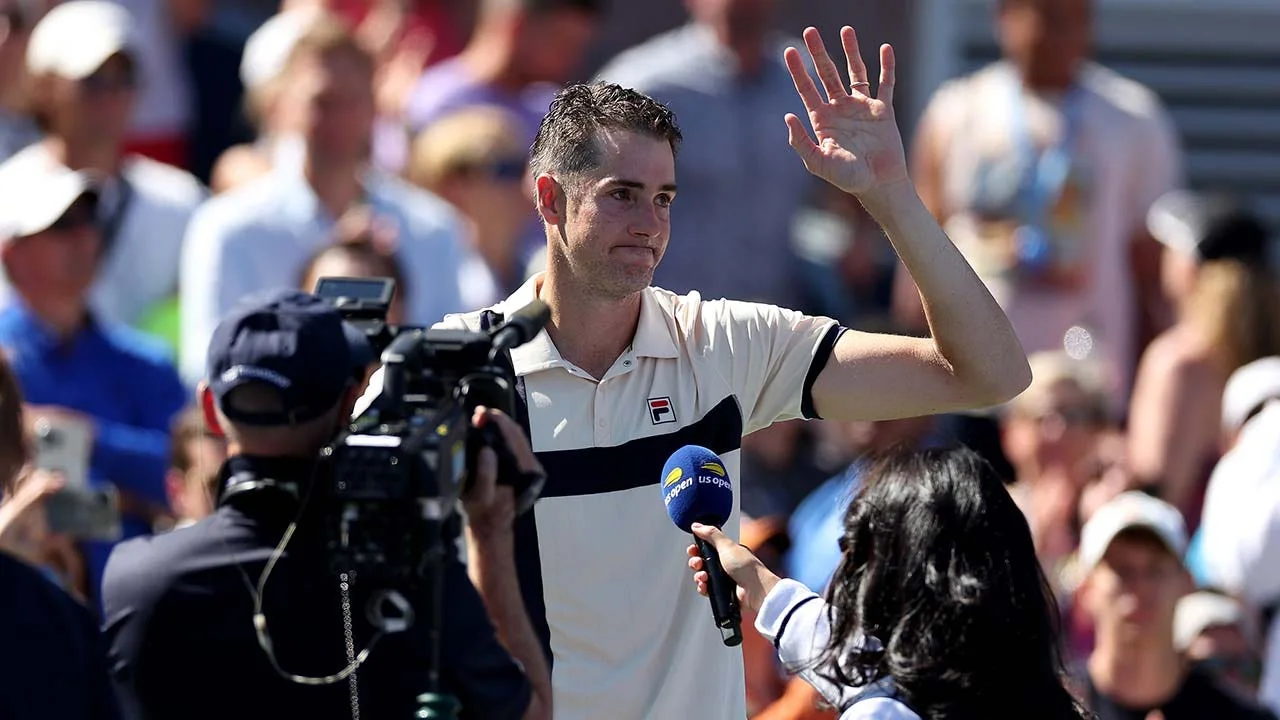
John Isner’s Georgia story connects an NCAA tennis champion with a devoted college football supporter. His four years as a Bulldog explain the relationship better than a photograph in team colors: they included doubles success, an undefeated team season and an individual final that ended in defeat. Here is how those experiences fit together, and how a tennis fan can follow the football connection without confusing past results with today’s schedule.
Why John Isner’s Georgia connection starts with tennis
John Isner became a Georgia Bulldog through college tennis. His later support for the football team grew out of a university connection built on practice courts, doubles partnerships and national championship matches. For an ATP fan, that sequence matters: the red-and-black allegiance belongs to the same biography as his enormous serve, rather than being a celebrity sporting preference added after he became famous.
The ITA’s account of his college career records four years at Georgia and career marks of 138–27 in singles and 138–24 in doubles. Those are college results, not his ATP win–loss record. They show sustained participation in both forms of tennis, an important distinction for viewers who mainly remember the individual serving battles of his professional career.
Two college achievements provide the simplest starting point: he was an NCAA doubles champion in 2005 and helped Georgia win the NCAA team championship in 2007. A doubles title rewards a partnership; a team title belongs to a lineup. Neither label means that he won the NCAA singles championship. Keeping those competitions separate makes the story more interesting, because Isner experienced success and disappointment within the same college setting.
College team tennis also changes what spectators should watch. The leading player may be the most recognizable name, but other courts can decide the collective result. A service hold has significance for the player contesting it, the partner or teammates following it, and supporters trying to follow several contests at once. That shared attention offers one explanation for why an athlete can remain attached to a school long after leaving its roster.
It would go too far to turn that explanation into a claim that college alone produced his professional game. Height, technique, training and individual development cannot be reduced to a campus slogan. The useful point is narrower: Georgia gave him an extended competitive setting in which his results had consequences for people beside him. His college record deserves to be read as sporting achievement in its own right, rather than merely a footnote before the professional tour.
Readers exploring the ATP player directory can apply the same distinction to other biographies. A university affiliation, a junior title and a tour-level breakthrough answer different questions. In Isner’s case, understanding the first helps explain why the football fortunes of that university continued to matter to him.
What Georgia won in 2007, and what Isner did not
Georgia won the 2007 NCAA men’s team championship; Isner finished runner-up in that year’s separate NCAA singles championship. These outcomes are compatible. A player can contribute to a national team title and then lose a later individual final, just as a successful team season can contain personal disappointments.
The Georgia historical results record a 4–0 team-final victory over Illinois in Athens. Georgia’s tenth-anniversary retrospective supplies the human detail: Isner defeated Kevin Anderson 6–1, 7–6 at No. 1 singles to put Georgia ahead 3–0, before Matic Omerzel secured the deciding victory at No. 4. The season ended undefeated, a year after Georgia had lost the team final to Pepperdine.
Notice the distinction between the standout matchup and the clinching result. Isner versus Anderson attracts attention because both names became familiar to professional tennis viewers. Omerzel’s court nevertheless delivered the point that completed the championship. Reading only the highest-profile singles score would miss how the title was actually secured. That is a useful habit to carry into any team tennis event: identify both the contribution and the moment the overall outcome becomes settled.

In the individual singles final, Virginia’s Somdev Devvarman beat Isner 7–6, 4–6, 7–6. The score tells a different story from the team final: two tiebreak sets surrounding a set won by Isner, with the individual trophy going to his opponent. It does not support rewriting the match as an easy defeat, nor does it make Isner an NCAA singles champion because his university had already won the team event.
In his 2012 Georgia interview, Isner explained that representing teammates brought a pressure he distinguished from playing for himself professionally. That is his assessment of the experience, not a universal ranking of which tennis competition is hardest. For a spectator, it helps explain why the collective championship could remain such a powerful memory alongside an individual loss.
When consulting tennis results, ask what the score represents before drawing conclusions. A completed singles match, a doubles partnership’s result and an aggregate team score measure different things. Isner’s final college season rewards precisely that careful reading: the achievement becomes clearer when its separate competitions stay separate.
How college competition led into his ATP career
Isner’s professional breakthrough came quickly after college, but it happened across different levels of tennis. Calling every early success an ATP title would obscure the progression. His first professional tournament victory was at an ITF Futures event; his subsequent Washington final brought him into a much more prominent tour setting.
Georgia’s July 2007 report from Shingle Springs, California identifies the first event as the USA F14 Futures tournament. Entering with a wild card, Isner won five matches and lost only one set, beating Ivan Miranda 6–4, 7–6(11) in the final. That was a professional title, with its own competitive value, but not an ATP Tour singles title. The distinction is particularly helpful when reading short biographies that compress several steps into a single sentence.
Later that summer, he reached the Washington final against Andy Roddick. In an interview preserved by the ITA, Isner recalled the run as evidence that he could make a living in professional tennis. He also credited four years with coach Manuel Diaz for helping him prepare, while acknowledging that college success did not automatically translate to the tour.

The same interview described continuing work on his serve, forehand, strength and conditioning. That matters because a college-to-professional success story can otherwise suggest that development ended on graduation day. For a large player with an attacking game, sustaining effective movement and shot quality through repeated matches remains a different challenge from simply possessing a formidable first serve. The interview establishes that he continued working; it does not supply a measurement of how much each improvement contributed to later victories.
For fans following a prospect, the practical lesson is to examine the opposition and event level as well as the headline result. A lower-level title can show an ability to win repeatedly; a tour final tests that ability in another field. Neither needs to be dismissed or inflated. Our ATP tournament pages help place current competition in its proper setting, while Isner’s early results provide a historical example of why that context matters.
His completed tour career extended through 2023 and included 16 ATP singles titles and a career-high ranking of No. 8, as summarized by the ITA. Those achievements make the Georgia years more illuminating, but they should not make his path look inevitable. The interest lies in the transition: an accomplished college player still had to establish himself against a new group of opponents.
The football supporter who stayed a Bulldog
Isner’s Georgia football support is documented in contemporary coverage, including posts during the 2017 season and attendance at the Rose Bowl at the start of 2018. Those are concrete historical examples of his allegiance. They do not establish a current travel schedule or suggest that he represented Georgia on the football field.
Tennis.com’s October 2017 article collected his public enthusiasm for the Bulldogs, including a confident message about the football team dating to July. The chronology is useful: his support was visible before the season reached its most celebrated postseason moments. For readers encountering an old post today, however, the rankings and expectations around it belong to that particular season.
In January 2018 coverage, Tennis.com reported that Isner attended Georgia’s Rose Bowl victory over Oklahoma with a group that included fellow tennis player Sam Querrey. Georgia subsequently lost the national championship game to Alabama, 26–23 in overtime, and Isner continued expressing pride in the Bulldogs. The two football games should not be merged: the Rose Bowl victory and national-final defeat were separate events.
There is an appealing change of role here. A tennis professional usually supplies the performance that others react to; a football supporter waits for somebody else to execute. The athlete’s own expertise does not provide control over the result. That observation helps explain the interest of these moments for tennis readers without pretending that cheering for a school reveals a new technical secret about Isner’s serve or return game.
The university supplies the connection between those roles. He had already represented Georgia under competitive pressure, so football offered another way to participate in a community he knew. That is an editorial reading of the documented history, not an attempt to describe every private reason for his fandom. The public record is sufficient to explain the relationship without inventing conversations with coaches, regular stadium routines or future appearances.
For someone discovering college football through a tennis player, affiliation can be a starting point rather than a demand for instant expertise. Learn which team he supports, distinguish the historical game from the next fixture, and then decide whether the sport itself interests you. There is no need to force a tennis analogy onto every football position or turn a fan’s prediction into an authoritative assessment of a matchup.
The enduring part of this story is the connection to Georgia. The individual scores and rankings remain tied to their dates. Keeping those two ideas separate lets an old football anecdote illuminate a tennis career without misleading a reader who arrived looking for information about the present.
Following Georgia football alongside ATP tennis
If Isner’s story has made you curious about the Bulldogs, begin with the current football fixture rather than an old highlight. The Rose Bowl and national-final examples above are historical. The next opponent, venue, kickoff and available broadcast should come from current listings, with the official Georgia schedule used to confirm the details that affect a viewing or travel plan.
For a convenient wider view, CollegeFootballSchedule.net brings college football games together by date, team and broadcast information. Its Georgia football schedule narrows that view to the Bulldogs. These tools are operated by the same project as ATP Schedule; this recommendation reflects that relationship, rather than an independent comparison of competing services. A listed fixture helps you plan, while the school and broadcaster remain the places to confirm late changes and access.
There is one especially easy mistake when comparing the two sports: assuming identical clock numbers mean identical moments. The football tool labels its times Eastern, while our ATP schedule for the next seven days displays matches in your selected local zone. Bring both into the same zone and check the calendar date as well as the hour. If a football entry says TBA, leave it unresolved; it is not permission to assign noon or midnight to the game.
Tennis adds another complication because the order of play is not a promise that every match starts at a precise minute. A preceding match can run long, and the relevant court matters. Treat a listed start or a “not before” instruction according to what it actually says, then check the tournament’s latest order of play near the session. A football kickoff is a different kind of scheduling reference, but it also needs confirmation when an earlier listing supplied only a broad television window.
A useful personal plan therefore contains three decisions: which event you most want to see live, which one has a replay option you can actually access, and how much uncertainty you can tolerate between them. Do not assume a tennis match will finish in time merely because it started first. Both a close tennis contest and a football game can outlast a comfortable-looking gap on your calendar.
Finally, confirm viewing rights separately. Our ATP viewing guide starts with the country where you will watch, and a football channel name also needs checking against your provider and location. A schedule is not a subscription or a guarantee of a particular stream. That small amount of preparation lets you follow the Georgia connection on its own terms while still giving the tennis on your calendar the attention it deserves.
About the author
ATP Schedule Editorial Team
The ATP Schedule editorial team turns match times, scores, tournament information and verified tennis news into clear answers fans can use quickly.
View all articles by this author →Fan discussion
Comments
Sign in with Google to comment. Keep the discussion helpful and tennis-focused. New comments are reviewed before they appear.
Loading comments…