Carlos Alcaraz's 2026 Comeback: Wrist Recovery, US Open Run and Planned Breaks
Carlos Alcaraz?s verified 2026 wrist-injury timeline, US Open comeback, performance assessment and the planned breaks shaping his next schedule.
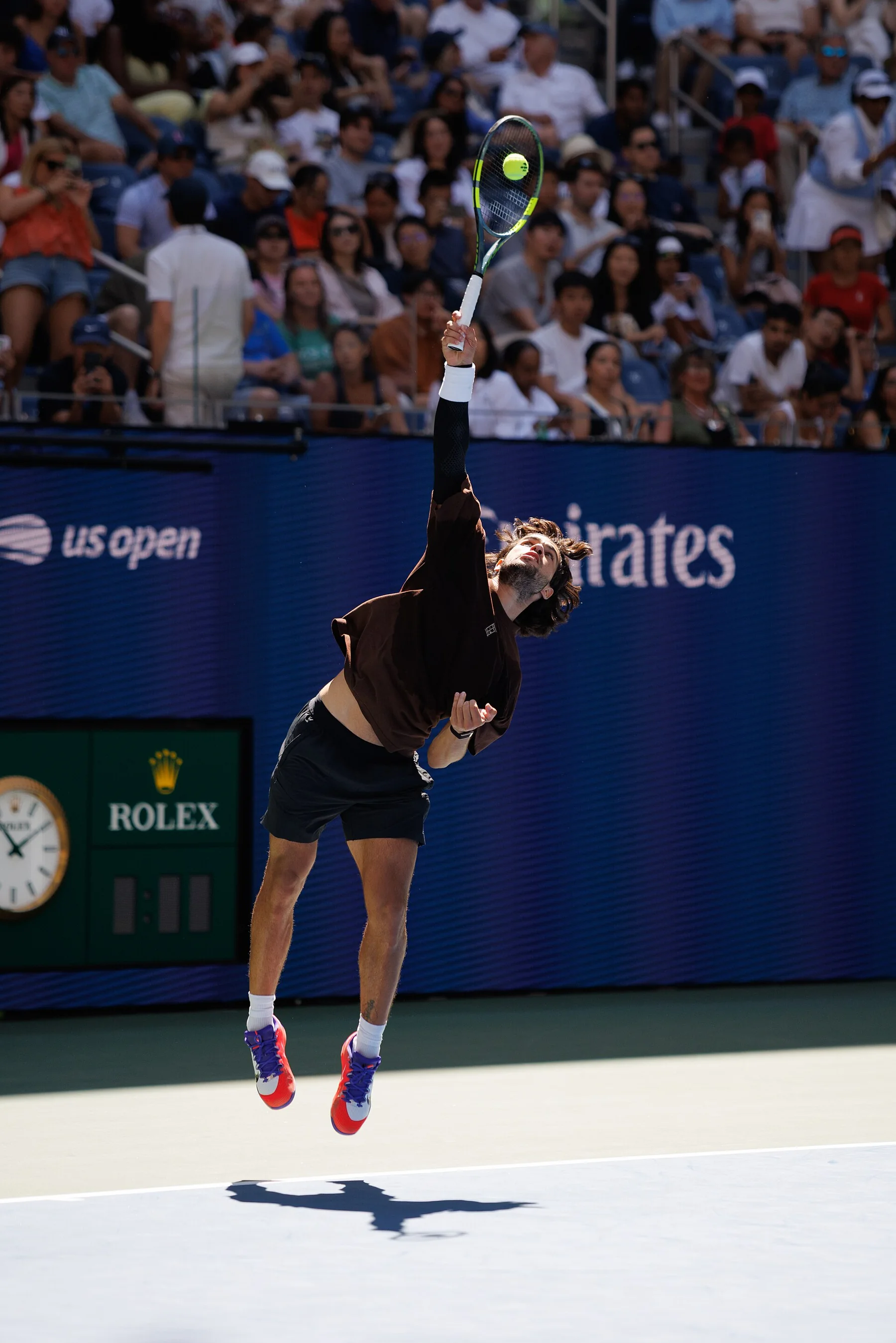
Carlos Alcaraz returned at the 2026 US Open after a right-wrist injury removed more than four months from his season. He reached the quarterfinals, survived his longest and latest test in New York, then made the bigger news: future seasons will include deliberate long breaks. Here is what the comeback proved, what it did not, and how fans should read his next schedule.
What happened to Carlos Alcaraz's wrist in 2026?
Carlos Alcaraz developed a right-wrist tendon problem in Barcelona in April and did not return to tour-level singles for 139 days. The interruption was especially striking because it cut through an excellent start: he was 22-3, had won the Australian Open and Doha, and had reached the Monte Carlo final before the wrist stopped him. This was not a routine week off between events. It removed Roland Garros, Wimbledon and the usual North American hard-court preparation from his calendar.
The Barcelona injury and four-month absence
Alcaraz beat Otto Virtanen in his Barcelona opener on April 14, then withdrew before his next match. The US Open's official coverage later identified the condition as tenosynovitis, inflammation around a wrist tendon. That is the useful limit of the public medical record: it explains the affected structure, but it does not give outsiders license to diagnose damage or forecast recurrence. What fans can say with confidence is that a problem in the hitting wrist matters on nearly every aggressive shot. A modern forehand, kick serve and last-second defensive flick all demand acceleration and stability from the hand and forearm.
The absence also changed the competitive picture. Alcaraz had become the youngest man to complete a career Grand Slam when he won the 2026 Australian Open at age 22, yet the US Open became only his seventh tournament of the season. A campaign that appeared capable of producing sustained pressure at the top of the rankings became a rehabilitation year. Readers can follow the current field through the site's ATP player directory, but ranking position alone cannot show the missing repetitions behind his comeback.
What recovery had to restore
A doctor's clearance answers whether an athlete may compete; it does not automatically restore conviction at full racquet speed. Alcaraz said his earlier return from a right-forearm issue in 2024 taught him that fear could persist after the tissue had healed. His 2026 task therefore had two layers: rebuild the wrist's tolerance for long, intense sessions and regain the willingness to swing freely when a point became stressful.
That distinction shaped every fair assessment in New York. A guarded forehand, reduced serve speed or reluctance to improvise could signal rust, caution or tactics rather than renewed injury. The best evidence would come from repeated matches: how he struck the ball late in sets, how the wrist reacted the following day and whether he could trust it under a best-of-five workload. His US Open run supplied a much harder test than any practice court could provide.
Why did Alcaraz choose the US Open for his comeback?
Alcaraz chose New York because his practice load suggested the wrist was ready and because the US Open gave him a familiar, emotionally positive place to restart. It was still an audacious choice. Instead of returning at an ATP 250 or a Masters 1000 and building through best-of-three matches, he made a major his first singles tournament in more than four months.
A high-risk return with a rational test plan
His team did not treat one pain-free hit as proof. Alcaraz described long, intense practices designed to show how the wrist reacted during the session and after the workload. He also had a useful memory bank in New York: he arrived as the defending champion, having beaten Jannik Sinner in the 2025 final, and repeatedly spoke about the energy he receives from the crowd. Confidence in the setting mattered because confidence in the joint was part of the challenge.
The competitive risk remained obvious. Official US Open analysis noted that, since the tournament settled at Flushing Meadows and became a hard-court event, no men's defending champion had retained the title without first playing a North American hard-court singles tournament. Hard courts demand abrupt braking and repeated explosive changes of direction; best-of-five tennis also multiplies serves and full-speed forehands. The choice made sense as a test of genuine readiness, but it did not create a gentle path back. The site's tournament calendar helps show what he bypassed and why New York represented such a large first step.
Mixed doubles offered a limited rehearsal
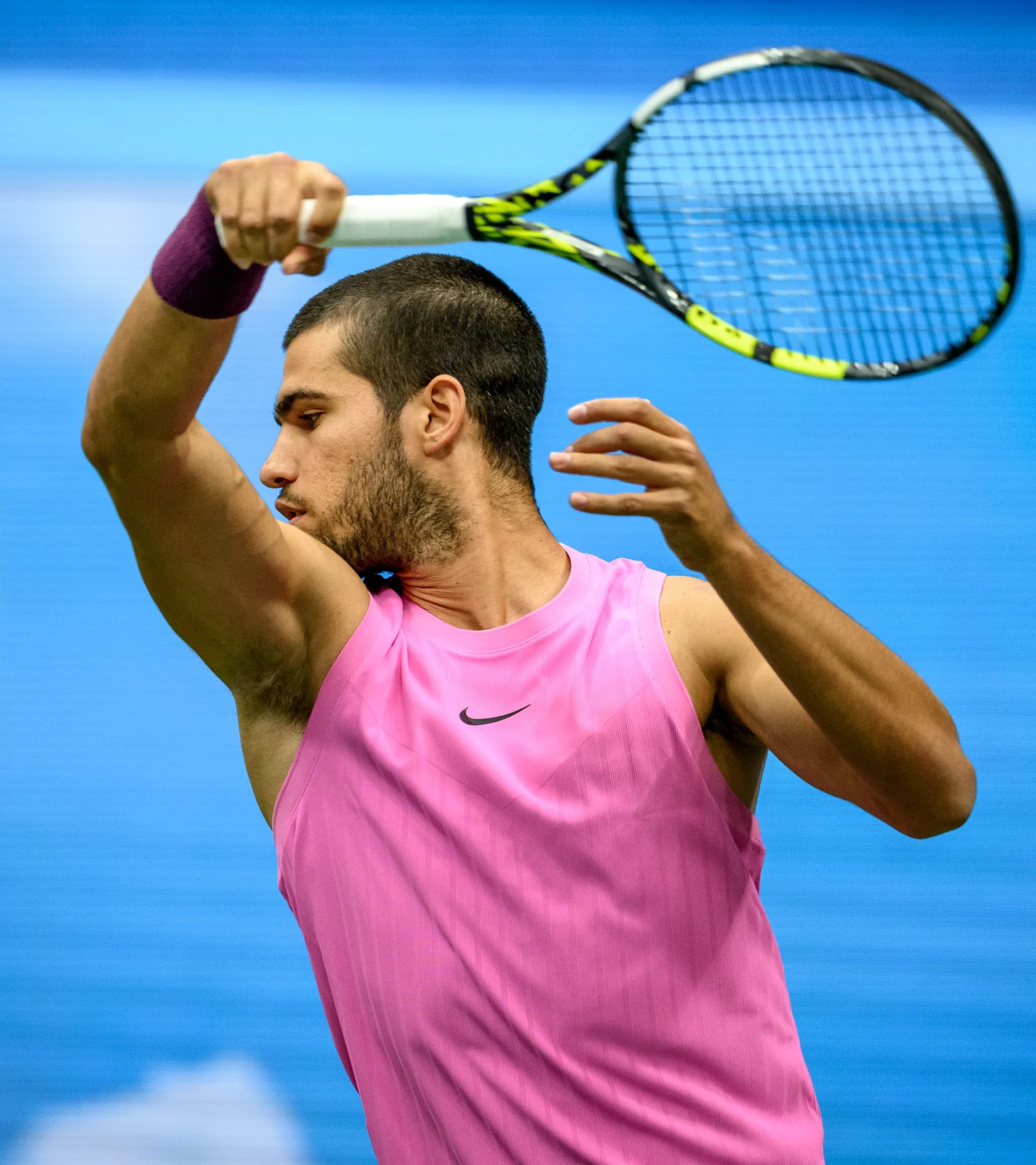
Before the singles draw, Alcaraz partnered Serena Williams in mixed doubles and won a round. That appearance was valuable: he felt match-day nerves, struck returns against live serves and learned how the wrist responded with a crowd present. It was also a limited rehearsal. Doubles uses a smaller movement area, shorter points on average and different tactical patterns, with far more emphasis on returns, first volleys and controlling the net.
Fans therefore needed to resist two premature conclusions. A healthy mixed-doubles appearance did not prove he could survive four hours of singles, and visible rust did not mean the wrist had failed. The early singles rounds would establish whether his practice base could survive score pressure, repeated serving and recovery days. In that sense, the US Open was both the comeback destination and the final phase of the test.
How far did Alcaraz go at the 2026 US Open?
Alcaraz reached the quarterfinals, where Ben Shelton ended his title defense in a five-set match lasting four hours and 28 minutes. A last-eight finish was below the standard of a defending champion, yet it was a meaningful comeback result after 139 days without singles competition. The shape of the run matters more than the round label.
Rust was visible, but the base level held
Roman Safiullin made Alcaraz work in the first round, but the Spaniard won 6-4, 6-4, 6-4. The official report recorded an average first-serve speed near 112 mph, 66 percent of first-serve points won and 27 errors, including five double faults. Those figures suggested a player managing rhythm rather than a player unable to compete. He still produced his familiar crosscourt forehand, drop shot and scrambling defense, and he repeatedly handled the larger points better than his opponent.
As the rounds accumulated, the central achievement was availability. He recovered, returned and did it again. That does not appear in a highlight reel, but it is the first requirement of a successful comeback. Fans checking the site's ATP results page should read the five completed rounds as a workload sequence, not merely as wins followed by one defeat.
Shelton exposed the remaining physical margin
Shelton won 6-7(5), 6-1, 6-3, 1-6, 7-6(7). The score captured the volatility. Alcaraz recovered from losing nine consecutive games, dominated the fourth set and pushed the deciding set to a match tiebreak. That response showed competitive trust in his body. It also required an enormous expenditure of energy to stay level with a fresh, explosive opponent.
Tactically, Shelton refused to let Alcaraz settle. He sometimes followed second serves forward and used backhand slice to alter contact height and pace. Alcaraz answered by pulling Shelton wide on the forehand side, attacking the American's backhand and using drop shots to move him vertically. The contest was more than a serving duel; it forced Alcaraz to brake, improvise and strike from uncomfortable positions, precisely the varied stress his comeback needed to face.
The 3:34 a.m. finish changes the verdict
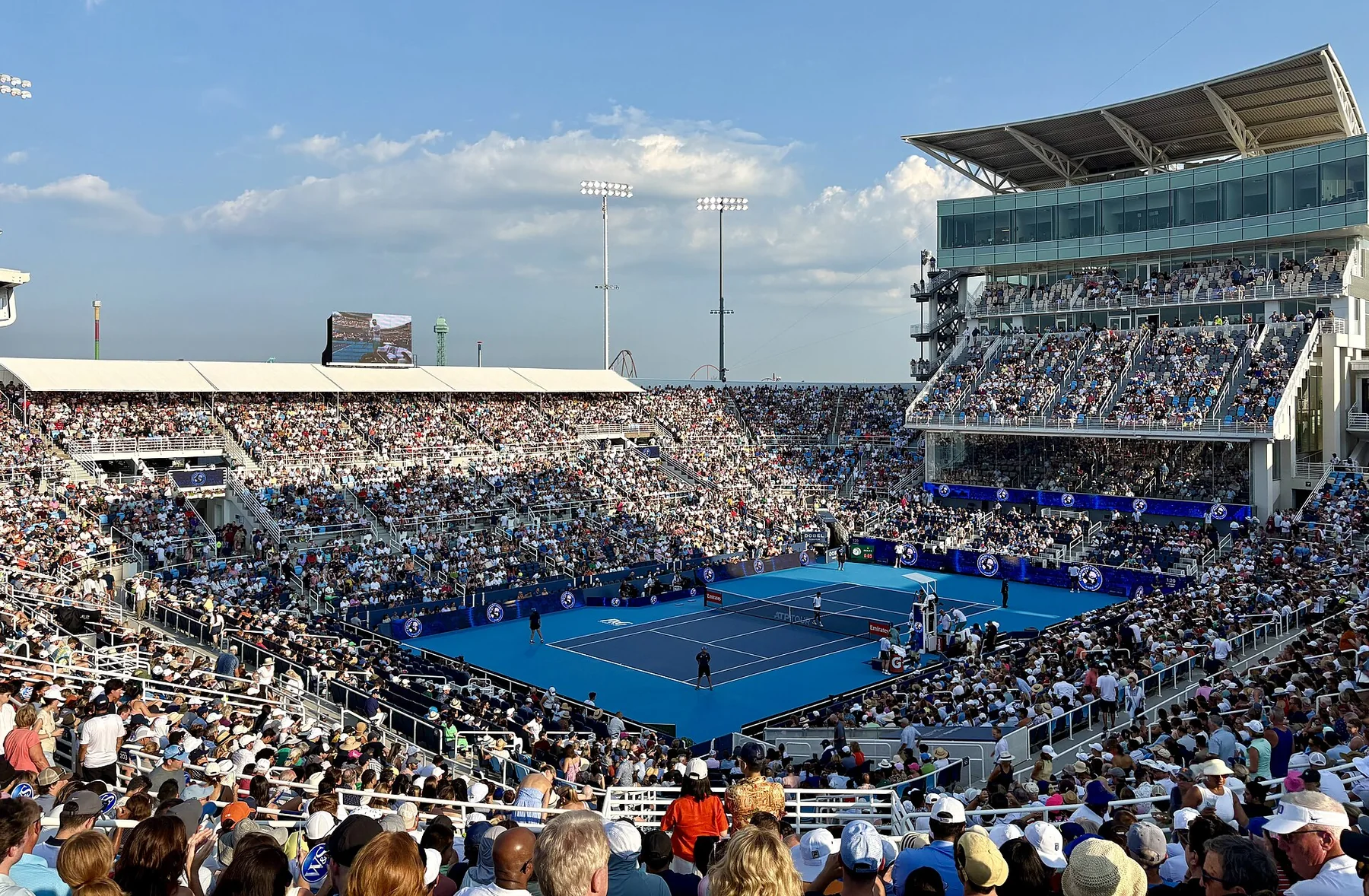
The match finished at 3:34 a.m. local time, a US Open record. The night session had been delayed after a long day program, and Shelton-Alcaraz did not begin until around 11 p.m. That context matters. Alcaraz was not merely asked to play a fifth set after four months away; he was asked to regulate energy and concentration at a biological hour when athletes would normally be asleep.
He showed physical distress during the match but still forced a deciding tiebreak. It would be too simple to call the loss proof that the wrist or conditioning failed. Shelton played brave, disruptive tennis and won the decisive points. The fair verdict is narrower and more positive: Alcaraz's wrist survived a severe competitive test, while his complete match fitness and recovery routines were still being rebuilt. A quarterfinal exit supplied better information than an easy early loss or withdrawal would have done.
What did the comeback reveal about his wrist and game?
The strongest evidence from New York was that Alcaraz could swing freely, recover between rounds and withstand a four-hour match; the weaker areas were serve rhythm and sustained efficiency. That is a tennis assessment, not a medical one. There was no public basis after the event for diagnosing a setback, and visible fatigue at 3 a.m. should not be confused with proof of renewed wrist damage.
The early serve numbers showed the distinction. His average first serve against Safiullin sat near 112 mph, below the range the official match report regarded as his usual capability, and he made five double faults. Yet he won 66 percent of points behind the first delivery and protected his service games well enough to win in straight sets. Placement, variation and the next shot can compensate for reduced speed. A comeback player does not need to chase a radar-gun number if a more controlled motion holds up under score pressure.
The forehand offered a more persuasive signal. Alcaraz did not spend five matches merely rolling the ball safely. He changed direction, accelerated crosscourt, defended on the stretch and continued to use touch. Against Shelton, he used the drop shot to pull an explosive opponent away from the baseline and recovered from two poor sets to win the fourth 6-1. That willingness to improvise suggests the mental barrier he discussed before the tournament was becoming smaller.
There were still signs of a player without a normal competitive runway. Error clusters appeared in the opener and again when Shelton won nine games in succession. Match fitness is partly physical, but it is also the ability to select the right shot when tired, reset after a bad service game and reproduce a pattern two hours after it first worked. Practice can prepare those skills; only matches sharpen them.
For fans following Alcaraz through the site's player section, the next useful checkpoints are practical. Does his first-serve percentage stabilize? Can he play consecutive weeks without a physical reaction? Does he continue taking the forehand early rather than protecting the wrist with extra spin and height? New York answered the biggest question—he could compete again—while leaving normal performance questions for the autumn swing.
Why does Alcaraz plan to take one- or two-month breaks?
Alcaraz says he wants to make rest a planned part of future seasons rather than let the next injury choose the break for him. During the US Open he said some pauses could last one or two months. The important word is “could”: this is a statement of scheduling philosophy, not a published list of tournaments he will skip.
The 40-week problem
Alcaraz argued that meeting every demand can keep a leading player in competition mode for roughly 40 weeks. The official calendar gives that complaint context. The tour begins in early January and runs through the ATP Finals in the second half of November; Davis Cup and exhibitions can extend the working year further. Seven of the nine Masters 1000 tournaments occupy 12-day windows. A player may compete on only five or six days during one of them, but must stay prepared, travel, practice and recover across the full window.
Deep runs compound the problem. The best players are asked to return late in nearly every tournament, which shortens the transition to the next surface or city. Alcaraz's wrist absence was unwanted, but it showed him what an extended physical and mental reset felt like. His proposed solution is to choose some of those resets before warning signs become an injury. Fans may dislike losing a star from a draw, yet a protected month can preserve appearances at the events where he is ready to play at full intensity.
Ranking points are the price of selective scheduling
The choice is not cost-free. Under the 2026 rulebook, a commitment player's schedule includes the Masters 1000 events for which he is accepted, the ATP Finals if he qualifies and four ATP 500 events, including one after the US Open. Exemptions, medical provisions and experience-based reductions make individual cases more complicated, but skipping eligible events can affect ranking calculations, bonus eligibility and fines.
That creates a strategic calculation. A healthy Alcaraz has a higher chance of collecting 1,000 or 2,000 points at the largest tournaments, while chasing every available event can reduce his best level when those weeks arrive. Conversely, long absences can cost seeding position, create harder draws and disappoint ticket holders who bought early. His team must decide where the marginal ranking opportunity is smaller than the recovery value.
The sensible fan response is to treat entry lists as a first signal and the current order of play as the final confirmation. The site's ATP schedule this week reflects the matches that have actually reached the playable calendar. Alcaraz's warning also applies beyond one star: a sustainable tour needs recognizable players present often enough to build stories, but rested enough that those appearances deliver the tennis audiences paid to see.
When will Carlos Alcaraz play next?
As of September 9, Tokyo is the first reported ATP Tour target on Alcaraz's autumn schedule, with Shanghai, Paris and the ATP Finals also possible. None should be presented as an unconditional promise after his exhausting US Open quarterfinal and his declaration that he will become more selective. Entry lists show intent; a draw and order of play provide firmer confirmation.
The likely Asian and indoor path
The official 2026 calendar places the Japan Open in Tokyo from September 30 to October 6, alongside the China Open in Beijing. Reporting around Alcaraz's comeback identified Tokyo as his likely ATP 500 choice. The Rolex Shanghai Masters then runs from October 7 to 18, creating an immediate transition if he goes deep in Japan. Shanghai's expanded 12-day format offers rest days within the draw, but it also keeps a player in tournament mode for a longer block.
The European indoor finish follows. The Paris Masters is scheduled for November 2-8, and the ATP Finals for November 15-22. Turin depends on qualification, although Alcaraz's strong pre-injury results and US Open quarterfinal strengthen his position. These dates describe opportunities, not a guarantee that he will use all of them. His team can reasonably insert a recovery block after New York, after Asia or before Turin.
| Event | 2026 dates | Status for Alcaraz |
|---|---|---|
| Japan Open, Tokyo | Sep 30-Oct 6 | Reported target; verify |
| Shanghai Masters | Oct 7-18 | Possible |
| Paris Masters | Nov 2-8 | Possible |
| ATP Finals | Nov 15-22 | If qualified and fit |
What fans should check before buying or watching
Start with the site's ATP tournament calendar, then check the official event entry list and draw. A player's name on an early promotional graphic is weaker evidence than a main-draw placement, and even the draw cannot eliminate a late physical withdrawal. For viewing, the ATP watch guide explains the legal platforms available by market; the exact match window appears only after the order of play is released.
Alcaraz's comeback changes how those checks should be interpreted. A skipped tournament would fit the strategy he has publicly described and would not by itself indicate a wrist setback. A confirmed appearance, likewise, should not be treated as proof that every later stop will follow. The most credible schedule is a rolling one: confirm the next event, observe his workload, and wait for his team to commit to the next block.
The comeback verdict
Alcaraz left New York with a quarterfinal result and far more useful evidence than he arrived with. The wrist tolerated five singles matches, his attacking identity returned, and the final loss exposed normal competitive gaps after a long layoff. His next challenge is structural: choose enough events to compete for the biggest prizes while protecting the body that makes his tennis possible.
About the author
ATP Schedule Editorial Team
The ATP Schedule editorial team turns match times, scores, tournament information and verified tennis news into clear answers fans can use quickly.
View all articles by this author →Fan discussion
Comments
Sign in with Google to comment. Keep the discussion helpful and tennis-focused. New comments are reviewed before they appear.
Loading comments…